
Toy Hauler vs Travel Trailer: Utah Guide

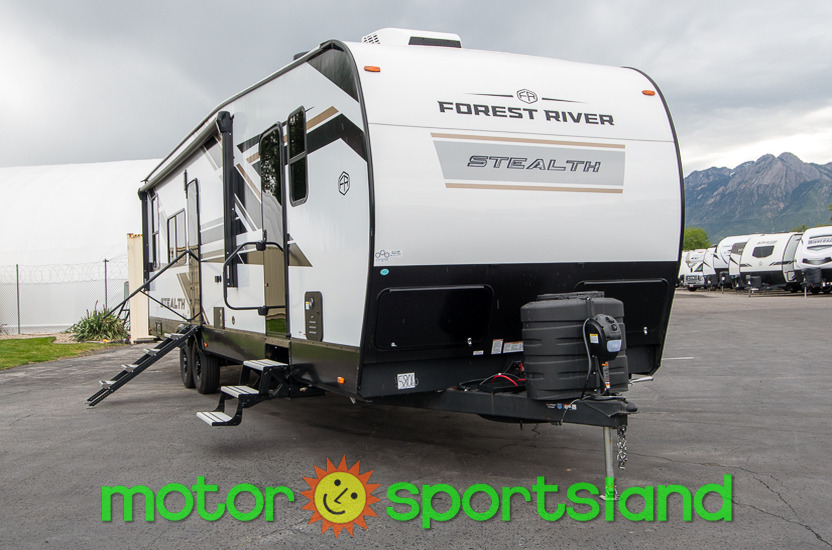
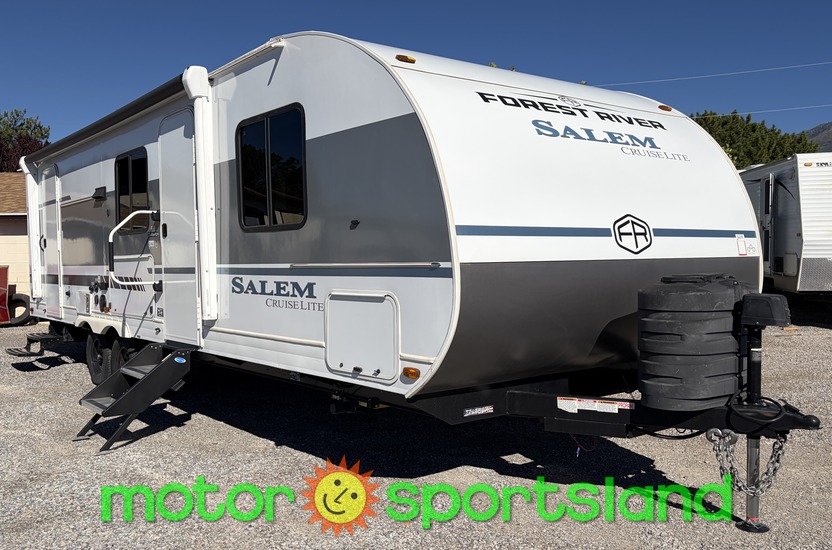
A toy hauler and a travel trailer can park in the same campsite and look like cousins, but they ask very different things of your truck, your driveway and your weekends. We sell both at Motor Sportsland. Right now we have 24 new toy haulers in stock, 20 at our Millcreek store in Salt Lake City and 4 in Spanish Fork, alongside 134 new travel trailers, 84 in Millcreek and 50 in Spanish Fork. Which one is right depends less on taste than on what you tow with, where you store it, and whether machines are coming along.
Toy hauler vs travel trailer, where the real difference shows up
The difference is payload and the size it takes to carry it. Most of the new toy haulers on our lot run from 3,064 to 5,320 pounds of cargo capacity. Most of the travel trailers run from 911 to 2,208 pounds. That gap is the whole story. If you are bringing dirt bikes, side by sides or sleds to the San Rafael Swell or up to the Uintas, the toy hauler has the rated capacity to do it legally. If your heaviest load is a cooler and camp chairs, you are paying to tow structure you will never use.
Everything else follows. Toy haulers here mostly run 28 feet 6 inches to 46 feet 1 inch long, travel trailers mostly 19 feet to 31 feet 7 inches. Toy hauler dry weights mostly run from 7,439 to 17,499 pounds against 2,690 to 6,700 pounds. Toy haulers mostly sleep 6 to 9, travel trailers mostly 3 to 8. Bigger box, bigger truck.
What a toy hauler costs you in towing, setup and storage
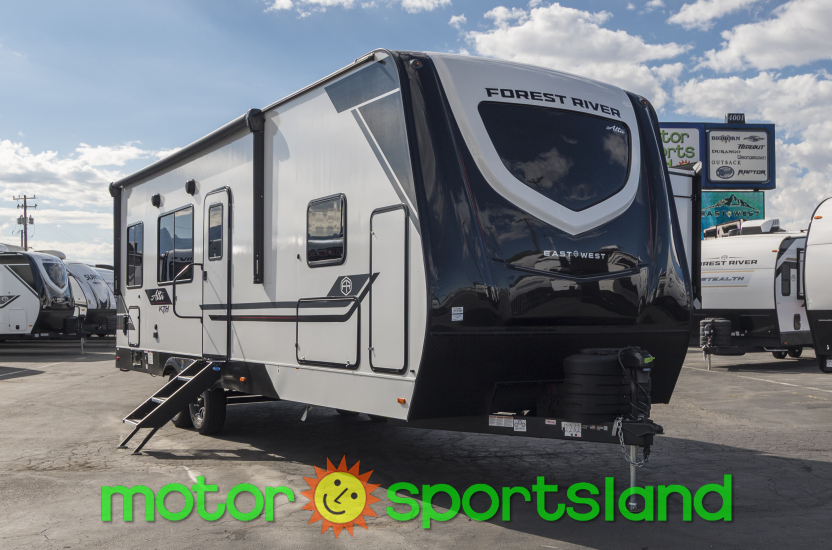
Start with the hitch. Toy hauler hitch weights mostly run from 1,155 to 3,850 pounds, and GVWR mostly runs from 11,355 to 21,500 pounds. The upper half of that range means a properly rated three quarter ton or one ton truck, and it means reading your door jamb sticker before you shop. We will do that math with you in the lot, because sometimes the trailer you want needs a different tow vehicle first.
Grades are the other cost. Parley's, Provo Canyon, Sardine, the climb toward Soldier Summit, all of them charge you for weight twice. Toy haulers in stock mostly ride on 2 to 3 axles, and the three axle units spread that load and give you more brake surface, which is what you want on a long descent with a loaded garage behind you. Plan slower miles and more fuel stops.
Getting into a site costs you something too. Longer boxes mean fewer Forest Service loops will take you, more reversing, and more attention to tree limbs. Then there is home storage. Toy hauler exterior height mostly runs from 12 feet 5 inches to 13 feet 6 inches, which is taller than most residential garage doors in the valley and taller than plenty of covered storage bays. If your HOA says nothing taller than the fence or nothing on the street overnight, price a storage yard before you buy, and measure the gate.
What you get for all that is self sufficiency. Fresh water on our toy haulers mostly runs from 94 to 173 gallons, grey from 50 to 120, black from 30 to 93. That is real range when you are parked on BLM ground past Green River with no hookups for four days. Solar on the equipped units mostly runs from 200 to 880 watts, and furnace output on the units that list it mostly runs from 18,000 to 40,000 BTU, which matters when a July night at 9,000 feet drops into the thirties.
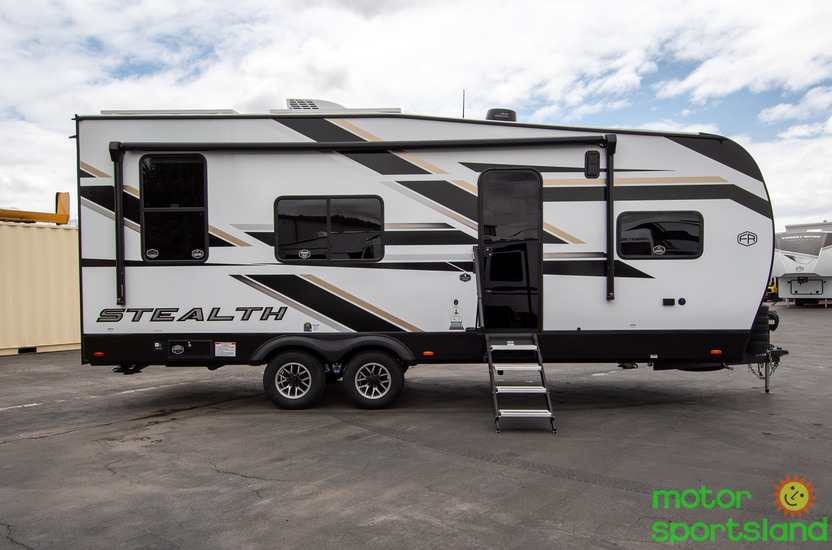
Our toy hauler lines include Stealth with 10 units, Raptor with 5, Takoda with 4, Alta with 2, and one each of Overland, Sportster and Carbon. The short ones tow nothing like the long ones.
Where a travel trailer makes life easier
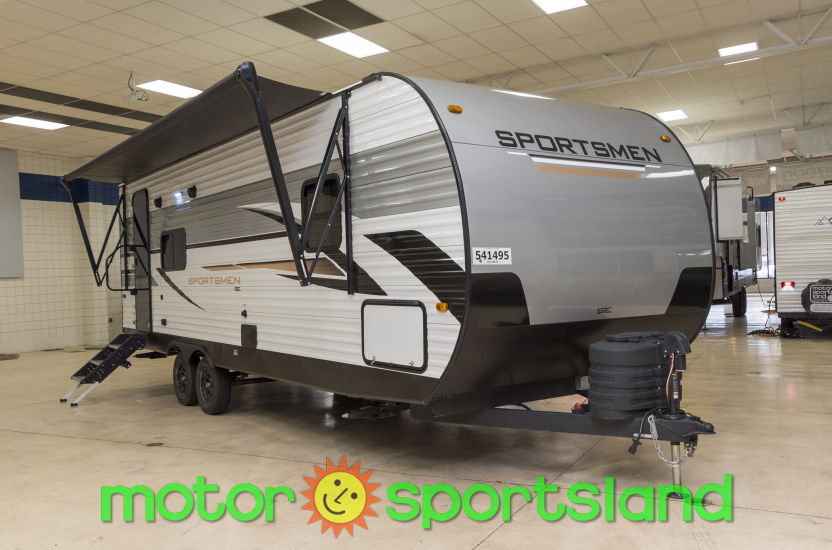
A travel trailer forgives a lot. Hitch weights mostly run from 313 to 801 pounds and GVWR mostly runs from 3,765 to 8,800 pounds, so plenty of these are within reach of a half ton truck, and the lighter end opens up to midsize trucks and some SUVs, depending on what your specific vehicle is rated to pull. Most sit on 2 axles, with single axle units at the small end.
Height is the quiet advantage. Travel trailer exterior height mostly runs from 9 feet to 11 feet 3 inches. That lower profile means less sail area on the open stretch of I-80 west of the city when the wind comes up, and it means more of these clear a storage lot roof or sit behind a side yard fence without a neighbor complaint. Shorter lengths also mean you can take the tight loops at Mirror Lake or Jordanelle that a 40 footer has to drive past.
The trade is capacity. Fresh water mostly runs 26 to 55 gallons, grey 26 to 70, black 26 to 42. You will be more deliberate about showers and dishes if you boondock, and you will dump sooner. Solar on the equipped units mostly runs from 200 to 400 watts, and furnaces that list output mostly run from 8,000 to 35,000 BTU. For hookup camping and shorter trips, none of that is a problem. For a week off grid with six people, it is.
We carry R-Pod with 21 units, Hideout with 11, Micro Minnie with 10, Connect with 10, Sportsmen with 9, Access with 9, Surveyor with 8, Thrive with 7 and Salem with 6, among others. That selection is why we can usually match a floorplan to a tow rating instead of the other way around.
Spec ranges side by side
| Spec | Toy haulers in stock | Travel trailers in stock |
|---|---|---|
| Sleeps | 6 to 9 | 3 to 8 |
| Slides | 2 to 3 | 1 to 2 |
| Length | 28 ft 6 in to 46 ft 1 in | 19 ft to 31 ft 7 in |
| Ext Height | 12 ft 5 in to 13 ft 6 in | 9 ft to 11 ft 3 in |
| Hitch Weight | 1,155 to 3,850 lbs | 313 to 801 lbs |
| Dry Weight | 7,439 to 17,499 lbs | 2,690 to 6,700 lbs |
| Cargo Capacity | 3,064 to 5,320 lbs | 911 to 2,208 lbs |
| GVWR | 11,355 to 21,500 lbs | 3,765 to 8,800 lbs |
| Axle Count | 2 to 3 | 1 to 2 |
| Fresh Water | 94 to 173 gal | 26 to 55 gal |
| Grey Water | 50 to 120 gal | 26 to 70 gal |
| Black Water | 30 to 93 gal | 26 to 42 gal |
| Furnace BTU | 18,000 to 40,000 | 8,000 to 35,000 |
| Solar | 200 to 880 watts | 200 to 400 watts |
Utah weather, canyon grades and storage rules
Three local realities decide more of these purchases than floorplans do. Heat is the first one. A September afternoon in Moab or out at Sand Hollow is brutal, and shade plus air conditioning plus a big fresh tank is the difference between staying and leaving. Cold is the second. Nights above 7,000 feet run cold most of the year, and the furnace ratings above tell you which units were built with longer shoulder seasons in mind.
Third is where it lives the other 48 weeks. Measure your gate, your garage door and your side yard, then compare them against the heights and lengths in the table. We have had customers fall for a long toy hauler and then learn their storage facility only had 12 foot bays open. Sort that out first and the rest gets simple.
Frequently asked questions
Can I tow a toy hauler with a half ton truck?
Some of the smaller ones, maybe, but you have to check your truck's numbers against the specific trailer. Toy hauler hitch weights mostly run from 1,155 to 3,850 pounds and GVWR mostly runs from 11,355 to 21,500 pounds, and the upper half of that range is firmly three quarter ton and one ton territory. Bring your registration and your door jamb sticker to Millcreek or Spanish Fork and we will check it before you get attached to a floorplan.
Is a toy hauler worth it if I only haul toys a few times a year?
Sometimes yes, because the tank capacity and the sleeping counts stand on their own. Toy haulers in stock mostly sleep 6 to 9 and carry 94 to 173 gallons of fresh water, which suits big families and long dry camping trips whether or not anything with wheels rides inside. You pay for that every tow and every storage bill, though, so if the garage sits empty ten months a year, look hard at the travel trailers first.
Which one handles Utah canyon grades better?
Lighter is easier, and travel trailers are lighter, with dry weights mostly from 2,690 to 6,700 pounds against 7,439 to 17,499 pounds. That said, a properly matched toy hauler on 3 axles pulls those grades fine when the tow vehicle is rated for it and you drive the descent in a low gear instead of on the brakes. The problem is never the trailer being heavy, it is the trailer being heavier than the truck is rated to control.
What fits in a typical HOA storage spot or garage?
Height is usually the limit. Travel trailer exterior height mostly runs from 9 feet to 11 feet 3 inches and lengths mostly from 19 to 31 feet 7 inches, which fits far more storage bays and side yards than toy haulers at 12 feet 5 inches to 13 feet 6 inches tall and up to 46 feet 1 inch long. Get your HOA's written limits and your facility's bay dimensions, then shop the table above.
Browse toy haulers for sale in Utah, travel trailers for sale in Utah or all our inventory.
