
Best Truck for Towing a Travel Trailer

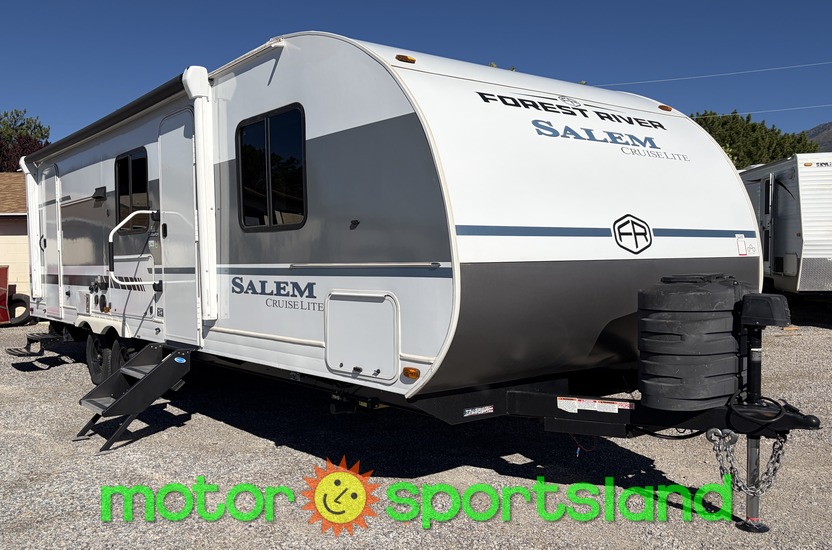
There is no single best truck for towing a travel trailer, and anybody who answers that in one sentence is selling you something. The right truck is the one that matches the trailer you actually want, loaded the way you actually camp, on the roads you actually drive. In Utah that means canyon grades, thin mountain air, and a parking spot at home that may or may not be legal. Here is how we walk customers through the match at our Millcreek and Spanish Fork stores.
What the numbers on a travel trailer spec sheet actually mean
Dry weight is the trailer as it left the factory with no water, no food, no bikes, no firewood, no clothes. It is a useful starting point and a terrible stopping point. Most of the new ones on our lot run from 2,690 to 6,700 pounds dry, with a median right around 4,931 pounds.
GVWR is the ceiling. It is the most that trailer is allowed to weigh once you are done loading it, and the people who built the frame and axles set it. Most of the new ones on our lot run from 3,765 to 8,800 pounds GVWR. Cargo capacity is what's left after you subtract dry weight and the weight of full propane (and often full fresh water) from GVWR. On most of the new ones on our lot it runs from 860 to 2,235 pounds. That gap is yours to fill, and families fill more of it than they expect.
Here is the part that changes how you shop. Your truck does not pull the dry weight. It pulls the loaded weight. Water alone is heavy, and most of the new ones on our lot run from 26 to 60 gallons of fresh capacity. Add a loaded fridge, a generator, camp chairs, a cooler, and a dog crate, and you are closer to GVWR than to dry. Shop as if the trailer will weigh its GVWR, because on the trip you remember most, it probably will.
| Spec | Typical low | Median | Typical high |
|---|---|---|---|
| Sleeps | 3 | 4 | 8 |
| Slides | 1 | 1 | 2 |
| Length (ft) | 17 | 25 | 31.58 |
| Ext Height (ft) | 9.83 | 10.67 | 11.25 |
| Hitch Weight (lbs) | 345 | 585 | 815 |
| Dry Weight (lbs) | 2,690 | 4,931 | 6,700 |
| Cargo Capacity (lbs) | 860 | 1,500 | 2,235 |
| Fresh Water (gal) | 26 | 40 | 60 |
| Grey Water (gal) | 27 | 34 | 70 |
| Black Water (gal) | 26 | 30 | 49 |
| Furnace BTU | 8,000 | 20,000 | 35,000 |
| AC BTU | 5,000 | 13,500 | 15,000 |
| Axle Count | 1 | 2 | 2 |
| GVWR (lbs) | 3,765 | 6,229 | 8,800 |
| Solar (watts) | 200 | 200 | 400 |
Matching a truck to a travel trailer without guessing
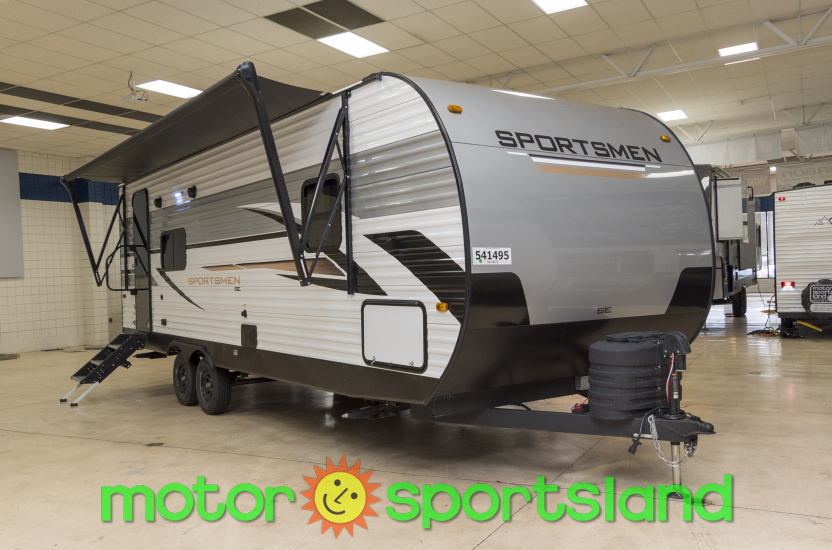
Class is a category, not a rating. Two trucks that look identical in the same parking lot can be far apart in what they are allowed to carry and pull, depending on cab, bed, axle ratio, drivetrain, and the options the first owner checked.
So read the truck, not the badge. Open the driver's door and look at the yellow sticker on the jamb. It tells you the combined weight of occupants and cargo that truck can carry, and that number belongs to your truck, not to your neighbor's. That sticker settles most arguments before they start.
It also saves people from the worst version of this story, which is falling in love with a floorplan the truck in the driveway was never going to handle.
Hitch weight, payload, and the quiet problem at the tongue
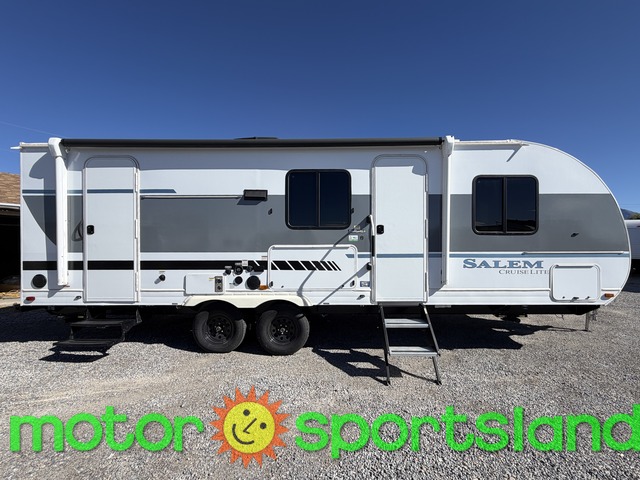
Hitch weight is the downward load the trailer's coupler puts on the ball. Most of the new ones on our lot list hitch weights from 345 to 815 pounds, with a median near 585 pounds. On a properly balanced trailer it should sit around ten to fifteen percent of the loaded trailer weight.
All of that lands on your truck's payload, not on its tow rating. So do the people in the cab, the cooler behind the seat, the tools in the bed, the hitch hardware itself, and the firewood you picked up in Heber. Count payload first, then talk tow numbers.
Weight distribution, sway control, and Utah canyon grades
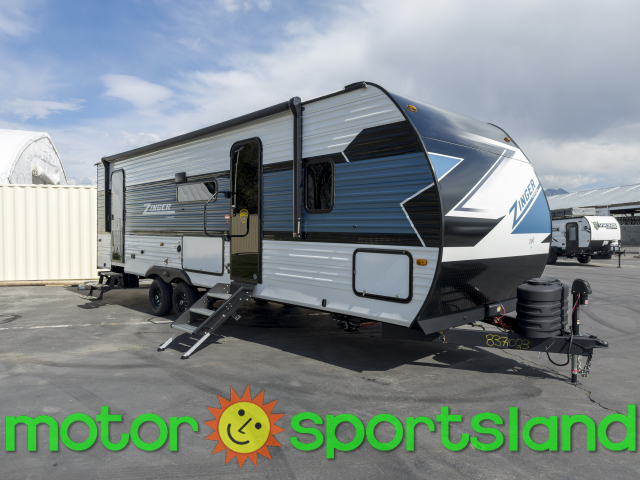
A weight distributing hitch uses spring bars to move part of that tongue load forward onto the truck's front axle and back onto the trailer's axles. The benefit is steering that still feels like steering and braking that stays level. Sway control, whether it is built into the hitch head or added as a friction bar, resists the side to side shove you get from a semi passing on I-15 or a crosswind out on the flats. Our median new travel trailer in stock rides on two axles, but tandem axles are no substitute for a hitch that is set up correctly. Many trucks require weight distribution above a certain trailer weight, so check the manual, because that requirement is not optional if you want the rating to mean anything.
Utah adds its own homework. Coming down, gravity does not care about your tow rating, so use lower gears and let the engine hold you back rather than cooking the brakes. Mountain nights get cold even in July. Among new units that list a furnace rating, most run from 8,000 to 35,000 BTU. Southern Utah heat runs the other direction. Among new units that list an AC rating, most run from 5,000 to 15,000 BTU. Solar helps when you park away from power; among new units that list solar, most run from 200 to 400 watts.
Measure your storage spot before you buy. Listed exterior height on most of the new ones on our lot runs from 9.83 to 11.25 feet, and length on most of the new ones on our lot runs from 17 to 31.58 feet. Salt Lake City limits trailer parking on city streets, and other cities may too. Salt Lake City, for example, bans leaving a trailer on a public street for more than 48 hours, and HOAs may add their own rules, so check before you buy. Knowing both numbers now is cheaper than learning them from a letter in the mail.
Frequently asked questions
Can a half-ton truck tow a travel trailer from your lot?
Many can. Whether yours can depends on your specific truck's payload and towing figures, which live on the door jamb sticker and in the owner's manual, not in the class name.
Should I shop by dry weight or GVWR?
Shop by GVWR and treat dry weight as trivia. Dry weight ignores water, propane, food, and gear. Cargo capacity on most of the new ones on our lot runs from 860 to 2,235 pounds, and families use a surprising amount of it. If the trailer works for your truck at GVWR, you never have to do math at the campground.
Do I really need a weight distribution hitch?
If your truck's owner's manual calls for one at your trailer's weight, yes, and we would recommend one anyway on most of what we sell. Listed hitch weights on most of the new ones on our lot run from 345 to 815 pounds, and loaded gear up front adds to that. Sway control on top of it is cheap insurance for canyon wind.
How does Utah altitude change what truck I need?
Thinner air means less power, and some truck makers tell you to reduce the gross combined weight rating by about 2% per 1,000 feet of elevation, so check your manual's high-altitude note. It also changes the experience, so a match that is already near the edge at sea level will feel worse over a Utah pass. If most of your trips involve mountain grades, give yourself extra margin in payload and towing capacity, and come talk to us about which lengths and weights fit your truck with margin for mountain grades.
Browse travel trailers for sale in Utah or all our inventory.
