
Resealing an RV Roof

Sealing over dirt, chalk and old cracked sealant
The most common mistake we see is fresh sealant laid straight onto a roof that hasn't been cleaned. Utah sun and dry air chalk up a roof fast, and that powdery film is what the new bead sticks to instead of the roof. A month later it peels off in a strip. Resealing an RV roof starts with a wash, a scrub around every seam and vent flange, and a full rinse.
The right way: clean the roof, let it dry completely, then pull the loose, cracked, lifting sealant off by hand or with a plastic scraper. Leave the sound, well-bonded material in place. You're not stripping the roof bare, you're removing what's already failed.
Guessing which lap sealant goes where
There are two different kinds of lap sealant, and they're not interchangeable. Self-leveling is for horizontal surfaces, so it flows out and settles into the seam on its own. Non-leveling (also called non-sag) is for vertical and sloped surfaces where you don't want the bead running downhill on you. Owners grab one tube, use it everywhere, and end up with sealant pooled at the bottom of a refrigerator vent or sitting in a lump on a flat seam.
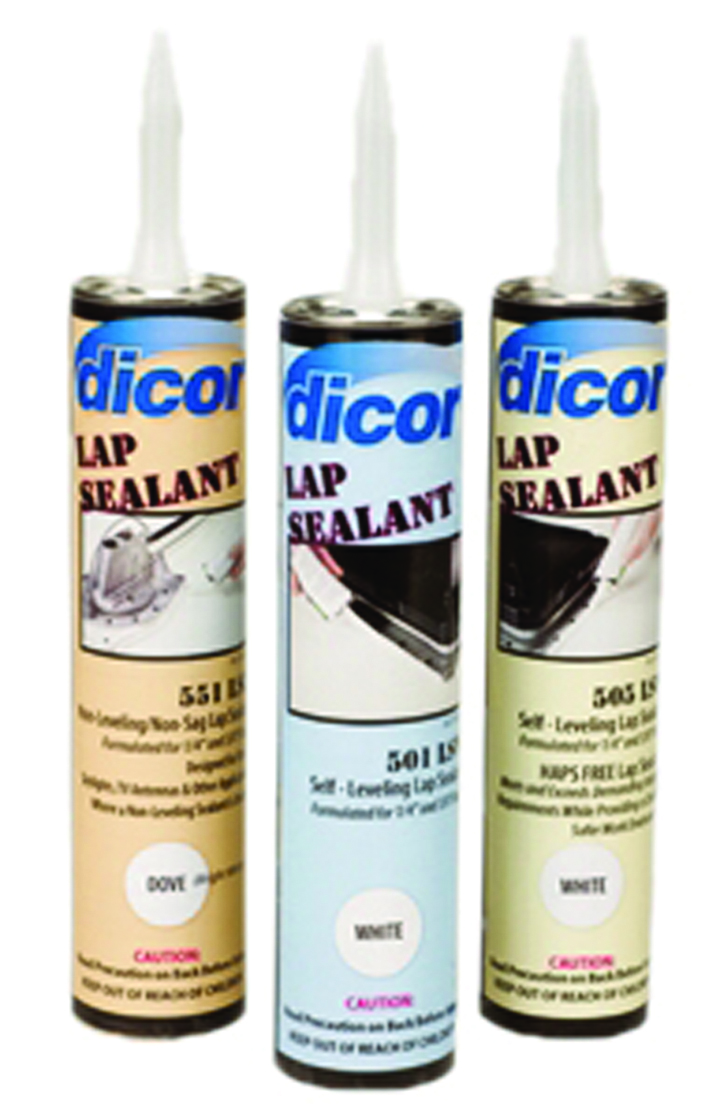
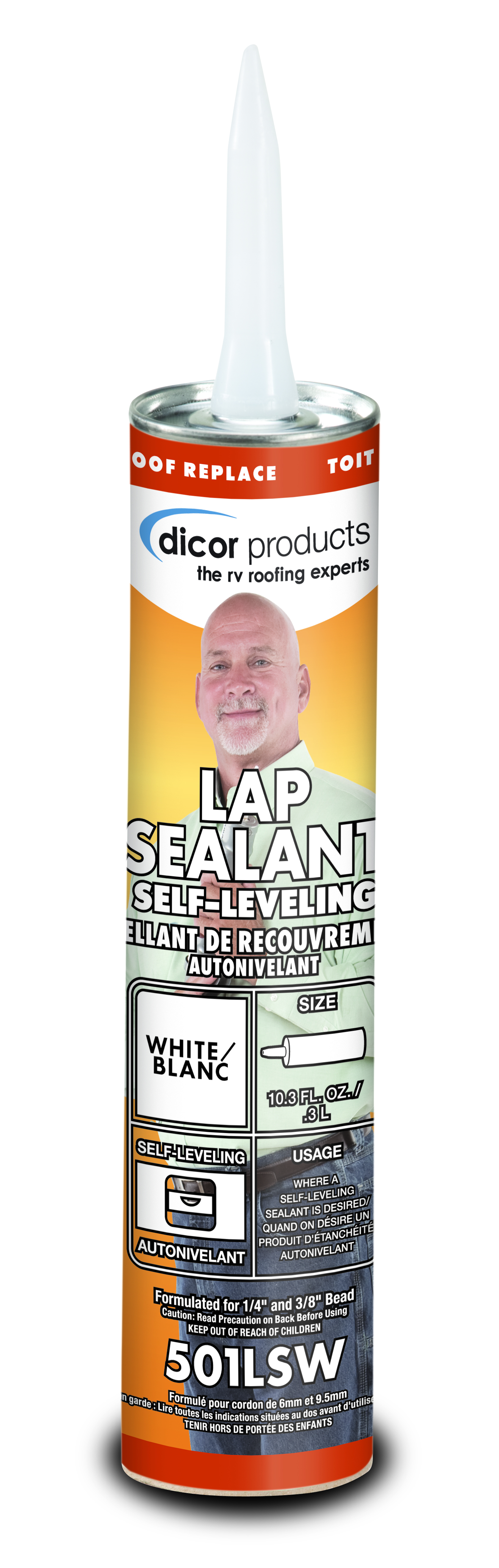
Dicor Self Leveling Lap Sealant comes in black, tan and grey, so you can match what's already on your roof instead of leaving a stripe people can see from the ladder.

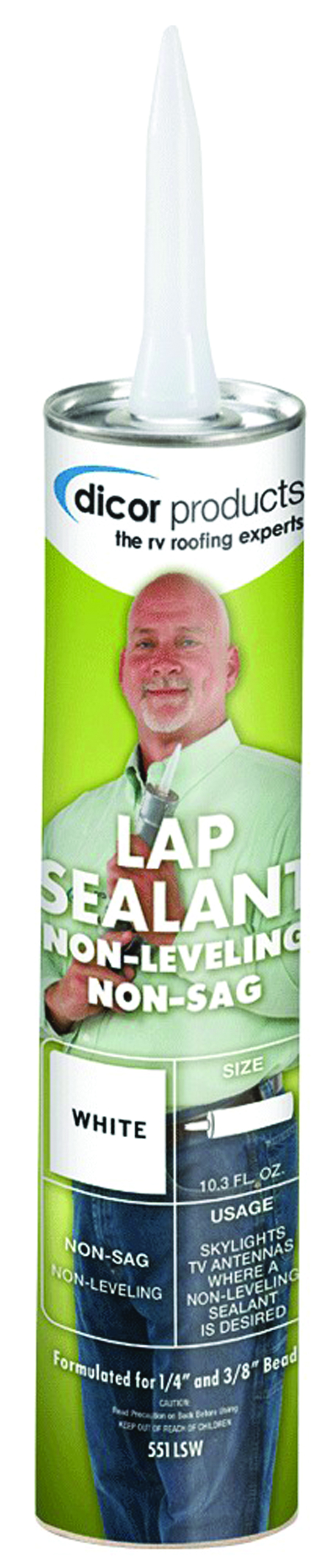
For the vertical faces, Dicor Non-Leveling/Non-Sag Lap Sealant is the one you want, and it's stocked in black and tan. Most roofs need both types on the same afternoon, which catches people off guard when they've only bought one.
Bring your RV's information to the parts counter in Millcreek or Spanish Fork and we'll sort out which type and which color you need for your roof. Color matching is easier in person than off a screen.
Trying to fill a tear or a split with sealant alone
A bead of lap sealant is for seams, flanges and screw heads. It isn't a patch. When there's an actual opening in the roof membrane, a gouge from a branch or a split at a corner, filling it with sealant gives you something that looks fixed for a season and then opens right back up as the roof moves.
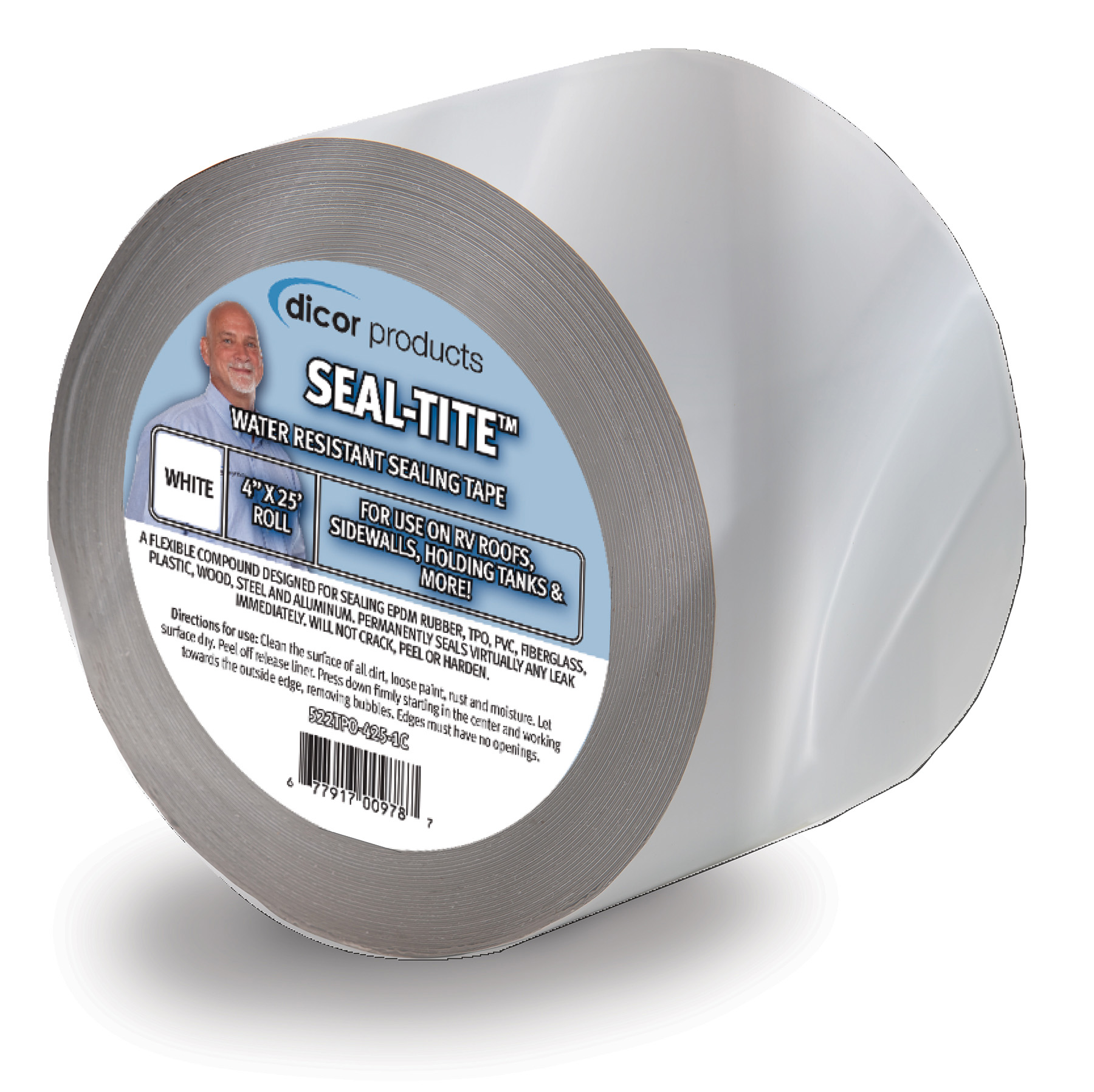
What works is bridging the opening with tape first, then sealing the edges. Dicor Self Adhesive Patch For Epdm, Metal And Fiberglass is their DiSeal Sealing Tape, 4 inches wide on a 50 foot white roll. The surface has to be clean and dry for the adhesive to grab, which is the same prep work from the first section. Press it down firmly across the whole width, working out air as you go.
Doing it in the middle of a Utah summer afternoon
Roof temperature matters more than air temperature. A dark roof at 2 p.m. in July in Salt Lake can get hot enough that sealant skins over before it levels, and hot enough that you'll rush the job just to get off the roof. Dry air here speeds up surface cure too, which sounds helpful until you're trying to tool a long bead.
Work early morning or on an overcast day. Check the forecast for rain, because a fresh bead that gets rained on before it sets up is a bead you'll be redoing. Spring and fall are the two best windows in Utah, and that lines up with most owners' inspection habits anyway.
Skipping the inspection and only fixing what's obviously leaking
By the time you see a stain on the ceiling, water has been in the roof for a while. Owners who only reseal where they see a problem keep chasing new spots every year. A roof inspection means getting up there (safely, with a ladder you trust and a roof that's rated to walk on) and going over every penetration: vents, skylight, antenna base, plumbing vent, A/C shroud flange, every screw head, and the full length of the front and rear seams.
Twice a year is the usual rhythm, plus after any hailstorm or a trip under low branches. Write down what you find so you know what's moving year to year.
Resealing an RV roof when you don't know what the membrane is
Roofs are EPDM rubber, TPO, fiberglass or metal, and owners often don't know which one they've got. That matters because cleaners and sealants aren't universal. People buy a product, use it, and find out later it wasn't right for their membrane.
If you're not sure, don't guess. Our parts counter can look up your coach and tell you what your roof is and which products go with it. Say what you know (year, make, model, floorplan) and we'll take it from there.
Call the service department if you find soft spots underfoot, sagging in the ceiling, delaminated walls or any place the roof decking flexes when you press on it. Those are structural problems and they need to be opened up and repaired properly, not sealed over.
Also call us if the leak is near the air conditioner, a powered vent or any wiring, or if the roof membrane is lifting away from the decking over a large area.
Laying down too much, or too little
A heavy glob of self-leveling sealant doesn't cure any better than a proper bead. It traps uncured material underneath, stays soft, picks up dirt and eventually cracks. Too thin is the other direction, and that's common when people stretch one tube across a whole roof to save a trip.
Run a consistent bead that covers the old sealant edge to edge with a little overlap onto sound material on both sides. Let self-leveling do its own spreading, don't smear it around. On vertical faces with the non-sag type, tool it in so it makes contact everywhere, and look for pinholes at screw heads, since that's where water finds its way in.
Forgetting the roof is only part of the water path
A sealed roof pushes water somewhere, and that somewhere needs to be clear. Check the gutters and drip rails along both sides. Check that the awning rail hasn't pulled loose. Look at the front cap seam and the rear cap seam where the roof meets the sidewall, because that joint takes a lot of flex on Utah's rougher roads and in cold snaps.
Sealant around a slide-out topper or a ladder mount gets missed constantly. Those are penetrations too.
Frequently asked questions
How often should I reseal my RV roof?
Inspect the roof twice a year and touch up any sealant that's cracked, lifting or separating. Full resealing is less frequent and depends on what the inspection shows, so the inspection is the habit to build.
Can I put new lap sealant right over the old sealant?
Yes, as long as the old sealant is clean, dry and still well bonded to the roof. Anything cracked, chalky or lifting has to come off first, or the new bead goes down over a surface that's already failing.
What's the difference between self-leveling and non-leveling lap sealant?
Self-leveling flows out and settles on horizontal surfaces, and non-leveling (non-sag) holds its shape on vertical and sloped surfaces. Dicor makes both, and most roofs need each one in different spots.
Which color should I buy?
Match the sealant already on your roof. Dicor's self-leveling comes in black, tan and grey, and the non-sag in black and tan, so bring your coach details to our parts counter in Millcreek or Spanish Fork and we'll help you pick.
Should I just have the service department do it?
If the roof has soft spots, if you're not comfortable working up there, or if the leak is anywhere near the air conditioner or wiring, have our service department handle it. Routine sealant touch-up on a sound roof is a job plenty of owners do themselves.
Parts in this post:
- Dicor Self Adhesive Patch For Epdm, Metal And Fiberglass
- Dicor Lap Sealant
- Dicor Lap Sealant
- Dicor Lap Sealant
- Dicor Lap Sealant
- Dicor Lap Sealant
Order now: call our parts counter at 801-262-2922, or stop in at either store, Millcreek in Salt Lake City or Spanish Fork. Browse all our RV parts and accessories.
