
Checking RV Roof Seals Before Snow

Snow turns a small seal crack into a real repair
A hairline gap in roof sealant in July is a nuisance. The same gap in January is a problem, which is why Checking RV Roof Seals Before Snow is worth an hour of your Saturday. Salt Lake and Utah County both sit in a freeze-thaw pattern all winter. Daytime sun softens the snow on your roof, water runs into whatever opening it can find, then the temperature drops after dark and that water freezes and expands. Repeat that twenty or thirty times and a crack you could barely see in the fall is wide enough to wick water into the ceiling.
Snow load also changes how water behaves up there. Rain runs off. Snow sits, sometimes for weeks, and it keeps a shallow pool of meltwater against every seam, screw head and flange on the roof. Sealant that was good enough to shed a quick summer storm gets a much longer test. Add road salt and sand from the canyons if you're towing in winter, and the old sealant on an uncovered roof takes a beating.
The other reason to do it now: by the time you notice a stain on the ceiling panel or a soft spot near a cabinet, the repair is no longer a tube of sealant. Water travels sideways along framing and insulation, so the damage often shows up a long way from where it got in. Catching a split bead in November is cheap. Chasing delamination in April is not.
How Checking RV Roof Seals Before Snow actually goes
Pick a dry, calm day when the roof isn't frosty and the surface has had a chance to warm a little. Cold sealant is stiff and brittle, and cold roofs are slick. If your rig doesn't have a ladder, or you aren't confident that your roof will carry your weight, stop there and let our service department do the inspection. Walking a roof you aren't sure about is how people put a knee through a panel.
Start by sweeping the whole roof clean. Leaves, pine needles and grit hide cracks, and anything organic sitting on a seam holds moisture against it. A soft broom and then a wash with a mild soap works fine. Let it dry. You want to see the actual color and texture of the sealant beads, not a film of dust.
Then go penetration by penetration. Every hole in the roof has a bead around it, and each one is worth looking at individually rather than scanning the roof as a whole. Work a pattern so you don't skip anything: the front cap seam, the back cap seam, both long edge seams, then the vents, the skylight, the antenna base, the refrigerator vent, the plumbing vents, the fasteners on any racks or solar brackets, and the air conditioner shroud flange.
What you're looking for is pretty specific. Cracks that run across the bead rather than along it. Sealant that has pulled away from the flange on one side and left a visible line. Chalky, dried-out areas that crumble when you press a thumbnail against them. Bubbles or lifted edges. Screw heads sitting in a depression where the sealant has shrunk away from them. Any spot that is sticky, soft or gummy, which usually means it's failing instead of curing.
Inside the coach, walk the ceiling with the lights off and a flashlight held at a low angle. Discoloration, a ripple in the ceiling panel, or a musty smell in a closet or overhead cabinet all point to water that already got in. Press gently along the ceiling edge where it meets the wall. Soft is bad. Report that to our service department rather than sealing over the top of it and hoping.
Most owners do this twice a year, spring and fall, and plenty of full-timers check more often. The fall pass matters more in Utah because of what the roof is about to be asked to do.
The sealants we carry at the parts counter
For the flat parts of the roof, the self-leveling tubes are what you want, because they spread out and settle into a horizontal seam instead of sitting up in a ridge. We stock Dicor Self Leveling Lap Sealant in black for darker roofs and trim, and it's the one most people reach for on vent flanges and screw heads on the roof deck.
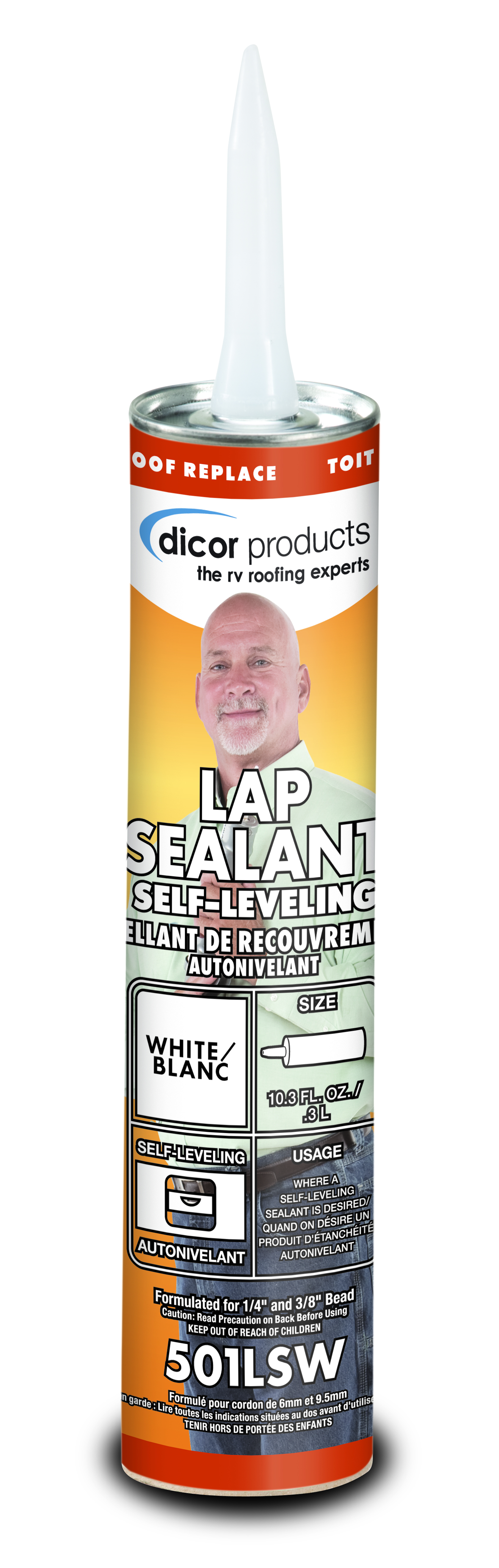
Color matters more than people expect, mostly because mismatched sealant is the first thing you see when you pull into a campground. We also carry Dicor Self Leveling Lap Sealant in tan and in grey, so you can get reasonably close to what's already on your roof or to the caps and trim. Bring a photo of your existing beads if you aren't sure which one to grab and we'll help you compare at the counter.
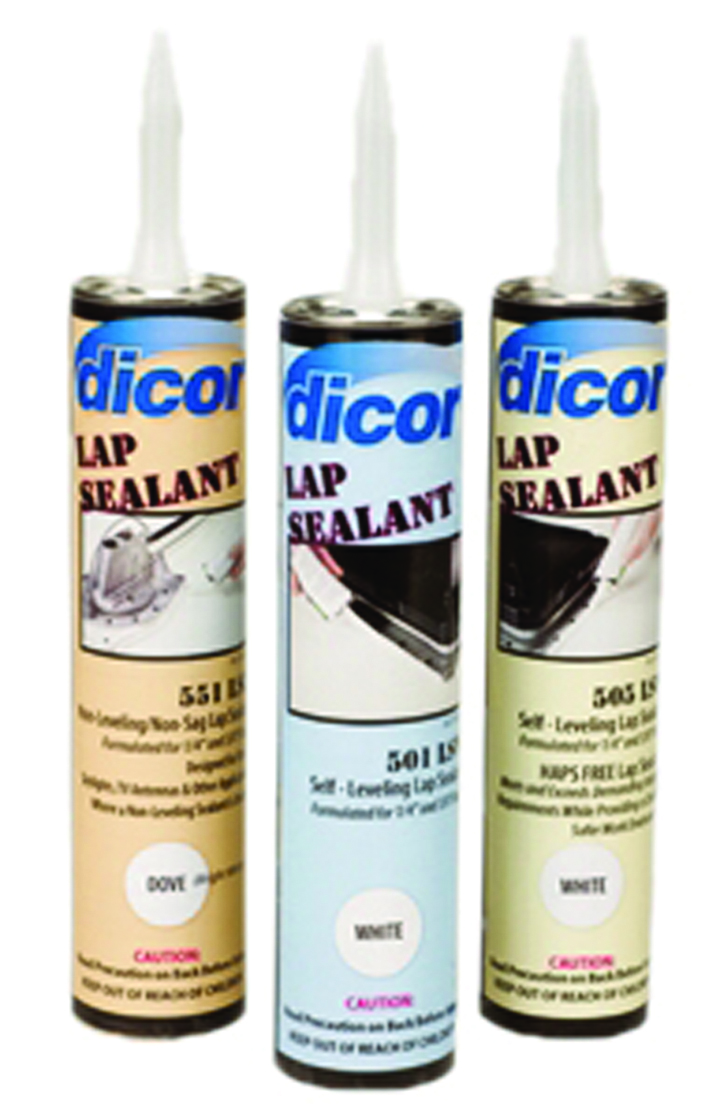
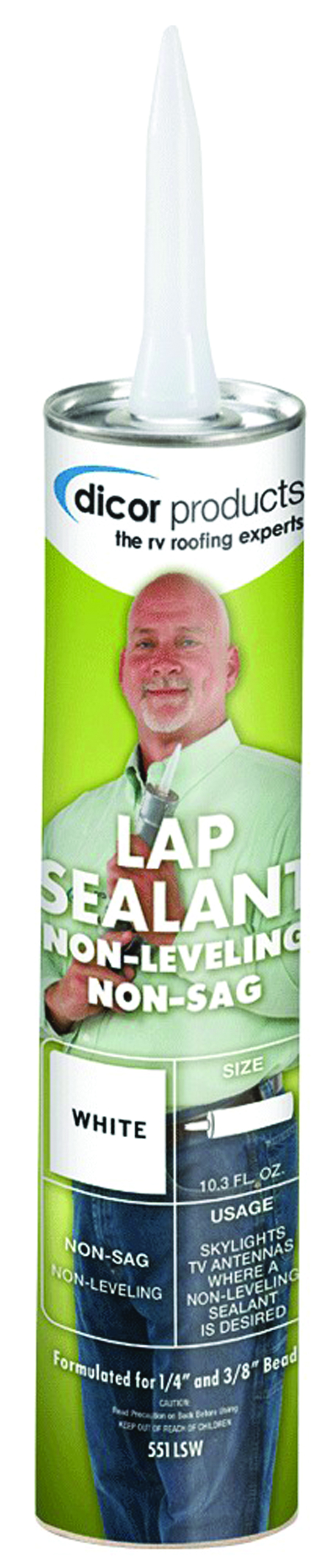
Vertical and sloped surfaces need something that stays put. A self-leveling product will run down a sidewall or a cap radius and leave you with a mess. That's what Dicor Non-Leveling/Non-Sag Lap Sealant in black is for, and it's the right tube for the front and rear cap transitions, awning hardware brackets and anything on a vertical face.

The same non-sag formula comes in tan, so you aren't stuck choosing between a sealant that holds its shape and one that matches. Most owners end up buying both a leveling and a non-leveling tube in the same trip, because a roof inspection almost always turns up work in both orientations.
One last note on buying sealant: compatibility with your specific roof material is not something to guess at. Roof membranes vary, and the wrong product can soften or fail to bond. Tell our parts counter in Millcreek or Spanish Fork what you're working on and we'll match the sealant to your rig instead of you finding out in February.
Vent covers earn their keep in winter
While you're up there, look at the vent lids. UV in Utah is hard on plastic, and a lid that's already chalky and crazed is the one that cracks under a snow load or in a wind event. A broken lid leaves an open hole, and in winter that means snow blowing directly into the coach.
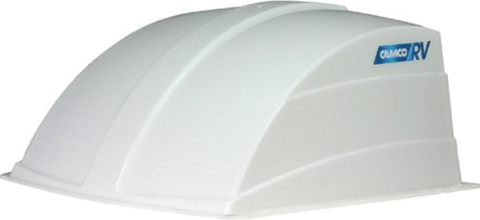
A cover over the vent lets you leave the vent cracked for airflow without taking on weather, which helps with the condensation that builds up inside a closed-up trailer during cold months. We stock the Camco Roof Vent Cover in white. Our parts counter can confirm which cover fits your vent opening before you buy it, so bring measurements or the rig itself.
Anything beyond sealant and lids goes to the shop. If the roof decking feels spongy underfoot, if a vent or fan has wiring involved, if the refrigerator or furnace vent is part of the problem, or if you're looking at a full roof reseal, our service department should handle it. Propane appliances and roof structure aren't driveway jobs.
Frequently asked questions
How often should I reseal my RV roof?
Inspect the seals twice a year, typically in spring and before winter, and spot-repair whatever looks cracked, chalky or pulled away. Full resealing happens on a much longer cycle and depends on how the rig is stored and how much sun it sees.
Can I put new sealant right over the old bead?
If the old sealant is clean, well bonded and just a little cracked, a fresh bead over the top is common practice. If it's crumbling, lifting or peeling off in sheets, it needs to come off first so the new material bonds to the flange instead of to failing sealant.
Do I need both self-leveling and non-sag sealant?
Usually yes. Self-leveling goes on horizontal roof surfaces where it can spread and settle, and non-sag goes on vertical or steeply sloped surfaces where a runny product would sag out of place.
Should I clear snow off my RV roof?
Deep, wet snow is heavy, and getting up on a cold roof to shovel it is risky for both you and the membrane. Talk to our service department about your situation rather than climbing up with a shovel.
Can the parts counter tell me which sealant color and vent cover I need?
Yes. Bring your rig, photos of the existing sealant beads, or measurements of the vent opening to Millcreek or Spanish Fork and we'll match the product to what you actually have.
Parts in this post:
- Dicor Lap Sealant
- Dicor Lap Sealant
- Dicor Lap Sealant
- Camco Camco Roof Vent Cover-White
- Dicor Lap Sealant
- Dicor Lap Sealant
Order now: call our parts counter at 801-262-2922, or stop in at either store, Millcreek in Salt Lake City or Spanish Fork. Browse all our RV parts and accessories.
