
Travel Trailer Hitch and Coupler Locks

Why do I need a lock on a trailer that's already parked?
A trailer sitting still is easier to steal than one hooked to a truck. Anyone with a ball mount and a few minutes can back up, drop the coupler on, and drive off. Travel trailer hitch and coupler locks block that by filling or covering the coupler so it can't seat on a ball. In winter, when your rig sits for weeks at a stretch and nobody is walking past it every day, that matters more. Snow cover and short days work in a thief's favor, not yours.
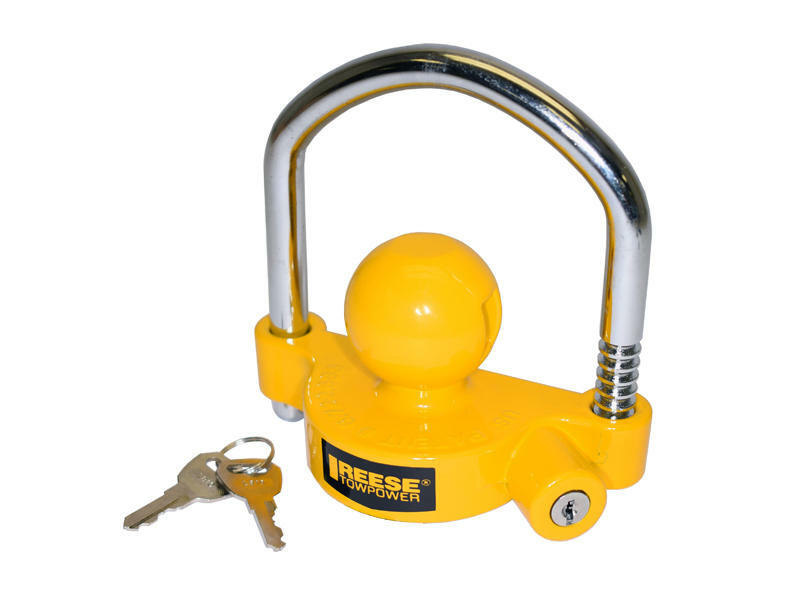
We keep a couple of options at both parts counters. The Universal Coupler Lock from Reese is the straightforward one, and the Global Travel Trailer Lock W/Keys from AP Products covers the same job in black.
What's the difference between a hitch lock and a coupler lock?
A coupler lock goes on the trailer, in or over the coupler socket that drops onto the ball. It stays with the trailer whether it's hooked up or parked. A hitch lock (sometimes called a receiver lock or pin lock) goes on the tow vehicle and keeps the ball mount from sliding out of the receiver. For a trailer stored for the winter, the coupler lock is the one doing the work. The hitch lock matters more if you leave a ball mount in the receiver year round.
Owners use both terms loosely, so if you walk in asking for a hitch lock we'll ask which end of the setup you mean.
Which lock should I use for winter storage?
If the trailer is unhitched and sitting, you want something on the coupler. The Reese Universal Coupler Lock is a common pick for that.
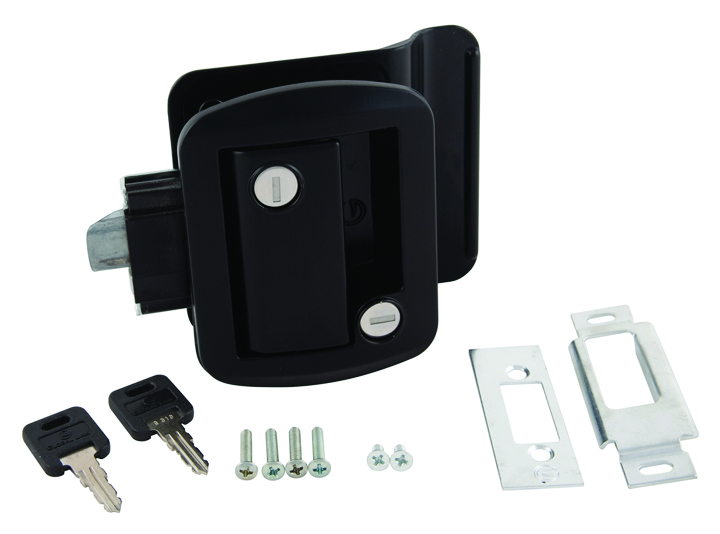
The Global Travel Trailer Lock W/Keys from AP Products is the other one we stock, and it comes in black with keys included. Losing the only key to a lock that's frozen onto your coupler in January is a bad afternoon, so keep a key somewhere other than the trailer.
Will one of these fit my coupler?
Couplers come in different sizes and shapes, and the socket on a 2-inch coupler isn't the same as the one on a 2-5/16. Latch styles differ too. Rather than guess from a photo, bring your trailer by or bring us the measurement off the coupler and we'll match it. Our parts counters in Millcreek and Spanish Fork do this all day. If you're not sure what you've got, we can look at the coupler stamp or the trailer's sticker and figure it out.
That's the part worth getting right. A lock that doesn't quite fit either won't close or will rattle loose over the winter.
How do I install one?
Coupler locks are a hand-install job. Open the coupler latch, set the lock in or over the socket per the instructions in the box, close it, and turn the key. There's no drilling, no wiring, no tools in most cases. Take the lock off before you hitch up, and put it back on as soon as you unhitch.
One habit that saves trouble: do it while your hands are still warm and the trailer is still in daylight. Locking up in the dark with gloves on is how keys end up in the snow.
Does cold weather affect the lock?
Moisture gets into any lock cylinder and freezes. A shot of dry graphite or a lock-specific lubricant before you store the trailer helps, and a cover over the lock body keeps most of the snow out. Don't pour hot water on a frozen lock. Let it thaw or warm the key.
Check the lock once or twice over the winter if the trailer is somewhere you can get to. You're looking for a cylinder that still turns and a body that hasn't been pried at. While you're out there it's a good time to glance at tire pressure and make sure the cover is still tied down.
Is a lock enough by itself?
No single lock stops a determined thief, but it buys time and it makes your trailer the harder target in the row. Most owners stack a couple of cheap deterrents on top of the coupler lock. Park the trailer nose-in against a wall or a fence so a truck can't get in front of it. Chock and block the wheels. Keep the tongue jack down. Note the VIN somewhere other than the trailer itself, and photograph the rig before you store it.
If your trailer has an electric tongue jack, electric brakes, or a battery disconnect you're not sure about, have our service department look at it rather than poking at the wiring yourself before storage.
Where can I get travel trailer hitch and coupler locks in Salt Lake City?
Both of our parts counters carry them, Millcreek and Spanish Fork. Walk in with your coupler size if you know it, or just describe the trailer and we'll sort it out. We also see a lot of owners come in during the first cold snap in November wanting to get everything locked down before the snow sticks, so earlier in the month is usually a quieter visit.
Frequently asked questions
Can I leave a coupler lock on while towing?
No. Take it off before you hitch up and store it inside the trailer or the tow vehicle, then put it back on once you've unhitched at the campsite or at home.
Does the AP Products lock come with keys?
Yes, the Global Travel Trailer Lock W/Keys from AP Products includes keys. Keep the spare somewhere other than the trailer.
What if I lose my key over the winter?
Call our parts counter and bring the lock in if you can get to it. Depending on the lock, a replacement unit is often faster and cheaper than trying to defeat the one you've got.
Should I lock the trailer's wheels too?
A lot of owners add a wheel lock or boot along with the coupler lock, especially for long-term storage. We can talk through what makes sense for where your trailer sits.
Parts in this post:
Order now: call our parts counter at 801-262-2922, or stop in at either store, Millcreek in Salt Lake City or Spanish Fork. Browse all our RV parts and accessories.
