
RV Wheel Chocks

Why RV Wheel Chocks matter more on a Utah grade
Flat campsites are rare around here. Between the canyon pullouts, the sloped gravel at Spanish Fork, and half the driveways in Millcreek running downhill toward the street, your rig is usually sitting on at least a little pitch. Gravity doesn't take a day off. RV wheel chocks are the cheap, simple part that keeps a trailer from creeping while you unhitch, and keeps it from rocking all night once you're set up.
They also save your hitch and your back. A trailer that rolls an inch while you're cranking the jack can bind the coupler hard enough to make re-hitching a two-person wrestling match.
What's the difference between a ramp chock and a locking tire chock?
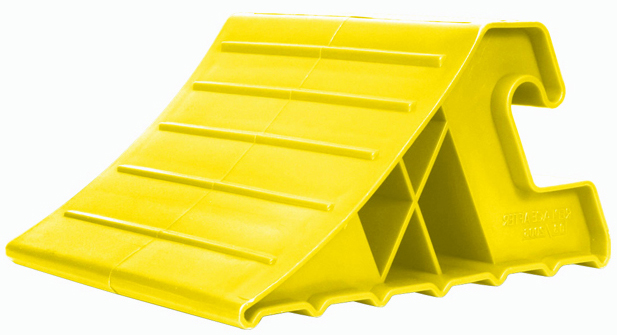
A ramp chock is the wedge you kick in front of or behind a tire. It blocks the tire from rolling in one direction, and it works on single axles, tandems, tow vehicles and motorhomes alike. The Camco Super Wheel Chock, Yellow is that style, made of hard plastic with UV inhibitors so the Utah sun doesn't chalk it out in one season. Camco lists it at 6-1/2 inches long by 8-1/2 wide by 10 deep.
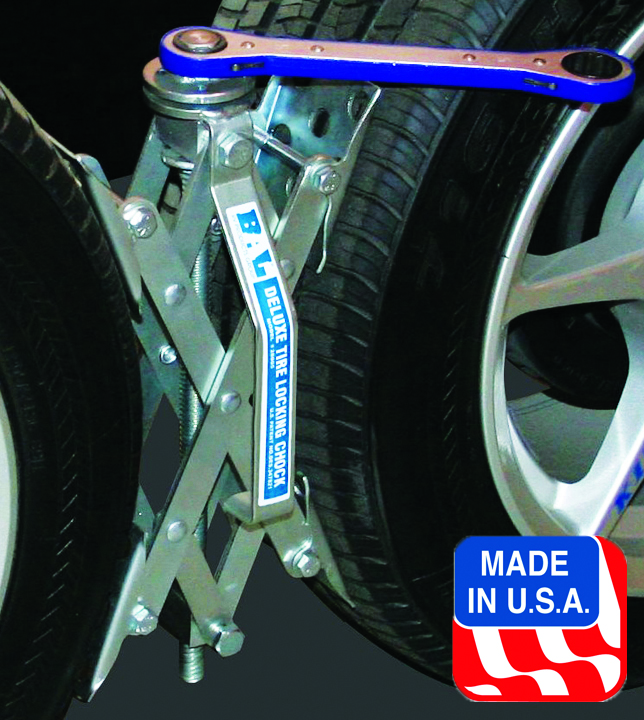
A locking tire chock is different. It goes between the two tires of a tandem axle and pushes them apart, so neither one can shift. That's the BAL X-Chock design. It works with the tire's natural movement instead of fighting it, and it retracts down to 1 3/8 inches for tight gaps, extending to 10 inches. It comes with a ratchet wrench, it's made in the USA, and it can take an optional 28015 padlock.
Do I need one or two of the X-Chocks?
Most tandem trailers get one per side, so you're looking at a pair. The BAL X-Chock, Tire Locking Chock; Pair covers both sides out of the box. If you already own one and lost or bent the other, or you just want to add a second set, the single BAL X-Chock Locking Tire Chock is sold on its own. Same design, same ratchet wrench, same retract and extend range.
Which chock do I put down first?
Chock before you unhitch. Every time. While the tow vehicle is still connected and holding the trailer, walk back and set your wedges on the downhill side of the tires, snug against the rubber. Then unhitch, then level, then add your locking chocks between the tandems if you run them.
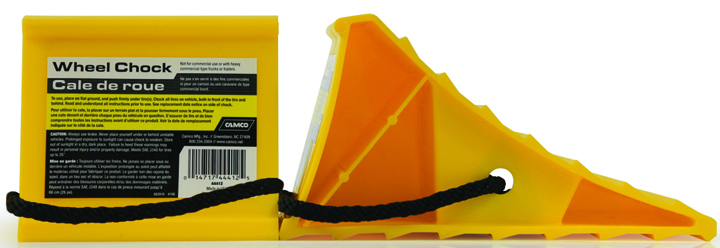
The Camco Wheel Chock With Rope, Yellow is handy for this part of the job. Same hard plastic with UV inhibitors, but the attached rope means you can place it and pull it back out without laying down in the gravel. On a steep site, a chock can wedge itself in tight once the trailer settles on it, and that rope is how you get it back.
Do stabilizer jacks or an auto-leveling system replace chocks?
No. Stabilizer jacks are built to stop the bounce and sway inside the trailer, not to hold weight or resist rolling. Auto-leveling systems lift and level, and some of them do hold a rig steady, but manufacturers still expect chocks under the tires. Don't count on the tow vehicle's parking brake either, especially on a grade with loose surface under it. If your trailer brakes feel soft or the breakaway system isn't behaving, let our service department look at it rather than guessing.
Will a chock work with my tires and wheel spacing?
That depends on your tire size and the gap between your tandem tires, which varies a lot from one trailer to the next. Bring us the year, make and model of your RV, or just a tape measure reading of the space between the tires at the closest point. Our parts counter in Millcreek or Spanish Fork can match you to the right chock. We'd rather spend two minutes on that than have you drive back with something that won't fit.
How many should I carry?
Plan on at least a pair of wedge chocks for the trailer, and more if you're on a noticeable slope. Many owners double up and set a wedge on both the front and back of a tire so it can't creep either direction when the ground is slick with snowmelt or loose with canyon gravel. A dually or a larger motorhome will want chocks on both sides of the rig.
Keep them where you can reach them without unpacking the pass-through. A bin right inside the door beats a chock buried under the sewer hose.
How do I keep them from cracking?
Hard plastic chocks last a long time if you don't run over them. The two Camco chocks here use UV inhibitors in the plastic, which helps with the sun exposure you get at Utah elevation. Rinse the grit off before they go back in the bay, check for cracks each spring, and replace any that have flex or a split in them. A cracked chock can let go under load, usually at the worst moment.
Frequently asked questions
Can I use the X-Chock on a single-axle trailer?
No. The X-Chock works by spreading against two tires on a tandem axle, so a single axle has nothing for it to push against. Use ramp-style wedge chocks on a single-axle trailer instead.
Should I chock the tow vehicle too?
Yes, if you're parked on any kind of slope and plan to leave it there. The same wedge chocks you use on the trailer work on a truck or SUV tire.
Does the X-Chock lock?
It can. BAL designed it to accept an optional 28015 padlock, which adds some security on top of its holding function. The padlock is sold separately.
Do chocks go in front of or behind the tire?
On a downhill slope, put them on the downhill side so the trailer can't roll away from you. If you're unsure which way the ground falls, set chocks on both sides of a tire.
Can your parts counter help me pick?
That's what we're here for. Stop by either store with your trailer details or the measurement between your tandem tires and we'll get you the right chock the first time.
Parts in this post:
- Camco Wheel Chock With Rope, Yellow
- BAL X-Chock, Tire Locking Chock; Pair
- Camco Super Wheel Chock, Yellow
- BAL X-Chock Locking Tire Chock
Order now: call our parts counter at 801-262-2922, or stop in at either store, Millcreek in Salt Lake City or Spanish Fork. Browse all our RV parts and accessories.
