
2026 Forest River Shasta Phoenix 218SE Tour

Standing outside the 2026 Forest River Shasta Phoenix 218SE
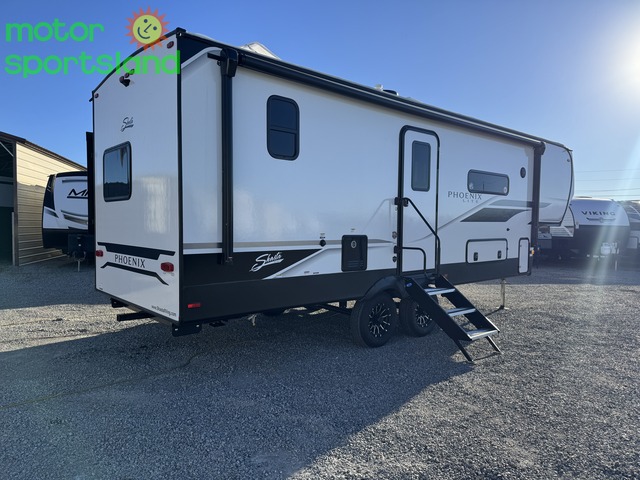
Walk up to it on our lot in Spanish Fork and the first thing you notice is that it doesn't tower over you. Eleven feet tall, eight feet wide, 29 feet end to end. That height matters more than people expect in Utah. You'll clear most gas station canopies without the pucker factor, and you'll take less of a shove from the crosswind coming out of Spanish Fork Canyon onto the flats. It rides on two axles with 15-inch tires, so you've got the redundancy that single-axle owners wish for when a tire goes on US-6.
Two slides push out on this floorplan, and that's the whole trick with a rig this size. Closed up it tows like something manageable. Open on the pad it lives like something a lot bigger.
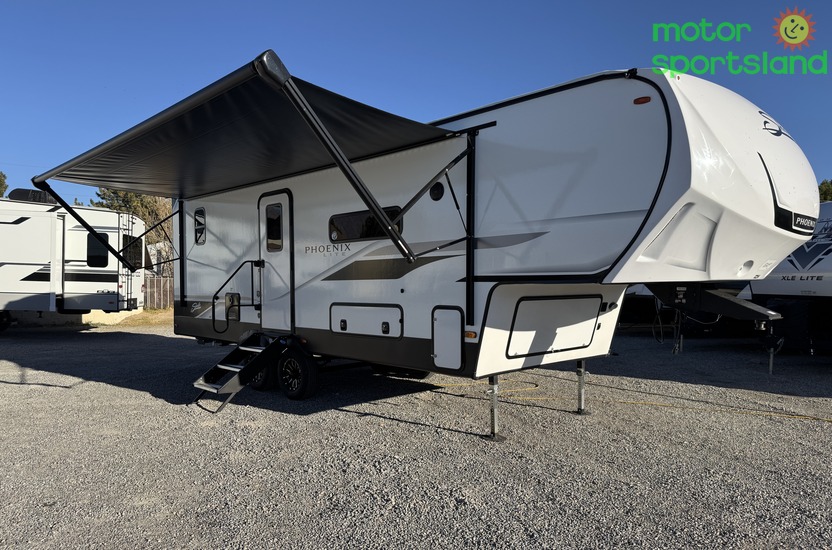
The awning runs 14 feet. In Green River in July, that's the difference between sitting outside and hiding inside. It also throws enough shade over the door that your fridge isn't fighting the afternoon sun every time somebody goes in for a drink.
Hitching it to what you already own
Here are the numbers you actually need. Dry weight is 7,365 pounds. GVWR is 8,500. That leaves 1,135 pounds of cargo capacity, which is honest for a unit this size: food, water, bedding, camp chairs, a generator if you carry one. Hitch weight comes in at 1,144 pounds dry, and it will climb as you load the front half, so go read the payload sticker inside your driver's door before you fall in love. Payload, not tow rating, is what stops most people.
The spread between 7,365 dry and 8,500 loaded is worth saying out loud. You're not working with a huge margin, so this is a trailer you pack deliberately rather than one you fill until the springs squat. The upside is that a modestly equipped truck can pull it up Soldier Summit without screaming, and coming down Price Canyon you're braking 8,500 pounds at worst.
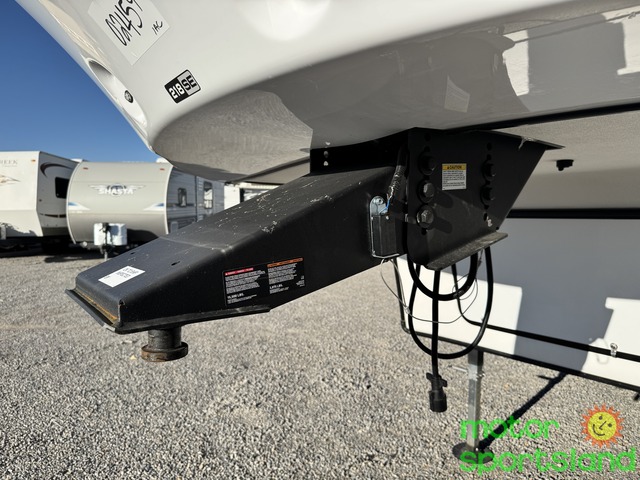
The jack does the lift and the leveling fore and aft, and it's a short crank or a short wait to get the coupler where it needs to be.
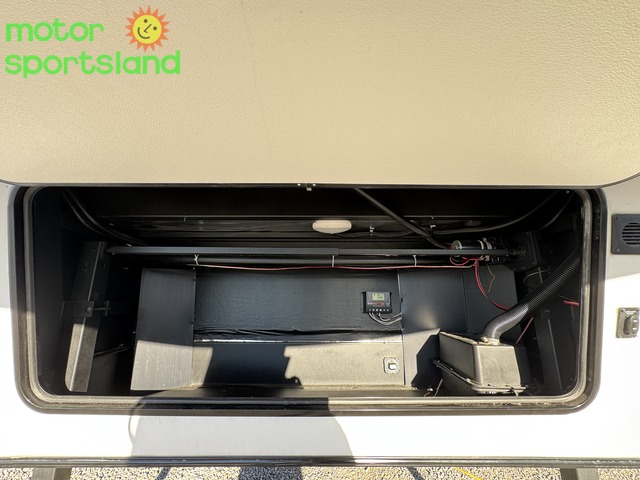
Then there's the pass-through storage. You can see in the photos how deep it runs, and it's the compartment that makes a trip work. Leveling blocks, sewer hose, firewood, fishing poles, the kids' sleds in March. Loading it from either side means you're not crawling in head first to find the one thing at the back.
Through the door
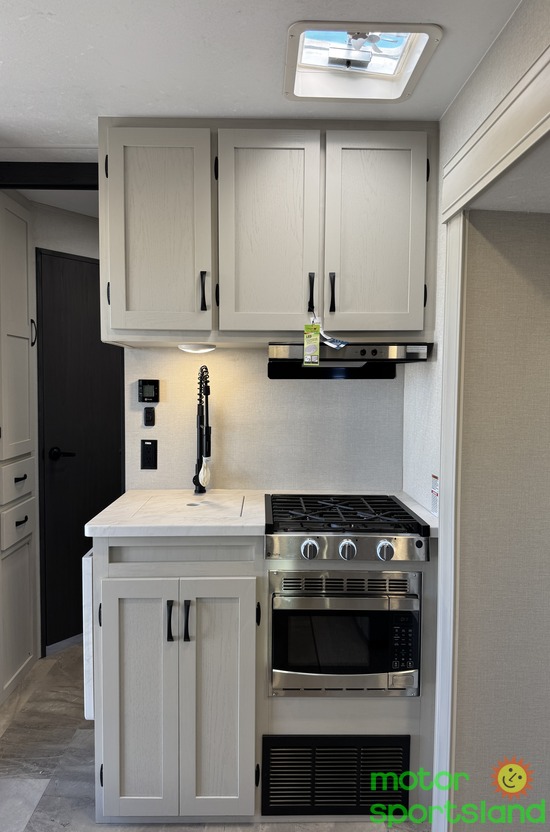
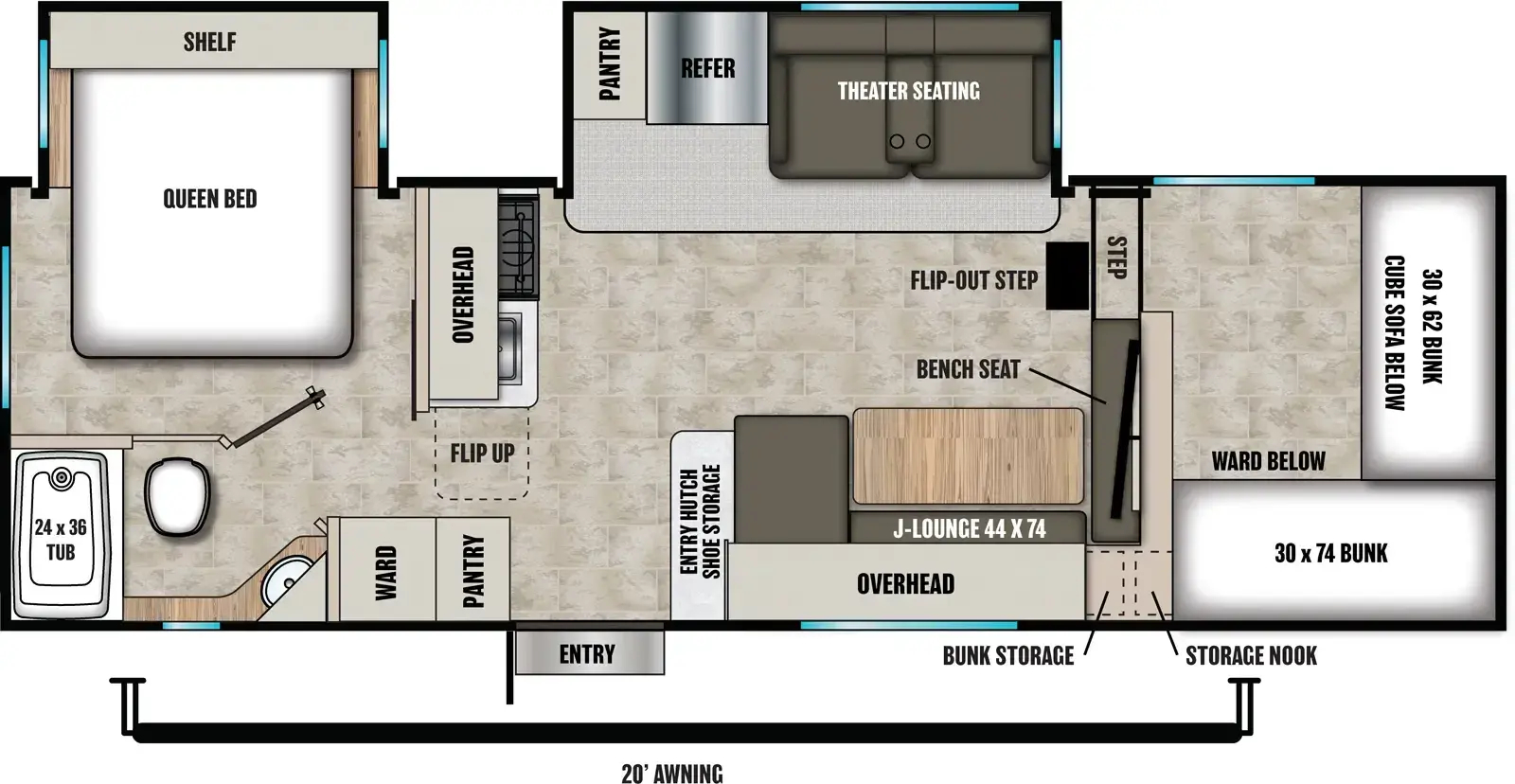
The kitchen gives you a three-burner cooktop, which is the real working minimum. Two burners means somebody's dinner goes cold. Three means eggs, bacon and coffee at the same time.
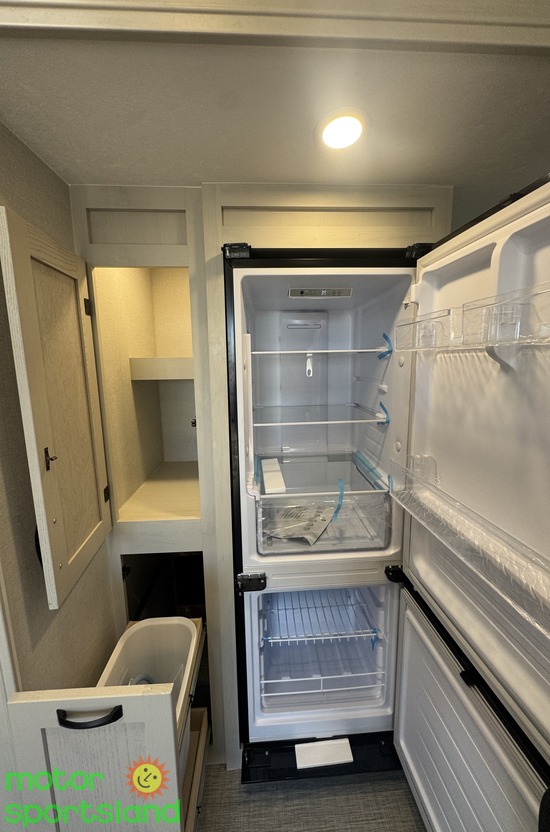
The refrigerator runs on gas or electric. On shore power it sips your amps. Off the grid it runs on propane and keeps milk cold for days without touching the battery, which is exactly what you want parked in the San Rafael Swell with no hookups in sight.
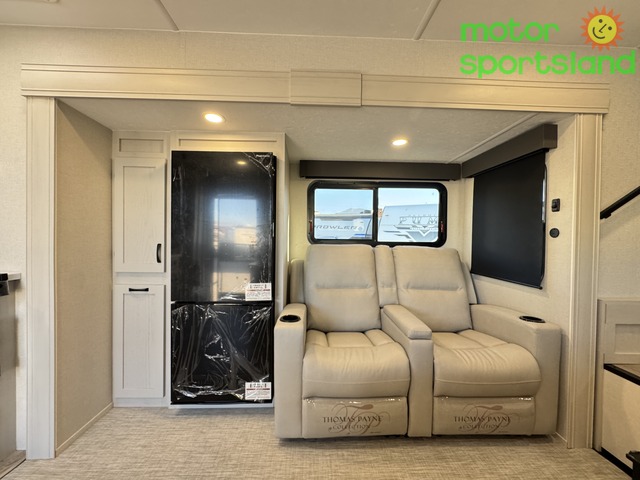
The dinette is where everybody ends up. Cards after dark, laptops when somebody has to work Monday morning, breakfast when it's 38 degrees outside and nobody wants to eat at the picnic table.
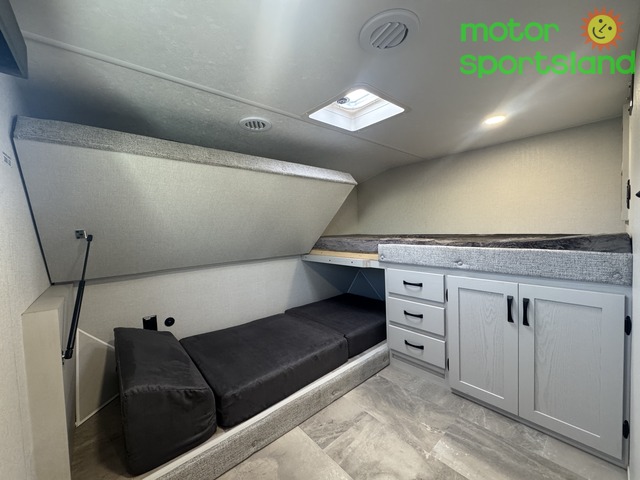
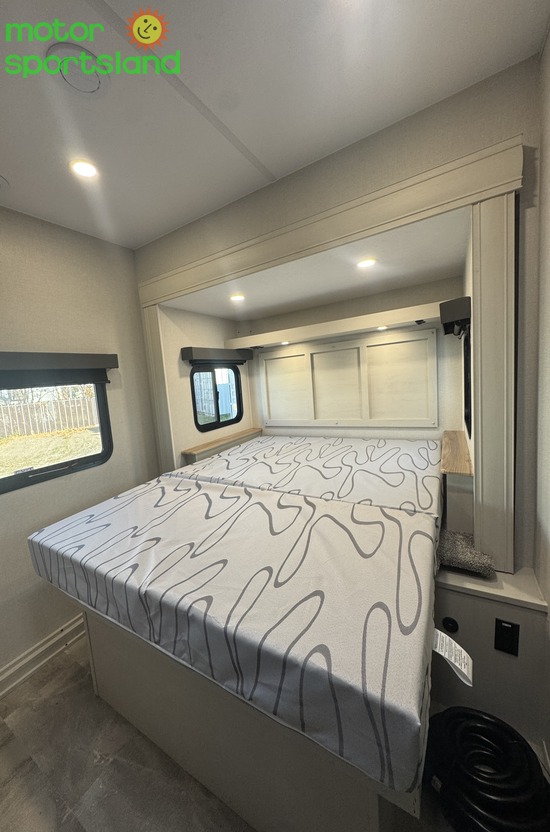
Shasta rates this one to sleep six. The bunks carry a good share of that, and bunks are the most honest kid-space in any trailer: they go to bed, you stay up, and nobody has to tear down a bed to make it happen.
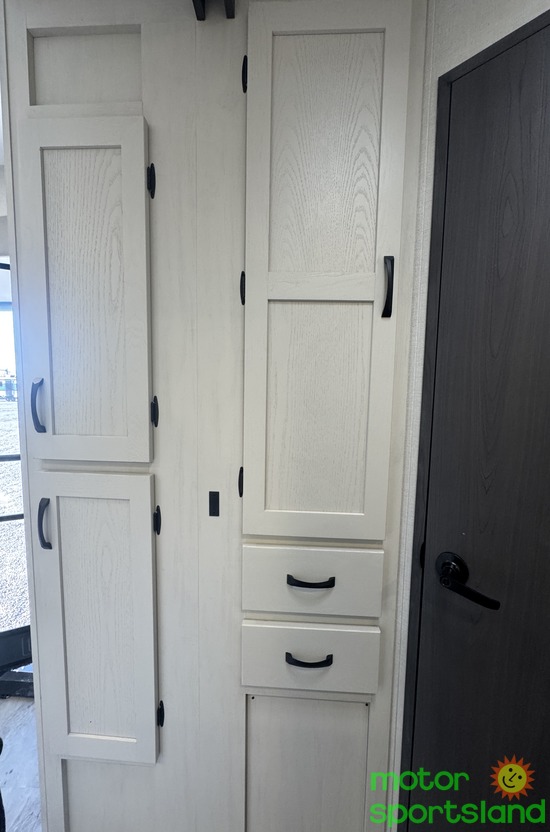
Closet storage means clothes hang instead of living in duffel bags on the floor for nine days. On longer trips to the Uintas or down to Lake Powell, that's the difference between a vacation and a camping-out-of-bags situation.
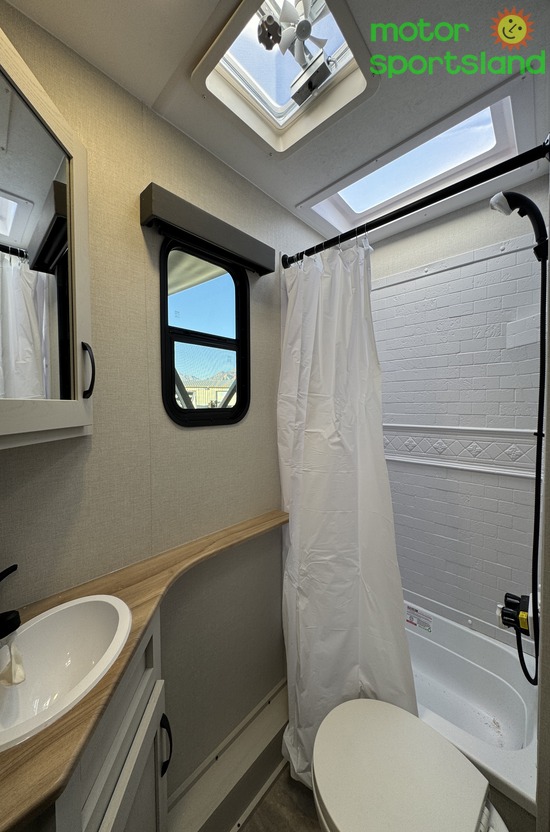
The bathroom has a radius shower, with the curved corner that buys you elbow room where a square pan wouldn't. Hot water comes from a gas/electric DSI water heater, so you light it off a switch instead of going outside with a lighter in the dark.
Numbers for dry camping and cold nights
Fresh water is 40 gallons, with 33 gray and 33 black. Those tanks are close enough in size that you won't strand yourself on one side of the equation. Forty gallons is a long weekend for a family that showers short, and you'll want jugs in the truck bed if you're staying out past that on BLM ground.
The furnace is 30,000 BTU. At 9,000 feet in the Uintas, a September night drops into the 20s, and that's a furnace with the capacity to recover the space fast after the door's been open. The air conditioner is 15,000 BTU, which is the bigger of the common sizes and earns it in Moab in August.
A 200-watt solar panel with battery and charge controller is available, and on a new travel trailer that's the package worth asking about if you camp away from pedestals. Also available: an interior convenience package, an exterior convenience package, linen decor, and roadside assistance.
If you've been looking at a Forest River travel trailer and your truck's payload is the constraint, the 218SE is one of the shorter, lighter answers among travel trailers for sale in Utah.
Frequently asked questions
What is the hitch weight on this floorplan?
Hitch weight is 1,144 pounds dry. That number rises as you load the forward storage and tanks, and it comes directly out of your truck's available payload, so check the door sticker.
What truck do I need to pull it?
Match it to the real numbers: 7,365 pounds dry, 8,500 GVWR, 1,144 pounds of hitch weight before you load a thing. Many properly equipped trucks handle those figures, but payload is the limiting spec, not tow rating.
How many people does it sleep?
Six, with bunks and a separate bedroom doing most of that work.
Can I dry camp in it?
Yes. You've got 40 gallons of fresh water, 33 gray and 33 black, a propane-capable refrigerator, and a 200-watt solar package with battery and charge controller available if you want to stay out longer.
How long is it, and will it fit my site?
It's 29 feet long, 8 feet wide and 11 feet tall, with two slides. That height clears more overhangs than taller units, and the length fits most Utah state park sites.
Come see this floorplan in person in Spanish Fork and open the slides for yourself, or check the live listing for current photos and details on the units we have on the ground.
In stock now:
Browse fifth wheels for sale in Utah, Forest River RVs or all our inventory.
