
2026 KZRV Durango 326RLT Walkthrough

Hitching up the 2026 KZRV Durango 326RLT
The 2026 KZRV Durango 326RLT sits on our Millcreek lot at 37.58 feet long and 12.75 feet tall, so the first thing we talk about is your truck. Dry weight is 11,110 pounds, GVWR is 13,500, and hitch weight comes in at 2,180. That pin weight rides over your truck's rear axle, so you're looking at a three-quarter-ton at minimum and realistically a one-ton if you plan to load the 2,390 pounds of cargo capacity this thing will carry. Two axles under it, eight feet wide, and a profile that tracks straight once you're rolling.
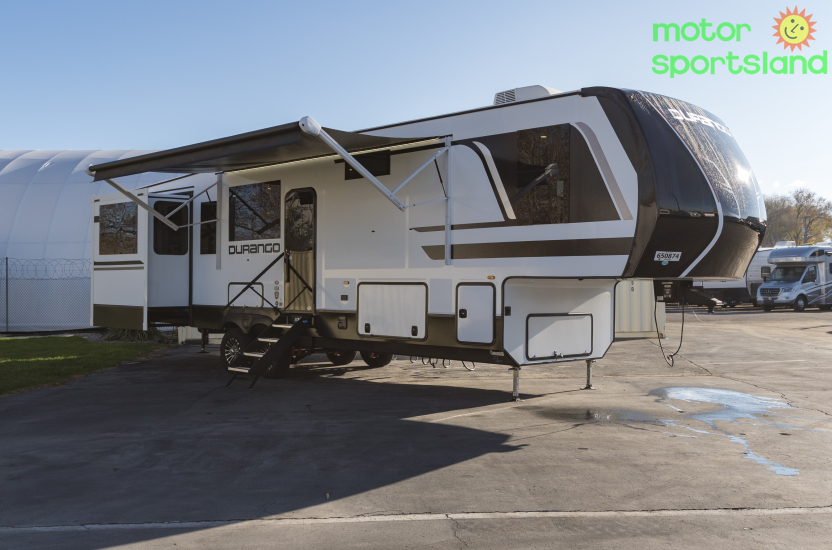
Walk the side of it before you back under the pin. Running your hand along the sidewall is how you learn a trailer, and this one gives you clean lines and a tall body that puts real headroom inside.
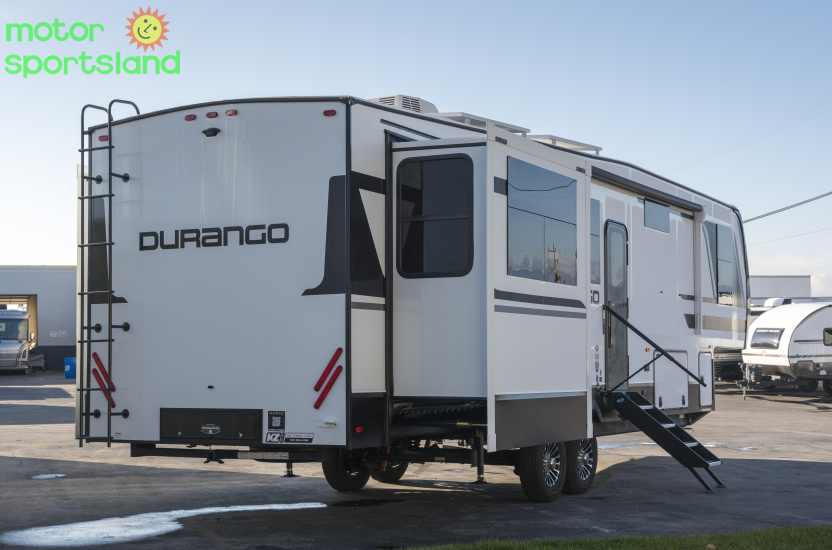
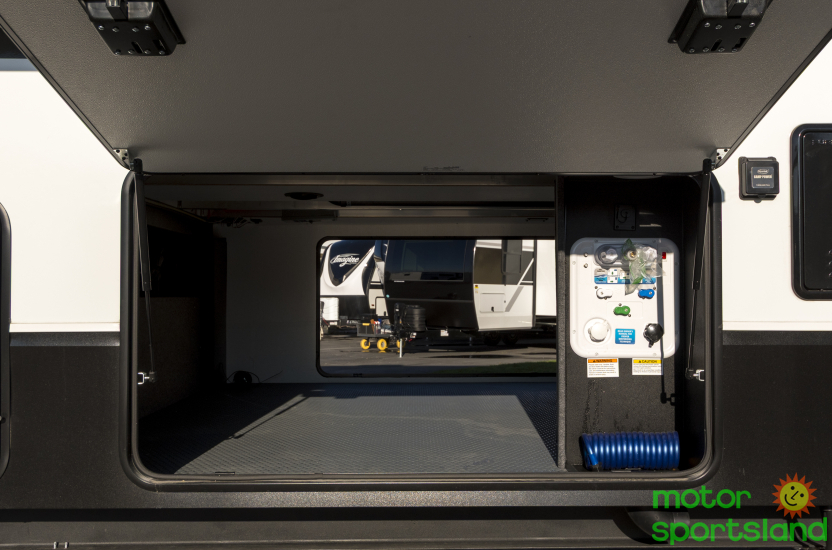
The underside storage is where the trip actually gets packed. There's pass-through storage, so gear goes in without stacking anything on top of the bedding. Load the heavy items low and centered.
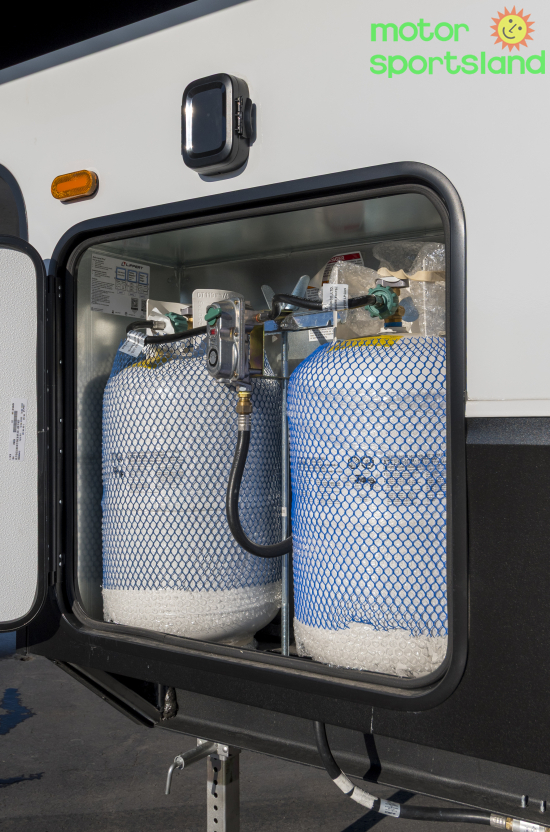
This is the storage that makes a long weekend workable, because nothing has to live in the truck bed where it blocks your mirror view.
Pulling in and setting up
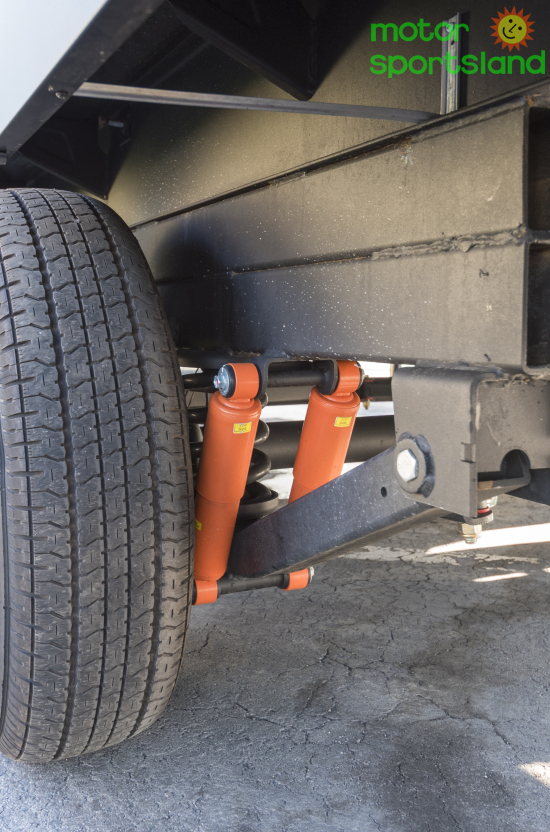
You've found your site. Dropping the stabilizer jacks is your first job after unhitching, because a 37-foot box with three slide-outs wants a solid base before anything moves. Crank them down until the trailer stops breathing when you walk across it.
Then the slides. Three of them, which is what gives this floorplan its width once you're parked, and it's the difference between a hallway and a room. Run them out one at a time and listen.
The awning is 16 feet of shade, and on a hot Utah afternoon it's doing more work than you'd think. Run it out, give it a slight pitch so it drains, and your door side becomes your living space.
Power is where this one gets interesting for anyone who camps away from hookups. There's 400 watts of solar on the roof feeding a 2,000-watt inverter, which means you can park on a forest road and still run household outlets without a generator cycling all evening. Fresh water holds 76 gallons, with 50 gallons each of grey and black, so your tanks are the limit on a boondocking stay rather than your batteries.
Cooking and eating
The kitchen is built around an island, and an island changes how a group uses a camper. Two people can work it from either side, groceries have a landing zone that isn't the dinette table, and the counter space stays usable even while dinner is in progress.
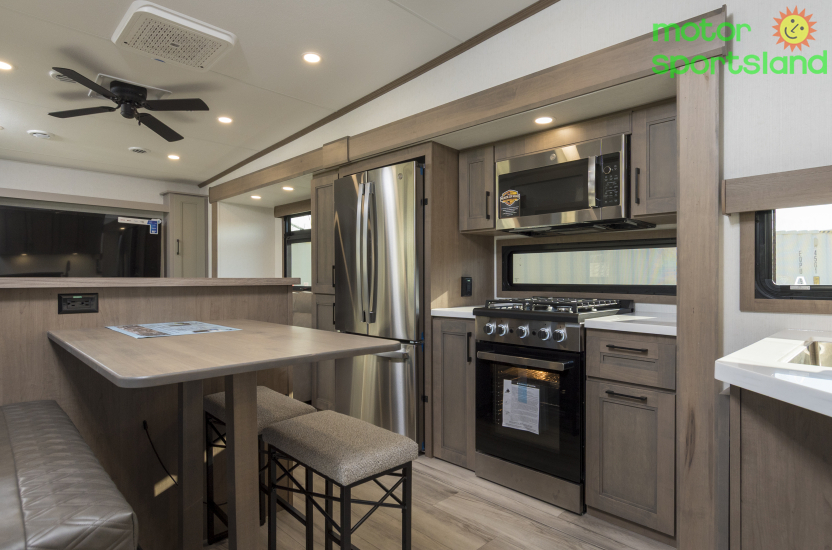
You get real counter run beyond the island too. Set the cutting board down, keep the coffee going on one end, and nobody has to shuffle.
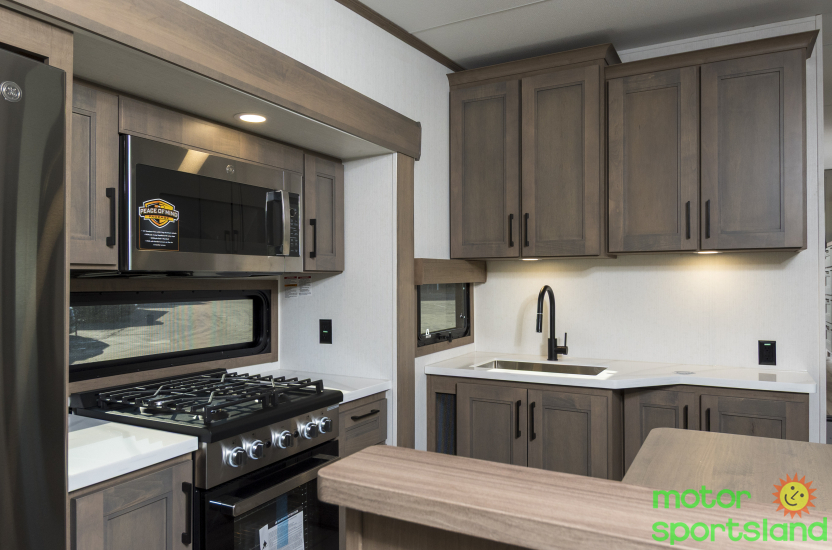
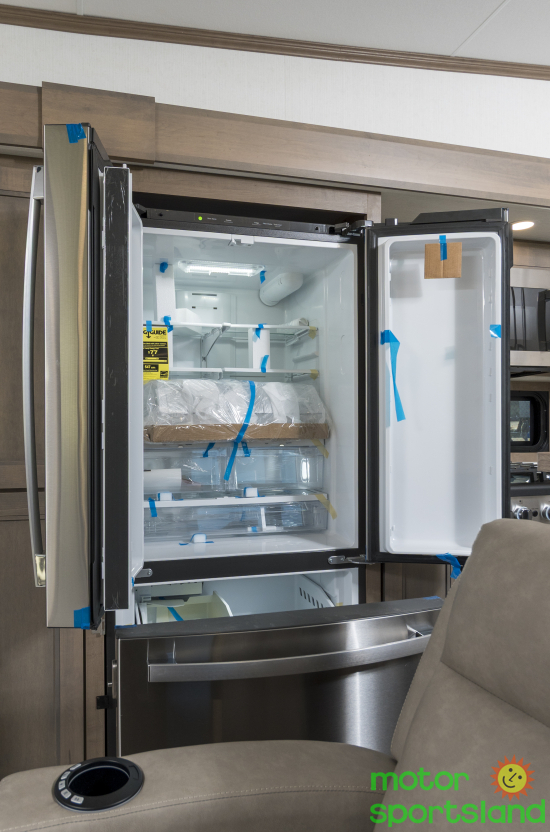
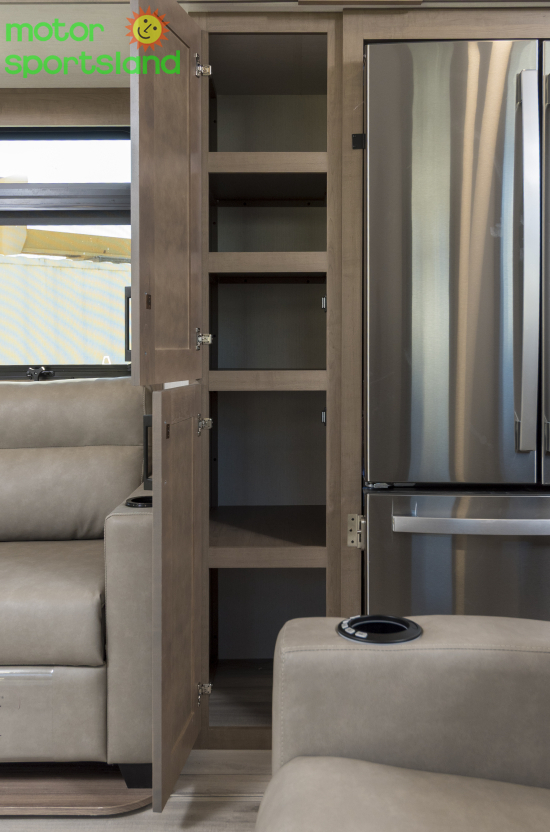
The refrigerator is sized for a week, not a night, which matters when the nearest grocery store is 40 miles of canyon road behind you.
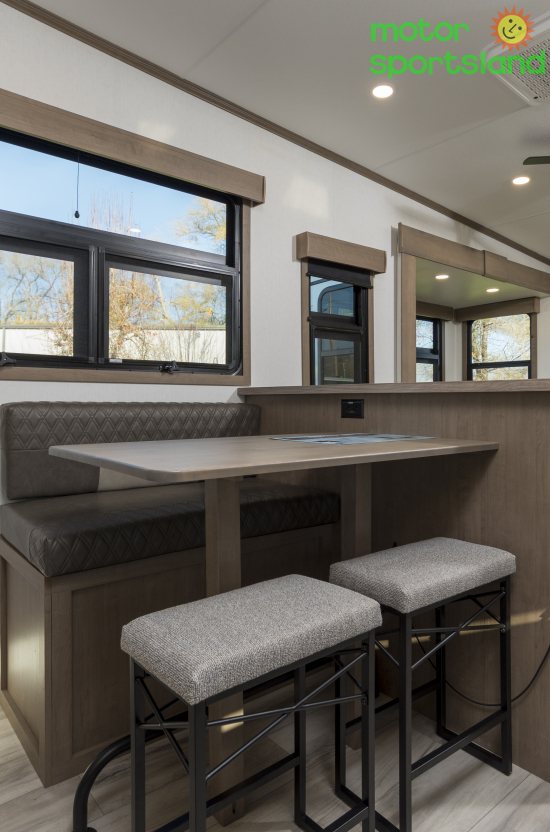
Dinner happens at the U-shaped dinette. A U-dinette seats more people than a booth and gives you a wraparound bench that works as a card table, a laptop desk and an extra sleeping surface. The Barista interior keeps it warm rather than stark.
The evening
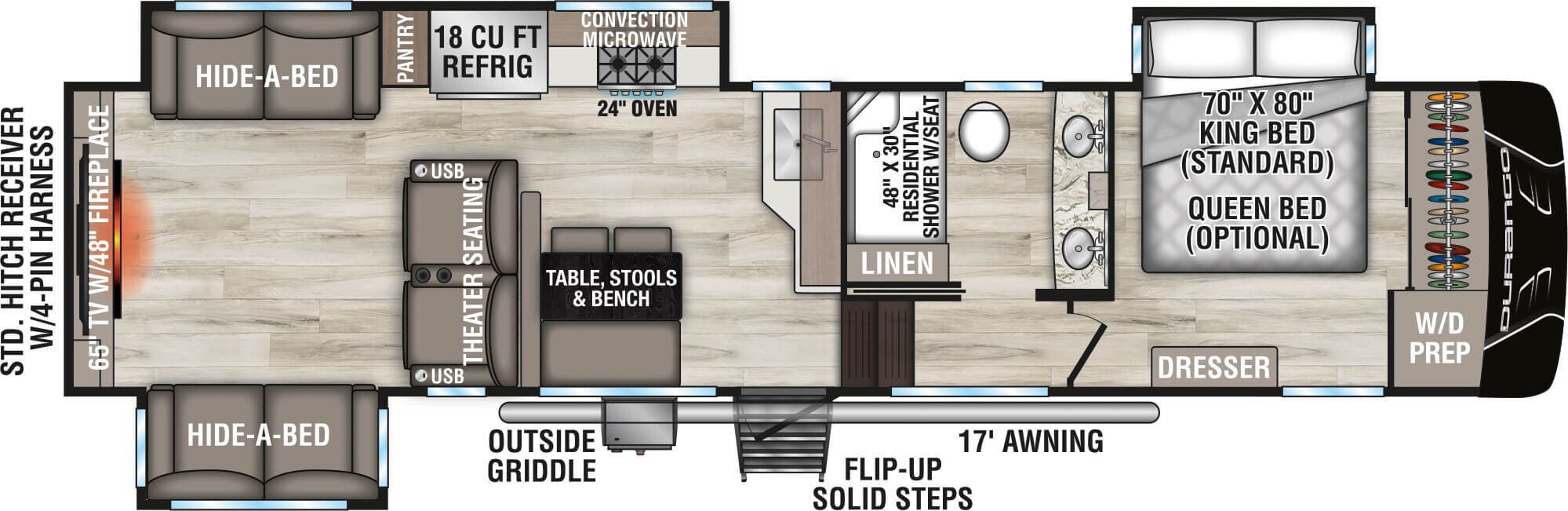
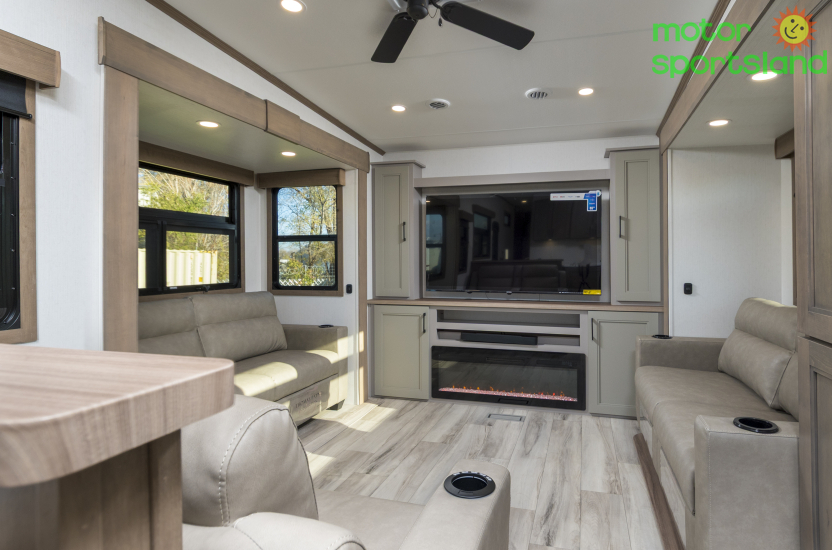
This is a rear living room floorplan, and that's the reason most people buy it. The living area gets its own end of the coach with seating facing in, so the group that wants to stay up isn't sitting in the kitchen or at the foot of someone's bed.
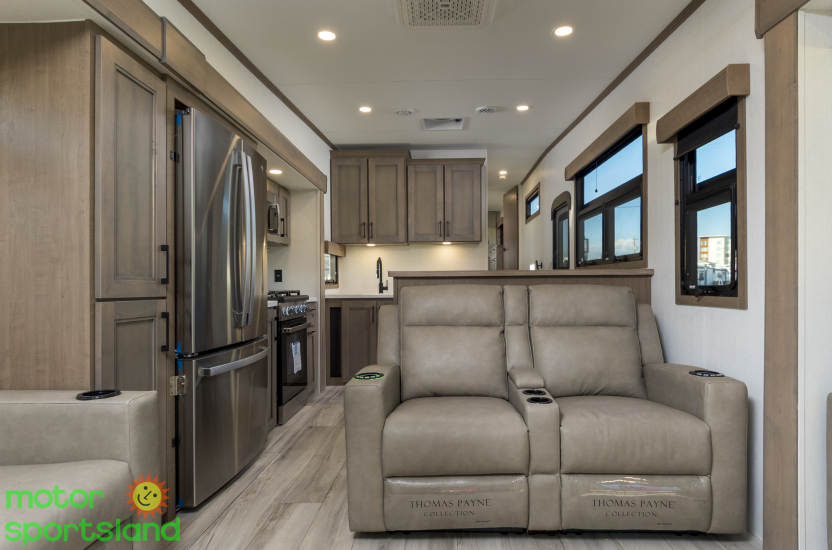
Sleeps six total, so the dinette and the living seating both earn their keep when you've got more people than beds.
Sleeping
The bedroom is separated from the living space, which is the whole point of putting the lounge at the other end. Close the door and the noise from the card game stays where it belongs.
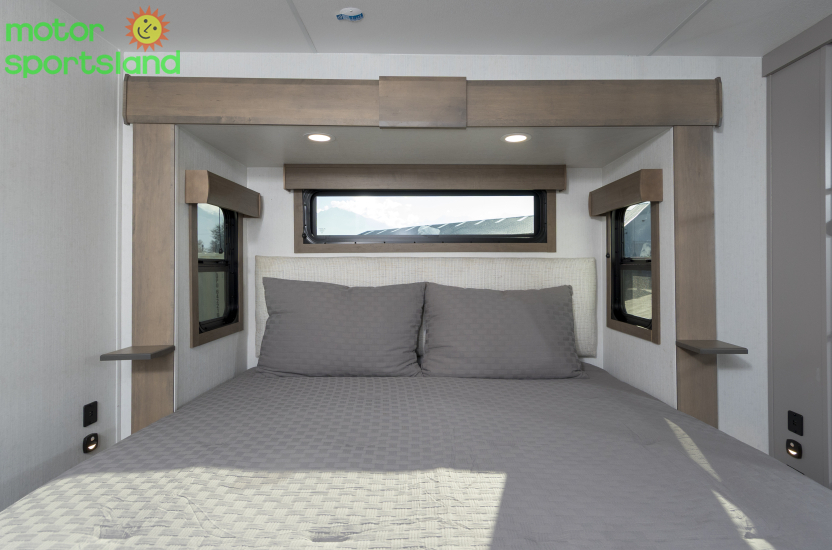
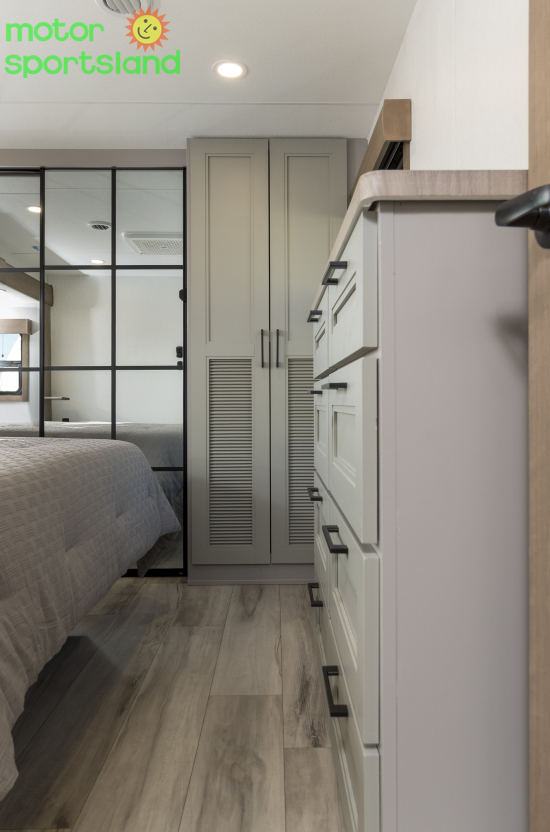
Closet storage is where a fifth wheel beats a bumper pull, and this layout gives you hanging space that holds a week of real clothes on hangers instead of folded in a duffel.
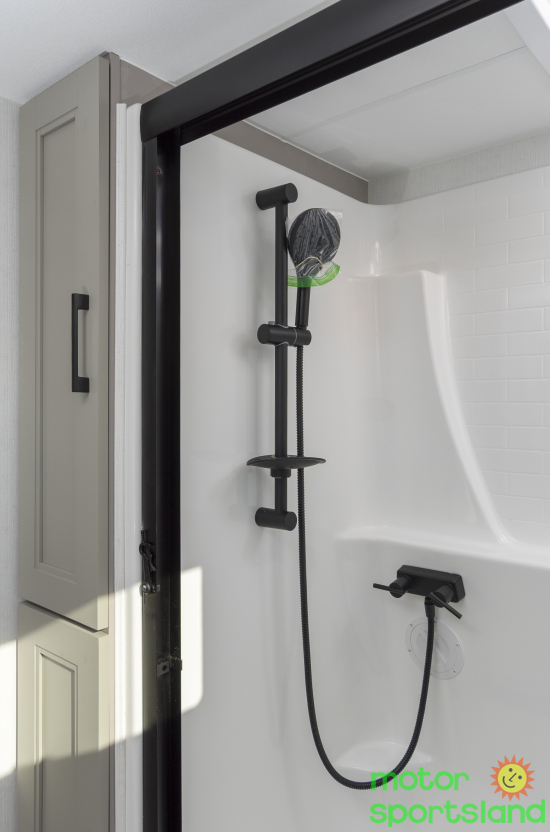
The bathroom is a full one with a shower, and after a day on a trail you'll care about that more than any other feature on the sheet. Door closes, water runs, and you're not walking to a bathhouse in the dark.
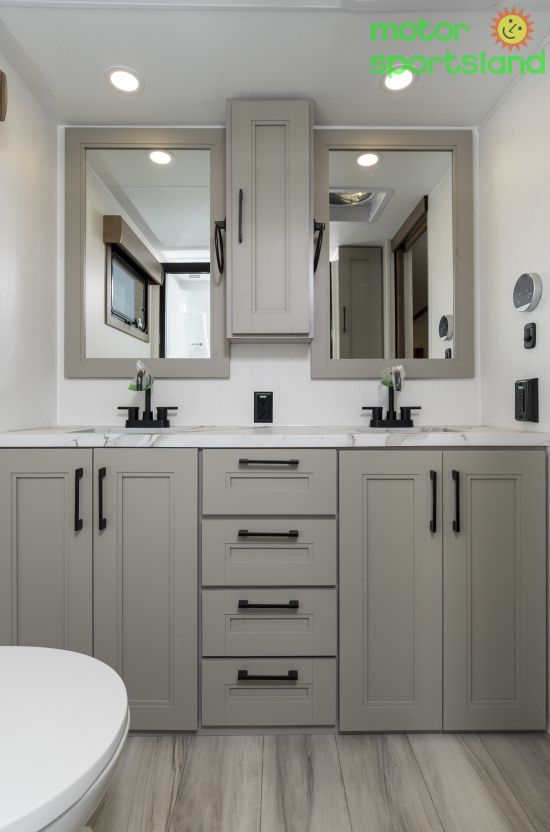
The photos show the shower, so you can judge the space for yourself.
Packing up in the morning
Slides in, jacks up, awning rolled and latched. Hook back up, check that the pin is locked and the safety chains and breakaway cable are connected, and do a walk-around of the lights before you pull out. Dump on the way out with 50-gallon grey and black tanks, which usually means one stop rather than mid-trip.
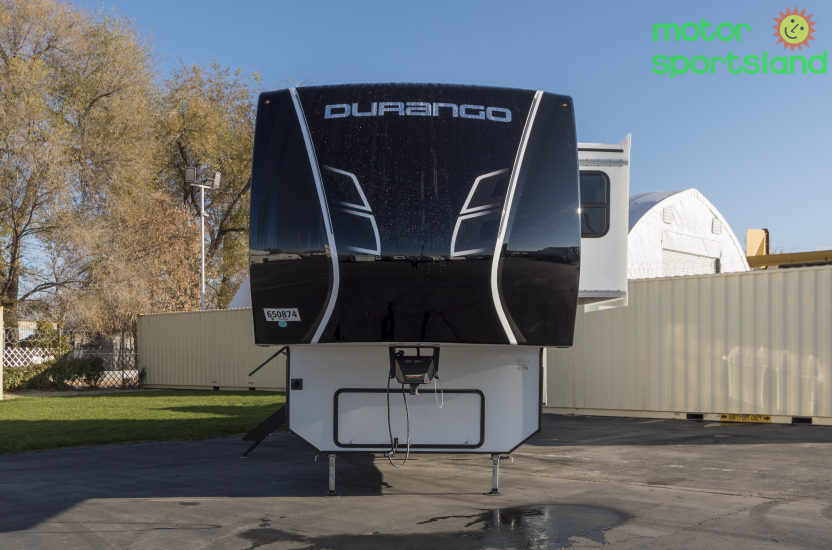
If you're shopping a new fifth wheel and your truck is rated for it, this is one of the easier ones to live in because the rear living room and the island kitchen keep people out of each other's way. We see a lot of folks looking for a fifth wheel for sale in Utah who come in wanting a floorplan exactly like this, where the lounge and the bedroom are at opposite ends.
Come walk it with us in Millcreek and we'll run the slides out and the jacks down so you can see how it sets up, or take a longer look at the photos and specs on the live listing.
Frequently asked questions
What is the hitch weight on this floorplan?
Hitch weight is 2,180 pounds. That's the load carried by your truck's rear axle when you're hitched, and it counts against your truck's payload along with passengers and anything in the bed.
What truck do I need to tow it?
Dry weight is 11,110 pounds with a GVWR of 13,500 and 2,390 pounds of cargo capacity, so plan for a heavy-duty three-quarter-ton at a minimum and a one-ton if you load it out. Bring your truck's door-jamb payload sticker in and we'll do the math with you.
Can I camp without hookups?
Yes. There's 400 watts of solar and a 2,000-watt inverter, plus 76 gallons of fresh water and 50 gallons each of grey and black, so your stay is usually limited by tank capacity rather than power.
How many people does it sleep?
Six, using the bedroom plus the dinette and living room seating. The U-shaped dinette is what makes that number work for a family or a group of friends.
In stock now:
Browse fifth wheels for sale in Utah, KZRV RVs or all our inventory.
