

2027 Forest River Salem 25ICE Specs & Towing

A Walk Around the 2027 Forest River Salem 25ICE
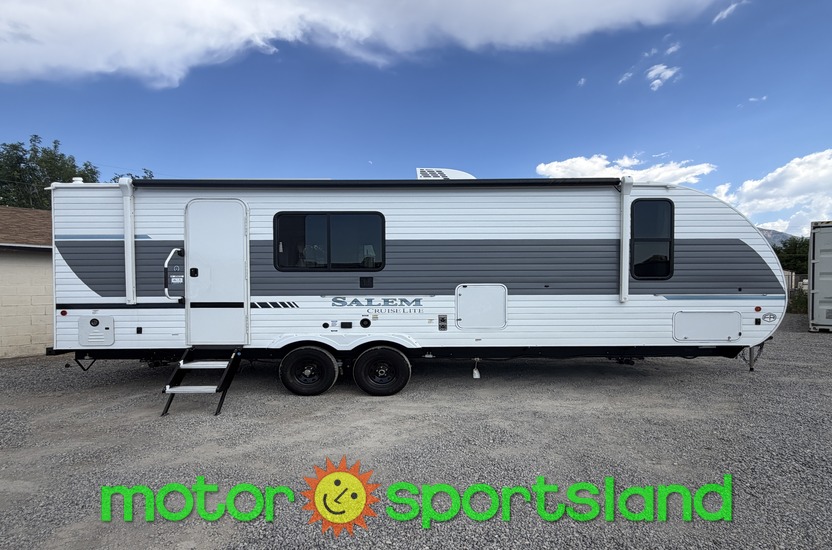
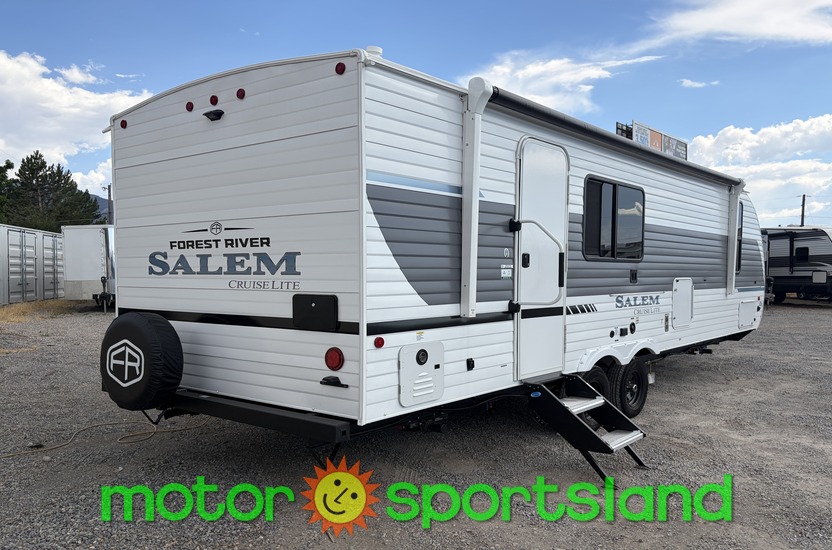
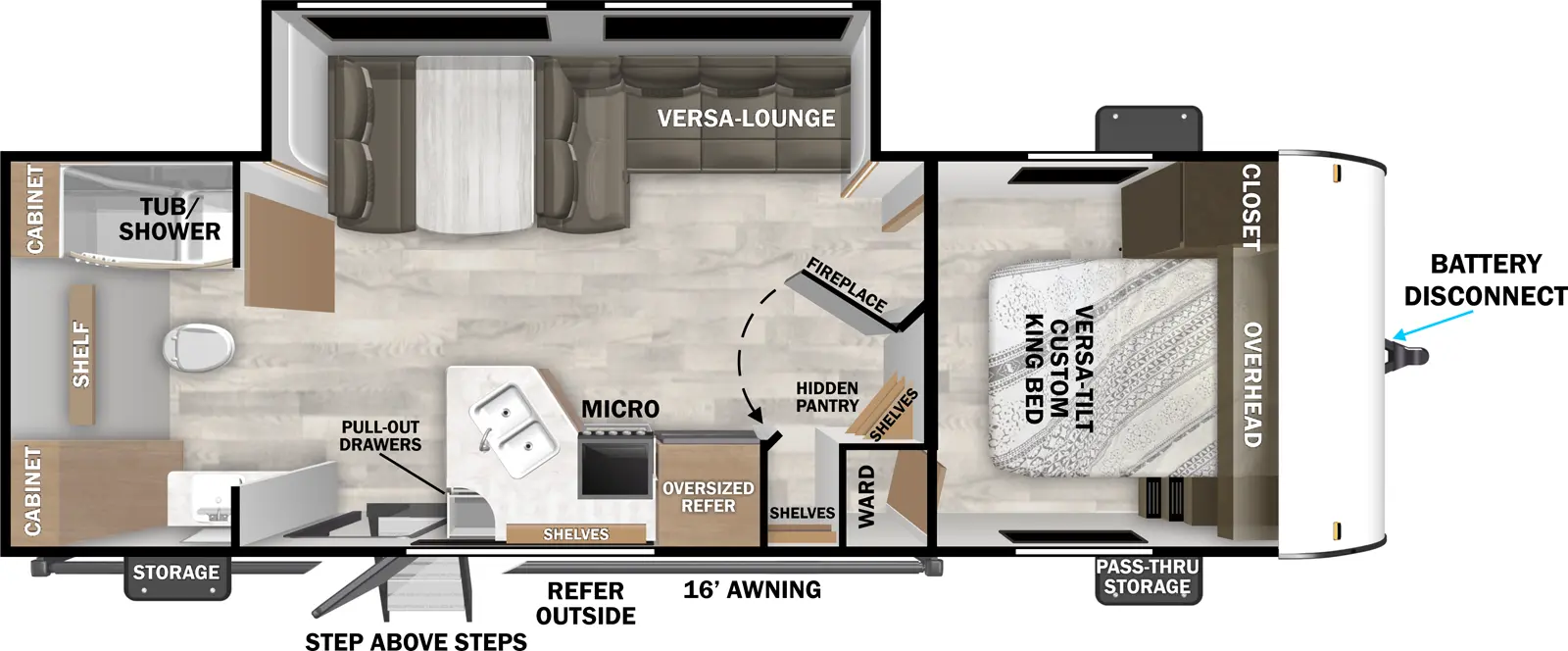
Most people who stop at this one on our lot in Spanish Fork walk in through the door and stop about three feet inside, because the sightline runs clear from one end to the other. That's what you get in a rear living trailer with no slide-out: a floor that's the same width parked as it is rolling down I-15, and no slide mechanism to lubricate, adjust or worry about in a snowstorm. The 25ICE is a center bath, center kitchen, front bedroom layout with the living space at the rear, and it's built on two axles at 29.83 feet of overall length.
| Salem 25ICE at a glance | |
|---|---|
| Sleeps | 4 |
| Length | 29.83 ft |
| Dry weight | 6,178 lbs |
| GVWR | 7,700 lbs |
| Hitch weight | 735 lbs |
| Slide-outs | None |
| Floorplan | Center Bath, Center Kitchen, Front Bedroom, Rear Living |
| Fresh water | 40 gal |
| Grey water | 60 gal |
| Black water | 30 gal |
| Cargo capacity | 1,557 lbs |
Start with the tow numbers
Dry weight is 6,178 pounds. GVWR is 7,700 pounds, cargo capacity is 1,557 pounds, and hitch weight is 735 pounds dry. Those four numbers are the whole towing conversation.
Here's how to use them. Don't plan around the dry weight, because nobody tows a dry trailer. Plan around the GVWR, because that's what the trailer can legally weigh once you've put 40 gallons of fresh water (about 334 pounds of it), a loaded pantry, bedding, camp chairs and a generator inside. Then look at your own truck's door-jamb sticker and owner's manual for its tow rating, its payload, and its maximum tongue weight. Payload is the one that catches people out: tongue weight rises as the trailer loads up, and whatever lands on the ball comes straight out of your truck's payload along with passengers, hitch hardware and anything in the bed. Weigh-station math beats showroom math every time, so check your truck's ratings rather than taking anyone's word for what "half-ton towable" means.
The 10.25-foot exterior height and 8-foot width matter too. Measure your garage door and your gate, and remember that number at drive-throughs and older canyon underpasses.
The three numbers to write on your hand are 7,700 pounds GVWR, 735 pounds of hitch weight and 1,557 pounds of cargo capacity.
The GVWR tells you whether your truck is the right truck, the hitch weight tells you whether your payload survives the hookup, and the cargo capacity tells you how much real life you can load before you're over.
Off-grid capacity and power
Fresh water is 40 gallons. Grey is 60 and black is 30, so you've got 90 gallons of waste capacity against 40 gallons coming in. That ratio is friendlier than it sounds: the 60-gallon grey tank means dishes and showers aren't what sends you to the dump station, and with a conservative hand on the faucet most couples get three or four days out of the fresh tank before anything needs attention. Carry a jug or two and you stretch it further.
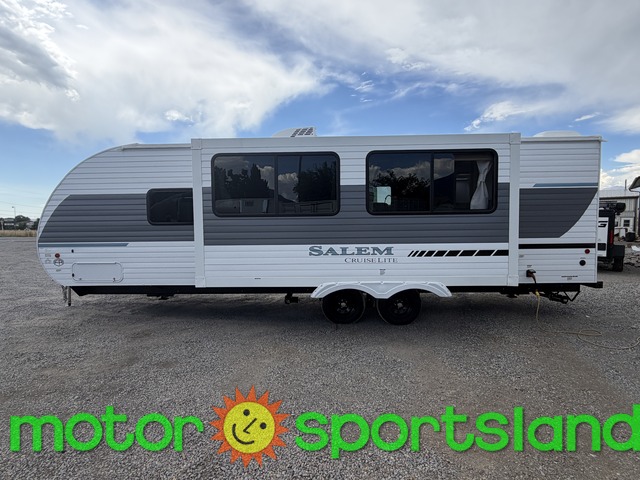
Available on this build is a 200-watt solar panel with a 30-amp controller, which is the piece that makes a weekend without hookups realistic. That's enough to keep the battery topped up for lights, the water pump, the fans and device charging, and it does it silently while you're out on the trail. A 15,000 BTU ducted air conditioner is also available, and ducted matters in a trailer this long because the cold air gets distributed down the coach instead of dumping out of one ceiling vent. The 16-foot awning covers most of the entry side, which is where you'll actually spend July afternoons at Yuba or Fish Lake.
Sleeping four, and where the gear goes
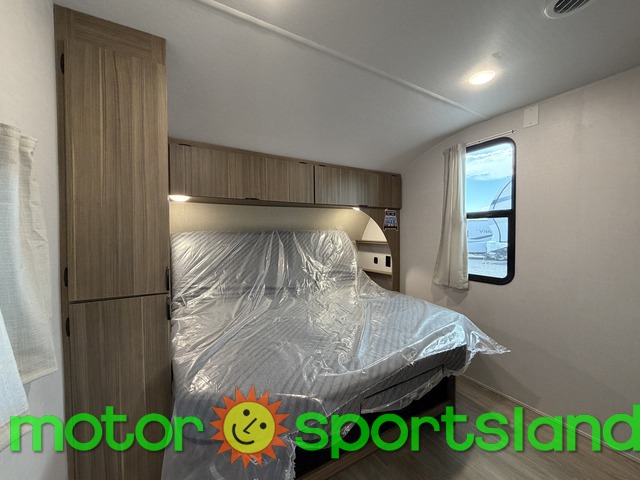
Sleeps four, and the way it does that is worth understanding before you look at anything else. The front bedroom takes a king bed, which is the headline for anyone who has spent a season fighting over a queen in a short-queen-sized hole. It's a real king, with walk-around space and closet storage flanking it.
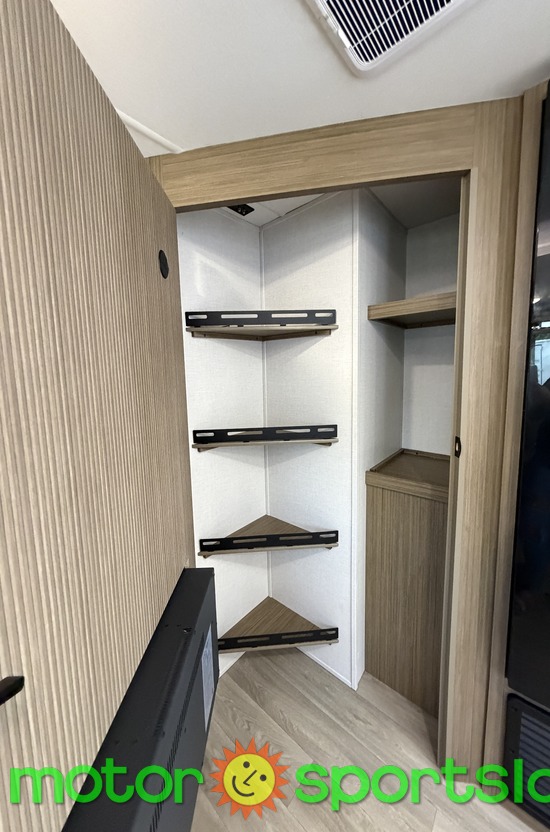
The closets are the kind you can hang shirts in rather than fold things into, and that's a bigger deal on a two-week trip than most buyers expect.
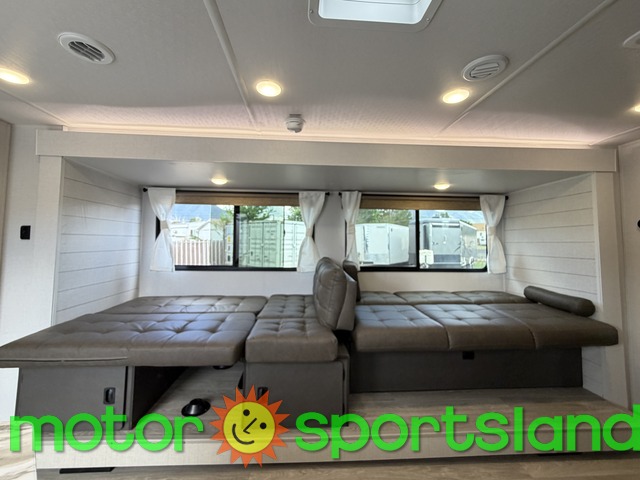
The rest of the sleeping capacity comes from bunks, so the kids or the grandkids get their own spot that doesn't have to be made and unmade every night.
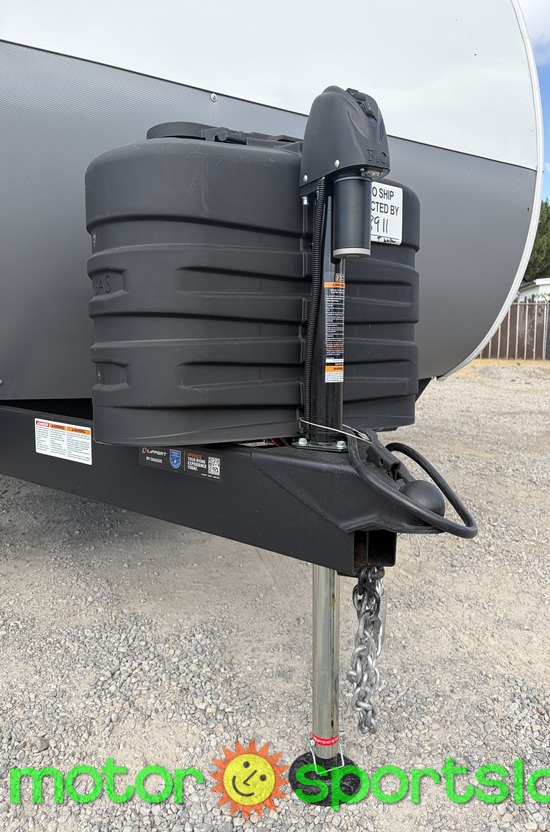
Outside, the pass-through storage runs the width of the trailer and takes the long awkward things: camp chairs, a folding table, leveling blocks, hoses, fishing rods. Load it from either side, which saves you walking around the coach in the dark.
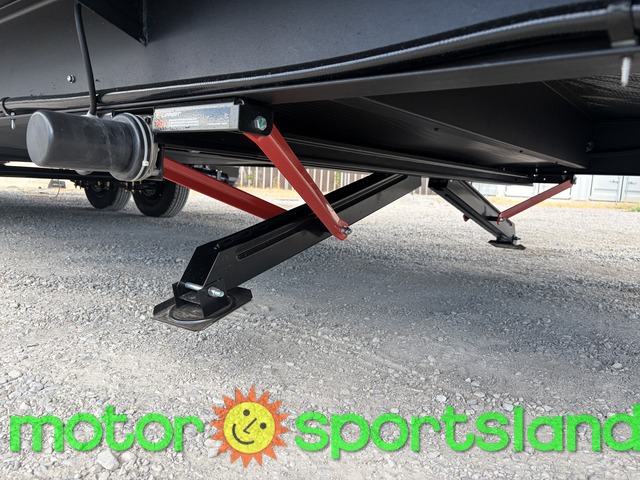
Stabilizer jacks at the corners take the bounce out of the floor once you're parked, and they're where you'll start and finish every setup.
Living space and kitchen
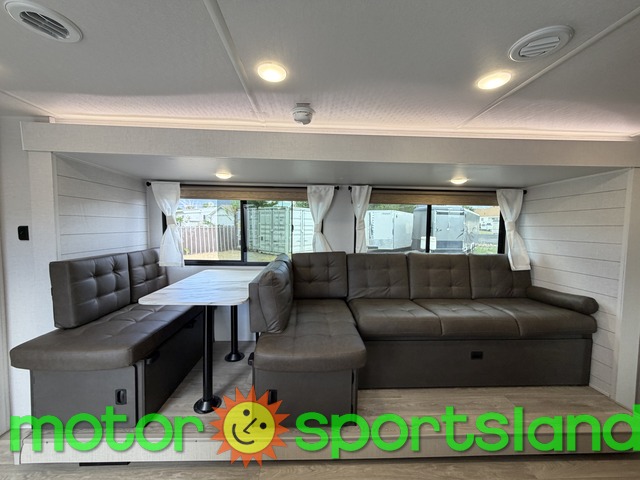
The rear living room is the reason this floorplan sells. With no slide, the back of the coach is one open room with the dinette and seating, which means the whole family can be in the same space without anyone sitting on the bed.
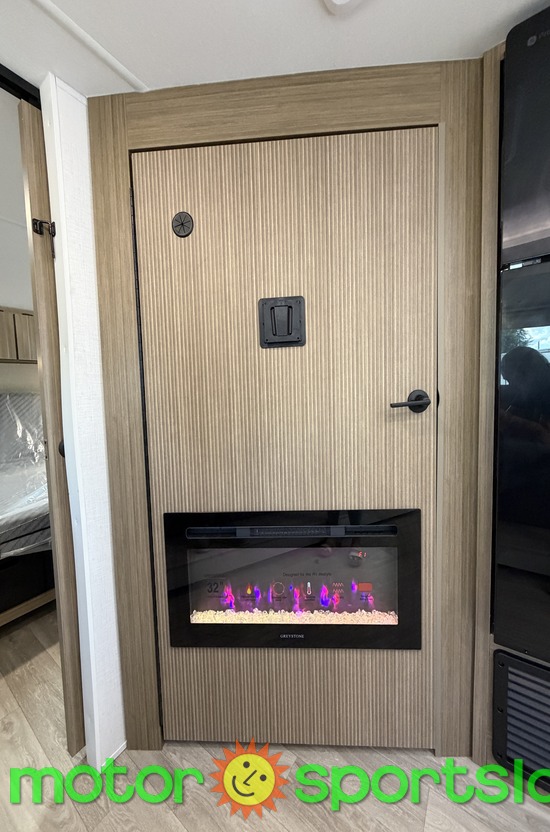
The dinette does double duty as a work surface, a card table and, on a long trip, a place for one more person to stretch out.
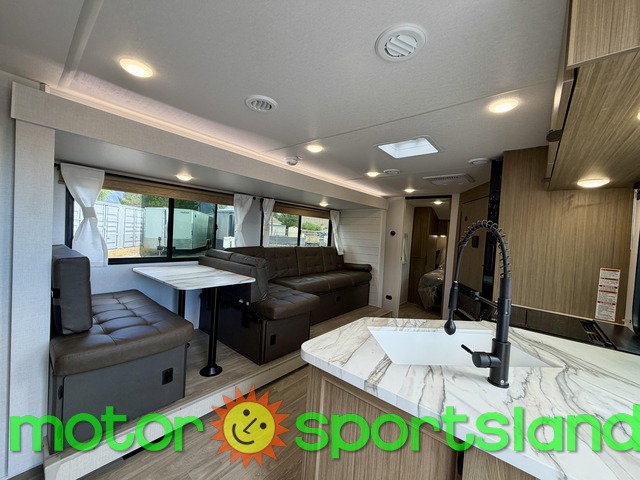
The center kitchen has an island, which is the feature people underestimate in a travel trailer with solar and a long rear living area. An island gives you prep space that isn't also the sink and the cooktop, and it gives traffic somewhere to flow around while someone's cooking.
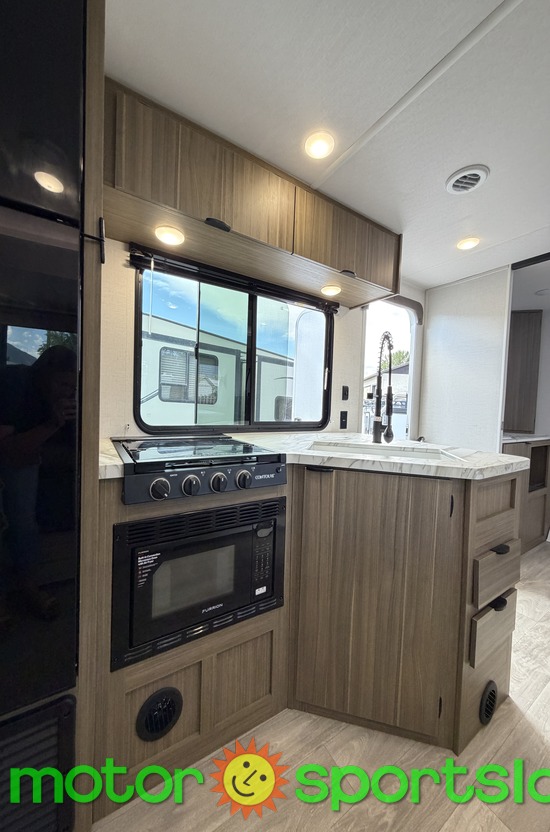
There's real counter run here plus overhead cabinetry.
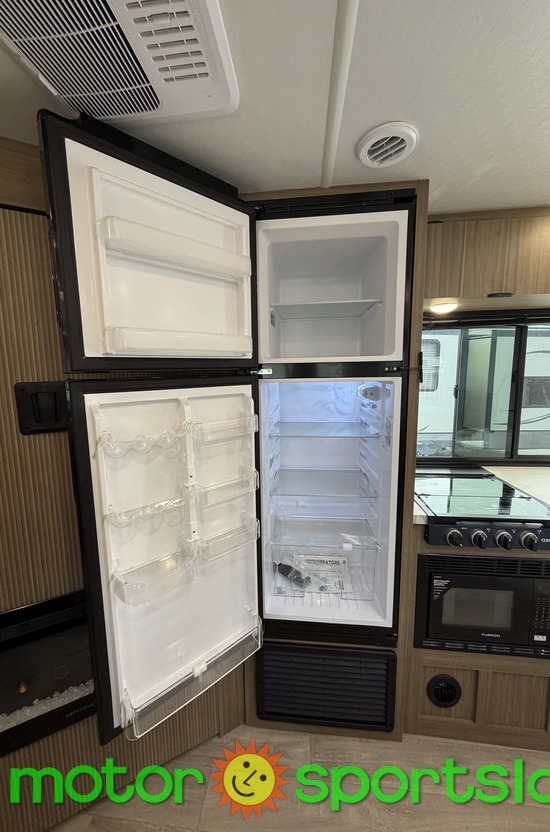
The refrigerator sits in the kitchen run where you can get to it without reaching over whoever's at the stove.
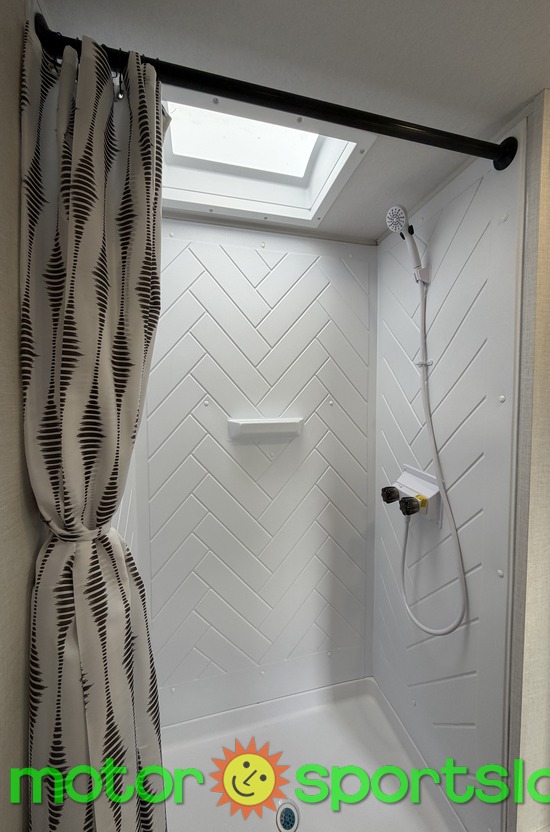
The center bath splits the bedroom from the living space, which is the quiet advantage of this layout: nobody walks through anybody's room to get there at 2 a.m. It's a full bath with a separate shower.
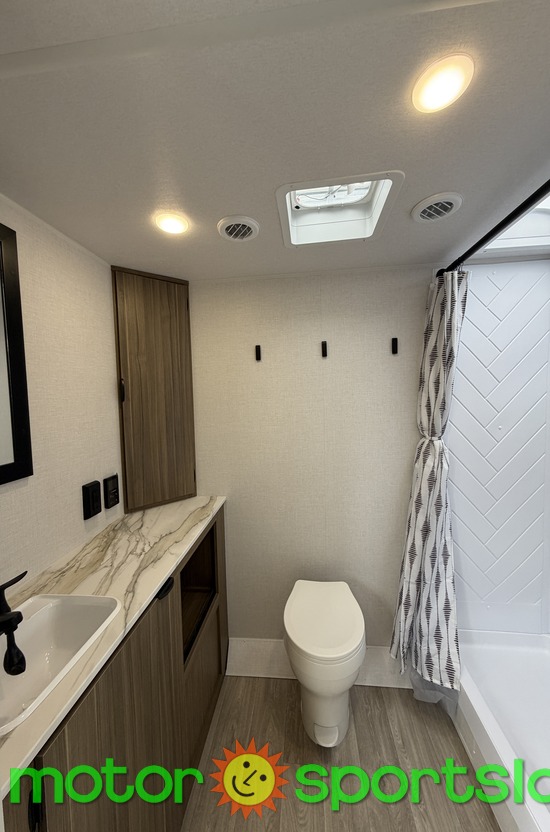
Interior decor on this one is Eclipse, which is a darker, warmer scheme that hides dust and dog hair better than the pale greys everyone built five years ago.
Why this one works in Utah
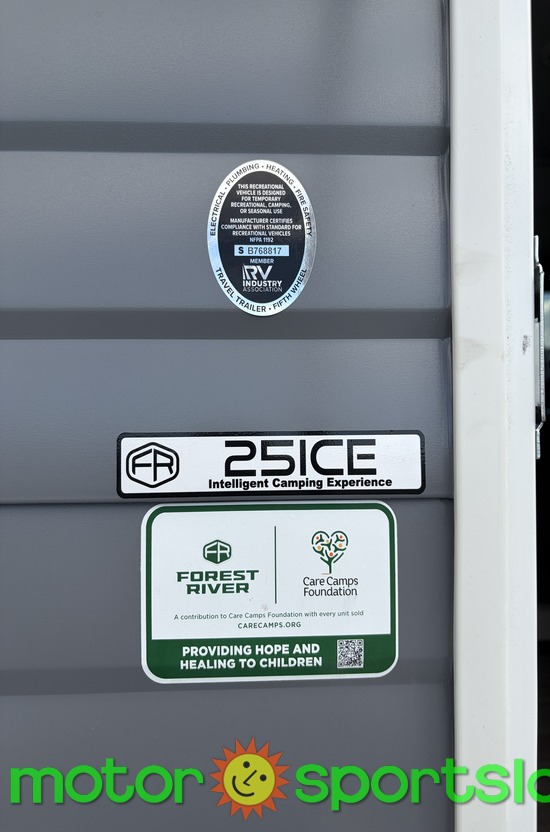
A two-axle, 29.83-foot trailer at a 7,700-pound GVWR is about the sweet spot for Utah towing. It's long enough for a king bed and a separate living room, short enough for most forest-service campgrounds, and light enough that a properly rated three-quarter-ton (or a well-equipped half-ton, once you've checked your own numbers) handles the grade out of Spanish Fork Canyon without drama. Among the new travel trailers and the broader Forest River travel trailer lineup we keep on the lot, this is the floorplan we point families toward when they want a king bed and bunks without a slide-out in the equation.
Frequently asked questions
What truck do I need to tow this floorplan?
Start with a 7,700-pound GVWR and a 735-pound dry hitch weight, then check your truck's door-jamb sticker and owner's manual for its tow rating, payload and maximum tongue weight. Payload is usually the limiting number, not tow rating, so do that math with your passengers and bed cargo included.
How many people does it sleep?
Four, using the king bed in the front bedroom and the bunks.
Can I camp off hookups in it?
Yes, within reason. You've got 40 gallons of fresh water, 60 gallons of grey and 30 gallons of black, and a 200-watt solar panel with a 30-amp controller is available on this build to keep the battery up for lights, pump and fans.
Does it have a slide-out?
No. The interior floor is the same parked as it is towing, which means no slide seals, no slide motor and nothing to extend before you can use the trailer.
How much can I load into it?
Cargo capacity is 1,557 pounds. Water counts against that, so a full 40-gallon fresh tank uses roughly 334 pounds of it.
Full specs, options and current photos are on the live listing, and if you want to know how your truck actually feels behind it, come to Spanish Fork and we'll hitch it up to your rig in the lot before you commit to anything.
In stock now:
Browse travel trailers for sale in Utah, Forest River RVs or all our inventory.
