
2027 Forest River Sandpiper 41 Specs & Towing

The 2027 Forest River Sandpiper 41: a walk-around in Spanish Fork
Start at the hitch, because that's where the decision gets made. This fifth wheel runs 40.08 feet long, 13.33 feet tall and 8.42 feet wide, with a dry weight of 12,734 pounds and a GVWR of 14,000. Hitch weight is 1,290 pounds. Two axles under it, rated at 7,000 pounds each, for a combined 14,000 pounds that matches the coach's GVWR.
| Sandpiper 41 at a glance | |
|---|---|
| Sleeps | 8 |
| Length | 40.08 ft |
| Dry weight | 12,734 lbs |
| GVWR | 14,000 lbs |
| Hitch weight | 1,290 lbs |
| Fresh water | 50 gal |
| Grey water | 156 gal |
| Black water | 104 gal |
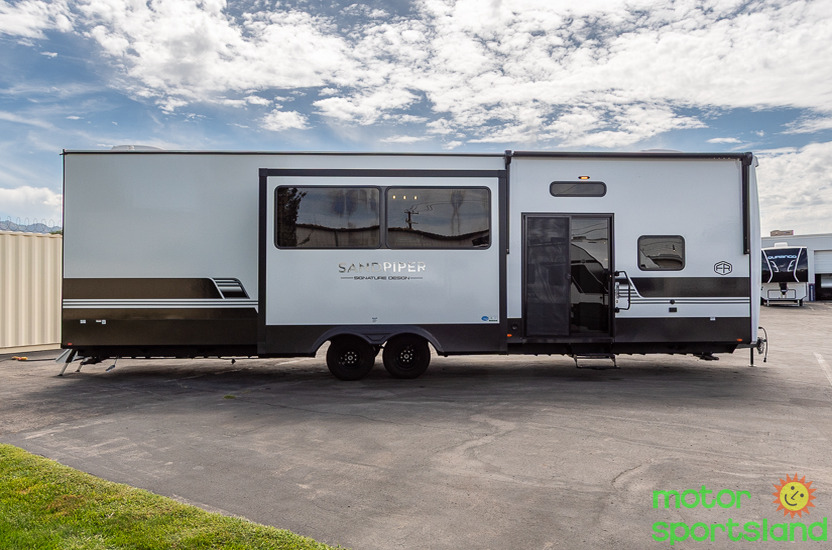
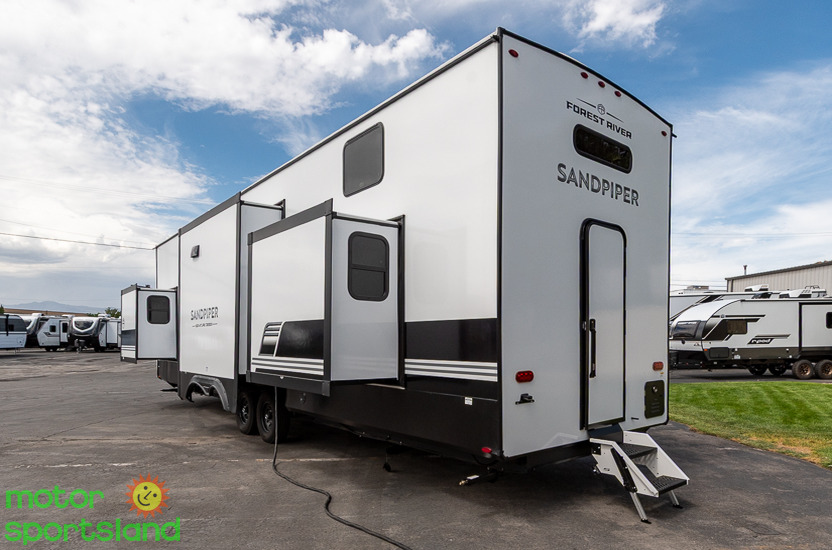
Do the math before you shop trucks. The gap between 12,734 dry and a 14,000 GVWR is about 1,266 pounds of cargo, water and gear, which is tight for a coach this size, so you'll want to load deliberately and weigh it once you're set up. More importantly, pull the sticker inside your own driver's door and find your payload number, then your rear axle rating. Hitch weight lands in the bed, and that 1,290 pounds comes off payload before you add passengers, firewood, a generator or the hitch hardware itself. A truck that tows the gross weight on paper can still run out of payload first. Height matters too at 13.33 feet, so check overpasses and your garage door, and know that length is what you'll feel in fuel stops and campground turns more than anything else.
Three numbers decide this one for you: 1,290 pounds of hitch weight, which is the first thing to subtract from your truck's payload; the 14,000-pound GVWR against 12,734 dry, which leaves you a modest cargo margin to manage; and 40.08 feet of length, which rules out a fair number of older or tighter campgrounds.
Check those three against your truck's door sticker and your reservations before you check anything else.
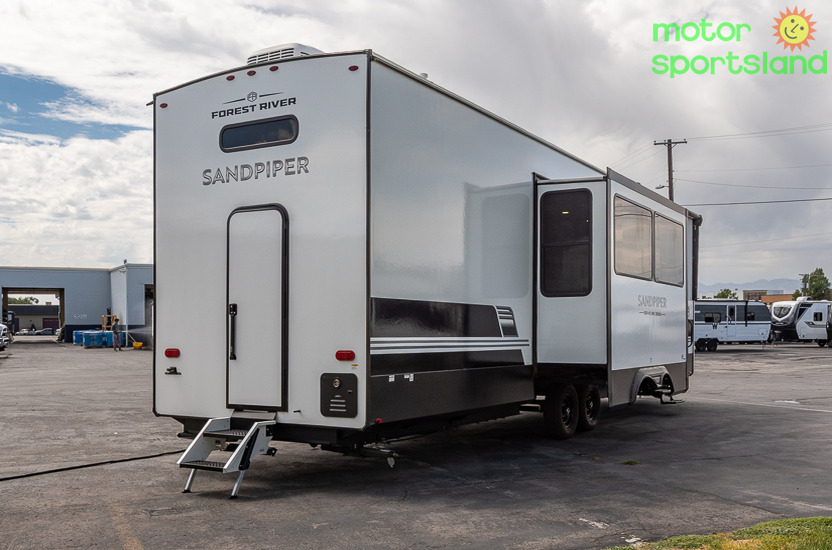
The frame under all of it is Forest River's I-Beam Monster Frame, cambered, powder coated and treated with rust prohibitor, with 5/8-inch tongue and groove DryMax premium floor decking on top. Sidewalls and slide-out walls are vacuum bonded. The axles carry an anti-lock braking system, and a tire pressure monitoring system reports in while you're rolling, which on a 40-foot coach is the difference between catching a soft tire and replacing a fender.
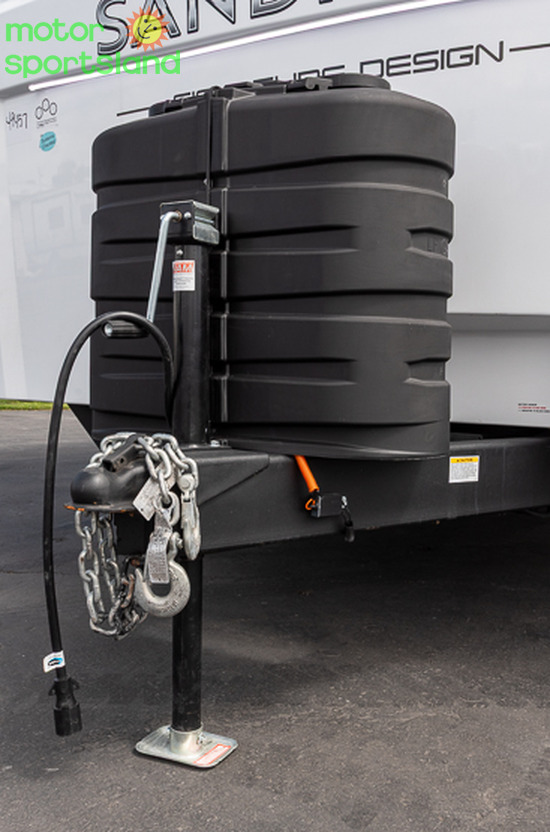
Setup is a six-point automatic electric Level-Up system, so you push the button and let it find level instead of chasing blocks under one side. This one is also fitted with four stabilizer jacks, which quiet down the flex you feel walking around inside once the coach is parked.
Water, power and cold-weather use
Fresh water is 50 gallons. Waste capacity is where this floorplan gets unusual: 156 gallons of grey and 104 gallons of black. That's a lot of tank behind a small fresh tank, which tells you how it's meant to live. On a full hookup site you can shower like you're home and never think about it. Boondocking, your limit is the 50 gallons of fresh and whatever you can haul in, not the dumps.
Water heating is a 60,000 BTU on-demand tankless unit, so the shower doesn't go cold halfway through and nobody is rationing hot water by schedule. Cooling is dual ducted 18,000 BTU air conditioners, and the coach is prepped for a third if you want it added later. Air comes through RV AirFlow AIRDIRECT vents, and that matters when you're cooling 40 feet of coach in a Utah August.
For shoulder-season and winter use, the underbelly carries Armor enclosure with heated enclosed water lines, and the holding tanks are heated on 12V. This one also has the Extended Stay package added, which is the point of a coach with these tank numbers: it's built to sit somewhere for a while rather than move every weekend.
Sleeping eight, and where the gear goes
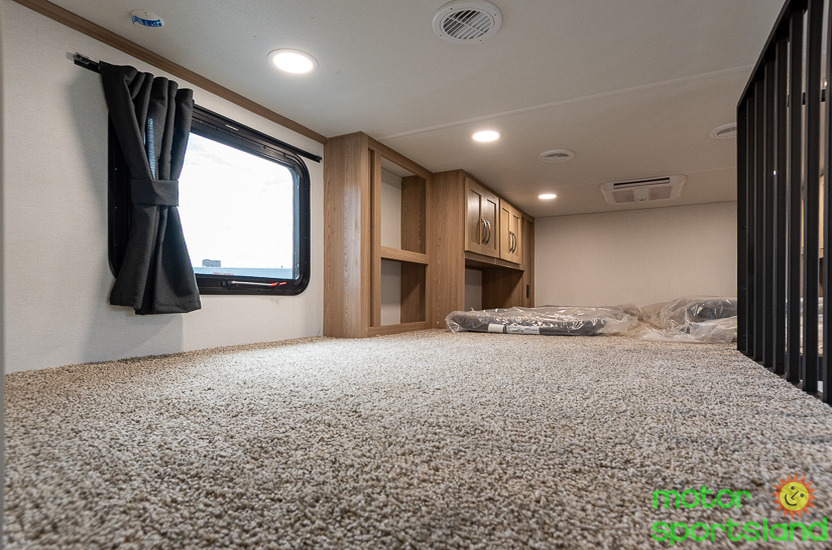
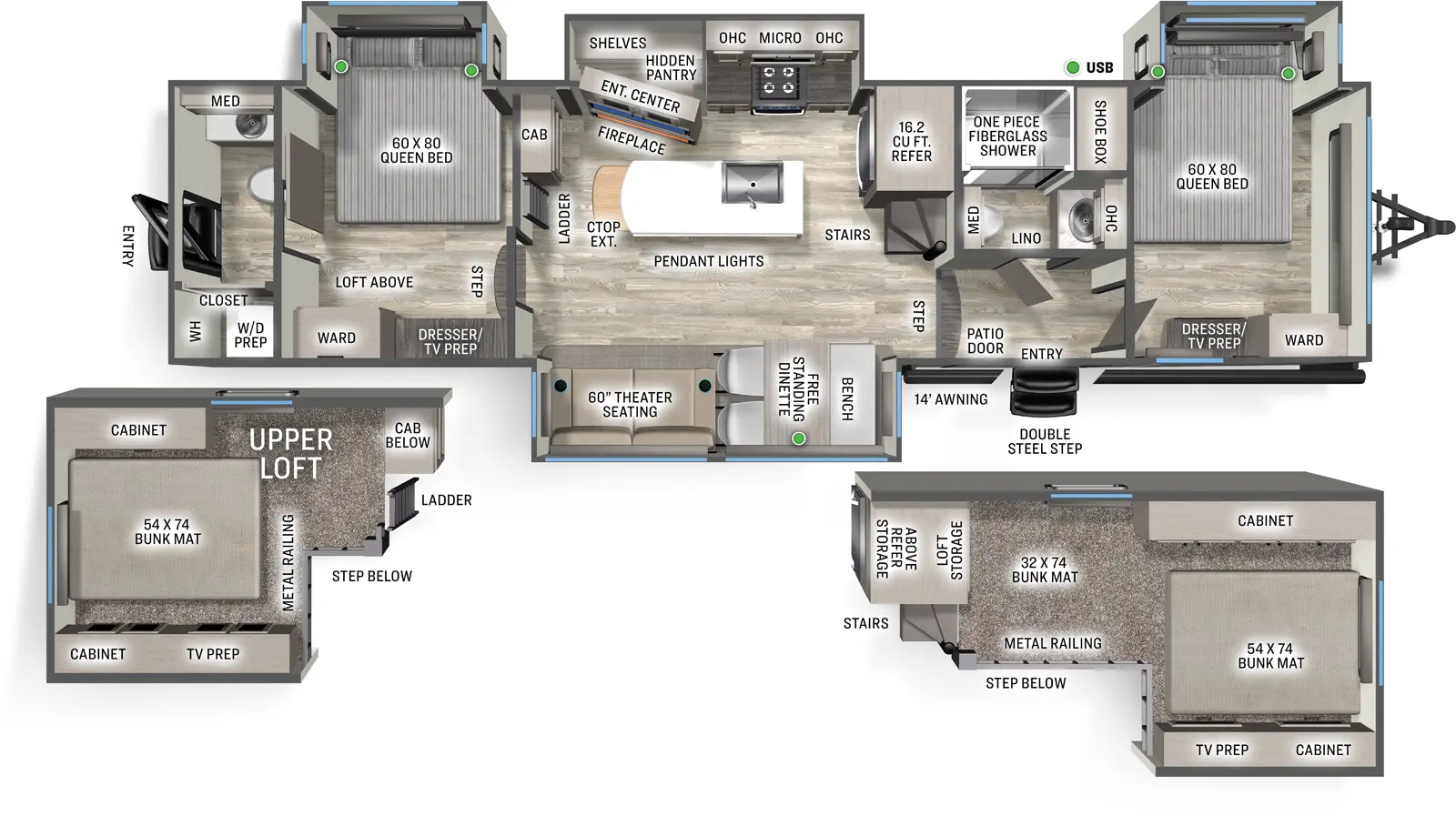
Sleeps eight. There's a queen bed in the bedroom, a bunk area, and a loft, which is how the count gets there without turning the whole living space into a bed every night.
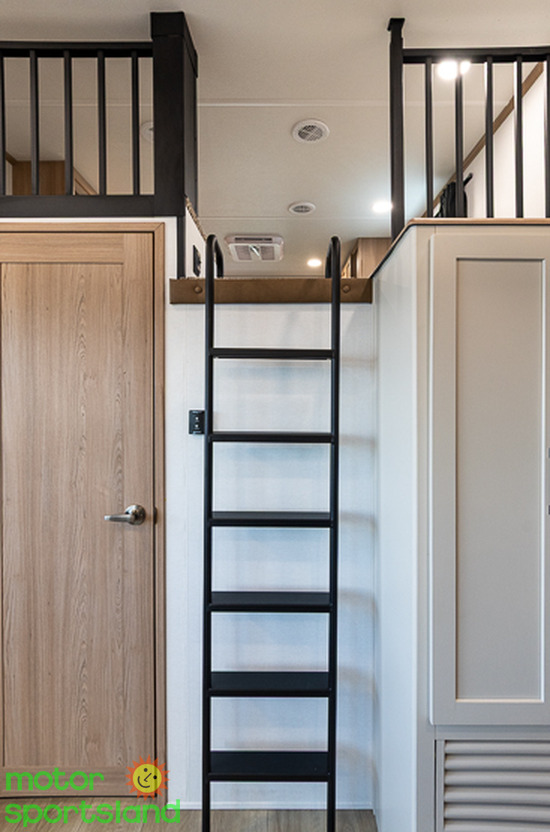
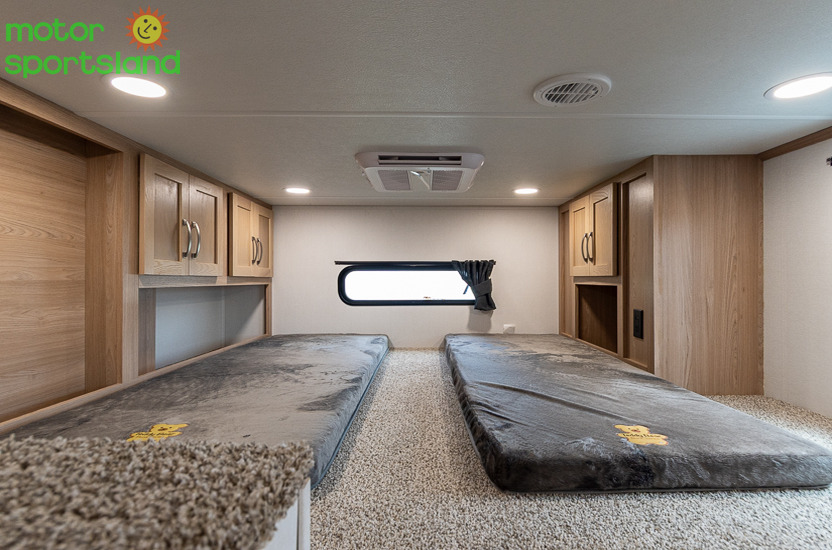
The bunks are the part parents should look at hard, because they mean the kids have their own space and nobody is unfolding furniture at 10 p.m.
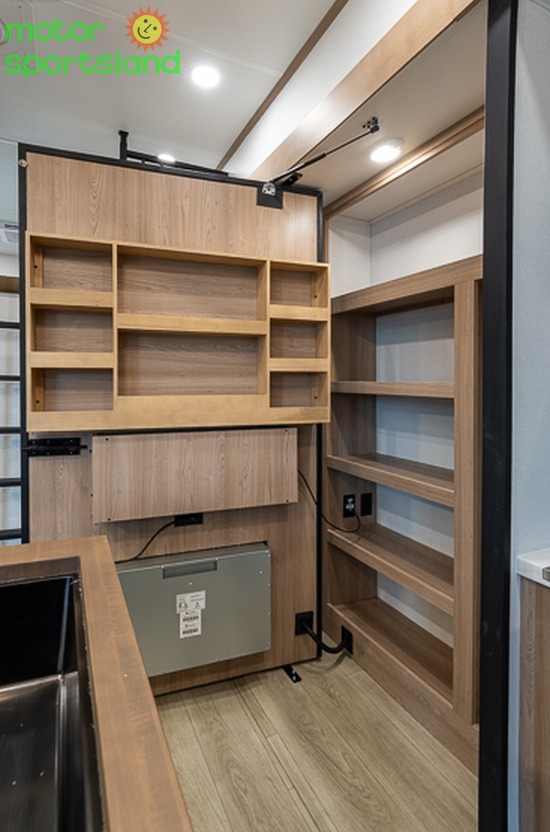
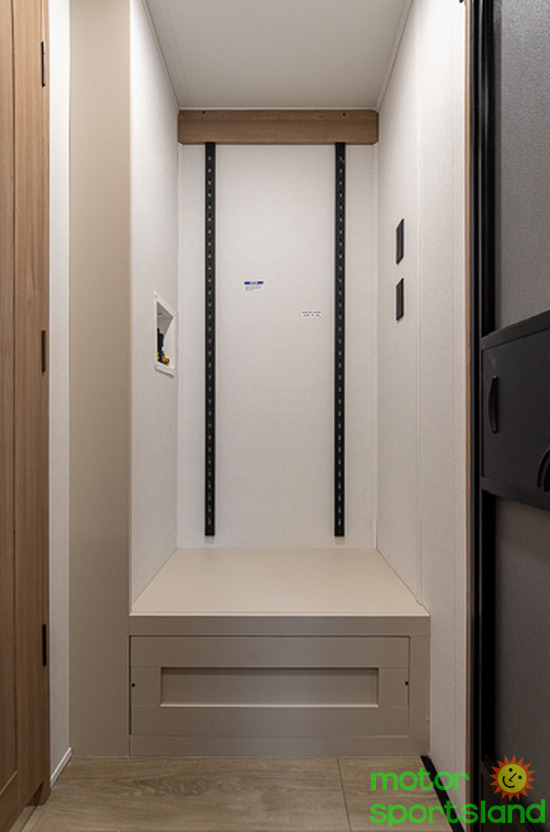
Storage is the other reason people buy a coach this long. Walk the closets with the floorplan in front of you and count hanging space, because that's what separates a vacation trailer from something you can actually live out of for a season.
Cabinetry is solid wood with square inset doors, and the drawers and cabinets are hidden hinge with soft close, so nothing slams shut on a washboard road or wakes the coach up at 6 a.m.
The kitchen and bath tour
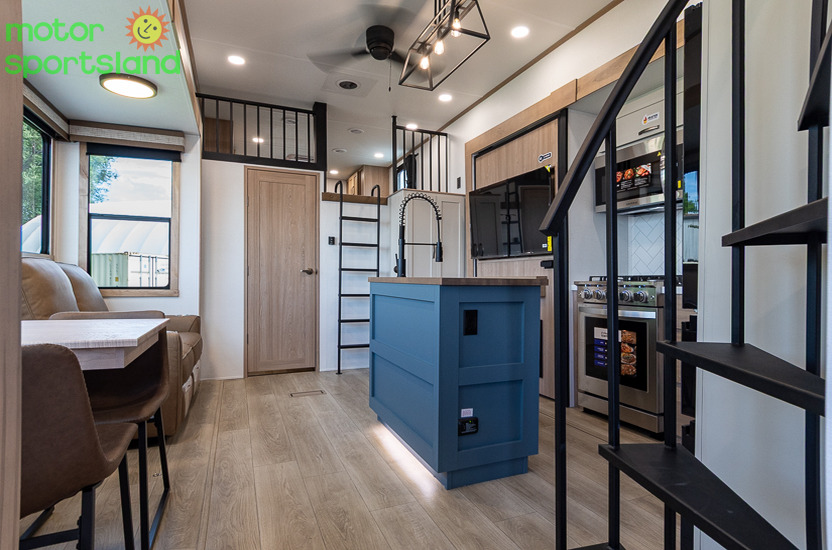
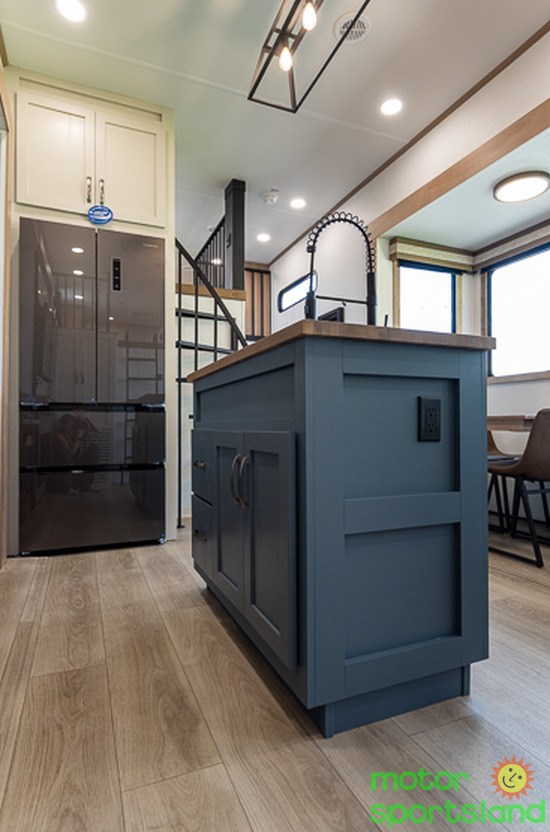
The kitchen runs a stainless steel appliance package with an under-mounted sink and solid surface countertops, which is the combination you want for real cooking: you can wipe crumbs straight into the basin with no rim to catch them, and the counter takes a hot pan without a trivet.
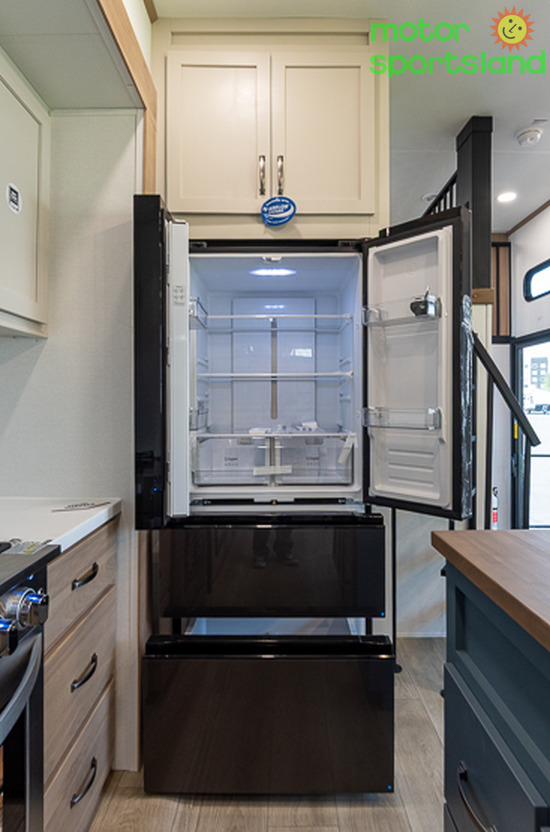
Refrigeration is sized for the week, not the weekend, which pairs with the tank capacity and the extended-stay setup.
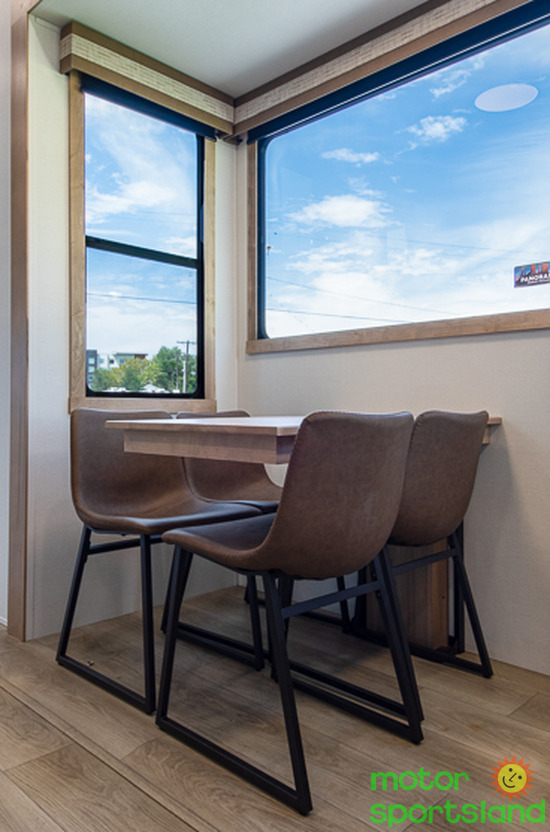
The dinette here came through with two dinette chairs in place of the bench, so you get real seating that moves instead of a fixed box.
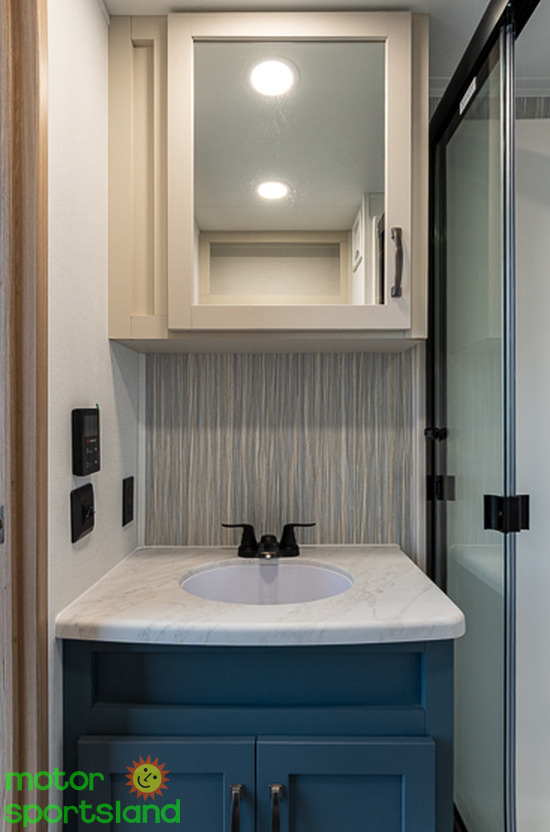
The bath has a one-piece fiberglass shower. One piece means no seams to re-caulk and nothing to work loose over a few thousand miles of road input, which is the quiet advantage you notice in year three.
There's rear entertainment in this floorplan, so the living area has a dedicated place for the screen rather than borrowing wall space from something else.
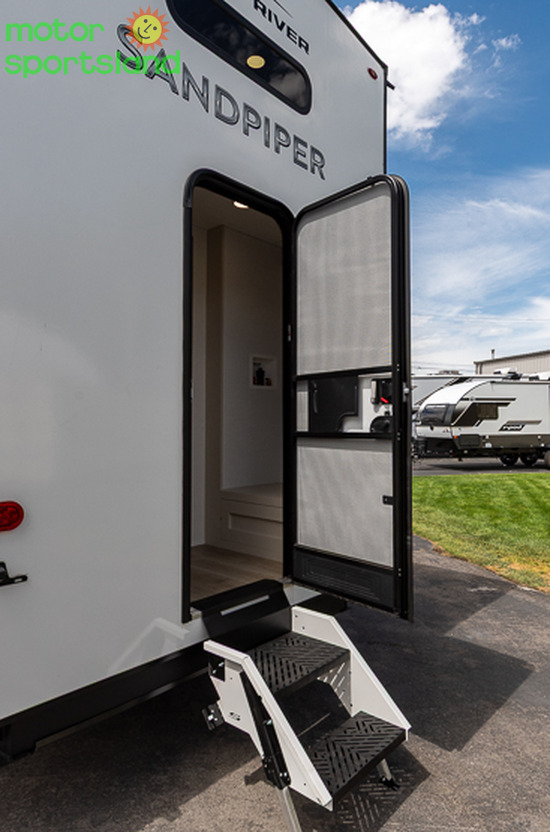
If you're shopping Forest River travel trailers and fifth wheels and have been comparing a new travel trailer against something this size, the thing to weigh is whether you want capability or simplicity. This one is the capability answer. An outdoor refrigerator and ice maker are available on select models in this line, so ask us what's fitted before you plan around it.
Frequently asked questions
What truck do I need to tow it?
Check your own truck's door sticker rather than a brochure number. You're working against 1,290 pounds of hitch weight and a 14,000-pound GVWR, so confirm both your payload and your rear axle rating before you commit, and remember the hitch hardware and passengers come out of payload too.
How much can I load before I hit the limit?
Dry weight is 12,734 pounds against a 14,000-pound GVWR, which leaves roughly 1,266 pounds for water, gear and food. Fifty gallons of fresh water alone is a meaningful share of that, so weigh it loaded once and you'll know where you stand.
Is this floorplan set up for long stays?
The 156-gallon grey and 104-gallon black tanks, the 60,000 BTU tankless water heater and the heated, enclosed underbelly point that direction, and this one carries the Extended Stay package. Fresh water is 50 gallons, so extended dry camping still means hauling water.
How many people does it sleep, and where?
Eight, using a queen bed in the bedroom plus a bunk area and a loft. That spreads the sleeping out instead of converting living space every night.
Will it fit my campsite?
At 40.08 feet long and 13.33 feet tall, it won't fit every site, especially in older state park loops. Check your reservation's maximum length and watch clearances on the route in.
For the complete spec sheet, current photos and what's on the lot right now, see the live listing. Then come to Spanish Fork and back your truck up to one. We'll put the hitch together, let you feel what 1,290 pounds on the pin does to your suspension, and walk the coach with you before you decide anything.
In stock now:
Browse travel trailers for sale in Utah, Forest River RVs or all our inventory.
