
10 High-Impact RV Upgrade Ideas for Utah Adventures

Transform Your Rig: Top RV Upgrades for Utah Campers
You pull back into Salt Lake after a weekend in the Uintas or down near Moab and the trip was good, but the weak spots are hard to ignore. The generator droned longer than it should have. The shower turned cold too fast. Backing into a tight site took more tries than you wanted. Utah has a way of exposing what an RV does well and what needs attention.
In our Salt Lake City service shop, we see the same pattern every season. Owners rarely regret spending money on comfort, safety, or off-grid power. They regret buying upgrades in the wrong order, mixing components that do not play well together, or adding weight without checking how the trailer will tow through Parleys Canyon or over Soldier Summit.
Utah also asks more from an RV than a flat, mild-weather campground does. High altitude can affect burner performance and cooling efficiency. Desert heat is hard on tires, roof materials, batteries, and interior comfort. Long mountain grades put hitch setup, braking, and cargo balance under a microscope. A trailer that feels fine at a local park can show real problems on a hot climb or a windy stretch of I-15.
That is why upgrade planning needs to match how you camp.
At Motor Sportsland, we help customers sort out those trade-offs every day. Some projects are good DIY jobs if you have the tools and time. Others are better handled in a service center because one wiring mistake, one roof penetration, or one hitch setup error can cost more than the install. If you are building a trailer for more off-grid travel, it helps to review real off-grid camping setups and use cases before you start buying parts.
This guide focuses on the upgrades that usually return the most value for Utah campers, especially owners of travel trailers and fifth wheels. The goal is simple. Spend where you will feel the improvement on every trip, and avoid upgrades that sound good on paper but do not solve the problems Utah camping creates.
1. Solar Panel System Installation
If you camp anywhere from the West Desert to the red rock country, solar is one of the most practical RV upgrade ideas you can make. Utah gives you strong sun, a lot of public land, and plenty of campsites where shore power isn't part of the experience. A well-planned system cuts generator time, keeps batteries healthier, and makes dry camping much easier.
We usually recommend owners think about roof layout before they buy parts. Panels need clean exposure, and roof clutter can ruin output. If you already know you want better off-grid capability, it helps to review some off-grid camping setups and use cases before you start drilling into the roof.
What works best in Utah
A basic setup can support lights, fans, charging, and water pump duty. A more serious setup works better for people spending longer stretches around places like Flaming Gorge or Capitol Reef. The biggest mistake we see is treating solar like a standalone upgrade when it really needs to match your batteries, inverter, and daily power habits.
Practical rule: Install solar before you crowd the roof with extra accessories. Shading from AC units, vents, and cargo racks can turn a good solar plan into a disappointing one.
Good solar installs also depend on clean charging logic. An MPPT controller is usually the right move if you want better harvest in changing sun conditions. In Utah, that matters in shoulder seasons when the sun angle shifts and campsites often have partial morning or evening shade.
- Tilt matters in winter: Fixed flat panels are simple, but adjustable brackets help when the winter sun sits lower.
- Dust is real: Fine dust from desert roads and dry campgrounds can knock performance down if you never clean the panels.
- Plan wire runs early: The cleanest install is usually the one designed before interior panels and trim are closed back up.
We've installed solar for owners who wanted little more than quieter mornings, and we've installed it for families building a full mobile work setup. Both can make sense. The key is sizing for your actual use, not the version of camping you imagine once a year.
2. Upgraded Lithium Battery System
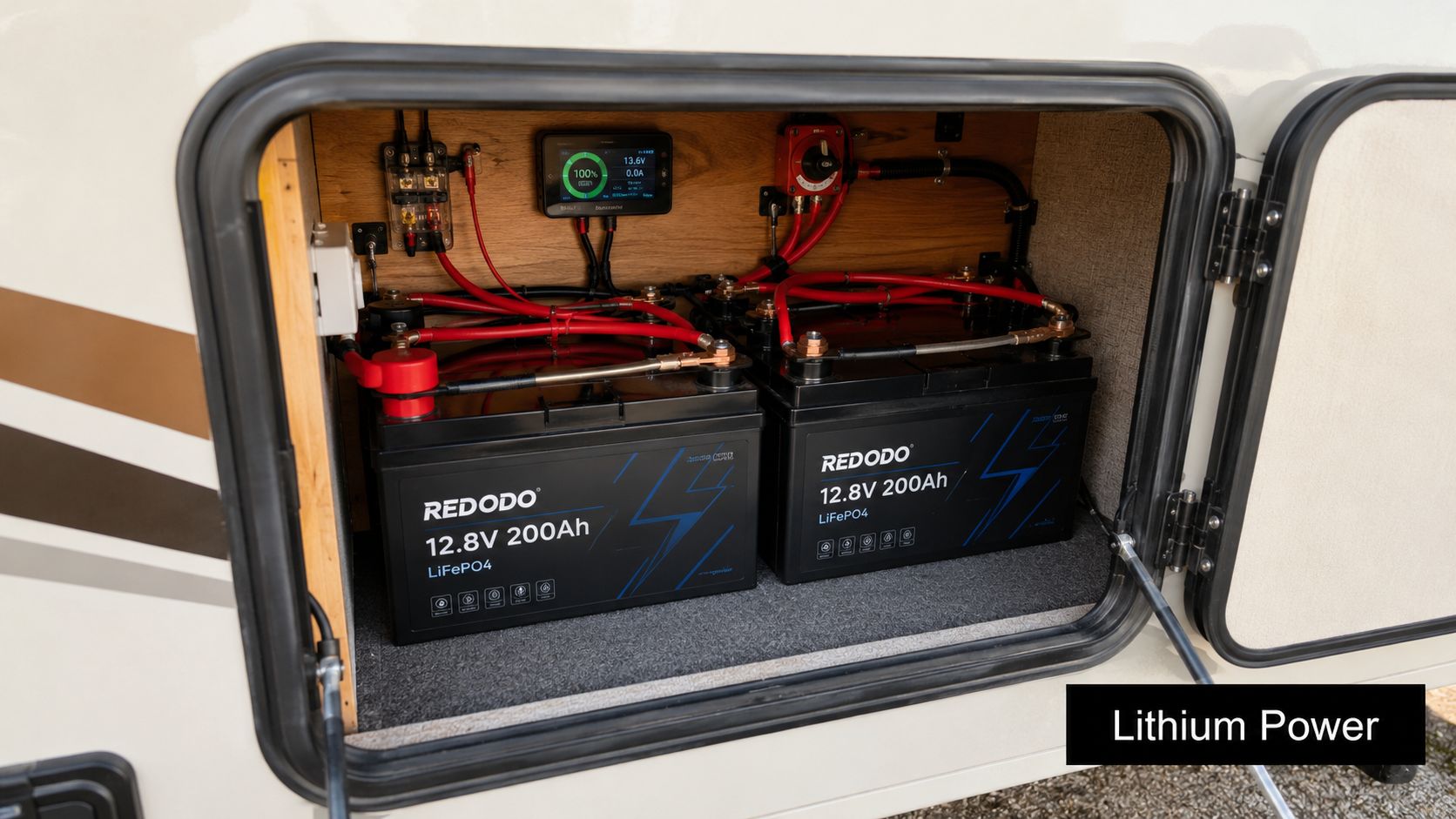
Lithium gets talked about like an automatic yes. It isn't. It's one of the best RV upgrade ideas for the right owner, but it needs a clear-eyed look at cost, charging equipment, and how you camp.
One of the few hard data points worth paying attention to here is that lithium upgrades often come with a much higher upfront cost. Recent industry commentary notes a roughly 300 to 500 percent higher initial cost than traditional lead-acid, while also citing a 2 to 3 times longer lifespan in many use cases, discussed in Outdoorsy's piece on RV upgrades and lithium trade-offs. That same source also notes that 65% of new off-grid RV buyers prioritize lithium systems, and that 15% of DIY electrical upgrades fail within the first year.
Where lithium pays off
If you boondock often, run an inverter regularly, or hate babying lead-acid batteries, lithium usually feels like a major quality-of-life improvement. Voltage stays steadier, usable capacity is better, and weight savings can help. That last point matters more than many owners expect, especially in bunkhouse trailers and toy haulers that already carry a lot of gear.
The bad installs are almost always the same. Old converter still in place. No battery monitor. Wrong fuse protection. Wiring that's too light. Cold-weather use with no heating plan.
Lithium is not a drop-in battery swap if the rest of the charging system still thinks it's feeding lead-acid.
If you want this done right, pair the battery upgrade with a lithium-compatible charger, proper overcurrent protection, and a real battery monitor. If the RV sees winter use around southern Utah or ski parking lots, battery heating matters too. We'd rather talk a customer out of a rushed lithium install than watch them come back with charging issues, nuisance shutdowns, or damaged components.
For owners who use their trailer a few weekends a year and mostly stay in full-hookup parks, lithium may not be the first dollar to spend. For owners chasing long off-grid stretches, it can be a foundational upgrade.
For a broader consumer view of storage economics, this overview on understanding solar battery costs and ROI can help frame the conversation.
3. Upgraded Water Heater
A weak water heater becomes a real problem fast when you're camping at altitude or dealing with cold mornings in the Uintas. This is one of those RV upgrade ideas that owners often put off until they've had one too many short showers or temperature swings.
Tankless and hybrid systems both have a place. Tankless usually makes more sense for regular boondockers who want simpler propane-based operation and don't need to store hot water in a small tank. Hybrid setups fit better for owners who spend a lot of time in campgrounds and want to use shore power when it's available.
Tankless versus hybrid in the real world
In our shop, the right answer usually comes down to camping style, not hype. A family running back-to-back showers at a developed campground has different needs than a couple dry camping outside Moab. The wrong choice isn't just inconvenient. It can also create annoying ignition behavior, unstable temperatures, or venting headaches.
- Choose for your camping pattern: Frequent hookups favor hybrid. Frequent dry camping favors simpler propane tankless systems.
- Check venting carefully: Vent routing and combustion safety aren't DIY guesswork.
- Think about water pressure: A better pump and stable flow often improve the experience as much as the heater itself.
At Utah elevation, appliance behavior can get finicky. Burners, airflow, and pressure consistency matter more than they do at lower elevations. That's one reason we prefer professional installation on anything involving gas and venting.
Some owners also overbuy on capacity and then struggle to fit the unit cleanly into the existing compartment. Measure carefully, and think through service access. Future maintenance matters.
If you're comparing home-style efficiency concepts and sizing logic, this article on sizing a heat pump water heater can be useful background, even though RV fitment and venting are their own category.
4. Improved Ventilation and Cooling
Before you spend big money on more air conditioning, improve airflow. In Utah heat, that order matters. A powered roof vent can make the coach feel dramatically different, especially in the evening when outside air finally starts cooling down.
This matters for more than comfort. Better airflow helps control cooking moisture, shower humidity, and the stale air that builds up when an RV sits in the sun all day. We've had owners come in asking for a second cooling unit when the first thing they needed was better vent management and better shade control.
Start with the roof vent
A quality powered vent is one of the most cost-effective RV upgrade ideas on this list. It pulls trapped heat out, helps overnight cooling, and reduces the need to fire up a generator just to get some air moving. For owners who camp at Bear Lake, Sand Hollow, or exposed desert sites, that upgrade earns its keep fast.
Then look at the rest of the cooling system as a package.
- Add reflective window coverings: They cut heat gain before the AC has to fight it.
- Use the right sealant: Cheap silicone often fails in dry heat and strong UV.
- Check electrical support first: Extra cooling equipment can overload a weak electrical system.
We also like zone thinking inside the coach. A recent remodeling trend for RVs is moving beyond simple bulb swaps and into zone-based LED layouts with smart dimmers, allowing separate living, kitchen, and sleeping areas, as described in these camper remodel ideas for 2026. That same logic applies to cooling. You don't always need to cool the whole RV the same way at the same time.
Better ventilation usually solves more comfort complaints than people expect, especially in dry climates with big day-to-night temperature swings.
If you're evaluating heating and cooling appliances generally, this guide on selecting the right water heater isn't RV-specific, but it does highlight why sizing and energy source choices need to match actual use.
5. Reinforced Hitch System and Weight Distribution Upgrade
For Utah towing, this is near the top of the safety list. A trailer that feels acceptable on flat city streets can feel completely different on mountain grades, in canyon winds, or when traffic shifts around you on I-15 or I-80.
A properly matched weight-distribution hitch with sway control doesn't just make towing feel better. It makes the tow vehicle and trailer work together the way they're supposed to. That's a huge deal if you're hauling a family trailer through Parleys Canyon or pulling a toy hauler toward southern Utah.
Stability matters more than comfort
When owners describe white-knuckle towing, the hitch setup is often part of the story. Not always the whole story, but part of it. Tongue weight, rear suspension squat, brake controller settings, and tire condition all play into the same system.
If you're comparing sway-control options, our overview of RV sway control setups and towing stability is a good starting point for matching equipment to trailer size and use.
The other issue people miss is weight. Extra batteries, toolboxes, generators, and cargo all change hitch behavior. Recent guidance around RV makeovers highlights a more serious version of that problem. Common upgrades such as concrete countertops and full solar arrays can push some rigs over GVWR, and that has been tied to tire and suspension risk in Extra Space Storage's discussion of RV makeover ideas and weight concerns.
- Know loaded tongue weight: Guessing leads to poor hitch selection.
- Adjust on level ground first: Fine-tune before you head for the mountains.
- Inspect annually: Worn components change towing behavior gradually, and many owners don't notice until the trailer starts moving around more.
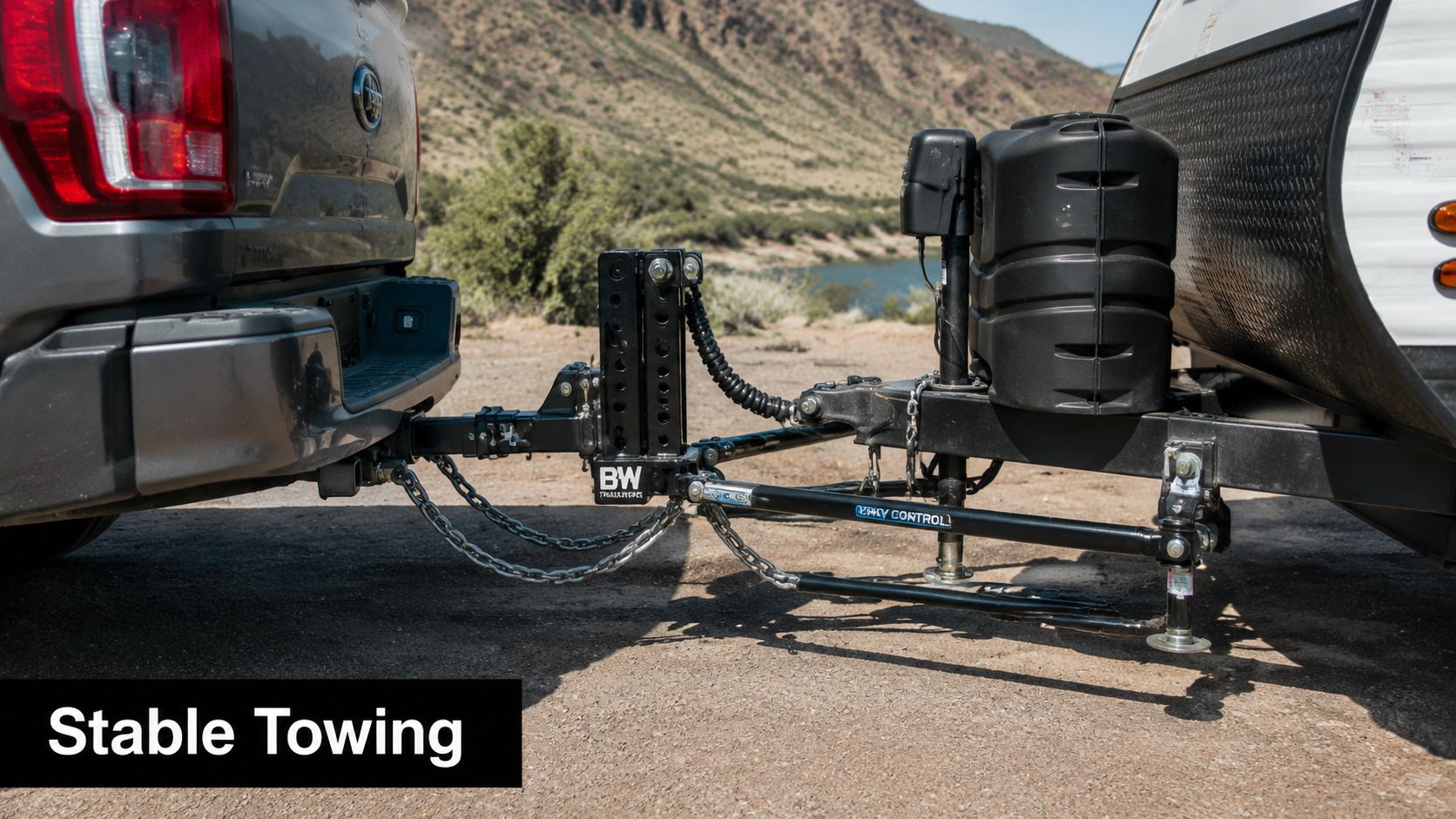
This is one area where a professional setup is worth it. Close enough isn't good enough when the road turns steep and windy.
6. Upgraded Appliances and Stove or Oven Replacement
This upgrade is often about livability more than glamour. A lot of factory RV kitchens are fine for reheating, light breakfast, and simple dinners. They're not always great for real cooking, especially if you travel for longer stretches or camp with kids.
Younger RV owners are influencing what people now want from their rigs. The median age of U.S. RV owners dropped from 53 in 2021 to 49 in 2025, and Gen X and Millennials now make up 46% of owners ages 35 to 54, according to this RV manufacturing outlook. That same outlook describes growing interest in upgrades such as energy-efficient LED lighting and modular kitchen designs that support a more flexible mobile lifestyle.
What actually improves the kitchen
We've seen owners transform how they use the coach just by replacing one weak appliance with the right one. A better refrigerator solves food storage headaches. A more usable cooktop changes whether you eat outside the RV every night. An induction unit can be excellent, but only if the electrical system and cookware support it.
The caution here is fit and power. Residential appliances often require cabinet changes, stronger circuits, and more ventilation planning than buyers expect.
- Measure the opening precisely: Small size differences become big install problems.
- Match the power system: All-electric kitchen upgrades can drive inverter and battery upgrades.
- Insulate around the appliance: Thin RV walls don't hide heat the way a house does.
If your current fridge, range, or microwave has become unreliable, our RV appliance repair and replacement services can help you decide whether repair or full replacement makes more sense.
Some of the newest 2026 floor plans are arriving with stronger baseline equipment, including dual composite walls, a 300 lb rated accessory hitch, 1,800W inverter capacity, and dual air conditioning, as shown in this 2026 RV floor plan walkthrough. Older coaches can absolutely be improved, but it's worth being honest about how much aftermarket work it takes to match newer mechanical specs.
7. Premium Tire and Wheel Upgrade
Coming down Parleys Canyon in July, with a fully loaded trailer and hot pavement under you, is when tire quality stops being a theory. Utah exposes weak tire setups fast. Desert heat around Moab, long freeway miles across I-15, and rougher access roads near trailheads all put real stress on tires and wheels.
In our Salt Lake City service shop, we see the same pattern over and over. Owners focus on tread brand, but the bigger issues are usually load capacity, tire age, inflation, and wheels that were barely adequate from the factory. A worthwhile upgrade starts with your actual loaded axle weights, then matches the tire's load range and speed rating to how the RV is used.
Match the setup to Utah use
For mostly highway travel, a quality trailer tire with good heat control and a wheel rated for the load usually makes the most sense. For owners who regularly tow into dispersed sites or over washboard roads, stronger sidewalls and a tougher wheel can be worth the extra cost, even if ride quality gets a little firmer. Bigger off-road style tires can look good, but they also add clearance, fender, and gearing questions that need to be checked before ordering parts.
TPMS is part of this upgrade too. A tire pressure monitoring system gives earlier warning when a tire starts building heat or losing pressure, which is exactly what you want before a shoulder-side blowout on a summer travel day.
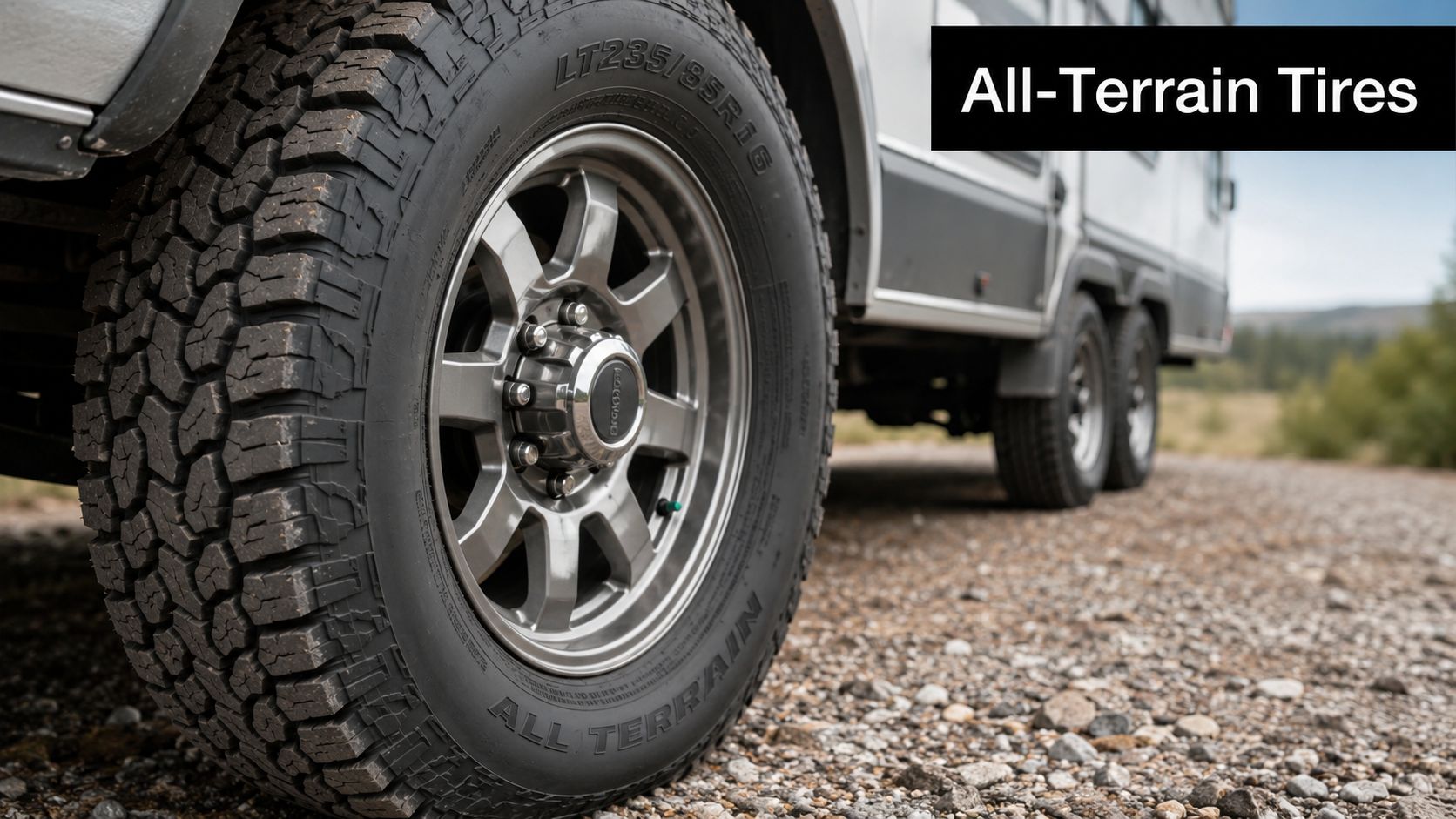
Buy tires for your loaded reality, not your empty brochure weight.
A few shop rules are worth following:
- Start with axle ratings and real scale weights: Guessing leads to the wrong tire.
- Use a gauge and check pressure cold: Sidewall appearance is not a reliable test.
- Replace tires in matched sets: Mixed ages and mixed constructions can hurt tracking and braking feel.
- Inspect wheel ratings before upgrading tires: The tire is only half the system.
This upgrade can be DIY if you're only adding a TPMS and staying with the same tire size. It becomes a pro job once wheel ratings, fitment, suspension clearance, or load calculations change. Cost depends on size and quality, but this is one of the upgrades that pays back in fewer roadside failures, better tracking in crosswinds, and more confidence on long Utah travel days.
8. Backup Camera and Blind-Spot Mirror System
This one pays you back every trip. Not in luxury, but in lower stress. If you've ever tried backing into a tight campsite after dark or merging with a longer trailer on a crowded Utah freeway, you already know why.
A camera system doesn't replace good mirrors or a spotter. It closes the blind zones those tools can't fully cover. That matters at campgrounds, fuel stops, dump stations, and boat ramps. It matters even more when you're tired after a long day.
Wired usually beats wireless
Wireless systems can work, but wired systems are generally more dependable over time. We see fewer signal complaints, fewer intermittent issues, and less frustration when the camera is hardwired cleanly. Mount location matters too. A low, centered angle often does the best job catching curbs, stumps, and the little obstacles that do expensive damage.
For longer trailers and fifth wheels, convex blind-spot mirrors are cheap insurance. They're simple, but they widen your awareness in lane changes and fuel-stop maneuvering.
- Use night vision if possible: Evening arrivals are common, especially in summer.
- Seal the camera housing carefully: Roof and rear wall penetrations need to stay watertight.
- Test in an empty lot: Dial in the view before the next crowded campground arrival.
We've had plenty of customers tell us a backup camera became the upgrade they appreciated most, even though it wasn't the one they were most excited to buy. That tracks with our experience. A lot of good RV upgrade ideas improve your trip in subtle ways. This is one of them.
9. Electrical Integration and Inverter Charger Upgrades
If you're adding solar, lithium, bigger appliances, or extra cooling, this is the backbone upgrade that keeps everything from turning into a patchwork mess. Electrical integration isn't flashy, but it's where a lot of expensive mistakes start or stop.
Many stock RV electrical systems were never designed around today's owner expectations. People want to charge work gear, run kitchen appliances, stay off-grid longer, and support more comfort features. That demand is growing along with the market. The global recreational vehicle market was valued at USD 69.09 billion in 2024 and is projected to reach USD 115.99 billion by 2032, with North America holding approximately 48.42% of market revenue in 2025, according to Data Bridge Market Research's global recreational vehicle market report.
Build the system as one package
An inverter upgrade without battery planning is incomplete. A lithium battery upgrade without charger compatibility is risky. A new appliance circuit added to an already strained panel is asking for trouble. We treat these as one conversation because that's what they are in practice.
A clean electrical upgrade usually includes proper cable sizing, quality breakers, a charger that matches battery chemistry, and a monitor that gives you accurate state-of-charge information.
Here's a useful walkthrough if you want to see some of the concepts in action before talking with a tech:
A good electrical system should feel boring. It should just work, trip predictably when needed, and support the way you camp without constant workarounds.
For Utah owners who split time between hook-up campgrounds and remote sites, that flexibility matters. If you're already planning more than one electrical upgrade, do them in the right sequence. It saves labor, reduces duplicated parts, and leads to a much cleaner result.
10. Professional Installation and Service Support
You find out where DIY stops on I-80 headed east from Salt Lake. A loose battery cable, a poorly sealed roof penetration, or a hitch setup that looked close enough in the driveway can turn into a long shoulder stop once the wind picks up or the grade steepens.
Utah puts more stress on upgrade work than a lot of owners expect. Desert heat exposes weak electrical connections. High elevation affects appliance performance. Long mountain pulls punish marginal cooling, charging, and towing setups. That is why install quality matters as much as the part you buy.
Professional service also makes more sense right now because many owners are keeping the rig they have and improving the weak points instead of trading up, as noted earlier in the article. In our shop, that usually means building a plan around how the RV is used in Utah, not adding parts one at a time and hoping they cooperate.
What a good service department should catch
A shop install should solve fit, safety, and serviceability at the same time. If a lithium battery upgrade needs a charger change, that should be caught before parts are ordered. If a new vent fan or solar cable run needs roof work, sealant choice and routing matter. If a hitch upgrade changes ride height, the weight distribution setup needs to be checked again under load.
That saves rework later.
Here is what owners should ask for before approving the job:
- A written scope: Parts, labor, and what is being reused
- Compatibility checks: Charger, inverter, battery chemistry, propane pressure, venting, and mounting points
- Load or function testing: Not just installation, but proof the system works under real use
- Documentation to keep: Wiring notes, component model numbers, and service recommendations
- Clear DIY boundaries: Ask which follow-up items you can handle yourself and which ones belong back in the shop
Some upgrades are realistic weekend projects. Others should stay with certified technicians. Roof AC replacement, inverter charger installs, propane appliances, structural hitch work, and collision-related repairs fall into the second group for good reason. If one of those jobs fails in Utah, it usually fails far from home, in bad weather, or halfway up a pass.
Motor Sportsland serves Utah from Millcreek and Spanish Fork, and the service team handles maintenance, repairs, plumbing, electrical work, upgrades, parts, and collision repair. For owners trying to stretch a budget, a shop visit can also help prioritize the sequence. Do the safety items first, combine labor where it makes sense, and save the cosmetic upgrades for later.
Top 10 RV Upgrade Comparison
| Upgrade | Complexity 🔄 | Resources ⚡ (Cost / Expertise / Time) | Expected Outcomes 📊⭐ | Ideal Use Cases 💡 | Key Advantages ⭐ |
|---|---|---|---|---|---|
| Solar Panel System Installation | Advanced (professional recommended) | $2,500–$6,000; panels (100–400W), MPPT controller, batteries, roof space, installer | Extended dry-camping, reduced generator use, higher resale 📊⭐ | Boondocking in sunny Utah, long trips away from hookups 💡 | Eliminates generator fuel/noise; scalable energy generation ⭐ |
| Upgraded Lithium Battery System (LiFePO4) | Advanced (professional electrical install) | $4,000–$12,000; 300–600Ah modules, BMS, charger/inverter upgrade, wiring | Weeks of boondocking, stable voltage under load, long cycle life 📊⭐ | Long-term off-grid stays, high-draw appliances, lightweight payload needs 💡 | High usable capacity, long lifespan, weight reduction ⭐ |
| Upgraded Water Heater (Tankless / Hybrid) | Intermediate–Advanced (gas/venting skills) | $1,500–$3,500; unit, venting/gas mods, possible electrical hookup, pro install | On-demand hot water, propane savings, space and weight reduction 📊⭐ | Frequent showers, cold mornings, mixed shore-power / boondock use 💡 | Endless hot water, improved efficiency, compact footprint ⭐ |
| Improved Ventilation & Cooling (Vents / AC) | Intermediate (vent DIY possible; AC pro) | $800–$5,000; powered vents, portable AC or mini-split, possible electrical upgrade | Better interior comfort, lower humidity/mold risk, reduced generator runtime 📊⭐ | Hot Utah summers, dusty camps, RVs without adequate airflow 💡 | Significant comfort gains; portable options for flexibility ⭐ |
| Reinforced Hitch & Weight Distribution | Advanced (precise setup required) | $1,200–$2,800; WDH hardware, sway control, professional setup and alignment | Improved towing stability, reduced sway, better braking and handling 📊⭐ | Heavy trailers, mountain passes, long highway tows in Utah 💡 | Dramatically increases towing safety and confidence ⭐ |
| Upgraded Appliances & Stove/Oven Replacement | Advanced (cabinet mods, gas/electrical work) | $2,000–$5,000+; residential or premium RV appliances, panel/venting changes, pro install | Home-like cooking, larger cold storage, reliable high-altitude performance 📊⭐ | Families/retirees who cook often, long-term travel, high-altitude camping 💡 | Better cooking results, capacity, and resale appeal ⭐ |
| Premium Tire & Wheel Upgrade (Load-Rated, AT) | Low (professional mounting recommended) | $1,500–$3,500; load-rated tires, balancing, optional TPMS | Lower blowout risk, improved handling, longer tread life 📊⭐ | Hot highways, gravel/remote access roads, heavily loaded rigs 💡 | Major safety and durability improvement for loaded travel ⭐ |
| Backup Camera & Blind-Spot Mirrors | Intermediate (wiring/monitor mounting) | $500–$1,500; camera(s), monitor, mirrors, wiring/installation | Safer backing/hitching, reduced blind-spot incidents, night maneuvering 📊⭐ | Tight campgrounds, hitching trailers, highway lane changes 💡 | High safety-to-cost ratio; reduces collision risk ⭐ |
| Electrical Integration & Inverter/Charger Upgrades | Advanced (professional electrical work) | Variable (depends on system); lithium-compatible inverter/charger, high-capacity breakers, wiring | Reliable charging from solar/shore/generator, supports high-draw appliances 📊⭐ | Lithium battery integration, solar-heavy systems, appliance upgrades 💡 | Ensures system compatibility, prevents damage, improves uptime ⭐ |
| Professional Installation & Service Center (Motor Sportsland) | Professional (certified technicians) | Service labor cost + scheduling; brand-certified installers, testing & documentation | Code-compliant installs, warranty protection, accurate system sizing 📊⭐ | Any complex electrical, gas, structural, or towing upgrades 💡 | Reduces installation risk, provides documentation and warranty support ⭐ |
Your Upgraded RV Adventure Awaits
You feel a good upgrade the first time you pull out of Salt Lake and head for real terrain. The trailer tracks straighter on Parleys. The battery bank still has capacity the next morning outside Moab. The cabin cools down faster after sitting in desert sun. The stove, water heater, and charging system stop feeling like weak links and start doing their jobs.
That shift is significant because the RV customer base is changing. More owners are buying with plans to camp longer, use their rigs in more seasons, and improve what they have instead of replacing it right away. As noted earlier, RV ownership and buyer interest have grown, and that has pushed more attention toward upgrades that improve comfort, reliability, and usable service life.
We see that in Utah every season. One customer is trying to keep a trailer stable on steep mountain grades. Another wants to dry camp farther from hookups without running a generator half the night. Another is working with a used fifth wheel and wants to spend money in the right order instead of throwing parts at it. Those are different jobs, and they call for different upgrade plans.
Start with the items that affect safety, control, and basic function. After that, spend on the systems that match your camping style. If your trips are built around southern Utah boondocking, power and cooling usually move up the list. If you spend more time crossing the Wasatch or towing a loaded toy hauler, towing hardware, tires, and weight balance usually pay off sooner. A polished interior can wait if the coach still has a weak charging setup or marginal hitch behavior.
Utah exposes bad decisions fast. High altitude changes appliance performance and cooling load. Desert heat punishes cheap sealants, undersized fans, and tired batteries. Long grades expose marginal tires, poor weight distribution, and weak brake setup. Winter storage adds another layer, especially if charging profiles, battery protection, and roof maintenance were handled carelessly.
That is why we talk through trade-offs in the service center before recommending parts. Some upgrades are smart DIY projects. Others should stay in a qualified shop because one wiring error, gas leak, or hitch setup mistake can cost far more than the labor bill. We regularly help owners decide whether to do a full install now, stage the work over time, or hold off until the rest of the system is ready.
At Motor Sportsland, that conversation happens with the way Utah owners camp in mind. Our Salt Lake City area team works on new and used RVs, so we can help whether you are improving the trailer you already own or starting with a coach that checks more boxes on day one. You can browse current inventory on Motor Sportsland, stop by the showroom, or talk with the service department about a practical upgrade plan for your rig, your budget, and the places you plan to camp.
FAQ
Which RV upgrade should I do first?
Start with safety and reliability. Tires, hitch setup, brake controller function, weight awareness, and visibility upgrades usually come before comfort items.
Are lithium batteries worth it for a weekend camper?
Sometimes, but not always. If you mostly stay in hookup campgrounds and only take short trips, the return may be weaker than it is for frequent boondockers.
Do solar panels work well for Utah camping?
Yes. Utah's sunny climate makes solar one of the more practical RV upgrade ideas, especially for dry camping and reducing generator run time.
Can I install RV upgrades myself?
Some projects are DIY-friendly, such as simple lighting or storage improvements. Electrical, gas, venting, roof penetrations, and hitch setup are usually better handled by a qualified service center.
What upgrades help most with Utah summer heat?
Powered roof vents, reflective window coverings, better airflow, and cooling system planning usually help the most. In many rigs, ventilation improvements come before adding more AC equipment.
Why does weight matter when upgrading an RV?
Every added component changes carrying capacity and can affect towing, tire loading, and suspension behavior. Heavy upgrades should always be considered against your RV's ratings and cargo needs.
If you're ready to sort out the best RV upgrade ideas for your trailer, fifth wheel, toy hauler, or motorhome, contact Motor Sportsland to browse inventory, schedule service, or talk through an upgrade plan with a Utah-based team that works on these rigs every day.
