
Best Fifth Wheel with Rear Kitchen Models for Utah in 2026
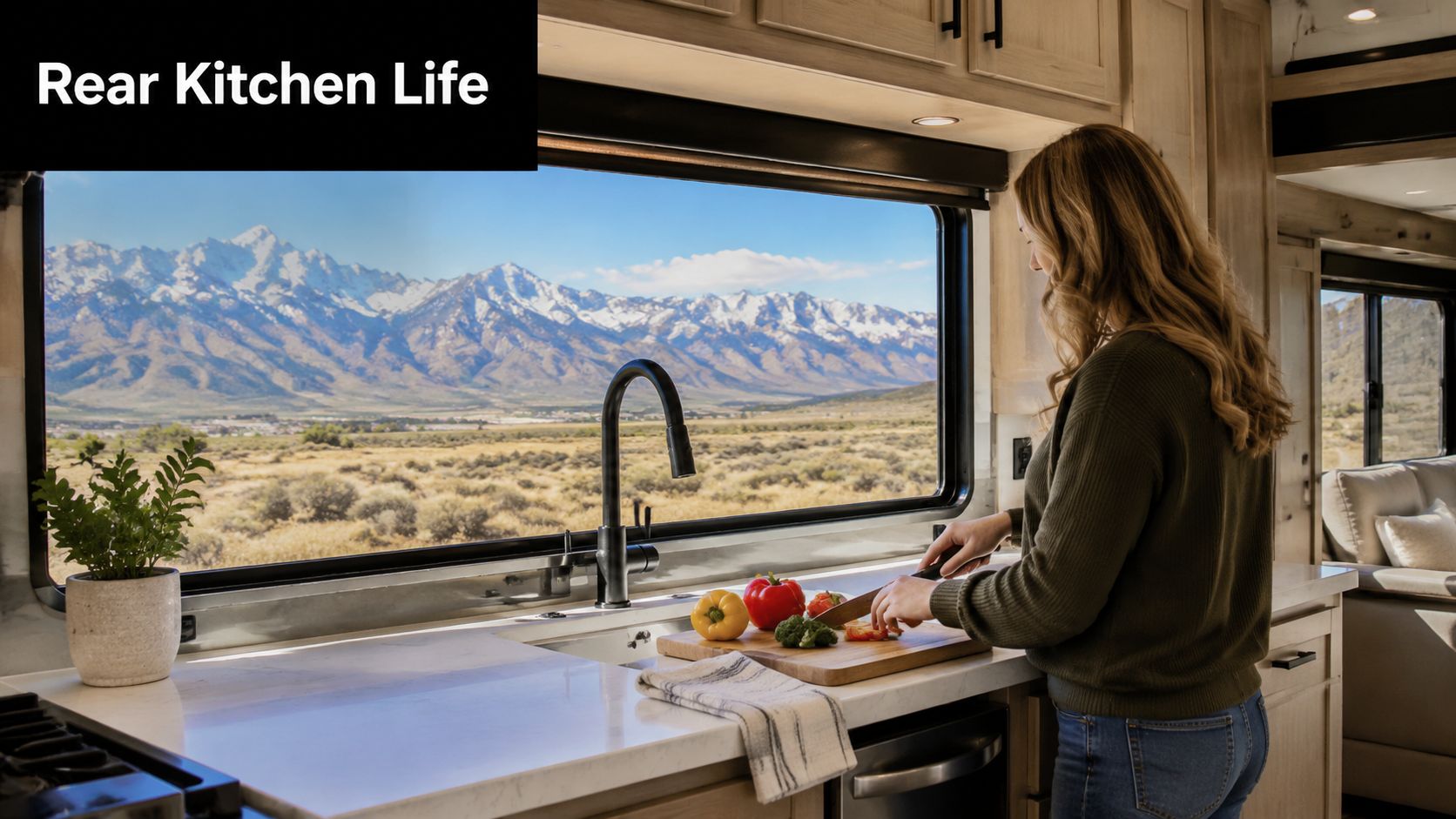
Picture this: you're prepping dinner with a panoramic view of the Wasatch Mountains unfolding right behind your sink, instead of staring at a wall in a cramped galley. That's the unique appeal of a fifth wheel with a rear kitchen—a layout that puts a full, residential-style kitchen right at the very back of the RV, and it’s a favorite among our customers here at Motor Sportsland.
This floorplan isn't just about moving the stove and fridge; it's a complete rethinking of the RV living experience. By creating dedicated zones for cooking and relaxing, it solves a common dilemma for many of our customers: how to get a spacious, functional kitchen without sacrificing the living area. Here at our Salt Lake City dealership, we've seen firsthand how this design has become a game-changer for Utah families and full-time adventurers.
So, what's all the fuss about? Our team wants to give you the honest, practical advice you need to decide if this layout is right for you. We’ll dig into the real-world pros and cons we discuss with folks in our showroom every day, look at how different floorplans suit various travel styles, and cover the critical towing factors you need to consider for navigating Utah's unique terrain.
An informed buyer is a happy camper, and we're here to help you make the best choice for your adventures. Of course, a great kitchen is only half the battle; keeping it organized is key. You can find some great tips on how to master RV food storage strategies to make life on the road even easier.
What Is a Rear Kitchen Fifth Wheel, Anyway?
When you hear the term "rear kitchen fifth wheel," the name says it all. The entire kitchen—your sink, stove, fridge, and countertops—is situated at the very back of the coach. But this isn't just a minor design tweak; it completely changes the feel and flow of the entire RV.
Instead of a galley-style kitchen in the middle of the traffic path, this layout creates a dedicated cooking zone at the rear. It’s a design that separates the hustle and bustle of meal prep from your main living area, which is a huge reason why so many of our customers here at Motor Sportsland gravitate toward it.
Defining the Space and Flow
The first thing you’ll probably notice when you step inside a fifth wheel with a rear kitchen is just how open it feels. By moving all the kitchen components to the back wall, designers can open up the floorplan and often include large, wrap-around countertops in a U-shape or L-shape. This gives you way more prep space than you’ll find in most other layouts.
The signature feature that people fall in love with is the massive picture window almost always found over the rear sink. Suddenly, washing dishes isn’t a chore—it’s a chance to take in an amazing view of your campsite, whether you’re parked by Bear Lake or nestled in the Uinta mountains.
Of course, a great RV kitchen is about more than just counter space; it's about smart storage. If you're looking for inspiration on how to make the most of every cabinet and drawer, you can discover smart kitchen space ideas that translate perfectly from home to RV.
What to Expect Inside
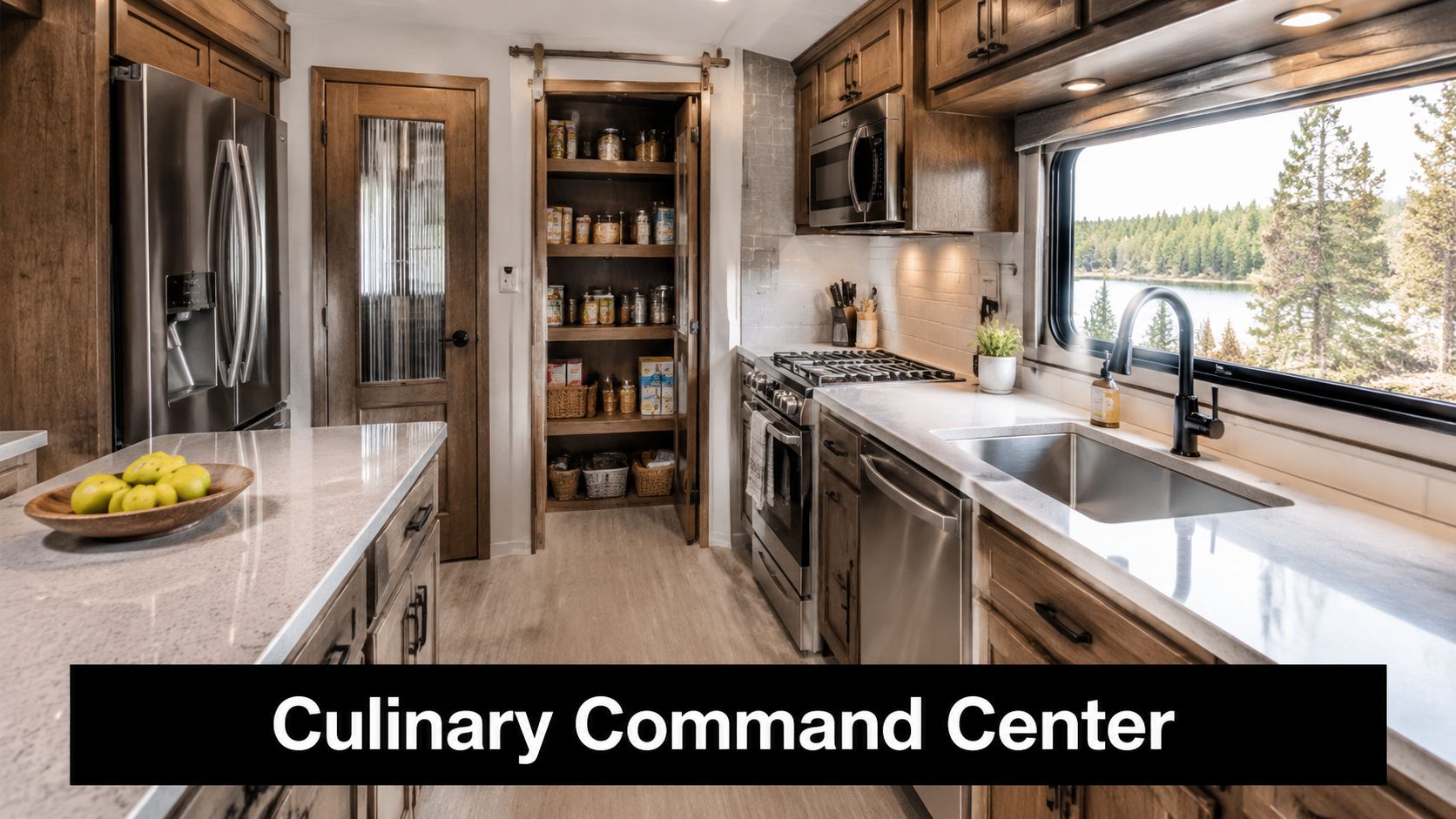
From what our team has seen on the lot, this layout makes it much easier to incorporate residential-style features, which is a big win for full-timers and families. Here are a few things you'll commonly find in these models:
- Generous Pantry Space: Many rear kitchens boast huge, floor-to-ceiling pantries, often with handy pull-out shelves, giving you plenty of room for groceries.
- Residential Appliances: With a dedicated rear wall, there’s more room for bigger refrigerators (typically 12 to 18 cubic feet), full-size microwaves, and occasionally even a small dishwasher.
- Separated Living Area: The living room truly becomes its own space, away from the clatter and smells of cooking. It just feels more relaxing when you want to kick back and unwind after a day exploring Utah.
The Pros and Cons Our Customers Experience
Here on the lot at Motor Sportsland, it’s a familiar scene: a couple walks into a rear-kitchen fifth wheel, and you can see their eyes light up. The appeal is immediate. But, like any floorplan, living with it reveals the real-world trade-offs. After talking with hundreds of our customers, our team has gathered the honest feedback you need to decide if this layout is right for you.
The Big Wins: What People Love About This Layout
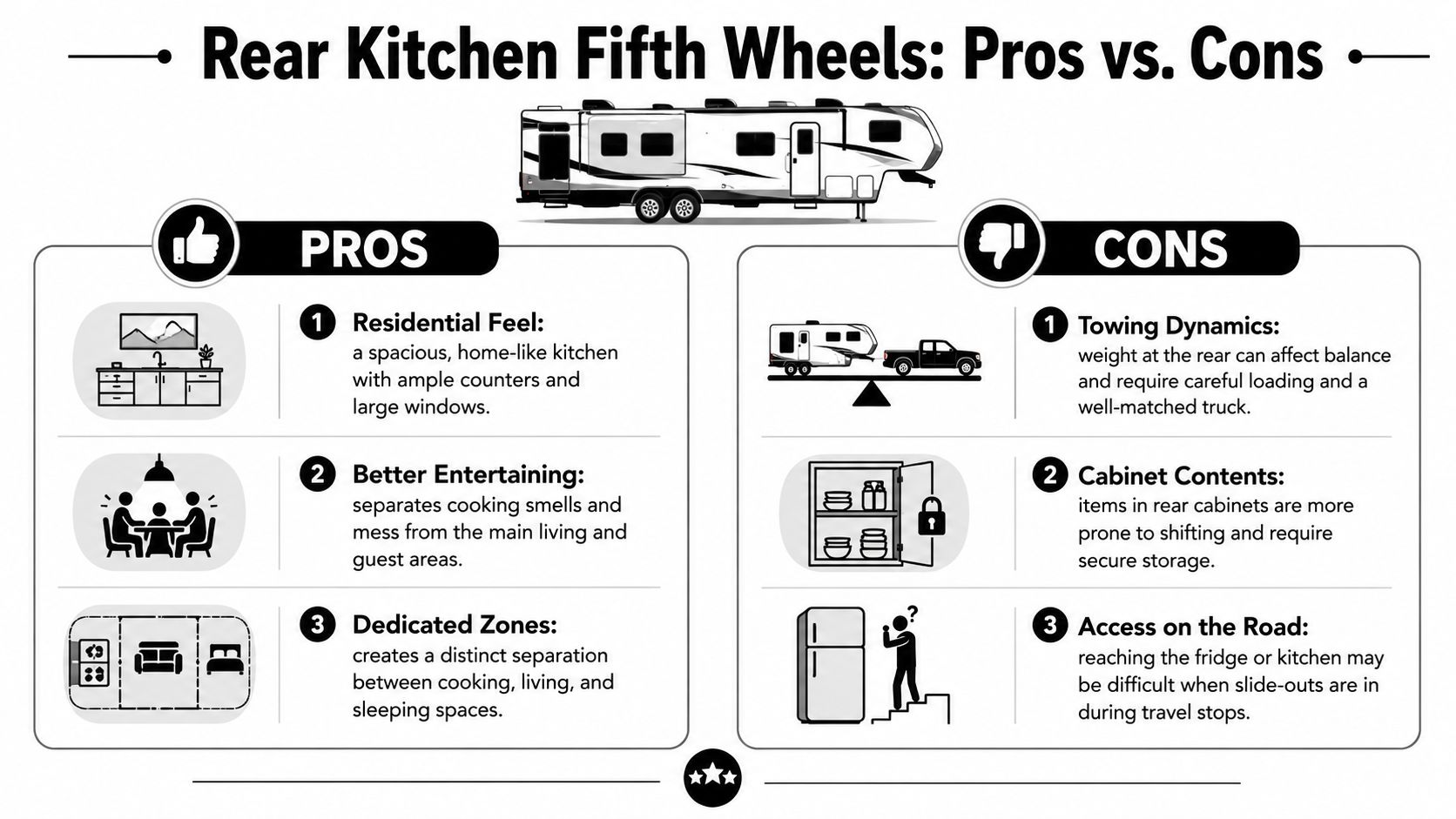
The biggest praise we always hear is about the clear separation of space. When you're cooking, you have a dedicated kitchen. When you're relaxing, the living area feels like its own room, away from the clatter and smells of meal prep. This creates a much more residential, home-like atmosphere that our long-term travelers and full-timers really appreciate.
- A True Chef's Kitchen: The sheer amount of counter space is a huge win. You can spread out, use multiple small appliances, and cook elaborate meals without feeling cramped.
- The Best Views: That signature large window over the sink is a showstopper. There’s just something better about doing dishes when you're looking out over a gorgeous Utah landscape.
- Great for Entertaining: Guests can hang out on the sofa without being underfoot. The living area stays clean and inviting, even while dinner is a work in progress, which makes having company feel much more relaxed.
Real-World Trade-Offs to Keep in Mind
Now for the practical side. Our service team will always tell you to be mindful of the weight. All that heavy stuff in the rear can lighten the load on your truck’s hitch, a measurement we call pin weight. Putting heavy appliances like the fridge, oven, and a pantry full of food at the very back of the RV is a major design choice that directly impacts how it tows. If the pin weight is too low, it can lead to a less stable, almost "floaty" feeling on the road. You’ll really notice it on windy days or going through winding mountain passes like Parley’s Canyon.
Our Team's Tip: We always advise customers to load heavy gear—like toolkits, cases of water, or your cast-iron skillet—forward of the RV's axles. It's a simple way to help maintain a safe, stable pin weight for a better towing experience.
You also have to think about how things ride back there. The rear of a fifth wheel gets the most bounce and sway on the road.
- Secure Your Gear: You'll need to be extra diligent about packing your cabinets. We recommend using non-slip liners, tension rods, and securely latched containers to keep your dishes and pantry items from turning into a mess by the time you arrive.
- Roadside Access: When the slides are in, getting to the fridge or pantry for a quick rest-stop lunch can sometimes be a challenge. This is something we always encourage you to test out during your walkthrough—don't be shy about it!
Ultimately, this layout is a perfect example of how manufacturers are building RVs for specific lifestyles. The concept scales from smaller couple's coaches to massive luxury rigs. For instance, we've seen 2026 models as short as 28 feet and 7,700 pounds, while others stretch to 41 feet and weigh over 12,600 pounds. You can see how floorplan specialization impacts model variety and pricing across the industry to get a feel for the wide range of options out there.
Comparing Popular Rear Kitchen Floorplans
When you start shopping for a fifth wheel, you'll quickly realize that not all rear kitchens are the same. Manufacturers like Keystone and Forest River have gotten incredibly creative, designing layouts that cater to completely different kinds of campers. To help you get a feel for what might work for you, let's walk through a few of the most common variations we show customers here on our lot in Salt Lake City.
Think of it as finding the right tool for the job—your adventure style will point you toward the perfect layout.
Ultimately, you’re often swapping a bit of towing simplicity for a living space that feels worlds bigger and more comfortable inside.
The Classic Couples Coach
This is easily one of the most popular rear kitchen layouts we carry, and for good reason. It’s built from the ground up for two people who want a spacious living area and a truly fantastic kitchen.
- What to look for: You'll almost always find a big U-shaped kitchen right at the back, giving you tons of counter space. The main living area usually has two opposing slides, which creates an enormous, wide-open room with theater seating aimed directly at the entertainment center.
- Who it's for: This is the perfect setup for couples who genuinely enjoy cooking and having friends over. It’s ideal for everything from weekend getaways to Jordanelle Reservoir to long, cross-country trips where you want to feel at home on the road.
The Family-Friendly Entertainer
When you need to bring kids or guests along, manufacturers get clever. They adapt the rear kitchen design by using multi-functional furniture and slightly different layouts to add sleeping capacity without sacrificing that great kitchen.
Rear-kitchen fifth wheels are often seen as larger, feature-packed rigs, making them a hit with full-timers and long-haul travelers. For example, it’s not uncommon to see a fifth wheel with a rear kitchen that measures 31 feet long, weighs around 8,344 pounds, and sleeps three. These are often loaded with upgrades like auto-leveling, a king bed, and solar packages. You can see how rear kitchen models are equipped for long-term travel to get a better sense of how these feature packages come together.
The Luxury Model with a Kitchen Island
For the RVer who wants it all, some high-end fifth wheels manage to incorporate a kitchen island into the rear kitchen floorplan. This layout feels the most like a modern residential home, offering incredible prep space and storage. It's a design focused on creating an upscale, comfortable home base for extended stays.
Our Team's Observation: An island is almost always a sign that you're looking at a top-tier model. It adds amazing functionality, but it requires a wider body and usually a third slide-out, which adds to the rig's overall weight and length. These are substantial fifth wheels built for serious campers.
To give you a clearer picture of how these differences play out in real-world models, our team put together a quick comparison of some popular styles you might see for the 2026 model year. This table shows how the same basic concept—a kitchen in the back—can be adapted for completely different needs.
Rear Kitchen Fifth Wheel Model Comparison (2026 Examples)
| Model Type | Example Brand/Model | Length | Dry Weight | Key Feature |
|---|---|---|---|---|
| Couples Coach | Keystone Cougar 368MBI | 39' | 11,350 lbs | Opposing slides create a massive living room perfect for two. |
| Family Bunkhouse | Forest River Sabre 37FLL | 42' 7" | 11,463 lbs | Integrates bunks, often in a separate front or mid-bunk room. |
| Luxury Island | Jayco North Point 382FLRB | 41' 5" | 13,855 lbs | Adds a full kitchen island for maximum prep and storage space. |
As you can see, the "rear kitchen" label can apply to a 39-foot couples coach just as easily as it can to a nearly 43-foot bunkhouse. The key is to look past the label and focus on how the entire floorplan flows together to match your camping style.
While a rear kitchen is a dream for cooking and entertaining, it might not be the best fit if your family is growing or you need truly separate sleeping zones. For those situations, you might want to explore other layouts. To see the contrast, check out our guide on 2-bedroom fifth wheel floorplans and compare the differences for yourself.
Towing and Weight Considerations in Utah
Pulling a fifth wheel with a rear kitchen through Utah's mountains is a different ballgame than towing a standard layout. Here at Motor Sportsland, our service team is always talking about safety, and the unique weight dynamics of these popular models are at the top of our list. When you put heavy items like the fridge, oven, and a fully-stocked pantry at the very back, the trailer's center of gravity naturally shifts rearward.
This shift can lighten up your pin weight—the downward force the RV puts on your truck’s hitch. While a lighter pin might sound great in theory, it can be a problem if it drops below the recommended 15-25% of the trailer’s total weight. Get too light, and you run the risk of dangerous trailer sway, which is the last thing you want when you’re coming down a steep grade like Parley’s Canyon or dealing with a crosswind on I-80.
Matching Your Truck to a Rear Kitchen Fifth Wheel
Having the right truck for the job isn't just a suggestion; it's a must. Rear-kitchen fifth wheels are so popular because they feel like home inside, but that residential feel often comes with a significant amount of weight. Take a popular model like the 2026 Grand Design Influence 3203GK—it starts with a dry weight of 12,776 pounds and a hitch weight of 2,471 pounds before you even add water, gear, or groceries. You can see how substantial high-end rear kitchen models get to understand why this matters so much.
That kind of weight puts you squarely in heavy-duty truck territory. For the kind of confident performance and braking power you need along the Wasatch Front, our team almost always points customers toward a one-ton single-rear-wheel (SRW) truck. If you’re not sure what your truck can handle, our guide on understanding your Ram's tow capacity is a fantastic resource for any truck owner.
Our service team strongly advises against trying to tow a rear-kitchen fifth wheel with a half-ton or even a lighter-duty three-quarter-ton truck. For our local Utah driving conditions, the risk of instability is just too high.
How to Load for Maximum Stability
Having the right truck is only half the battle—how you load your RV is just as crucial. To help balance that rear-biased weight, follow these tips straight from our pros:
- Load Heavy Items Forward: Always put your heaviest cargo, like toolkits, firewood, generators, or cases of water, in the front pass-through storage compartment. This puts that weight ahead of the RV's axles where it can do the most good.
- Secure Everything in the Kitchen: Things can get tossed around back there. Use non-slip liners, tension rods, and solid containers in your cabinets and pantry to keep items from shifting and throwing off your balance.
- Travel with Empty Tanks: Water is surprisingly heavy (8.34 pounds per gallon!). Whenever you can, travel with your fresh, gray, and black water tanks empty. A few hundred pounds of water sloshing around at the very back of your trailer can have a huge effect on stability.
Finding Your Perfect Rear Kitchen Fifth Wheel
So, you've decided a rear-kitchen fifth wheel might be the one for you. That’s fantastic. The journey from here to your first trip is an exciting one, but it’s best taken one step at a time to ensure you end up with a rig you’ll love for years to come.
Start Your Search Online
Your search almost always begins online, and that's a smart first move. It’s the easiest way to get a feel for the sheer variety of brands, layouts, and price points without leaving your couch. Here at Motor Sportsland, we keep our online inventory meticulously updated. You can simply filter for “Fifth Wheel” and then select the “Rear Kitchen” floorplan to see everything we have on the lot right now.
From Your Screen to Our Showroom
After narrowing down your list of favorites, it’s time for the most important step: seeing them in person. We’d love to have you stop by our Salt Lake City showroom to get a real feel for these RVs.
This is the part of the process you simply can't skip. Photos and videos can't tell you how sturdy the countertop feels, whether the living area feels cramped or spacious, or how intuitive the flow is from the kitchen to the sofa. You have to walk through it.
This is also your chance to see what makes Motor Sportsland different. Our team is made up of fellow RV enthusiasts, and our goal is to help you find the right match, not just make a sale. We want you to open every drawer, sit on the furniture, and picture yourself making breakfast before a day of exploring Utah.
Making Your Dream RV a Reality
Once you’ve found the model that just feels right, the final piece of the puzzle is financing. Our team works to make this part as clear and simple as possible.
You can even get pre-qualified for financing directly on our website before you visit. Knowing your budget ahead of time is a huge advantage. It lets you shop with confidence and makes the entire process smoother, bringing you that much closer to owning the perfect fifth wheel with a rear kitchen.
FAQ: Your Rear Kitchen Questions Answered
If you’ve been looking at a fifth wheel with a rear kitchen, you probably have some questions. It’s a fantastic layout, but it’s different from the more traditional floorplans. Here at our Salt Lake City dealership, we talk to families every day about this exact topic, so we've gathered the most common questions—and our honest answers—to help you out.
Are rear kitchen fifth wheels stable on the road?
This is probably the number one question we get, and it's a smart one to ask. The short answer is yes, they are perfectly stable when set up correctly.
The key thing to understand is pin weight. Because the kitchen’s heavy appliances are at the very back, it can make the front end of the fifth wheel a bit lighter on the truck’s hitch. That's why it is crucial to match the fifth wheel to a capable truck—usually a three-quarter-ton or one-ton model. You’ll also want to pack your heavier gear toward the front storage bays to help maintain a perfect balance. Our service team can walk you through your truck’s specific ratings and make sure your hitch is dialed in for Utah's mountain roads.
Is this layout good for full-time RV living?
For many people, it's the best layout for full-time living. Full-timers often fall in love with the residential feel of a rear kitchen. You get an incredible amount of counter space and a clear separation between the kitchen and the living area, which makes the whole space feel bigger.
The huge pantries and residential-sized refrigerators you find in these models are a game-changer when you're living on the road. The only real consideration is getting comfortable with the unique towing dynamics we just talked about.
Expert Opinion: For couples or individuals living in their RV, the spacious living area and chef-friendly kitchen are hard to beat for daily comfort. We’ve found it’s one of the most popular choices among our full-time customers.
What kind of appliance options can I expect?
This is where the rear kitchen layout really shines. Manufacturers use that space to pack in upgraded, residential-style appliances you won't find in other floorplans. It’s common to find:
- Larger Refrigerators: Many models boast 12 to 18 cubic foot residential fridges, a huge step up from the standard RV size.
- Better Ovens & Cooktops: You'll frequently see three or four-burner cooktops and ovens that are big enough to actually cook a family meal.
- Dishwasher Prep: Some high-end models, like the 2026 Brinkley Model Z, even come prepped for a small dishwasher—a true luxury on the road.
- Convenience Appliances: All that counter space and plenty of outlets make it the perfect spot for your coffee maker, air fryer, or stand mixer.
Can you access the kitchen during travel stops?
That is an excellent and practical question. The honest answer: it depends on the specific model.
With some rear kitchen fifth wheels, a slide-out can block the refrigerator or pantry when it's retracted for travel. This is a critical detail for anyone who likes to pull over for a quick lunch or grab a cold drink without opening everything up. Our team always encourages customers to operate the slides right here in the showroom to see exactly what you can—and can't—get to. Don't be shy about it; this is how you find the perfect RV for the way you travel.
Ready to see if a rear kitchen layout is the right fit for your family's adventures? The team at Motor Sportsland is here to help you explore the best models with no pressure. Stop by our showroom in Salt Lake City for a personalized tour!
Browse our current inventory of new and used fifth wheels today!
