
Class A vs. Class B Motorhome: A Utah Buyer’s Guide for 2026

Deciding on the right motorhome can feel like a huge commitment, and for good reason—it is! When you get down to it, the choice between a Class A and a Class B often boils down to a classic trade-off: sprawling, residential comfort versus go-anywhere agility. Here at our Salt Lake City showroom, the "Class A vs. Class B motorhome" discussion is one we have every single day. The right answer always comes back to how you imagine your travels. Are you seeing yourself pulling into a luxury resort with all the hookups, or are you dreaming of finding a secluded spot up a canyon near the Wasatch Front?
With over 55 years of experience helping Utah families find their perfect fit, our team at Motor Sportsland has learned a thing or two. We want to share our real-world dealership insights to help you make the best decision for your adventures. Let's break down the practical differences so you can feel confident in your choice.
A Quick Look at Class A vs. Class B Motorhomes
When you first start exploring the world of motorhomes, the difference between a Class A and a Class B can seem a bit blurry. This isn't just about picking a size; it's about choosing the right vehicle for the kind of travel you dream of. Think of it as choosing between a rolling luxury condo and a nimble adventure vehicle. One is built for maximum comfort and space when you arrive, while the other is designed for ultimate freedom and mobility on the journey itself.
This image really helps visualize the two distinct travel philosophies.
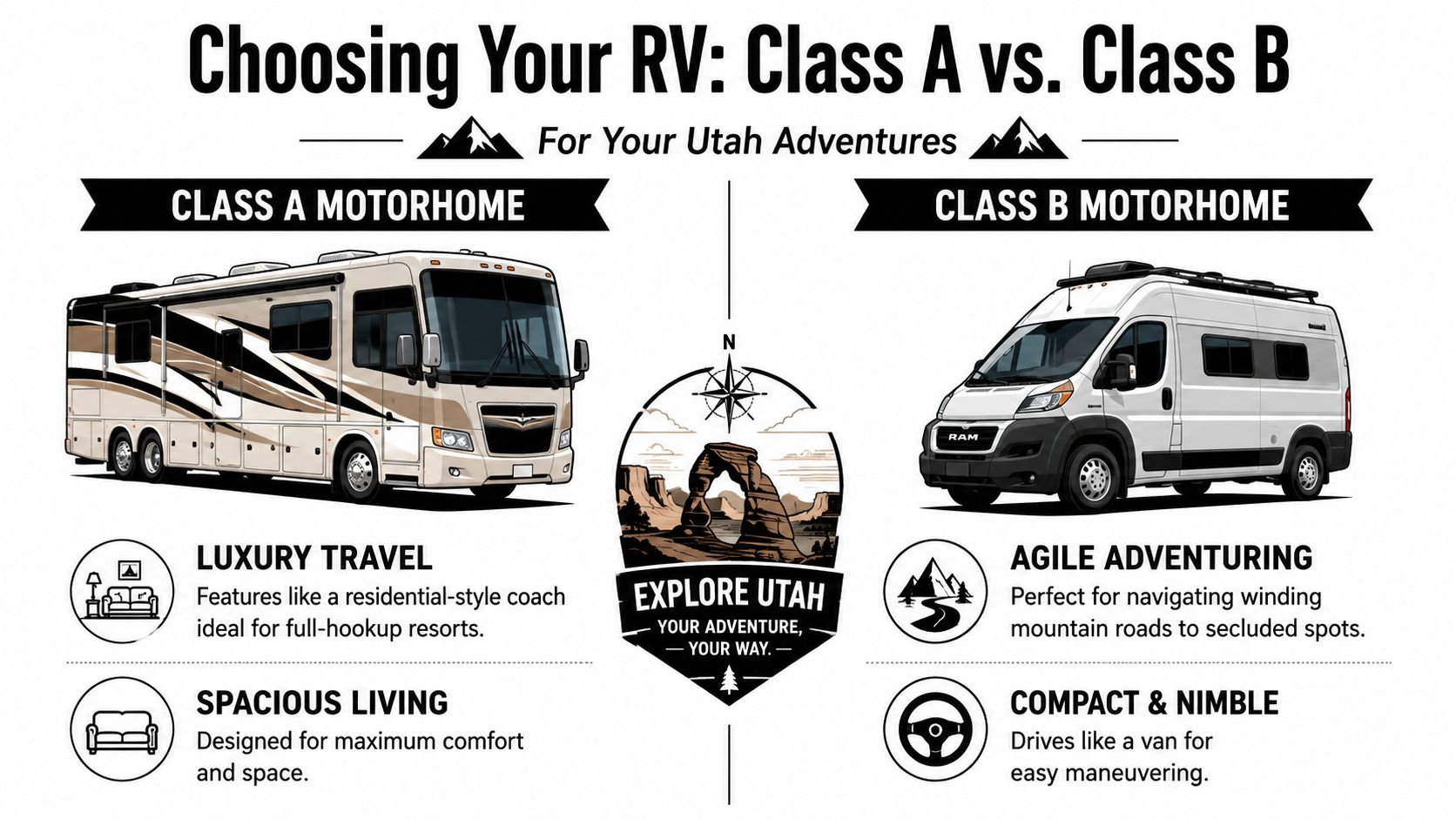
As you can see, the decision boils down to your priorities for exploring Utah and beyond. Do you want to bring all the comforts of home with you, or do you want the agility to chase the horizon and squeeze into that perfect, secluded campsite?
At a Glance: Class A vs. Class B Motorhomes
This table highlights the key defining characteristics of Class A and Class B motorhomes to provide a quick reference for Utah buyers.
| Characteristic | Class A Motorhome | Class B Motorhome (Camper Van) |
|---|---|---|
| Foundation | Built on a heavy-duty chassis (bus, truck) | Built on a standard full-size van chassis |
| Size | 29' to 45' long | 17' to 24' long |
| Driving Feel | Like driving a large bus; requires practice | Like driving a large van or SUV |
| Living Space | Expansive, multiple slide-outs, residential feel | Compact, efficient, multi-function spaces |
| Best For | Long-term travel, large groups, resort-style camping | Solo travelers, couples, weekend trips, active explorers |
| Parking | Restricted to large RV parks and specific sites | Fits in a standard parking space, very versatile |
| Stealth Camping | Nearly impossible | Often possible due to its discreet appearance |
This quick comparison should help you start leaning one way or the other. Each class attracts a different kind of RVer. Many first-time buyers are also weighing factors like resale value and ease of driving. If you're leaning toward something a bit more manageable, you might find our guide to the best small motorhomes for beginners incredibly helpful.
Here at Motor Sportsland, we have a simple way of putting it: a Class A is for living in your destination, while a Class B is for getting to your destination.
It’s no surprise that families and full-timers often choose the sprawling, residential feel of a Class A. On the other hand, we see a lot of couples, solo adventurers, and weekend warriors fall in love with the go-anywhere spirit of a Class B. To get a better feel for their innovative and clever layouts, take a look at our current inventory of Class B camper vans.
Comparing Driving and Maneuverability on Utah Roads
How a motorhome handles on the road is probably the single biggest difference between a Class A and a Class B, and you’ll feel it everywhere you go in Utah. From navigating the busy streets of Salt Lake City to climbing a steep mountain pass, the driving experience is night and day.
It all boils down to their fundamental design. A Class A motorhome sits on a purpose-built bus or heavy-duty truck chassis, giving you that high, commanding view of the road. It feels fantastic on wide-open stretches of I-15, but it means you're always thinking a few moves ahead.
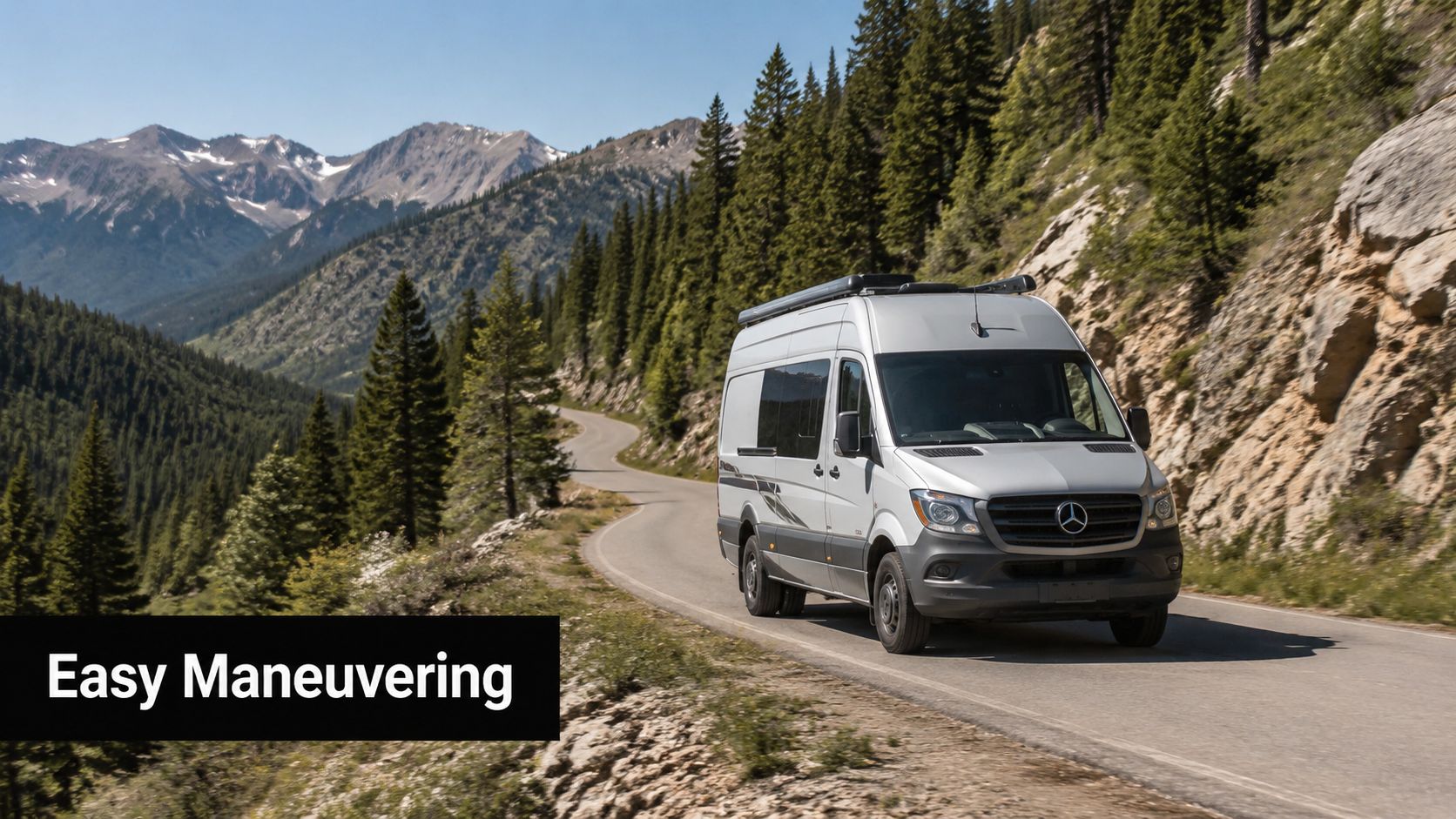
On the other hand, a Class B is essentially a camper van built on a platform like a Mercedes-Benz Sprinter or Ram ProMaster. If you can drive a large SUV or a work van, you can handle a Class B. It's nimble, responsive, and a lot less intimidating if you're new to the RV world.
Navigating Urban and Mountain Terrain
Let's get practical. Imagine you need to run to the grocery store in downtown Salt Lake City or find a spot to park near Temple Square. This is where the Class B really makes its case.
- Parking: A Class B often slides right into a standard parking spot. This makes quick stops for supplies or exploring a small town incredibly simple. A Class A, however, needs dedicated RV parking, which is hard to find and seriously limits your ability to be spontaneous.
- Maneuverability: Those tight city streets and crowded lots are no problem for a Class B. Driving a Class A in the same environment requires careful route planning to avoid low clearances, sharp turns, and roads that suddenly get too narrow.
Now, picture yourself heading up Big Cottonwood Canyon for a hike or exploring the winding scenic byways in the Uinta Mountains. The Class B’s shorter wheelbase and van-like feel make it the clear favorite for getting to those incredible, tucked-away spots that a larger rig just can’t reach.
Here's a thought we share often at Motor Sportsland: “Class A drivers plan their destination and then stay put. Class B drivers discover their destination along the way.”
The Handling Trade-Off
While a Class A demands more from its driver, its sheer mass provides an exceptionally smooth and stable ride on the highway. You’ll feel less push from crosswinds or passing semi-trucks compared to a much lighter van. But that rock-solid stability comes at the direct expense of agility.
Ultimately, your choice should reflect your travel style and how confident you feel behind the wheel. If you want a rig that’s easy to drive and gives you the freedom to go anywhere the road takes you, the Class B is tough to beat. If you’re comfortable commanding a large vehicle and plan on logging long-haul miles between destinations, a Class A offers an unmatched highway experience.
Total Cost of Ownership: Fuel, Maintenance, and Insurance
When you’re comparing a Class A to a Class B motorhome, the price tag on the window is just the first chapter of the financial story. To truly understand what you'll be spending, you need to look at the total cost of ownership—especially fuel, maintenance, and insurance. These ongoing costs are what really shape your long-term budget.
A Tale of Two Fuel Tanks
The most dramatic difference you'll notice is at the gas station. The sheer size and weight of a Class A motorhome mean you'll be spending a lot more time and money at the pump. It's a heavyweight rig, and its fuel appetite reflects that.
- Class A: A typical Class A averages between 6-10 miles per gallon (mpg).
- Class B: A nimble Class B, built on a modern van chassis, is far more fuel-efficient, often delivering 18-25 mpg, especially with diesel options.
That gap adds up faster than you might think. Let's say you drive 10,000 miles in a year and gas is around $3.50 a gallon.
- In a Class A (at 8 mpg), you could easily spend $4,375 on fuel alone.
- That same journey in a diesel Class B (at 22 mpg) might only cost you around $1,590. That's a massive difference that could fund a lot more adventure.
Insurance and Maintenance Costs
Beyond the pump, your other operating costs will also look quite different. Insurance and service are two major expenses you’ll want to budget for from day one.
- Insurance Premiums: Class A motorhomes almost always have higher insurance premiums. Their higher replacement value, larger size, and potential for more extensive damage in an accident mean insurers see them as a greater risk.
- Maintenance: Our service team here at Motor Sportsland can tell you that while both types need regular upkeep, servicing a Class A can be more complex. The heavy-duty chassis, specialized engine components, and unique systems can lead to more expensive parts and labor. Class B vans, which are often based on common platforms like the Ford Transit or Mercedes-Benz Sprinter, are generally easier and more affordable to service at a wider range of shops.
When figuring out your budget, don't just estimate your insurance—get real quotes. Finding the right provider is crucial, as detailed in this comprehensive guide to RV insurance.
A good rule of thumb our team often shares with buyers is to budget about 10% of the RV's purchase price for annual ownership costs. This includes everything: fuel, insurance, maintenance, storage, and campground fees. That 10% represents a much larger dollar amount for a Class A than for a Class B.
Ultimately, these recurring costs directly affect how often you can get out and explore. A lower total cost of ownership frees up cash for fuel to see Zion, campground fees near Bear Lake, or the simple freedom to say "yes" to one more trip. These financial realities also have a big impact on how to maximize your RV's resale value down the road.
Living Space, Amenities, and Storage Capacity
When you’re weighing a Class A vs. a Class B motorhome, the interior is where their core philosophies really come to life. It’s a classic showdown: the rolling luxury residence against the highly efficient, mobile basecamp. A Class A is all about maximum comfort inside the coach, while a Class B is built to get you out on your adventure.
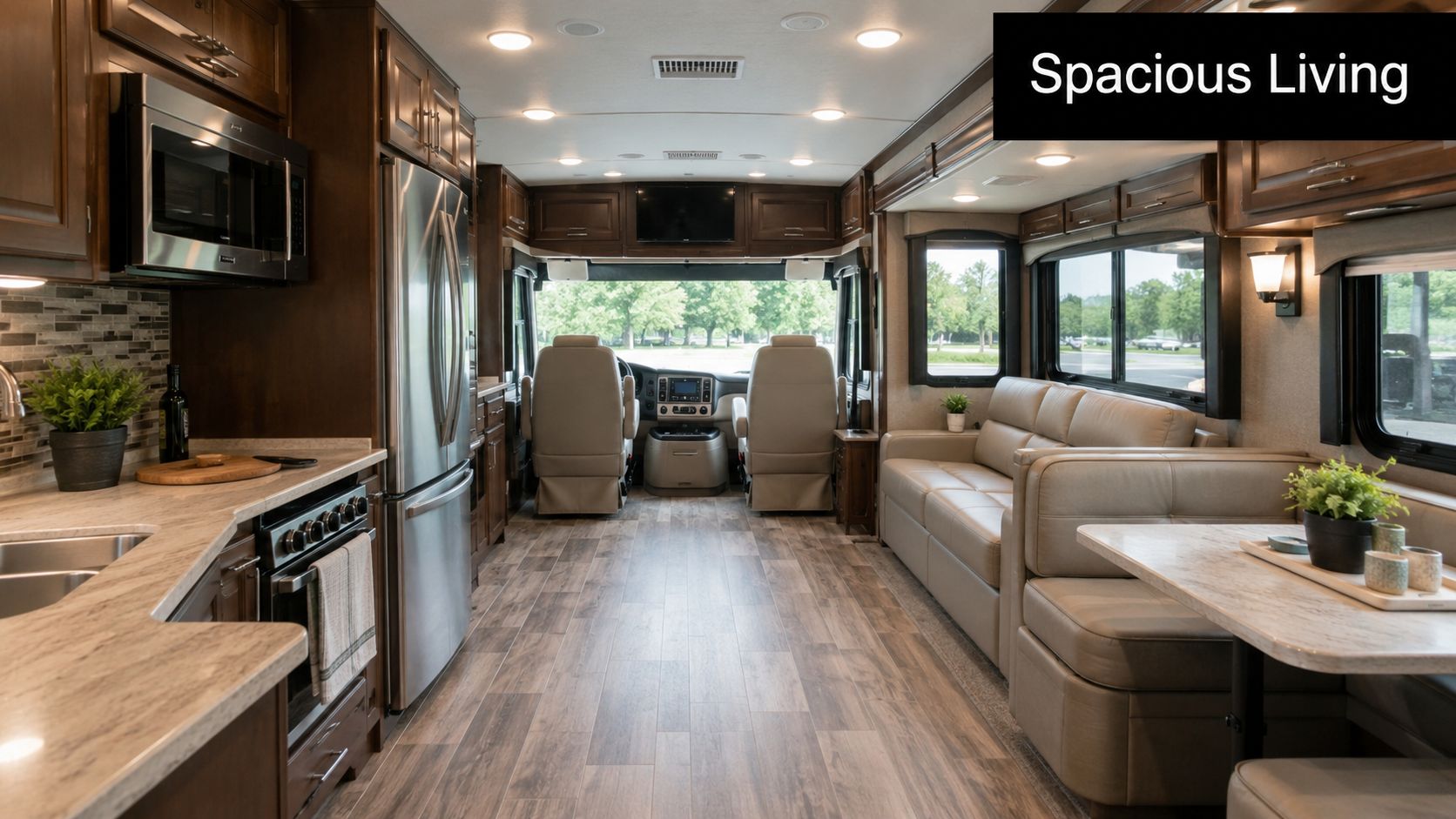
This is the ‘palace versus pocket rocket’ debate in real-time. Let’s take a look at how each one uses its footprint.
Inside the Class A: The Rolling Residence
Class A motorhomes are designed from the ground up to maximize living space. They feel less like a vehicle and more like a traditional home, especially with multiple slide-outs that dramatically expand the interior once you’re parked at a beautiful spot like Jordanelle State Park.
Key Amenities You’ll Find:
- Residential-Style Kitchens: You’ll often find full-size refrigerators, multi-burner stovetops, ovens, and even kitchen islands, just like you would in a Forest River Georgetown 5 Series.
- Spacious Bathrooms: Most have a full "dry bath," meaning a separate shower, a porcelain toilet, and a large vanity. Some of the larger models even boast a bath-and-a-half or a master ensuite.
- Vast Basement Storage: The underbody compartments on a Class A are absolutely enormous. This "basement" storage is a game-changer for full-timers or long-term travelers who need to bring along chairs, grills, outdoor gear, and supplies for weeks at a time.
A Class A is perfect for families or couples who want to travel without giving up the comforts and square footage of home.
Inside the Class B: The Efficient Basecamp
A Class B van is a masterclass in multifunctional design. Every single inch is engineered for efficiency, often serving multiple purposes. You won’t get sprawling rooms, but what you get instead are brilliant, space-saving solutions.
Key Features of a Class B Layout:
- Compact Galleys: The kitchenettes are small but surprisingly capable, typically featuring a small fridge, a sink, and a two-burner cooktop. It’s more than enough to whip up a good meal after a long day of hiking.
- Wet Baths: To save precious interior real estate, most Class Bs use a "wet bath" that combines the toilet, sink, and shower into one waterproof enclosure. It’s a clever trade-off for gaining more living area.
- Convertible Spaces: The dinette usually transforms into a bed, and the front seats often swivel to create a comfortable lounge. It’s a dynamic living space that adapts to your needs throughout the day.
- Limited but Smart Storage: Storage is cleverly integrated everywhere—in overhead cabinets, under the bed, and in small closets. It’s enough for the essentials on a weekend trip, but it forces you to pack with intention.
As our team at Motor Sportsland often tells customers, “A Class A gives you a living room, a dining room, and a bedroom. A Class B gives you one room that can be all three.”
Matching Your RV to Your Travel Lifestyle
When you're trying to decide between a Class A vs. a Class B motorhome, it’s about so much more than just the features list. It’s really about finding the rig that matches your travel soul. Here at our Salt Lake City dealership, we see two very different approaches to RVing, and figuring out which one you are is the secret to making the right choice.
The question boils down to this: Do you want to bring your home with you, or do you want a vehicle to take you far away from it? There’s no wrong answer, only the one that’s right for you.
The Class A Owner Lifestyle: The Destination Dweller
Class A owners are often our full-time travelers, snowbirds, or families who put a premium on space and comfort. For them, the motorhome isn't just transportation; it's a destination in its own right. We have customers who spend entire seasons in their Class A, moving between luxury RV resorts that come with pools, clubhouses, and full hookups.
Their kind of journey is about getting from one comfortable, long-term spot to the next. They want a residential-sized kitchen, a big private bedroom, and enough storage to carry all the comforts of home. Their adventures often revolve around the community and amenities of their destination.
The Class B Owner Lifestyle: The Active Explorer
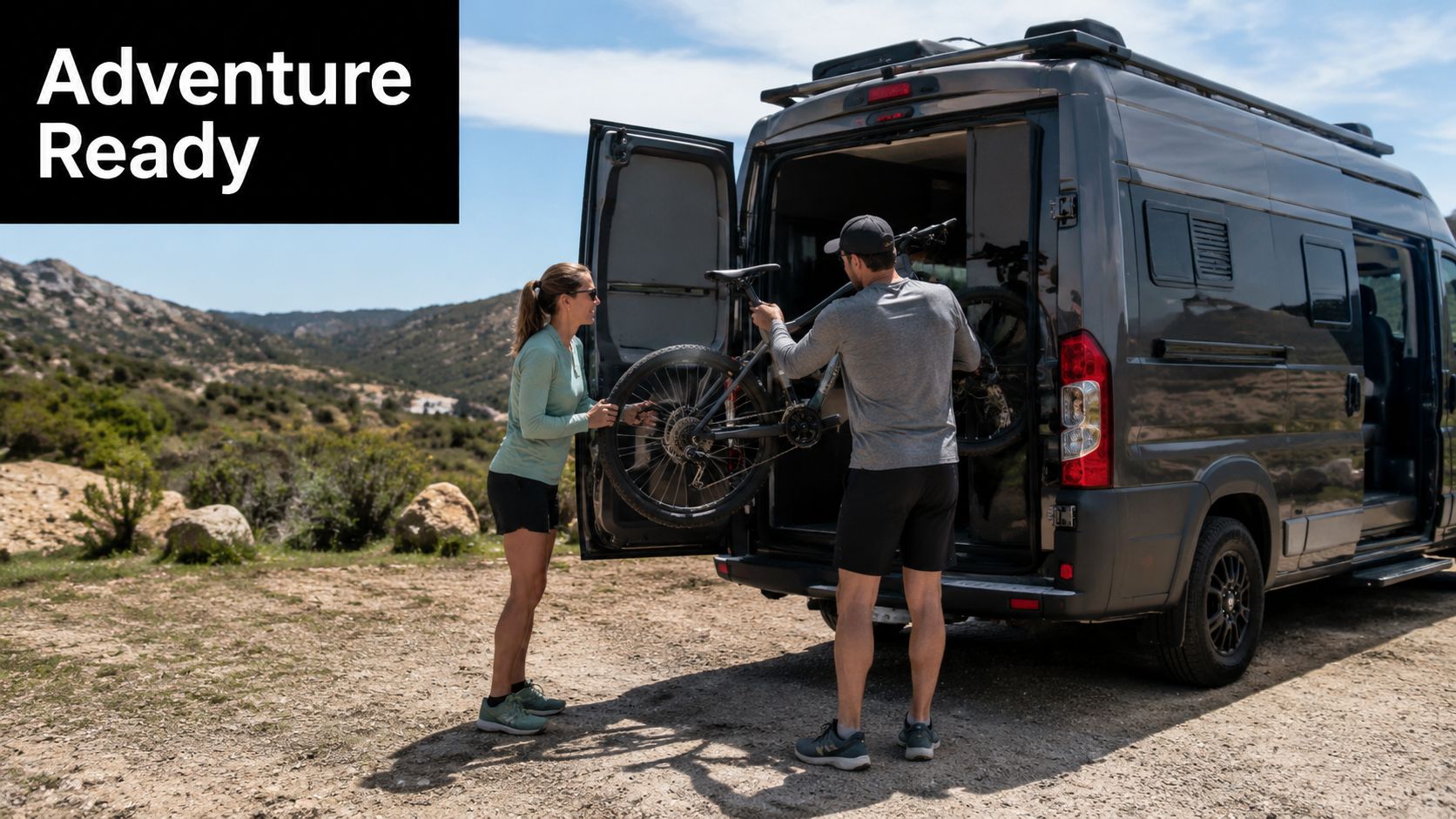
The Class B owner, on the other hand, is usually a couple or a solo adventurer who sees their camper van as a launchpad for action. Mobility and access are their top priorities. These are the customers who take their vans up narrow canyon roads to find a hidden trailhead near Bear Lake or camp right at the base of a climbing route.
They’re perfectly fine with a more minimalist setup because the van isn’t the main event—it’s the key that unlocks the real adventure. The data backs this up, too. Research shows that 52% of Class B owners prefer to stay at national park campgrounds, and 51% choose state parks. This shows a clear preference for being immersed in nature, not just staying near it. You can see more details in these Class B owner demographic trends from the RVIA.
A customer once told us, "My Class B isn't my home. It's my key to the biggest backyard in the world: Utah's wilderness."
That sentiment captures the spirit perfectly. Class B owners trade expansive interior space for ultimate freedom, packing their vans with mountain bikes and hiking gear instead of extra kitchen gadgets. Their travel style is defined by spontaneity and a deep love for the great outdoors.
Conclusion: Which Is It: Class A or Class B?
We’ve covered a lot of ground, from driving impressions and fuel costs to living space and long-term ownership. When it comes to the final choice between a Class A and a Class B, there’s no magic formula. The right answer really comes down to what you want your life on the road to look like. At its heart, the decision is a classic trade-off: Do you want the sprawling, home-like comfort of a Class A, or do you crave the park-anywhere freedom of a Class B?
Take a moment to be really honest with yourself about how you plan to travel. Are you picturing long stays at full-service RV resorts, where space and amenities are king? If so, a Class A is probably calling your name. But if your ideal trip involves chasing trailheads deep in the Wasatch Mountains or snagging that last-minute spot in a national park, a Class B is going to be a much better fit.
One thing we’ve learned after helping hundreds of Utah families find their perfect RV is that nothing—and we mean nothing—replaces seeing them in person. A floorplan on a screen feels completely different when you're actually standing inside.
The only way to truly know is to experience them for yourself. That's why we always invite people to come down to our Motor Sportsland showroom here in Salt Lake City. You can climb behind the wheel of a Class A, then hop into the driver's seat of a Class B just minutes later. Walk through the different layouts, open the cabinets, and get a real, hands-on feel for the space. Our team is here to answer your questions—no pressure, just honest advice. We want to help you find the motorhome that will get you out there making incredible memories for years to come.
Ready to find the perfect fit for your adventures? The team at Motor Sportsland is here to help. Browse our current inventory of new and used motorhomes or stop by our showroom for a personal tour.
Frequently Asked Questions (FAQ)
Here are answers to the most common questions our team hears when helping customers compare a Class A vs. a Class B motorhome.
Can I use a Class B as my daily driver?
You absolutely can, and for many people, this is the deciding factor. Since most camper vans are built on a standard van chassis, they typically measure between 17 to 24 feet. This means you can genuinely navigate city traffic and squeeze into a regular parking spot without a second thought. We have plenty of customers right here in Utah who use their Class B for everything from grocery runs to commuting. It makes the RV a true two-for-one vehicle. With a Class A, on the other hand, you’re almost certainly going to need a separate "toad" car to get around once you're parked at the campground.
Is one type safer to drive than the other?
This one isn't a simple yes or no. Both classes are very safe, but their safety advantages come from different places. A Class A feels like a fortress on the highway; its heavy-duty frame and sheer mass make it exceptionally stable, especially when a gust of wind hits you on I-80. A Class B, however, is built on a modern van chassis packed with the latest automotive safety tech. Think of features like multiple airbags, lane-keeping assists, and automatic collision avoidance systems—the kind of stuff you’d find in a new SUV. Ultimately, the "safer" rig is the one you feel most confident and comfortable handling.
Which is better for Utah winters and high altitude?
Now this is a crucial question for anyone planning local adventures. Generally, Class B vans are the clear winners here. Their compact interiors are much easier and more efficient to keep warm, and many come with robust "four-season" insulation packages designed for cold weather. Plus, their smaller size is a huge asset on icy or snowy mountain roads.
Our service team often points out that the powerful, modern engines in today's Class B models handle the steep grades of the Wasatch Front with less effort than some of the larger, gas-powered Class A motorhomes. That really matters when you're climbing up to a high-altitude campsite.
Do I need a special license to drive a Class A motorhome in Utah?
For most Class A motorhomes, you do not need a special license in Utah. A standard Class D driver's license is sufficient as long as the vehicle's Gross Vehicle Weight Rating (GVWR) is under 26,001 pounds. The vast majority of gas and many diesel Class A RVs fall under this limit. However, some very large, heavy diesel pusher models can exceed this weight, which would require a commercial driver's license (CDL). We always recommend verifying the specific GVWR of the model you're considering.
