
E2 Weight Distribution Hitch: Your Utah Towing Guide

You pull out of Salt Lake City with a new travel trailer behind you, excited for a weekend near Jordanelle or Bear Lake. The first few miles feel fine. Then a gust hits on I-80, a semi passes, and suddenly the trailer feels like it's nudging the back of your truck around. The rear of the tow vehicle squats, the steering feels lighter than it should, and your hands tighten on the wheel.
That white-knuckle feeling is common for new trailer owners. It doesn't always mean you bought the wrong trailer. Often, it means the rig isn't balanced correctly for towing. A good hitch setup changes that.
The e2 weight distribution hitch is popular because it addresses two things that matter most on Utah roads: keeping weight distributed properly and helping control sway. If you tow through mountain grades, open valleys, canyon winds, or busy interstate traffic, that matters every mile. This guide breaks the system down in plain language so you understand what it does, how it works, how to choose the right version, and what to watch over the long haul.
Introduction The White-Knuckle Drive We Want You to Avoid
A lot of first trips start the same way. The trailer is packed, the kids are excited, the tanks are topped off, and everything looks good in the driveway. Then the loaded trailer pushes down on the back of the tow vehicle more than expected. The nose of the tow vehicle rises a bit, the headlights point higher, and the whole setup feels less planted.
That's where many owners get confused. The trailer may be connected securely, but secure and balanced aren't the same thing. A trailer can be hitched correctly and still tow poorly if too much weight stays concentrated at the rear of the tow vehicle.
On Utah roads, that shows up fast. You feel it climbing toward the Wasatch, descending with more trailer behind you than you're used to, or crossing exposed stretches where side winds can move a tall trailer. The problem isn't just comfort. It affects steering feel, braking confidence, and how much control you have when traffic changes suddenly.
The e2 weight distribution hitch was built to reduce that stress. It's not magic, and it doesn't replace proper loading, but it gives the tow vehicle and trailer a much more level, controlled relationship. For a new owner, that can be the difference between staring at the mirrors in panic and enjoying the drive.
What Exactly Is an E2 Weight Distribution Hitch
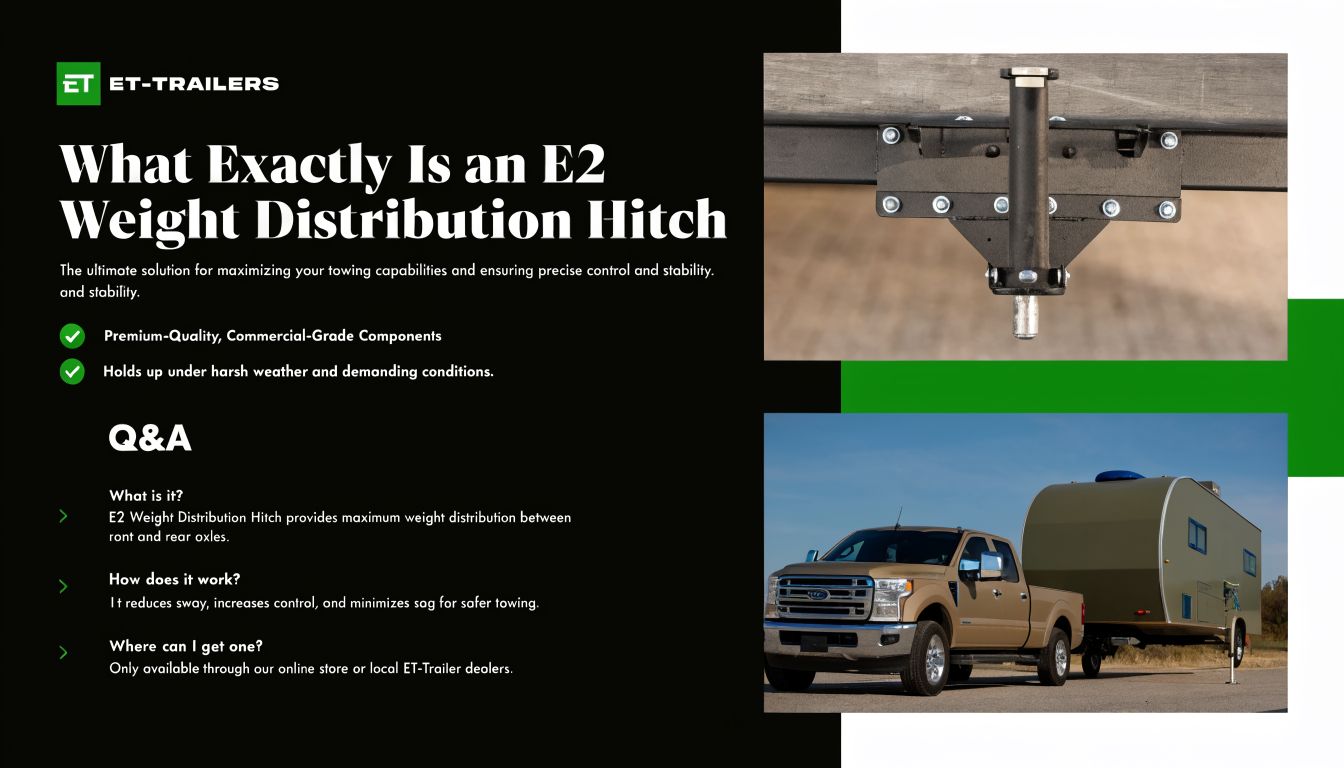
At its simplest, an e2 weight distribution hitch is a towing system that helps spread trailer tongue weight more evenly and adds built-in sway control. Instead of letting the trailer press mostly on the back of the tow vehicle, it uses spring bars and bracket pressure to share that load more effectively.
Think of it like a wheelbarrow
A wheelbarrow is easy to move because the handles help you lift and balance the load. Without that mechanical advantage, the weight would feel much heavier and harder to control.
The e2 hitch works on a similar idea. The spring bars act like support arms. They help shift some of the load away from the rear of the tow vehicle so the whole combination sits more level and feels more stable.
The main parts that matter
Most new owners only need to understand a few key pieces:
- Hitch head. This is the main connection point at the receiver. It's where the bars attach and where the system starts to distribute the load.
- Spring bars. These do the heavy lifting in the balance equation. They're under tension and help redistribute tongue weight.
- L-brackets. These support the bars on the trailer frame and also create the friction that helps resist sway.
- Shank. This slides into the receiver and sets the basic height for the hitch head.
Some standard e2 models use a 2-inch receiver shank and allow adjustment up to 1 inch drop or 7 inches rise, according to the Fastway e2 review details at Camp Addict. That's useful because tow vehicles and trailer coupler heights vary.
Practical rule: If your tow vehicle sags in the rear and feels light in the steering after hookup, the issue usually isn't just “weight.” It's where that weight is sitting.
Why people like this design
One reason the e2 gets attention is that it keeps sway control built into the system rather than relying on separate add-ons. That makes the setup easier to live with for many owners.
Another advantage is flexibility. The e2 design is available in round-bar and trunnion configurations, and product information at Defender's e2 listing notes that it can install around gas tanks and battery boxes, works with surge brake systems, uses a 2-inch receiver size, carries a 10-year warranty, and has no backing, turning, or weather restrictions. For people who camp in tight spots or tow in changing mountain weather, that simplicity matters.
How the E2 Hitch Restores Balance and Fights Sway
You feel it first in the steering wheel. The trailer is hooked up, the rear of the SUV squats, and on a downhill stretch outside Parleys Summit the front end feels a little too light. That uneasy feeling is what a weight distribution hitch is built to correct.
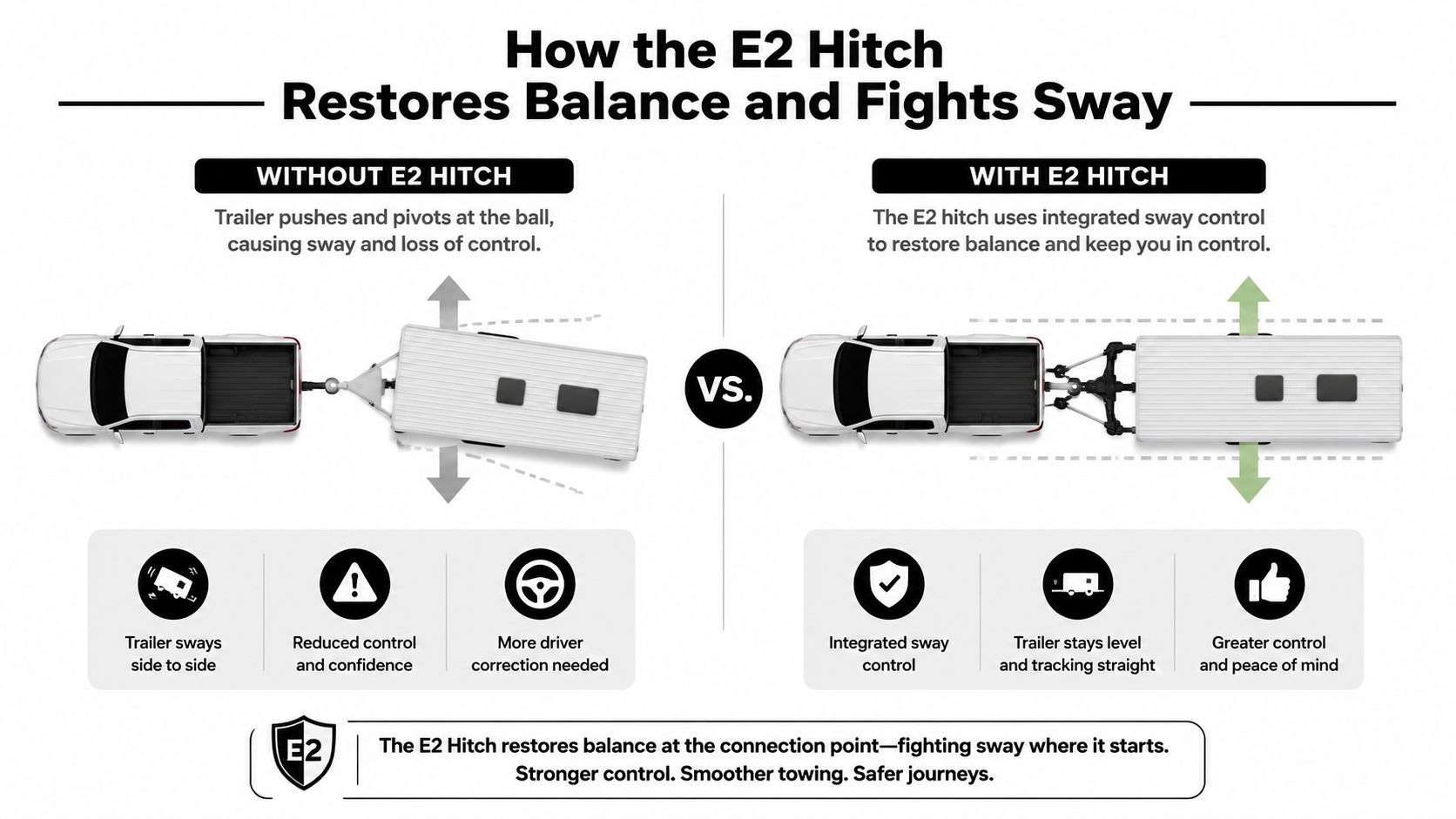
The e2 does two jobs at the same time. It puts weight back where it belongs, and it resists the side-to-side motion that can grow into sway.
What weight distribution is really doing
A trailer's tongue weight pushes down at the very back of the tow vehicle, a lot like a person loading too much weight onto the handles of a wheelbarrow. The rear takes the hit, while the front gets lighter. In real towing, that can mean less planted steering, longer-feeling stops, and more driver correction on mountain roads.
With the e2, the spring bars apply tension that spreads part of that load forward onto the tow vehicle's front axle and back onto the trailer axles. According to Fayette Distribution's product information for the Fastway e2, proper setup can redistribute 75-100% of excess tongue weight and uses a rigid steel-on-steel friction system with two contact points to help counteract sway. That front-axle recovery is the part owners usually notice first, because the vehicle starts to feel more settled and more predictable.
If you're still sorting out tow ratings, it helps to compare GVWR and GCWR before choosing any hitch setup. A stable rig starts with the right numbers.
How it fights sway without extra hardware
The sway control part is simple to picture. The bars rest on frame brackets under tension, and those steel contact points create friction the whole time you tow. That friction works like a steady hand on the trailer, resisting the small pivots that can build into a bigger swing.
That matters in Utah. Crosswinds in open valleys, long grades that shift weight downhill, and thinner high-altitude air that can leave naturally aspirated tow vehicles working harder all put more stress on the combination of vehicle, trailer, and driver. The e2 helps by resisting motion early, before the trailer starts making big corrections for you.
A calm trailer rarely becomes a dramatic trailer.
Why setup matters more than people think
An e2 only works as well as it is adjusted. If the bars are too loose, the rear of the vehicle can still sag and the front can stay light. If the setup is too aggressive, ride quality and handling can feel off in a different way. That is why techs measure stance before and after hookup and pay close attention to how much front-end height is restored.
Owners who switch between trailer types often notice this quickly. A bumper-pull uses the hitch to manage leverage at the back of the vehicle, while a fifth-wheel places weight in a different spot altogether. If you want a helpful comparison, this guide on how a 5th wheel pin box affects towing dynamics shows how load position changes the feel of the whole rig.
On Utah roads, good setup is not just about comfort. It is about keeping steering, braking, and control where they should be when the road turns steep, windy, or both.
Choosing the Right E2 Model for Your RV
Choosing an E2 starts with one question. What does your trailer weigh when it is packed for the kind of trips you take in Utah?
That matters more than many first-time owners expect. A trailer that feels fine on flat city streets can behave very differently on Parleys Canyon, on a long pull through central Utah, or in crosswinds near open valleys and desert highways. The right hitch model helps the tow vehicle stay planted when the road, weather, and altitude start adding stress to the whole setup.
Trunnion or round bar
The E2 comes in trunnion and round bar styles. Both handle weight distribution and built-in sway control. The difference is mostly about fit, clearance, and available ratings.
Trunnion bars usually give owners more rating options, which helps if your trailer is on the lighter or heavier end of the travel trailer range. Round bar models fit many mid-range setups well, but the selection is narrower. Frame space also matters. Propane tanks, battery boxes, and the shape of the trailer tongue can affect which style fits more cleanly.
A good comparison is a wheelbarrow. If the load is balanced well and the handles suit the job, it feels controlled. If the load is too heavy for the handles or the shape does not fit the space, every bump reminds you something is off.
Weight ratings side by side
According to the Camp Addict Fastway e2 review, trunnion models are available in 4,500, 6,000, 8,000, 10,000, and 12,000-pound GTW ratings, while round bar models cover the 6,000 to 10,000-pound range.
| Hitch Style | Available GTW Ratings (lbs) | Ideal For |
|---|---|---|
| Trunnion | 4,500, 6,000, 8,000, 10,000, 12,000 | Owners who want the widest rating range, from lighter trailers to heavier setups |
| Round bar | 6,000 to 10,000 | Owners whose trailers fall in the mid-range and whose installation space suits this style |
If you are still comparing trailer sizes and trying to picture what a loaded family camper asks from the hitch and tow vehicle, our travel trailer towing guide and inventory overview can help put those numbers into context.
A simple way to narrow it down
Use this checklist:
- Start with loaded trailer weight. Use real camping weight, not dry weight from a brochure.
- Match the tongue weight range. The coupler load has to fit the bars, not just the trailer's total weight.
- Check front-frame clearance. Tank covers, jack placement, batteries, and tray layouts can steer you toward one bar style.
- Leave room for how you travel. Water in the tanks, generator cargo, and mountain gear can change hitch demands fast.
- Be honest about future plans. If a larger trailer is likely in a year or two, say that up front.
This same capacity-first mindset shows up in other equipment categories. Riders who explore Punk Ride's heavy-duty ebike selection usually start with load rating and intended use before looks or extras. Towing works the same way. Pick for the actual load, the actual road, and the actual conditions you plan to handle.
An Overview of Professional E2 Hitch Installation
A proper installation is part measurement, part adjustment, and part road-ready judgment. It's not just bolting hardware together.
What a technician is looking for
A technician usually starts with tow vehicle and trailer stance. The hitch head height needs to line up properly with the coupler so the trailer can sit close to level. Then the head angle and spring bar tension get adjusted to create the right amount of load transfer.
The L-brackets also matter more than many owners realize. They need to be placed correctly on the trailer frame so the bars work as intended and the sway-control friction happens where it should.
The installation process at a high level
A professional install usually includes steps like these:
- Mount the shank and hitch head so the base geometry is correct for the tow vehicle and trailer height.
- Set head angle and bar position to achieve effective weight distribution.
- Place and secure the L-brackets at the correct frame location.
- Couple the trailer and tension the bars to bring the rig into a more level stance.
- Measure and verify so steering and load transfer are where they should be.
If the hitch is installed but the tow vehicle still feels light in the front, the job isn't finished.
Why many owners prefer professional setup
The e2 system isn't impossible to understand, but precision matters. Small setup errors can leave too much weight on the rear axle or reduce sway-control effectiveness. A rig can look “pretty level” and still not be set correctly.
That's why many owners prefer to have the first install done by a shop that works with towing equipment regularly. Once the system is fitted and explained well, day-to-day hookup gets much easier. If you'd rather have it done right from the start, you can schedule a professional installation with our expert service team.
Long-Term Maintenance and Troubleshooting Tips
A lot of e2 content stops after installation. Real ownership starts after that.
The hitch works in a hard environment. It sees pressure, road grime, rain, dust, heat, cold, and on many Utah trips, long miles through changing conditions. That means inspection and routine upkeep matter just as much as initial setup.
What to inspect regularly
Owners have reported visible L-bracket wear after as little as 1,700 miles, according to a discussion highlighted on the Forest River Forums. That doesn't automatically mean something is wrong, but it does mean you shouldn't treat the hitch as a set-it-and-forget-it part.
A smart inspection routine includes:
- Bracket surfaces. Look for unusual wear patterns, gouging, or changes that seem uneven side to side.
- Bolts and hardware. Make sure nothing has loosened or shifted after repeated towing.
- Bars and contact areas. Watch for rust, damage, or signs of abnormal metal wear.
- Frame mounting points. Confirm the brackets still sit where they were intended.
What noises are normal
Many friction-based hitches make noise. Groaning, creaking, and metal-on-metal sounds during turning or low-speed maneuvering can be normal with this kind of system. New owners often think the hitch is failing when it's performing friction-based sway control work.
That said, a sudden change in sound matters. If the hitch becomes much louder than usual, starts clunking sharply, or shows uneven wear, inspect it before the next trip.
Shop insight: Consistent noise with normal wear is one thing. A new noise plus fresh wear marks is when you stop and look closer.
Utah conditions make maintenance more important
Salt, moisture, dust, and temperature swings can all be hard on towing components. If you travel through winter-treated roads or store your trailer where metal sees repeated freeze-thaw cycles, check the hitch more often. Clean it after dirty trips, keep an eye on corrosion, and don't ignore small wear signs just because the rig still tows “okay.”
Advanced Towing Safety and Compatibility Notes
Modern trucks have added features that make daily driving comfortable. Sometimes those same features complicate hitch setup.
Auto-leveling suspension can change the result
For owners of newer trucks and SUVs, one important note comes from the Fastway e2 round bar manual. It states that 4-corner auto-leveling systems can reduce a weight distribution hitch's effectiveness by 20-25%. It also notes that proper setup may require disabling the system during hitching or adjusting the hitch to compensate.
That catches many owners off guard. The suspension is trying to level the vehicle, while the hitch is also trying to redistribute load. If those systems aren't accounted for together, the final setup may not deliver the steering and control you expect.
Compatibility questions owners often ask
The e2 is also appealing because it works with a wide range of trailer setups. As noted earlier in the article, its design can work with surge brake systems and around common trailer-mounted equipment like battery boxes and tanks. That's useful for owners shopping used trailers or trying to keep an existing brake setup intact.
A few practical reminders help here:
- Know what features your truck has. Air suspension, auto-leveling, and tow packages all affect setup.
- Don't assume “level” means correct. A truck can look level and still have poor weight transfer.
- Recheck after changes. New tires, suspension modifications, or different trailer loading can change hitch performance.
Safety is a system, not one part
The hitch is one piece of the towing picture. Tires, brake controller behavior, trailer loading, suspension, and speed discipline all matter too. If you want a broader refresher on towing habits and road safety, these safe practices for fifth-wheel owners are useful even if you tow a bumper-pull trailer, because the mindset carries over.
A good hitch helps a lot. A good hitch plus good towing habits is what really builds confidence.
Your Partner for a Safer Towing Adventure
A properly matched and properly adjusted e2 weight distribution hitch can make towing feel far more controlled. It helps the rig stay balanced, gives sway less chance to build, and makes the tow vehicle feel more planted where it matters most.
That's a big deal on Utah roads. Long grades, crosswinds, canyon routes, and busy freeway traffic all expose weak towing setups quickly. When the hitch, trailer loading, and vehicle setup all work together, the drive gets calmer and more predictable.
If you're sorting out your first trailer setup, replacing an older hitch, or trying to solve a towing confidence problem, it's worth getting a second set of eyes on the whole combination. The right advice early can save a lot of stress later.
Frequently Asked Questions About the E2 Hitch
A lot of first-time trailer owners ask the same thing after setup. “Will this thing calm the trailer down on Parley's, in canyon crosswinds, or on a long pull in summer heat?” Fair question. The e2 helps a lot, but it works best when you understand what it can do, what it cannot do, and what you still need to check over time.
Does an e2 weight distribution hitch eliminate trailer sway completely
An e2 helps resist sway. It does not make a trailer immune to bad loading, excessive speed, strong crosswinds, or poor tire condition.
A good way to look at it is this. The hitch gives the trailer fewer chances to start swinging and helps the tow vehicle stay more planted. On Utah roads, that matters most when wind hits the side of the trailer or when a downhill curve tries to unsettle the whole combination.
Can I back up with the e2 hitch connected
Yes. The e2 is designed so you can back up and make normal turning maneuvers without removing a separate sway control bar.
That is one reason owners like it for regular camping use. You are less likely to forget a step at the campsite or fuel stop.
How do I know if my hitch is adjusted correctly
Start with measurements, not guesswork. A properly adjusted setup should bring the tow vehicle back toward a level, controlled stance and keep steering from feeling light.
Then pay attention to how it drives. If the front end still feels loose, the trailer porpoises over bumps, or the rig gets pushed around more than expected in wind, the setup may need another adjustment. That is especially true before towing through mountain grades where small setup problems become much easier to feel.
Is the noise during turns normal
Usually, yes. The e2 uses steel-on-steel friction, so some creaking or groaning in slow turns is part of how the sway control works.
What you want to watch for is a change. A new clunk, uneven wear, damaged brackets, or noise that suddenly gets much harsher deserves an inspection before the next trip.
Is the trunnion style better than the round bar style
The better choice is the one that matches your trailer and tow vehicle correctly. Trunnion bar models often fit higher weight ranges and can offer a bit more ground clearance in some setups. Round bar models still work well when the rating and frame fit are right.
It is a lot like choosing the right size wrench. Bigger is not automatically better. The correct fit is what gives you proper control.
Should I inspect the hitch only at the start of camping season
Check it throughout the season. Long trips, rough pavement, rain, road salt, and repeated mountain towing all add wear.
Look over the bars, brackets, hitch ball, shank, and mounting hardware regularly. If you tow often in Utah, that habit can catch small issues before they turn into sloppy handling on the highway.
If you want help choosing, installing, or servicing the right hitch for your trailer, the team at Motor Sportsland can help. You can browse RV options online, stop by our Salt Lake area showroom, or schedule service if you want an experienced set of hands to dial in your towing setup before your next Utah trip.
