
Fifth Wheel vs Travel Trailer: Choose Your Perfect RV
You're standing on the lot, looking at two very different paths into RV ownership. On one side is a tall fifth wheel with a raised front bedroom, big pass-through storage, and that “small condo on wheels” feel. On the other is a travel trailer that looks simpler, lighter, and a lot easier to imagine behind the truck already sitting in your driveway.
That's where most first-time buyers get stuck.
The usual fifth wheel vs travel trailer advice isn't wrong, but it often stops too early. It says fifth wheels are bigger and more stable. It says travel trailers are lighter and easier to afford. All true. What it usually doesn't do is help you answer the question that matters most once you head east toward the Wasatch, climb mountain grades, or start loading kids, coolers, firewood, and bikes for a weekend at Bear Lake.
The decision often comes down to your exact truck, your payload capacity, your camping style, and how much RV you want to manage. Around Salt Lake City, our team sees buyers make much better choices when they look past brochure talk and focus on how the RV will tow, fit, and work in Utah conditions.
Your Big RV Decision Starts Here
A lot of buyers come in thinking they've already narrowed it down. They haven't.
They'll say they want the “bigger one” because they like the room, or the “cheaper one” because it seems practical. Then we start asking a few basic questions. What truck do you drive now? Do you want to keep the bed open for generators, bikes, or a camp kitchen? Are you taking quick weekends to Jordanelle, or are you planning longer trips where comfort matters more than simplicity?
That usually changes the conversation fast.
For many Utah families, the right answer isn't the biggest RV they can finance. It's the one they can tow comfortably through wind, grades, and traffic without white-knuckling the drive. For retirees or longer-stay travelers, the answer may lean the other way. More space, more storage, and a more settled living setup can make a huge difference.
Practical rule: If you're comparing a fifth wheel and a travel trailer, start with the truck and the trip length. Floorplan comes after that.
The good news is this decision gets clearer once you break it into the parts that affect ownership. Hitch design, interior layout, truck payload, total startup cost, and where you plan to camp in Utah will tell you more than any sales brochure ever will.
Understanding the Tale of Two Hitches
The single biggest difference between these RVs sits at the connection point.
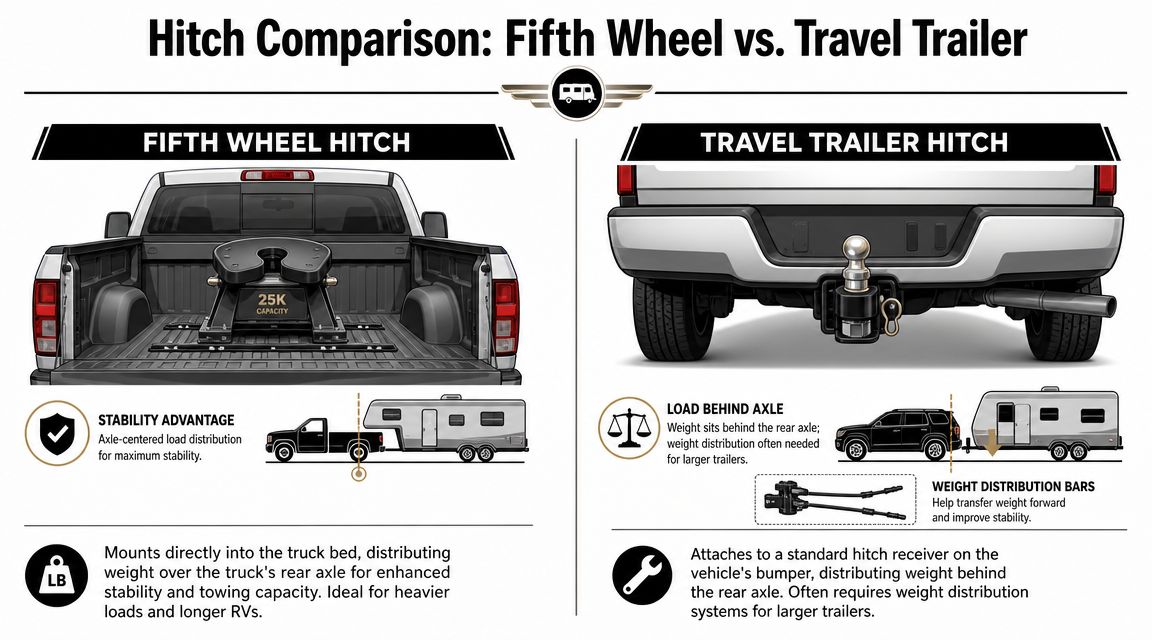
A travel trailer uses a receiver-style hitch at the rear of the tow vehicle. A fifth wheel connects in the bed of a pickup through a dedicated hitch. That one engineering change affects turning, sway, loading, truck-bed use, and how the trailer feels at highway speed.
How the hitch changes the drive
A fifth wheel places the hitch point over or just forward of the truck's rear axle, which gives it a tighter turning radius, better weight distribution, and less sway than a travel trailer that hitches at the rear bumper, according to Camping World's explanation of fifth wheel vs travel trailer towing.
That matters on Utah roads.
On I-15, I-80, and open stretches where wind can move a lighter trailer around, buyers usually notice the difference immediately. A fifth wheel tends to track more calmly during lane changes and in crosswinds. Travel trailers can tow very well too, especially when matched properly, but they're more sensitive to loading, setup, and tow vehicle choice.
What works well with each setup
Here's the practical split we see most often:
| Feature | Fifth Wheel | Travel Trailer |
|---|---|---|
| Hitch location | In truck bed | Rear receiver hitch |
| Towing feel | More planted and stable | More dependent on setup and loading |
| Turning behavior | Tighter turning radius | Wider swing behind the vehicle |
| Truck bed use | Hitch takes bed space | Bed stays open if towing with a truck |
| Tow vehicle requirement | Pickup truck required | Wider range of tow vehicles |
A fifth wheel often feels less intimidating once you're moving. A travel trailer often feels easier before and after the drive because the hardware is simpler and you don't give up the truck bed.
The trade-off most first-time buyers miss
The fifth wheel's hitch system improves control, but it also commits you to pickup ownership and in-bed hardware. For some people that's no issue. For others, it changes daily truck use enough that a travel trailer makes more sense.
If you're still fuzzy on the hardware itself, our guide on what a fifth wheel hitch is and how it works gives a straightforward overview.
A lot of towing stress comes from mismatch, not from the RV type itself. The hitch design just determines where your margin starts.
Comparing Living Space and Floorplan Philosophies
Once you step inside, these two RV types stop feeling like close cousins and start feeling like different products built for different lifestyles.
Lippert reports that fifth wheels are typically about 25 to 50 feet long, 12 to 14 feet tall, and roughly 7,500 to 16,000+ pounds, while travel trailers are usually 15 to 40 feet long, about 10 to 12 feet tall, and around 2,000 to 9,000 pounds in its fifth wheel vs travel trailer comparison. That size difference shows up most clearly in how the living space is organized.
Fifth wheels feel like split-level living
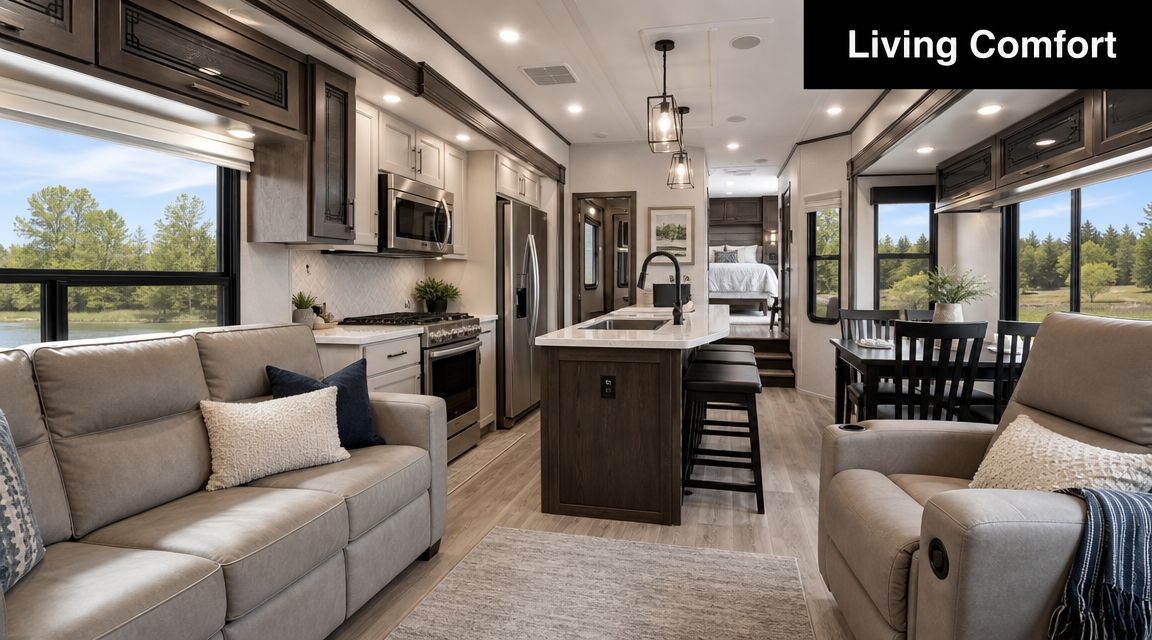
Most fifth wheels use the raised front section for a bedroom, bathroom, or both. That creates natural separation between sleeping space and the main living area.
For couples or longer-stay travelers, that layout often feels more residential. You get a stronger sense of “rooms” instead of one long shared space. Kitchens and living areas also tend to feel larger because the trailer's overall height and body size allow for bigger slide layouts and more vertical volume.
That doesn't make every fifth wheel luxurious. It does mean the design philosophy usually leans toward comfort during longer stays.
Travel trailers prioritize simplicity and flexibility
Travel trailers usually keep everything on one main level. That matters more than many buyers expect.
Families with small kids often like the easier movement. Buyers who don't want extra interior stairs notice it right away. Weekend campers also tend to appreciate how quickly a travel trailer can feel familiar. Park it, set up, and you're in one straightforward living zone.
A well-designed travel trailer can still feel roomy, especially in bunkhouse layouts. If you're comparing sleeping setups, our roundup of 2 bedroom travel trailer floor plans is useful for seeing how family-focused layouts solve privacy without stepping up to a fifth wheel.
Which floorplan style fits real life
Use this test instead of asking which one is “better”:
- Choose a fifth wheel if you want stronger separation between bedroom and living space, plan longer trips, or care more about residential feel than low-step accessibility.
- Choose a travel trailer if you want one-level living, easier entry for kids or older family members, or a simpler overall footprint.
- Pause before deciding if you're mostly reacting to showroom size. Bigger doesn't always mean easier to own.
Some buyers also benefit from sketching how they'll use the space. A planning tool like Small Room Planning can help you think through bed access, storage flow, and where daily clutter will land once everyone's inside.
If you camp for two nights at a time, the easiest floorplan usually wins. If you camp for two weeks at a time, the most livable floorplan usually wins.
The Truck Question and Real-World Payload Math
A lot of first-time buyers hit the same wall in our Salt Lake City store. They find the RV they like, look at the tow rating on their truck, and assume they are set. Then we run the payload numbers on the door sticker and the deal changes.
That is the key truck question.
The gap between a travel trailer and a fifth wheel often comes down to the actual weight the truck must carry, not just how much it can pull down the highway.
The ProPride Hitch article on towing stability makes that point clearly in its explanation of payload and safer towing. Available payload has to cover passengers, cargo, hitch equipment, fuel, and the trailer weight transferred onto the truck.
Payload matters more than tow rating
Tow rating gets the headline. Payload decides whether the setup works.
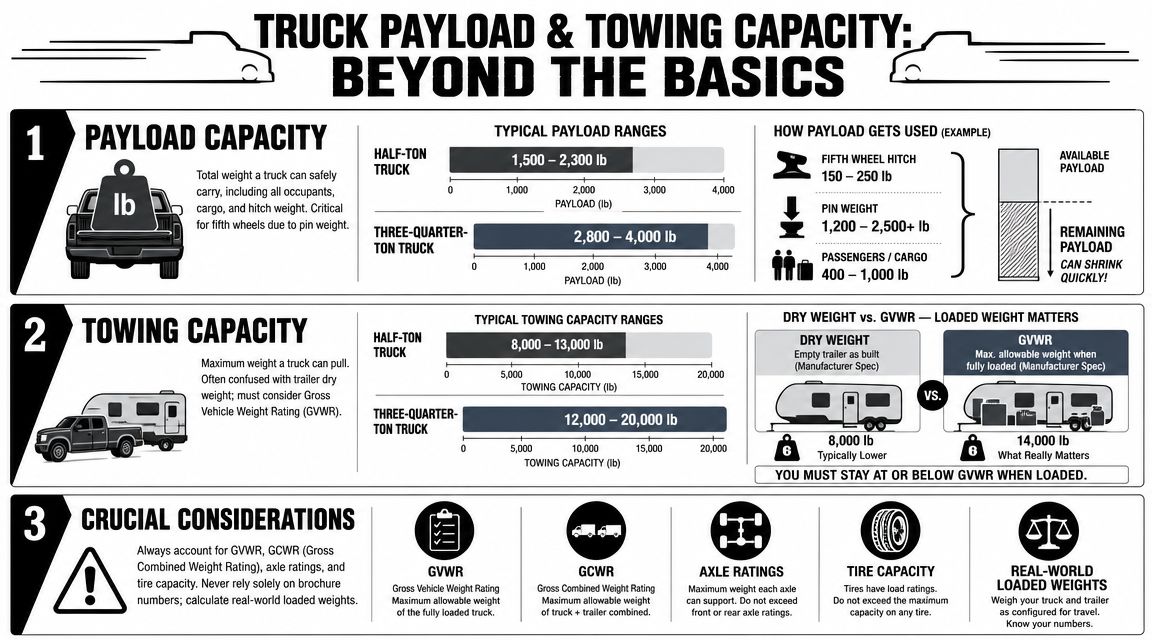
Payload is the amount of weight your truck can carry on its own axles. For RV buyers, that includes everything added to the truck before and after hitching up:
- Driver and passengers
- Cargo in the cab and bed
- Aftermarket accessories
- Hitch hardware
- Tongue weight from a travel trailer
- Pin weight from a fifth wheel
That last item is where buyers get surprised. A travel trailer usually places a smaller share of its loaded weight on the truck. A fifth wheel places a much larger share in the bed, right over or just ahead of the rear axle. That improves stability, but it uses payload fast.
Why fifth wheels force a harder truck match
Here is the trade-off in plain terms.
A fifth wheel tows with a calmer, more planted feel for many drivers, especially in crosswinds or on rough pavement. On I-80 through Parleys Canyon or heading south on I-15 with afternoon wind, that extra stability is a real advantage. The cost is truck capacity. Pin weight is heavy, and it counts directly against payload.
A travel trailer asks less from the truck bed because the hitch load is lower. That often gives a half-ton owner more room for family, coolers, bikes, and the rest of the gear that ends up coming along on a Utah camping trip.
How to check your truck before you shop the RV
Start at the driver's door jamb. Find the yellow payload sticker. It will list how much combined weight of occupants and cargo your exact truck can carry.
Then subtract, in order:
- People in the truck
- Cargo in the cab and bed
- The hitch itself
- Any accessories added to the truck
- Expected tongue weight or pin weight
What is left is your remaining margin.
Here is a realistic example. Say the truck's payload sticker shows 1,800 pounds. Put two adults in the cab at 400 pounds total, two kids at 200 pounds, a cooler and gear in the bed at 150 pounds, and a fifth wheel hitch at 200 pounds. You have already used 950 pounds. That leaves 850 pounds for pin weight.
That is where many “half-ton towable” fifth wheels stop making sense for a family. Even if the truck can pull the trailer by tow rating, the payload can be gone before the trip starts.
A travel trailer can change that math because its hitch weight is usually much lower. The exact number still needs to be checked on the loaded trailer, but the truck often has more breathing room.
If you drive a Ram, trim level, cab configuration, drivetrain, and bed length all change the numbers. This guide on Dodge Ram tow capacity by configuration is a useful starting point before you assume one badge means one rating.
Utah roads punish bad payload math
Utah is not gentle on an overloaded truck.
A setup that feels acceptable on flat city streets can feel strained on mountain grades. Climbing toward higher elevation, merging uphill, braking downhill, and managing gusty canyon wind all expose a mismatch. At altitude, power loss also makes a marginal combination feel smaller than the brochure suggested.
I tell first-time buyers the same thing in the showroom. Leave margin. If your payload math is tight in the driveway, it will not improve on the way to Strawberry, Bear Lake, or the red rock country in southern Utah.
Shop-floor advice: Run the numbers for your loaded camping day, not for an empty truck sitting on the lot.
For many buyers, that single check settles the fifth wheel versus travel trailer decision faster than any floorplan tour.
Calculating the Total Cost of Ownership
A lot of first-time buyers focus on the trailer payment and miss the more expensive mistake. The real number is the full camping package.
As noted earlier, fifth wheels usually start higher on purchase price, and they often pull a truck upgrade into the deal. That second part is what changes the budget in a hurry. If your current half-ton works with a travel trailer but not with a fifth wheel's loaded pin weight, the comparison is no longer trailer versus trailer. It becomes trailer, truck, hitch, insurance, fuel, storage, and service.
The cheapest RV on paper is not always the cheaper RV to own
I see this in Salt Lake City all the time. A buyer shops a fifth wheel that looks like a strong value, then realizes the truck on the driveway cannot carry the loaded pin weight plus passengers, tools, and cargo in the bed. Replacing the truck can add far more to the ownership cost than any upgrade package inside the RV.
A travel trailer often keeps the starting cost lower because the tow setup is simpler and the tow vehicle options are wider. A fifth wheel adds an in-bed hitch, uses bed space, and usually brings higher operating costs over time because the rig is larger and heavier.
Here is the practical side-by-side view:
| Cost category | Travel Trailer | Fifth Wheel |
|---|---|---|
| RV purchase entry point | Usually lower | Usually higher |
| Tow vehicle impact | Often works with more existing truck setups | More likely to require a heavier-duty truck |
| Hitch equipment | Receiver and weight-distribution setup in many cases | In-bed hitch required |
| Storage cost and fit | Often easier to store at home or in a standard space | Height and length can limit storage choices |
| Fuel use | Often lower, depending on size and profile | Often higher, especially on long grades |
Costs that deserve a real conversation before you sign
These are the line items buyers should price out in advance:
- Truck costs. Payment, registration, higher maintenance costs, and sometimes higher tire and brake costs if the RV pushes you into a bigger truck class.
- Hitch and setup. Travel trailers may need a weight-distribution hitch and brake controller. Fifth wheels need an in-bed hitch, and some short-bed trucks also need extra clearance planning.
- Storage. Taller, longer rigs can be harder to fit at home and more expensive to store around the Salt Lake Valley.
- Insurance. A higher-value RV and a higher-value truck usually mean a higher insurance bill.
- Fuel on Utah routes. Pulling up Parley's, heading toward Bear Lake, or running southern Utah with a headwind will show the difference between a lighter trailer and a heavier fifth wheel fast.
- Service and tires. Bigger rigs often mean bigger tires, higher replacement cost, and fewer easy parking or service options.
One more point matters here. Payload math affects cost, not just safety. If a fifth wheel puts your truck over its payload sticker, the fix is not a better attitude or an aftermarket add-on. The fix is usually a different truck.
That is why I tell buyers to build the budget backward from the truck they already own. If the numbers work, great. If they do not, a travel trailer can be the smarter financial decision even when the fifth wheel feels more upscale on the lot.
Choosing the Right RV for the Utah Lifestyle
Utah doesn't reward one-size-fits-all RV advice.
The right answer for a family doing quick local weekends is different from the right answer for a couple heading south for long stays, and both are different from a toy hauler buyer planning trips to the desert.
Weekend family camping around Northern Utah
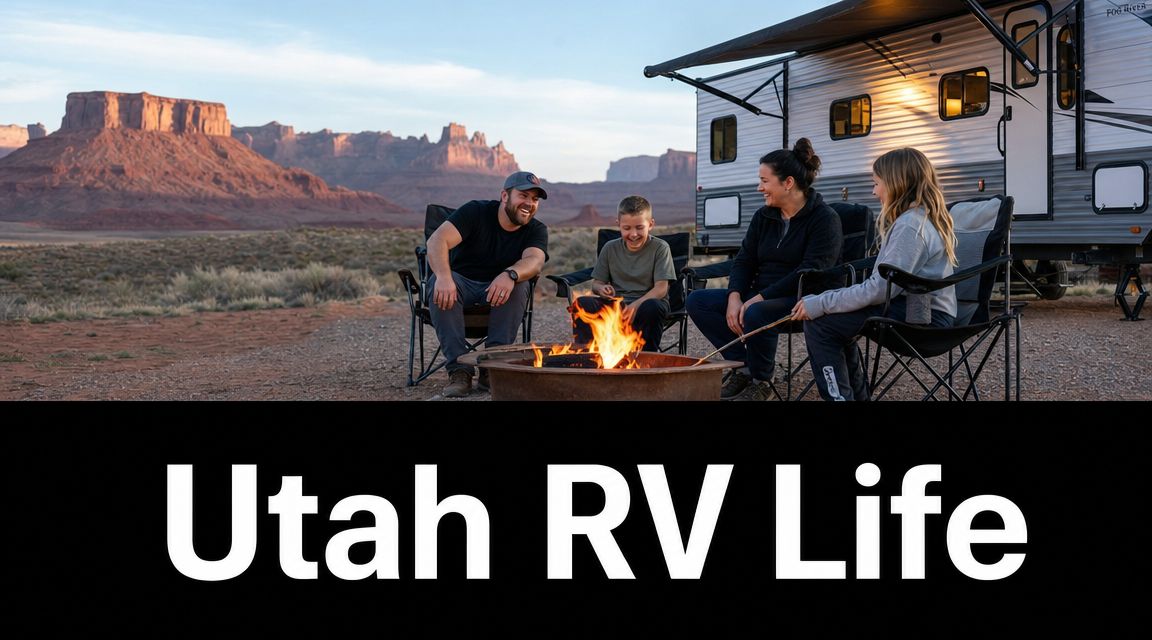
If your trips look like Friday departure, Sunday return, and campgrounds such as Jordanelle or Bear Lake, a travel trailer often fits the rhythm better.
Setup tends to be simpler. The overall package is often easier for first-time owners to store, maneuver, and live with between trips. If you've got kids, sports gear, and a busy weekly schedule, less complexity matters.
A travel trailer also makes sense for buyers who want flexibility with the tow vehicle and don't want every camping trip to feel like a major operation.
Longer seasonal travel and snowbird plans
For couples planning extended stays, a fifth wheel starts to pull ahead.
The bigger living area, stronger storage options, and more residential separation can make a long trip feel sustainable instead of cramped. If you're spending serious time inside, especially during shoulder seasons or in mixed weather, comfort starts carrying more weight in the decision.
That's where the fifth wheel's extra size becomes less of a drawback and more of the reason to buy it.
Toy haulers and gear-heavy adventures
Utah buyers also look hard at toy haulers for trips to places like Moab. In that part of the market, your choice often comes down to how much garage separation and living comfort you want versus how much weight and tow demand you're willing to take on.
A travel trailer toy hauler can be a smart fit for shorter trips and lighter overall ownership. A fifth wheel toy hauler usually makes more sense when the trip is longer and the living area matters as much as the cargo area.
Wind, grades, and driver confidence
Utah roads can humble a setup that looked fine on paper.
Open highways, canyon wind, and sustained climbs expose weak tow-vehicle matches and nervous hitch setups. Buyers who are new to towing often enjoy the camping experience more when they choose the RV that leaves more comfort margin on the road, even if it's a little smaller inside.
On Utah mountain drives, confidence matters. The trailer that feels easy to control is usually the trailer you'll use more often.
A simple Utah buyer filter
Ask yourself these questions in order:
- How far are most trips? Short local trips push many buyers toward travel trailers.
- How long are you staying? Longer stays increase the value of fifth wheel space.
- What roads will you drive often? Mountain grades and wind reward stable, well-matched setups.
- Do you want to keep your current truck? If yes, that may settle the debate quickly.
- What gear comes with you every trip? Families and powersports users need to think beyond sleeping capacity.
Considering Resale Value and Long-Term Service
Resale value starts long before you put the RV up for sale. It starts with the first season of ownership, the first roof inspection, and whether small problems get fixed while they are still small.
That matters for both towable types, but the long-term service picture is a little different. A fifth wheel often brings higher resale appeal with buyers who want more living space, but repairs can cost more because there is more coach to maintain. A travel trailer may be easier to sell to a wider group because more shoppers can tow one, especially in the lighter segments. The condition of the unit usually matters more than the badge on the nose.
For first-time buyers, I give simple advice. Buy the RV you can afford to maintain, not just the one you can afford to purchase.
Maintenance history affects resale more than owners expect
In our Utah climate, neglected sealant, skipped winterization, and old tires show up fast. A roof that goes unchecked through snow, summer sun, and dry mountain air can turn a minor reseal into interior wall or floor damage. Once water gets in, resale drops quickly because buyers and dealers know hidden moisture repairs are expensive and hard to fully verify.
Service records help. So do clean title history, working appliances, and evidence that the brakes, bearings, and tires were handled on schedule. A buyer looking at a used fifth wheel or travel trailer is really buying confidence.
What to stay ahead of
- Roof and exterior seal inspections. Water intrusion is one of the fastest ways to lose value.
- Winterization and de-winterization. Utah freezes can split lines, fittings, and valves if prep gets skipped.
- Tires, brakes, and bearings. Towables often sit for long stretches, then get pulled over long grades in heat.
- Slide, appliance, and electrical checks. Early fixes are usually cheaper than in-season breakdowns.
- Suspension and frame wear. This matters even more on heavier fifth wheels and on RVs that see rougher access roads.
Motor Sportsland also has a service department that handles routine maintenance, repairs, upgrades, and seasonal prep for Utah owners who want professional help keeping a towable in shape.
The RV that keeps its value is usually the one with dry walls, current service, and no deferred repairs waiting for the next owner.
Final Checklist Your Perfect RV Awaits
The best fifth wheel vs travel trailer decision usually gets made with a pencil, not a guess.
If you want more towing flexibility, lower entry cost, and simpler ownership, a travel trailer often wins. If you want more living space, a more residential layout, and stronger highway stability, a fifth wheel may be the better fit.
Before you decide, check these five things:
- Your exact truck payload sticker
- How many people and how much gear travel with you
- Whether you want to keep the truck bed open
- How long your typical trips will be
- How comfortable you feel towing on Utah grades and in wind
When buyers slow down and work through those points thoughtfully, the right RV usually becomes obvious.
Frequently Asked Questions
Can I really tow a small fifth wheel with a half-ton truck?
Sometimes, but the answer depends on your specific truck's payload sticker, not the badge on the fender. Some smaller fifth wheels are marketed toward half-ton owners, but many buyers run out of payload once passengers, hitch hardware, and gear are added. Most first-time buyers are better served by checking payload first and treating a travel trailer as the safer fallback if the margin is tight.
Which is better for a family with young kids?
Both can work well. Travel trailers often make family life easier because everything is on one level. Fifth wheels can be great for parents who want more separation between the main bedroom and the kids' sleeping area. The better choice depends on whether you value simpler access or more privacy.
Are fifth wheels harder to back up and park at campsites?
Not always. Their size can look intimidating, but the hitch position over the truck can make backing feel more controlled and predictable. Travel trailers can be very manageable too, but many first-time drivers are surprised that a well-matched fifth wheel doesn't feel as awkward as they expected.
How should I handle winter storage for a large RV in Utah?
Winterization needs to be done thoroughly before hard freezes. Plumbing protection, battery care, roof inspection, and moisture prevention all matter. Large RVs also need a realistic storage plan, especially if height or length limits your home parking options.
If you're narrowing down a fifth wheel or travel trailer and want help matching it to your truck, budget, and Utah camping plans, contact Motor Sportsland. You can browse inventory, compare floorplans, or talk with our team before you buy so the RV you choose actually fits the way you travel.
