
Pop Up Campers for Sale: The Complete Utah Buyer's Guide
You're probably comparing pop up campers for sale after a familiar Utah conversation: the family wants a weekend at Jordanelle or Bear Lake, the SUV is already in the driveway, and nobody wants to buy a larger truck just to tow a full-size travel trailer. A folding camper can be the practical middle ground between sleeping in a tent and managing a hard-sided RV, but only if you understand its cold-weather limits, setup demands, maintenance needs, and real ownership costs.
I've seen buyers focus on bed count and purchase price, then discover that canvas condition, roof leaks, lift-system wear, or winter storage matters just as much. This guide will help you compare floorplans, verify tow-vehicle compatibility, inspect used inventory, and decide whether a pop-up fits the way you camp in Utah. For a useful overview of the category's advantages, see our guide to the benefits of pop-up campers.
Why Utah Families Are Choosing Pop Up Campers
A family in Salt Lake County might leave Friday afternoon with two kids, bikes, bedding, and a cooler packed into an SUV. They want to reach Jordanelle before dark, but they also want a camper that can fit beside the garage when they get home. A pop-up often makes more sense for that family than either a tent or a tall, fully enclosed trailer.
The category has a meaningful foothold in the broader RV market. Folding camping trailers account for 6% of RV ownership in the United States, according to the RVIA-based RV Owner Demographic Profile. That makes pop-ups a niche but established product, not an obscure experiment. RV researchers classify folding camping trailers separately from travel trailers, fifth wheels, and motorhomes because the design attracts different buyers and creates a different camping routine.
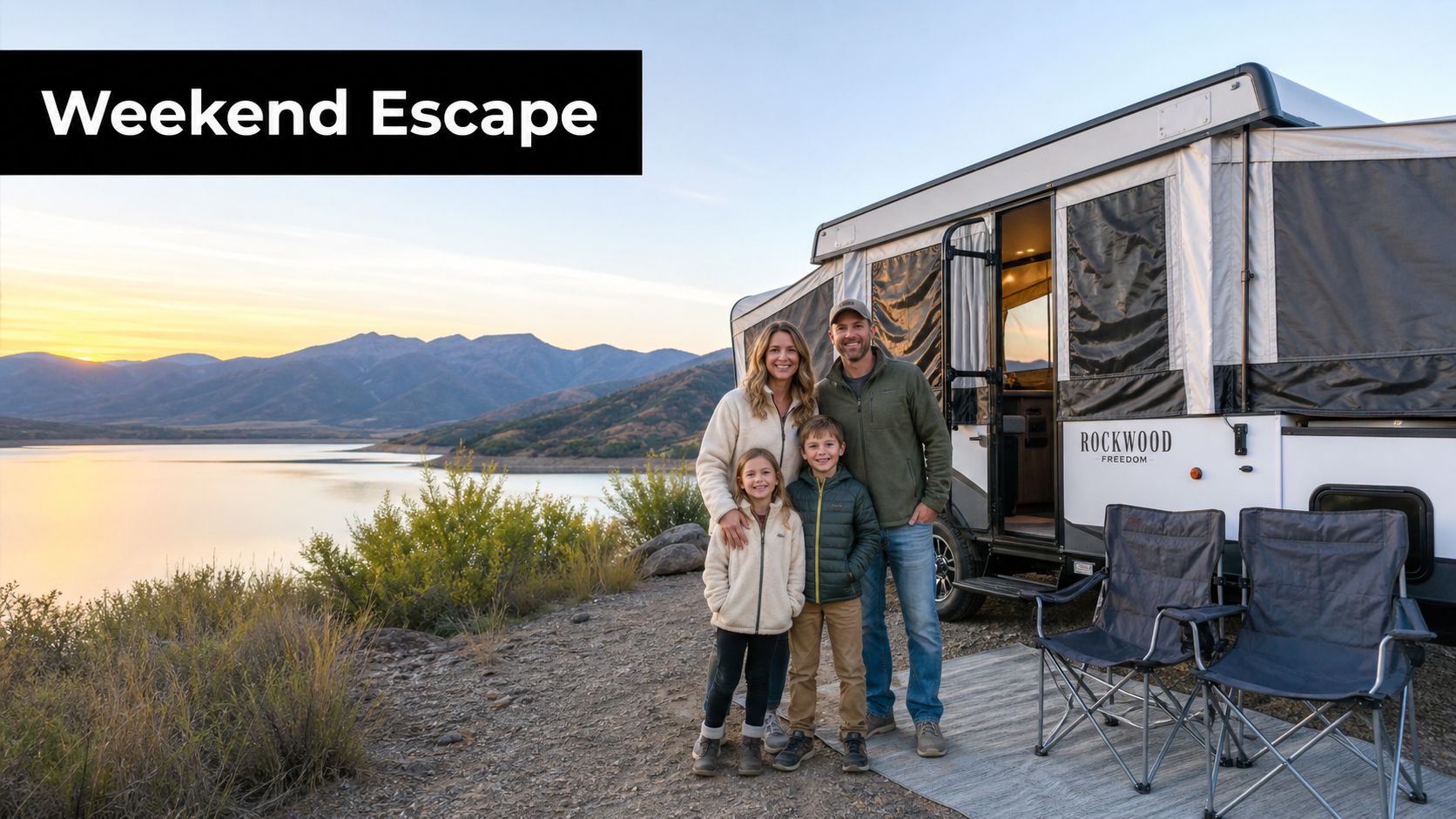
The appeal for first-time buyers
Pop-ups work particularly well for buyers who value:
- Lower tow demand: A folding profile can suit an SUV or half-ton truck that isn't equipped for a large trailer.
- Compact storage: The collapsed camper takes up less visual and physical space than a full-height travel trailer.
- Family sleeping space: Fold-out beds create a surprisingly open interior once the roof is raised.
- A closer-to-nature experience: Canvas walls let you hear rain, wind, and birds, which many campers consider part of the appeal.
- A manageable entry into RV ownership: Buyers can learn leveling, hitching, hookups, maintenance, and winterization without immediately managing a larger rig.
Utah also rewards compact camping equipment. A lower trailer can be easier to position at a crowded campground, and a smaller footprint gives families more flexibility around the Wasatch Mountains, the Great Salt Lake region, and reservoir destinations. The trade-off is clear, though. You'll spend more time setting up, and soft walls offer less protection from cold than a rigid trailer.
My recommendation: Buy a pop-up because it matches your normal camping trips, not because the brochure makes it look like a bargain. If your family expects warm interiors, quick arrivals, and frequent shoulder-season trips, inspect hard-sided alternatives before committing.
What Pop Up Campers Are and How They Work
A pop-up camper is a folding towable RV with a rigid lower box and an expandable upper living area. During travel, the roof lowers over the dinette, appliances, and folded beds. At camp, the owner levels the trailer, raises the roof, pulls out the beds, and secures the canvas or hard-side panels.
Think of it as the Swiss Army knife of RVs. The trailer carries the essential structure in a compact package, then unfolds into sleeping areas and living space when you arrive.
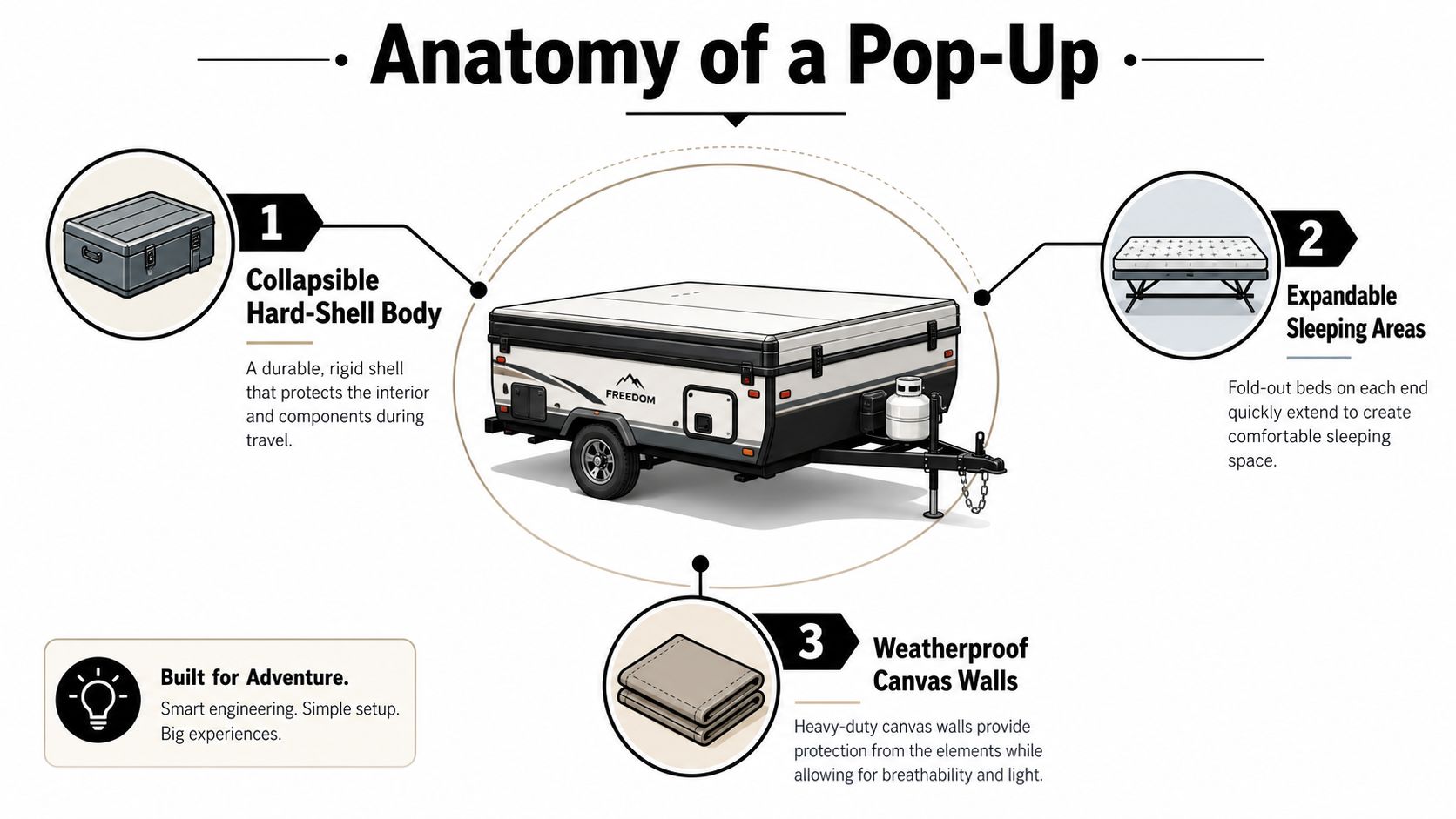
The basic setup sequence
Most owners follow a routine similar to this:
- Position and level the trailer. Leveling affects door operation, sleeping comfort, and the way the roof mechanism works.
- Chock the wheels and stabilize the frame. The trailer needs a steady base before you raise the roof.
- Release travel latches. Never operate the lift system while a latch or roof restraint remains engaged.
- Raise the roof gradually. Manual systems use a crank, while some newer designs use powered assistance.
- Pull out the beds. The sleeping platforms extend from the box and receive support from the frame or cables.
- Attach the canvas or wall panels. Check that seals and fasteners sit correctly before closing the door or windows.
Modern pop-up campers commonly weigh about 700 to 3,800 pounds empty, use box lengths from 8 to 16 feet, and stand roughly 4 feet 6 inches to 5 feet 6 inches high when closed, according to the popup camper technical overview. That low travel height reduces frontal area and can reduce wind drag and improve tow stability compared with taller hard-sided trailers, an advantage on exposed roads and mountain approaches.
The lift system is real machinery
Traditional lift systems commonly use a cable-and-spring arrangement. A Goshen Stamping lift-system guide describes a 3/16-inch main cable driving a greased master tube with two chambers. Pusher plates move heavy springs through corner guide tubes and into telescoping lift arms.
That design is effective, but it isn't maintenance-free. Cable condition, spring movement, guide-tube lubrication, and crank resistance all tell you something about the camper's condition. A roof that raises unevenly or binds under light load deserves a professional inspection.
The category also has deep roots. The modern pop-up traces to the 1916 Campbell Folding Camping Trailer patent, and historical accounts describe several companies selling similar folding trailers in 1916, with at least seven more entering the market by 1917. By 1964, Ward's company had become the country's largest camping-trailer manufacturer, showing how folding campers developed from an early road-camping novelty into a durable RV category.
For the design differences that matter most in a driveway and at camp, compare pop-up campers with travel trailers.
How to Choose the Right Size and Floorplan
The right pop-up isn't the biggest one your vehicle can pull. It's the floorplan that gives your family enough sleeping space, storage, and usable living room while staying within the tow vehicle's payload, hitch, and braking limits.
Start with the vehicle, not the camper listing. Find the tow rating, payload rating, hitch rating, and the actual weight of passengers, cargo, fuel, and accessories. A camper that looks acceptable by empty weight can become a poor match after bedding, propane, food, batteries, bikes, and camping gear go inside.
Pop-up camper size guide by family type
| Family Type | Box Length | Dry Weight | Sleeping Capacity | Key Features |
|---|---|---|---|---|
| Couple or solo camper | 8 to 10 ft | About 700 to 1,800 lb | 2 to 4 | Compact storage, simple setup, basic dinette |
| Small family | 10 to 12 ft | About 1,200 to 2,500 lb | 4 to 6 | Two beds, dinette, compact galley |
| Family with older children | 12 to 14 ft | About 2,000 to 3,200 lb | 6 to 8 | Larger beds, expanded seating, more storage |
| Large family or comfort-focused buyer | 14 to 16 ft | About 2,800 to 3,800 lb | 6 to 8 | Larger box, stronger amenities, more interior room |
The ranges above reflect the category's commonly cited technical envelope of 700 to 3,800 pounds empty and 8 to 16 feet of box length from the popup camper reference. Treat dry weight as a starting point, not a loaded-trip number.
Floorplan choices that matter
A dinette gives you a table for meals, cards, and rainy afternoons, but it may convert into a bed each night. A sofa can be easier for lounging and may create a more comfortable daytime interior. Families with children often prefer opposing sleeping areas because adults don't have to climb over bedding or convert every surface before breakfast.
Look closely at the kitchen galley. A compact interior kitchen helps in cold or wet weather, while an outdoor kitchen can preserve interior space and keep cooking smells outside. Air conditioning may be valuable for lower-elevation summer camping, but it adds weight and can require suitable electrical service. Bike racks, awnings, roof-mounted equipment, and larger battery systems also increase the load.
Tow-vehicle rule: The camper must fit the vehicle after you account for people and gear, not just before you load for the trip.
High-altitude camping in the Uintas changes the comfort discussion. Nights can feel much colder than valley conditions, and the soft tent sections lose heat more readily than rigid walls. Choose a larger box only when your tow vehicle can handle it, then prioritize sealed canvas, roof condition, furnace operation, and floor insulation instead of chasing every available feature.
New vs Used Pop Up Campers and What to Expect
A low asking price can hide the highest ownership cost. Used pop-ups deliver strong value when the previous owner kept the roof, canvas, tires, plumbing, and lift system serviced. They become expensive quickly when moisture has entered the roof or floor, or when the lift mechanism has been forced through years of neglect.
A new camper brings current equipment, dealer support, and warranty protection. Better weather sealing, lithium-ready electrical systems, solar preparation, and newer lift components reduce uncertainty, but they do not remove maintenance. For Utah mountain camping, cold nights and long storage periods make weather resistance and reliable roof hardware more important than a polished interior.
What our inspection should uncover
Use this inspection list before buying a used pop-up:
- Roof and seals: Check for soft spots, stains, failed sealant, sagging, and repeated patchwork.
- Canvas: Examine seams, zippers, windows, mildew, fading, tears, and attachment points.
- Floor and cushions: Press the flooring for soft areas and check cushions for damp odors or discoloration.
- Water systems: Test tanks, drains, faucets, the water heater, and visible plumbing connections.
- Lift operation: Raise and lower the roof evenly. Listen for grinding, popping, binding, or sudden changes in crank effort.
- Cable and spring condition: Inspect accessible parts and ask for records showing lubrication or lift-system service.
- Electrical equipment: Test lights, outlets, battery charging, brakes, and exterior connectors.
- Appliances: Run the refrigerator, furnace, stove, and air conditioner, if equipped.
- Frame and tires: Look for corrosion, bent components, cracked sidewalls, uneven wear, and damaged suspension parts.
An independent pop-up camper inspection checklist highlights roof leaks, water damage, tanks, curtains, and cushions. Give those areas more attention than clean upholstery or a shiny exterior. A lift system that raises unevenly can turn a convenient floorplan into a repair bill, especially after cold-weather storage.
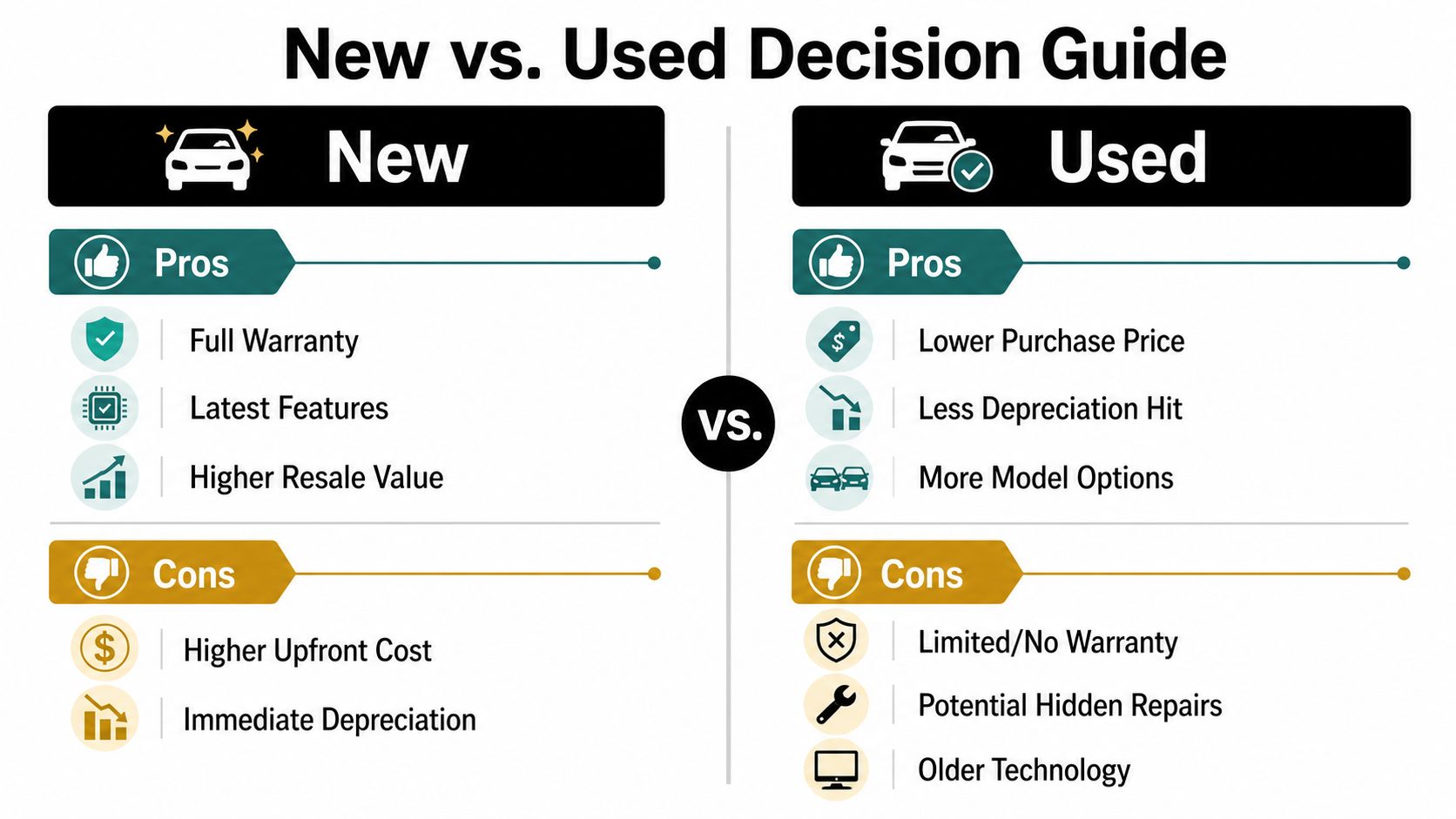
When new makes more sense
Choose new if you are buying your first camper, need dependable equipment for scheduled trips, or cannot confidently evaluate hidden moisture and mechanical wear. Choose used if you can inspect thoroughly, handle minor repairs, and accept the work that comes with an older unit. A secondary camper for occasional fair-weather trips can also justify buying used.
Consider this hypothetical: a camper advertised at $3,000 could reach $6,000 after repairs if it needs substantial work. That is not a market statistic or a prediction for every used unit. It shows why you should set a repair allowance before agreeing on value, then walk away when the roof, floor, or lift system fails inspection.
Compact campers continue to add off-grid equipment, stronger weather resistance, lithium power, and solar-ready configurations. Treat those features as part of the buying decision, not proof that a particular camper is worth more. In Utah, a sound roof, dry floor, working furnace, and properly maintained lift system matter more than a long feature list.
Towing Maintenance and Utah Winter Storage
Utah mountain trips expose towing problems quickly. Grades, crosswinds, elevation changes, and rough campground approaches put extra stress on tires, hitch components, latches, and brakes. A pop-up's lower profile helps, but it does not replace a careful pre-trip inspection.
Before each departure, lock the coupler, cross the safety chains correctly, attach the breakaway cable, test the lights, and set tire pressure to the manufacturer's specification. Pack heavy equipment low and close to the trailer axle, secure every roof latch, and leave additional braking distance. If the trailer has electric brakes, learn the controller before climbing or descending mountain roads. Use this camper brake controller guide to review that part of the towing setup.
Maintain the lift system before it fails
The lift system supports the roof and determines whether the camper's beds, seating, and interior space are usable. Cable-and-spring mechanisms need cleaning, lubrication, and correct adjustment. A frayed cable, binding spring, or dry guide tube can make the roof rise unevenly or stop it from operating safely.
Powered lifts still require a load calculation and regular inspection. A camper-roof actuator example from FIRGELLI uses two 12V linear actuators and four gas springs, with actuator force affected by roof weight, hinge geometry, and mounting position. A separate patented screw-drive lift system describes lifting a roof structure weighing about 275 pounds with up to about 400 pounds of additional roof load, nearly 700 pounds total. Those figures describe that specific patented system, not the capacity of every powered pop-up. Do not add roof equipment until the lift design and manufacturer's limits support it.
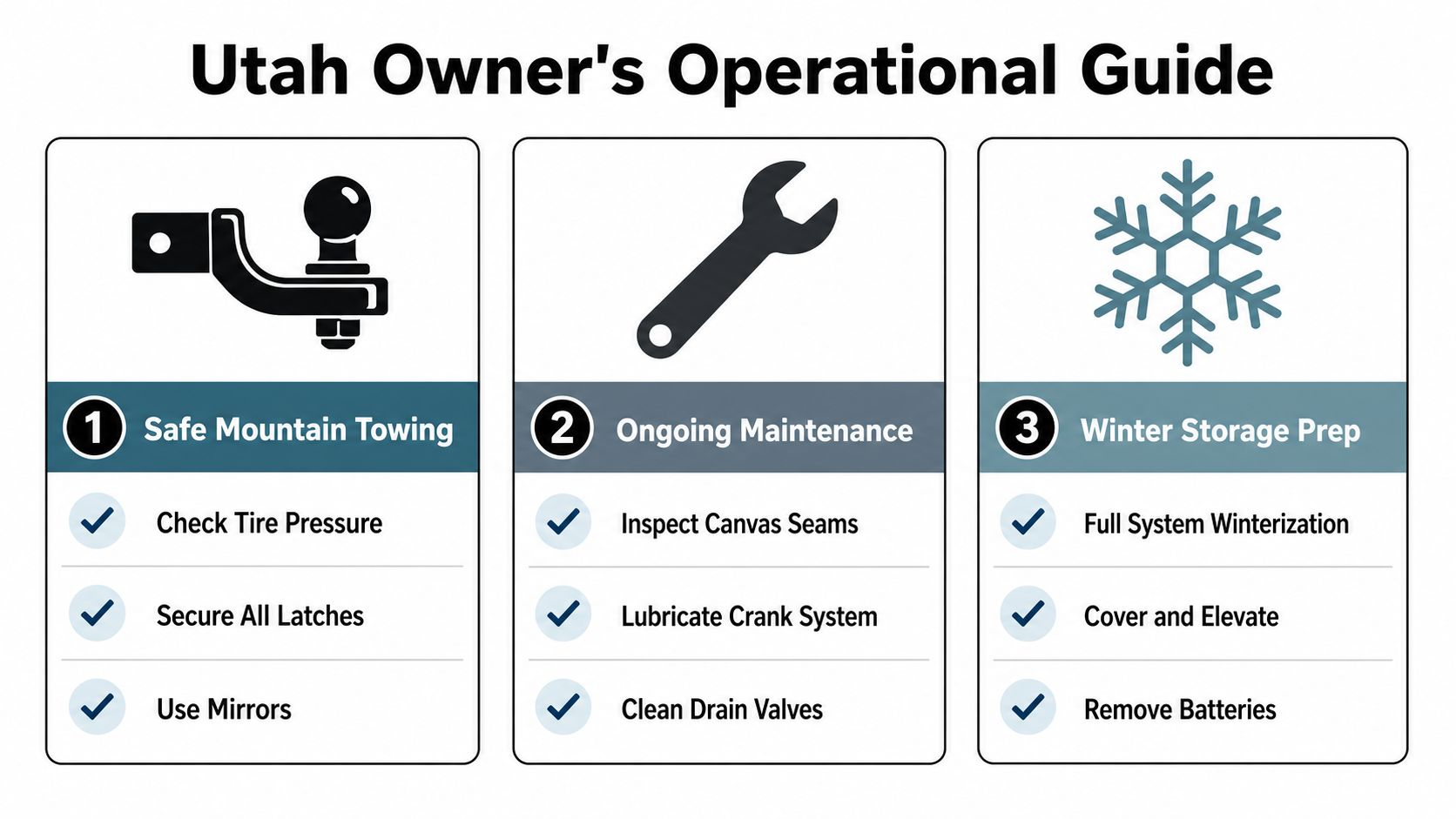
Winterize before the first hard freeze
Utah's freezing temperatures can damage plumbing, batteries, canvas, and roof seals. Start winter storage before the first hard freeze, then follow the camper manufacturer's procedure:
- Drain the fresh-water tank and hot-water heater completely.
- Remove remaining water from the plumbing system.
- Seal underside openings against rodents and other animals.
- Remove the battery and store it indoors.
- Cover vent openings while preserving suitable airflow and blocking pests.
- Clean and dry the canvas before lowering the roof.
- Lower the tongue end so rain and snow shed instead of pooling.
The pop-up camper winterization checklist from Beckley's RVs covers draining the fresh tank and water heater, sealing underside openings, storing the battery indoors, covering vents, and lowering the tongue end. Schedule service if the roof binds, a cable shows damage, plumbing will not drain, or you find signs of water intrusion. Cold-weather storage is where neglected lift hardware and small leaks become expensive spring repairs.
The following video can help owners visualize the operating routine before attempting a repair:
Where to Buy Pop Up Campers in Utah
Private sellers can offer interesting older inventory, but you assume more responsibility for inspection, title work, delivery, and repairs. An out-of-state dealer may have the floorplan you want, yet distance makes warranty questions, parts, and follow-up service less convenient.
A local dealership lets you operate the roof, inspect the canvas, sit on every bed, examine storage, and compare the trailer with your tow vehicle before you sign. Ask the salesperson to demonstrate the lift system, explain the loaded-weight calculation, and identify the components that require seasonal service. Those answers are more useful than a polished listing description.
Compare the buying process, not only the sticker
Motor Sportsland offers folding campers alongside other RV categories, with online inventory tools, financing and pre-qualification options, trade-in support, and service for maintenance, plumbing, electrical work, installations, upgrades, parts, and collision repair. The company serves Utah customers through locations in Millcreek and Spanish Fork, which can make delivery, walkthroughs, and follow-up more practical for Wasatch Front buyers.
For shoppers comparing dealer experiences, a quote-comparison resource for dealers can help organize questions about pricing, fees, financing, warranty coverage, and service access. Use any comparison tool as a checklist, then verify the details directly with the dealer.
What to bring to the showroom
Bring your vehicle's exact year, make, model, trim, and tow-package information. Also bring a rough list of the people, bikes, coolers, batteries, propane, and camping equipment you normally carry. We can then evaluate the camper as a real travel setup rather than an empty brochure specification.
Browse current pop-up camper inventory before visiting, then schedule enough time for a complete walkthrough. Don't rush the roof operation. A good buying process should leave you knowing how the camper travels, how it sets up, what it needs for winter, and where you'll take it for service.
Your Next Steps and Common Questions
Start with four decisions: confirm your tow vehicle, choose sleeping capacity, set a budget that includes maintenance and storage, and decide whether you'll camp only in warm weather or also during Utah's colder shoulder seasons. Then browse available pop-up campers for sale, narrow the floorplans, and inspect promising units in person before choosing.
Motor Sportsland has served Utah families for over 55 years and offers new and used RV inventory, financing tools, trade-ins, and service support through its Utah locations. The dealership's team can help compare folding campers with travel trailers when your camping plans require a different level of weather protection.
Frequently asked questions
Are pop-up campers safe in bear country?
Treat a pop-up like a tent for food and scent control. Follow campground rules, keep food and scented items secured as directed, and never assume canvas walls provide the same separation as a hard-sided trailer.
How long does setup take?
Setup varies by floorplan, equipment, and owner experience. Practice at home, follow the manufacturer's sequence, and don't rush roof operation or bed support installation.
Can I use a pop-up camper year-round in Utah?
You can use one outside peak summer, but soft tent sections are more climate-sensitive than rigid walls. Roof, floor, furnace, canvas condition, insulation, and condensation control determine how comfortable the camper remains.
What does insurance cost?
Insurance pricing depends on the camper, coverage, location, deductible, claims history, and insurer. Request a quote for the specific unit before finalizing your budget.
Our team can help you compare new and used pop-up campers, evaluate tow-vehicle fit, inspect lift systems, and plan Utah winter service. Browse the available options and contact Motor Sportsland to arrange a showroom visit and find a folding camper that fits your family's real camping routine.
