
Rv for Sale Utah
A first-time buyer in Utah usually starts with a simple question. Can my SUV pull that trailer up Parley's Canyon, or am I about to buy a rig that looks great on the lot and feels wrong the first time the grade climbs and the weather turns? That's the rv for sale Utah problem, not just finding a unit, but finding one that fits our roads, our elevation, and the way Utah families camp.
Utah is a serious RV state, so the shopping experience here should feel different from a generic national checklist. Our team at Motor Sportsland has spent more than 55 years working with Utah buyers, and the biggest lesson is still the same, match the RV to the trip, not the brochure. If you're heading toward Zion, Bear Lake, Jordanelle, Moab, or a shoulder-season site in the Wasatch, the right floorplan, insulation, and tow setup matter more than flashy trim. Buyers who understand that usually make a better purchase the first time.
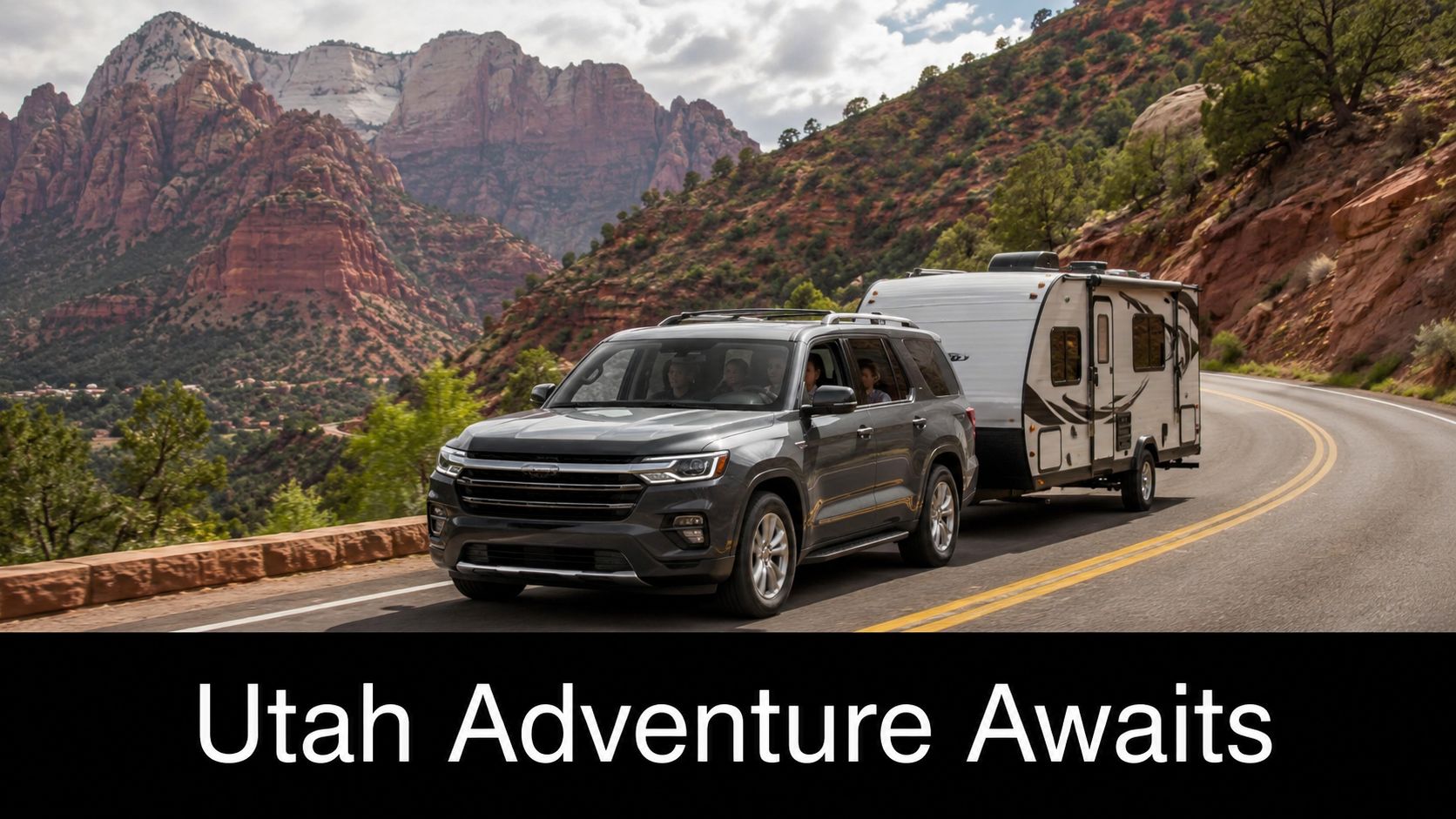
Why Buying an RV in Utah Feels Different
A Utah family can roll out of Salt Lake City on a Friday morning, climb into cooler air by lunchtime, and end the day dealing with wind, dust, or a surprise temperature swing. That's why a generic rv for sale Utah search can mislead people. What looks like a simple purchase quickly turns into a question of weight, weather protection, storage, and how much comfort you still have after the toys, kids, or gear are loaded.
Utah's market also changes the buying mood. The Utah RV Dealers Association says Utah is the largest per-capita owner of RVs in the country, which helps explain why RV shopping here is active and competitive, not occasional or sleepy. Motor Sportsland has worked through those buying cycles for decades, so we see the same pattern every season, first-time shoppers arrive focused on price, then realize the core issue is whether the unit fits their terrain and their towing setup.
Practical rule: if your plans include both desert heat and mountain cold, buy for the harder conditions first.
That's the lens this guide uses. It's built for the buyer comparing a used travel trailer in the showroom, the retiree planning longer trips out of state, and the family trying to keep weekend camping realistic without overbuying. It also helps if you're trying to avoid the usual sticker-shock surprises, because the purchase price is only part of the story once registration, maintenance, and long-term fit enter the picture. Utah buyers don't need more hype. They need a straight answer on what works here and what doesn't.
Utah's RV Market at a Glance
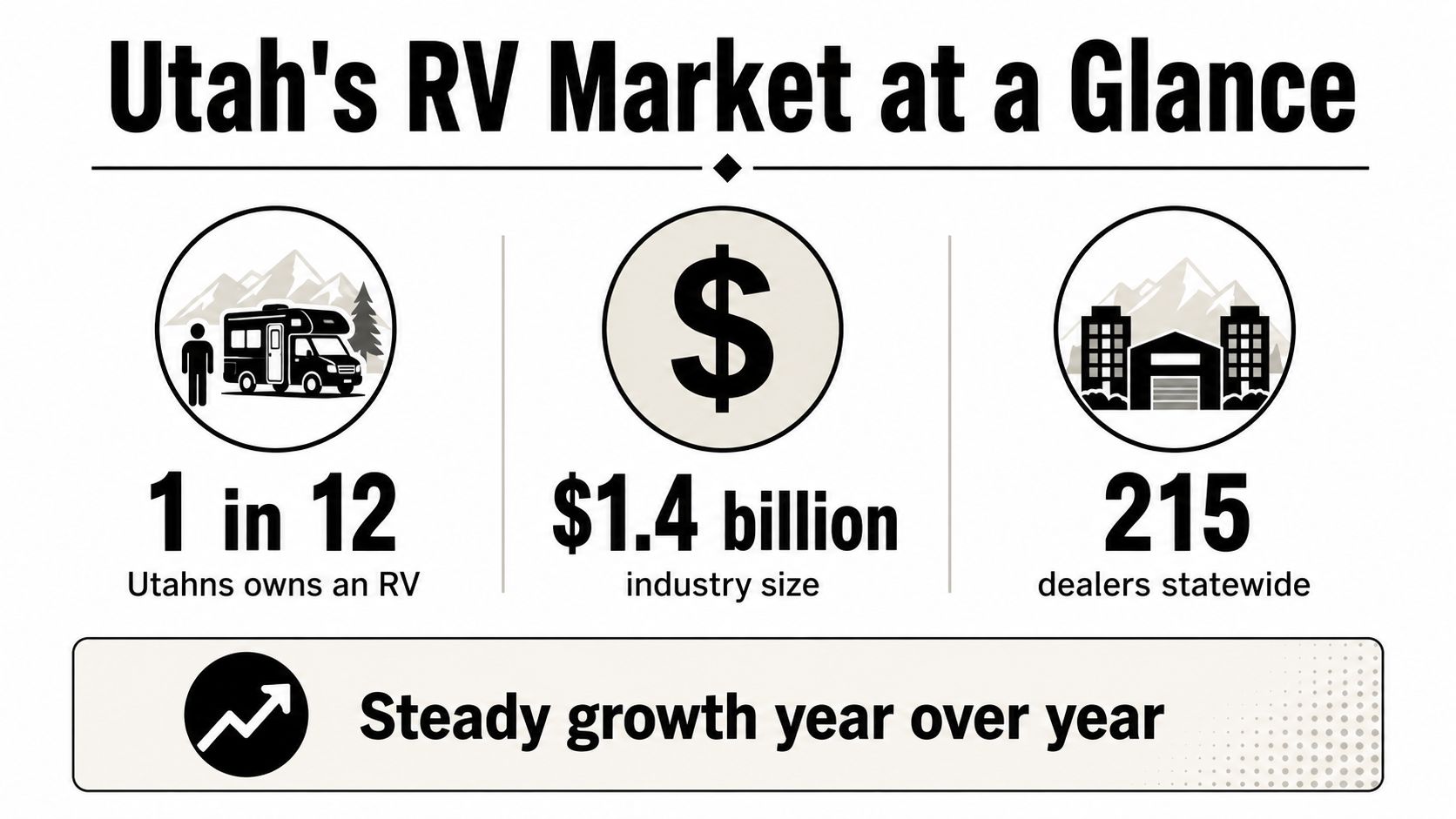
The local market is strong enough that you can shop with real confidence, but only if you understand what you're looking at. Independent market research estimates Utah's Recreational Vehicle Dealers industry will reach $1.4 billion in market size in 2026, with 215 businesses and 1,685 workers in the state, while the industry's business count grew 9.8% annually from 2021 to 2026 and market size grew 3.2% annually over the same period (Utah RV Dealers Association reference and IBISWorld industry profile). That's not a thin local niche. That's a mature retail and service ecosystem.
For a buyer, that matters in plain English. More dealers usually means more inventory variety, more price spread, and more chances to compare the same kind of rig across different lot conditions. A larger service network also makes long-term ownership more realistic, because you're not depending on one shop to handle every repair, parts request, or maintenance visit.
Utah's buying activity has also been documented for years, not just in a single hot season. State transaction reports from the Utah State Tax Commission showed 2,036 units sold statewide in the third quarter of 2010, with 290 units in Utah County alone during that period, and a later first-quarter report showed 1,950 total sales statewide in 2013. The point isn't the old dates. The point is that Utah has a durable RV buying culture, so competition is normal here, and shoppers should use that to their advantage instead of treating the first unit they see as the only unit that exists.
Bottom line: in Utah, you're not shopping a narrow selection. You're shopping a broad market, which means comparison pays.
Choosing the Right RV Class for Utah Travel
Utah doesn't reward the biggest rig by default. It rewards the rig that matches your roads, your tow vehicle, and your camping style. A compact van might be smarter for trailhead access, while a larger fifth wheel makes more sense if you're planning longer highway runs and want extra separation between living and sleeping space.
How each class fits Utah life
A Class B is easy to place in tight campgrounds and trailhead parking situations. It's the one I'd point at for a couple who wants quick weekend escapes, not a huge footprint, and simpler driving through the Wasatch.
A Class C is the family-friendly middle ground. If you're taking kids to Jordanelle or Bear Lake, a bunkhouse-style layout gives you practical sleeping space without jumping straight to a massive coach.
A Class A suits travelers who want a big, road-trip-focused motorhome and aren't trying to squeeze into every narrow campground loop. A fifth wheel is a strong long-haul and snowbirding option, especially if you want better separation and more residential comfort. A travel trailer is usually the most flexible entry point for Utah shoppers because it gives you a lot of floorplan choice. A toy hauler works when the weekend includes bikes, UTVs, or other gear that needs a garage.
| RV Class | Typical Length | Sleeps | Best Utah Use Case |
|---|---|---|---|
| Class A | Larger footprint | Varies | Long highway trips and extended travel |
| Class B | Compact | 2 to 4 | Trailheads, quick mountain weekends |
| Class C | Mid-size | 4 to 8 | Family camping at Jordanelle or Bear Lake |
| Travel Trailer | Wide range | 2 to 10 | First-time buyers and flexible budgets |
| Fifth Wheel | Larger | 4 to 8 | Long-distance trips and seasonal travel |
| Toy Hauler | Varies | 4 to 8 | Moab and powersports-focused trips |
The simple way to choose
Start with your tow vehicle, then your family size, then your actual campground habits. If your truck can't safely handle the weight, the floorplan is irrelevant. If you only camp a few weekends a year, don't buy like you're moving into full-time living. Buy the size you'll enjoy towing and cleaning, not the largest unit your budget can technically reach.
New vs Used RVs in Utah
Used buyers have a real opening right now because wholesale pricing has softened. Black Book's Q1 2026 market update found the average motorhome wholesale selling price was $62,637, down 2.2% quarter over quarter and 1.5% year over year, while 2025 RV shipments reached approximately 342,220 units (Black Book market update). That doesn't mean every used unit is a bargain, but it does mean the market is giving shoppers more room to compare value.
New units still win on warranty coverage, current floorplans, and the peace of mind that comes with starting fresh. Used units win on depreciation, price flexibility, and access to layouts that may no longer be made exactly the same way. In Utah, that trade-off matters more because mountain use is hard on appliances, seals, tires, and suspension components. A clean used RV from a dry climate can be a smarter buy than a newer rig that spent years in harsher conditions.
If you want a deeper checklist for inspecting a pre-owned unit, our team keeps a practical walk-through here, how to buy a used RV. For title history across state lines, it's also worth understanding title brands in Oregon and Washington before you get serious about any out-of-state listing.
Use this rule of thumb
- Buy new if you want warranty support, a very specific floorplan, or you don't want to inherit maintenance unknowns.
- Buy used if you care more about value, are willing to inspect carefully, and can handle a little cosmetic wear.
- Buy the newer used unit if you want a modern layout without paying full retail.
- Skip the bargain unit if the roof, seals, or running gear already look tired.
If you're the kind of buyer who gets anxious about repairs, new usually feels better. If you're comfortable inspecting a rig and you want more RV per dollar, used is where Utah shoppers often find the better deal.
Where to Search and How to Evaluate Utah Inventory
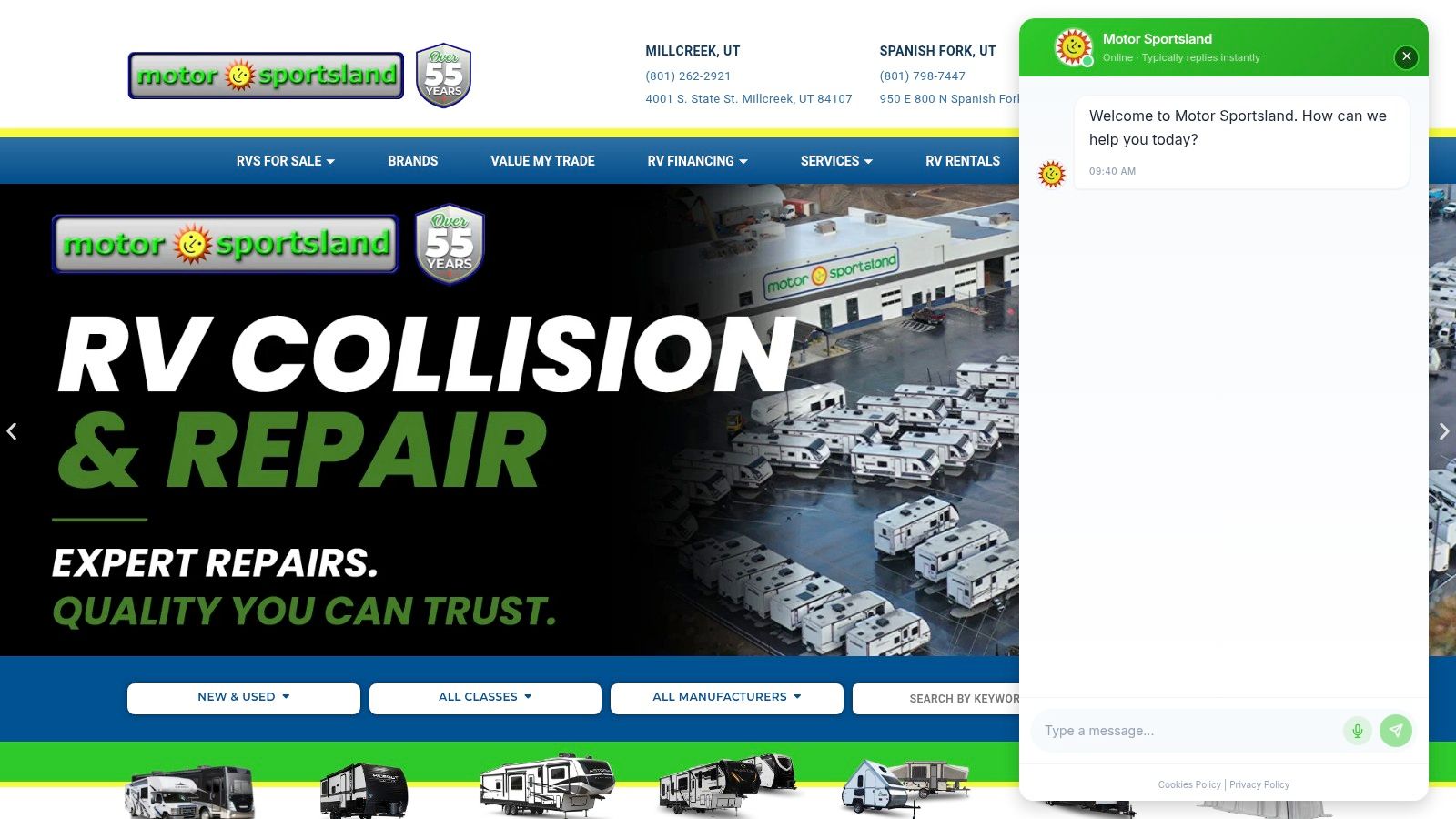
Start online, but don't stop there. Utah inventory pages are useful because they let you filter by weight, length, price range, floorplan, and features, which is exactly how a buyer should shop when the goal is to match an RV to mountain roads and desert camping. The inventory layout at Motor Sportsland is built around those filters, and its Salt Lake City and Spanish Fork locations give shoppers a broader local field to compare without driving all over the state.
Utah listings often skew toward travel trailers and used units, which makes sense in a state where many buyers want flexibility, affordability, and a towable setup that works with existing trucks and SUVs. That means you should pay close attention to floorplan details. A trailer that looks similar on paper can feel completely different once you compare storage, aisle width, and sleeping arrangement for mixed-use trips.
What to inspect in person
- Slides and seals. Run them, inspect them, and look for water intrusion.
- Tire age and sidewalls. Tires can look fine and still be the wrong age for travel.
- Roof condition. A compromised roof turns into expensive trouble fast.
- Appliances. Cycle the refrigerator, water heater, A/C, and furnace.
- Interior damage. Watch for soft flooring, stains, or musty odors.
If you're checking a used unit, a VIN lookup is smart before you get emotionally attached. A resource like this VIN check guide before buying can help you think through the paperwork and identity side of the deal before you sign anything.
A pre-purchase inspection at a service center is worth it because it catches the stuff sellers gloss over. Our service side also helps with trade-ins, financing pre-qualification, and the kind of rotating Deals of the Week that can make a better floorplan reachable if you're ready to move quickly. If you want to read how local dealers organize the buying process, this overview of RV dealers in Salt Lake City is a useful place to start.
What to do before you visit
Bring your tow vehicle specs, rough sleeping needs, and a short list of must-haves. If you know your priorities before you walk in, you'll judge the inventory faster and avoid getting distracted by a floorplan that only looks right. That's the difference between a clean Utah purchase and a long, confusing one.
Utah Registration, Taxes, and Paperwork
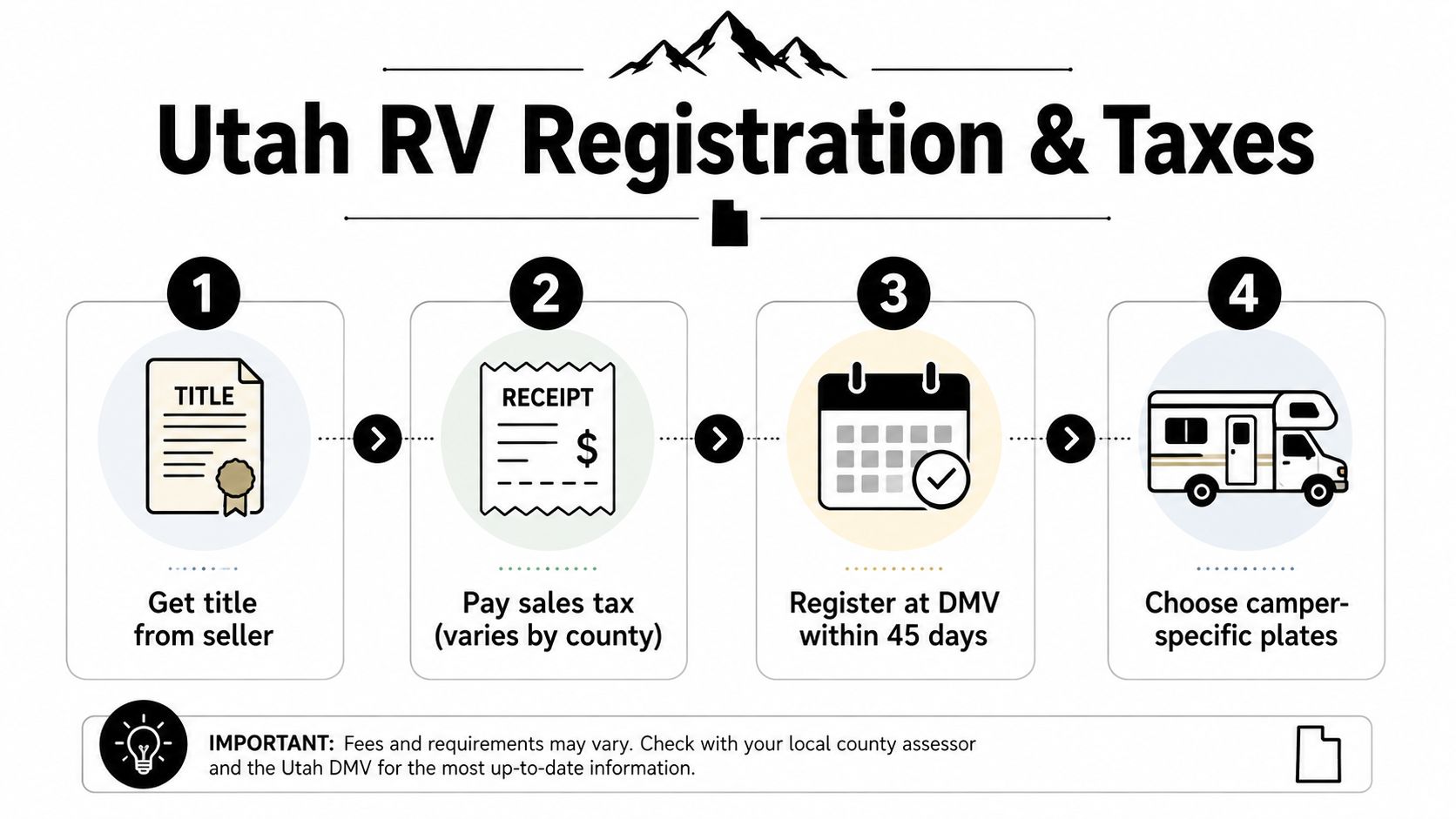
Utah doesn't treat campers like ordinary passenger vehicles, and buyers need to plan for that before delivery day. The Utah DMV has a dedicated Campers registration page, which is your clue that paperwork matters here. If you're buying out of state, the transfer process can be just as important as the unit itself.
The practical order is simple. Get the title lined up, confirm lien payoff status if there is one, and make sure the paperwork matches the actual unit you're buying. Temporary tags, out-of-state titles, and missing signatures are the most common places where a smooth sale turns annoying. Ask for clarity before you sign, not after you've already planned the first trip.
Don't let the sticker price fool you. A clean title package saves time, and bad paperwork can delay your camping season.
Day-of-delivery checklist
- Confirm the title is ready or properly assigned.
- Verify sales tax expectations before you leave.
- Ask exactly when and where to register through the DMV.
- Make sure you leave with the right camper-specific plate instructions.
You can also review the purchase paperwork carefully with our guide on the RV purchase agreement, especially if you're comparing financing terms or trade-in details. Utah buyers don't need to become paperwork experts, but they do need to slow down long enough to avoid avoidable errors. A dealer who explains the process clearly is saving you time later.
Service, Maintenance, and Long-Term Ownership in Utah
An RV in Utah lives a harder life than people expect. Summer dust, winter storage, elevation changes, and long highway runs all punish weak seals, tired batteries, and sloppy maintenance. That's why ownership should never end at the sale. The test is how the rig behaves after a full season of use.
Motor Sportsland's Service Center handles maintenance checks, repairs, installations, plumbing and electrical work, upgrades, RV parts, and collision repair, which is the kind of support local owners need when something small starts acting up. A local shop matters because you don't want to bounce between specialists every time the water system acts strange or the roof needs attention after a rough winter.
For accessories and campsite setup, some owners also look at products like Rider 18 SW-Motech accessories, especially when they're organizing gear around outdoor travel rather than just parking in one place.
Seasonal habits that keep a rig road-ready
- Winterize early. Don't wait for the first hard freeze.
- Check seals in spring. Roof lines and slide areas deserve a careful look.
- Inspect after snow. Roof membranes and trim can hide winter wear.
- Budget for upkeep. Used or new, every RV needs routine attention.
That's the part of rv for sale Utah shopping people ignore too often. The purchase is only the beginning. The owners who stay ahead of maintenance are the ones still using their RV comfortably years later.
Key Takeaways and Buyer FAQs
Utah RV shopping works best when you stay practical. Match the class to your roads and family size, compare new and used thoroughly, use local inventory filters to narrow the field, and budget for the paperwork and ownership costs that come after the sale. A dealer with strong service capability gives you more than inventory, it gives you a place to keep the rig usable.
Buyer FAQs
How do I choose between Millcreek and Spanish Fork?
Choose the location that gives you the best inventory match and easiest access for service or follow-up visits. If one store has the right floorplan, that matters more than zip code preference.
What happens during a trade-in appraisal?
The appraisal looks at condition, age, equipment, and marketability. Clean maintenance history and obvious care usually help the conversation.
How does financing pre-qualification work?
You submit basic credit information early so you know your payment range before you commit to a specific rig. That makes shopping faster and less stressful.
Does Utah's elevation affect propane or tire pressure?
Yes, elevation and temperature swings change how RV systems feel and perform, so owners should check both before mountain trips and during seasonal transitions.
If you're ready to narrow your choices, browse inventory, ask for a trade-in review, or stop by the showroom in Salt Lake City for a straight answer on what fits your truck, your camping style, and your budget.
If you're comparing rv for sale Utah options right now, Motor Sportsland can help you sort the right floorplan, the right condition, and the right ownership plan without wasting your time. Visit Motor Sportsland to browse current inventory, ask about service, or schedule a visit to the Salt Lake City showroom, and we'll help you narrow the field to rigs that fit how you camp in Utah.
