
RV Generator Maintenance Guide: 2026 Tips from Motor
Nothing ruins a Utah camping weekend faster than a generator that quits right when you need it. You're parked near Jordanelle, the sun's still high, the kids want the A/C on, someone plugs in the coffee maker, and the generator sputters, hunts, and dies. Most of the time, that failure didn't start at the campsite. It started months earlier with skipped exercise runs, stale fuel, a dirty air filter, or oil that stayed in service too long.
That's why RV generator maintenance matters so much here. Utah RVs often sit through cold storage, then get asked to work hard in summer heat, dusty camp roads, and higher elevations. Generators don't love that pattern unless the owner stays ahead of it.
At our Salt Lake City service counter, we talk people through this all the time. A reliable generator usually isn't about luck or having a fancy rig. It's about a repeatable routine. Run it the right way, service it by hours instead of guesswork, and prep it correctly for storage. If you're also thinking about off-grid fuel planning more broadly, this virtual pipeline guide for mobile natural gas delivery is an interesting look at how portable energy logistics work in different field settings.
Introduction Your Utah Adventure Depends on a Healthy Generator
A generator problem usually shows up at the worst possible time. That's part of what makes it so frustrating. Your lights may still work off battery for a while, but once you need cooling, microwave power, battery charging, or steady AC power for your coach systems, a neglected generator gets exposed fast.
Utah adds some real pressure to the equation. We see rigs come back from Bear Lake, Moab, the Uintas, and the Wasatch with the same pattern. The generator was “fine last year,” then storage, dust, old fuel, and inconsistent use caught up with it. Owners often did start it once in a while, but not under meaningful load, and that's where a lot of problems begin.
Practical rule: Good RV generator maintenance is simpler than generator repair. Most owners can handle the basics if they stay consistent.
If you want your generator ready for boondocking, shoulder-season hunting trips, or a family stop between Utah parks, the goal is straightforward. Keep the fuel system clean, keep clean air moving through it, keep oil fresh, and make the generator work often enough that it stays healthy.
Your Core RV Generator Service Schedule
The biggest mistake we see is treating generator service like seasonal memory work. Owners think, “I checked it last spring, so I'm probably good.” Generators don't work that way. They need an hour-based schedule, because runtime tells you far more than the calendar alone.
A solid baseline comes from established RV maintenance guidance. That guidance recommends exercising the generator monthly at at least 50% load, changing oil and air filters every 100 to 150 hours or once a year, replacing fuel filters every 400 to 500 hours, servicing slip rings and brushes every 500 hours, and adjusting valves on older-style units every 800 hours according to RV generator care guidance from RV.com.
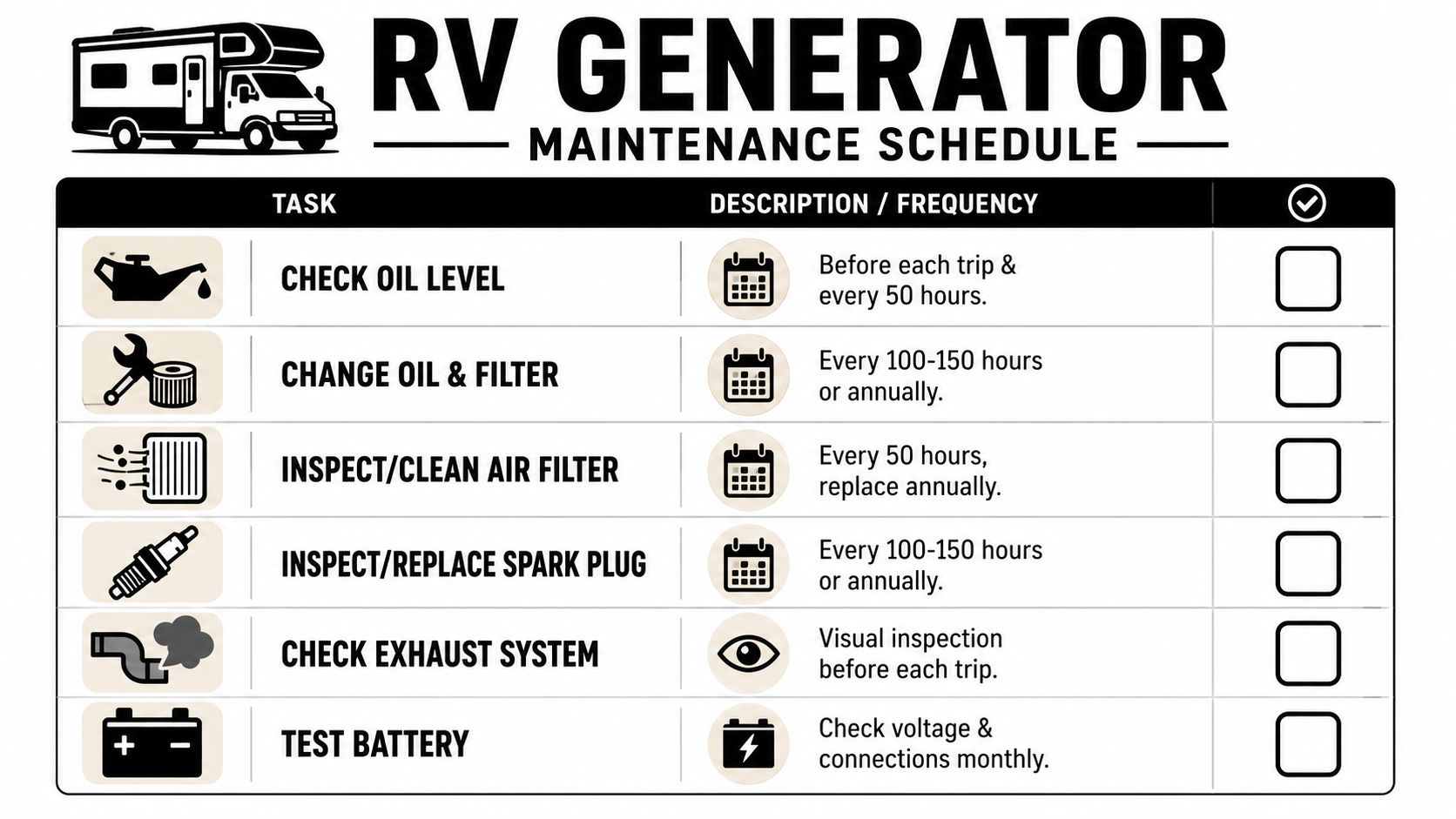
The service intervals that matter most
| Task | Frequency (Operating Hours) | Frequency (Time-Based) |
|---|---|---|
| Exercise under load | N/A | Monthly |
| Change oil | 100 to 150 hours | Once a year |
| Change air filter | 100 to 150 hours | Once a year |
| Replace fuel filter | 400 to 500 hours | As needed by schedule |
| Service slip rings and brushes | 500 hours | As needed by schedule |
| Adjust valves on older-style units | 800 hours | As needed by schedule |
That table gives you the backbone of RV generator maintenance. If you remember nothing else, remember this: hours first, calendar second, whichever comes first.
Why these intervals aren't optional
Oil is cheap compared with internal engine wear. Once oil gets dirty or breaks down, sludge and contamination start doing damage you won't see until the generator runs hot, sounds rough, or loses reliability. We've seen plenty of owners focus on the house batteries, tires, and roof seals while forgetting the generator's oil entirely.
Air filtration matters just as much in Utah. Dusty roads around the Great Salt Lake, southern Utah camp loops, and dry shoulder seasons can load up a filter fast. A restricted air filter chokes performance and raises heat. At altitude, where the engine is already working with thinner air, a dirty filter makes the problem worse.
A practical checklist before trips
Use this short routine before you leave town:
- Check the hour meter: Don't guess. Know whether you're nearing an oil or filter interval.
- Verify oil level: A low oil condition can lead to shutdowns or poor running.
- Inspect the air path: Look for a dirty filter, blocked vents, or debris around the cooling area.
- Look over the exhaust: Check for damage, looseness, or signs something changed since the last trip.
- Run it with real demand: Put an actual electrical load on the generator before you trust it at camp.
If you're building maintenance habits across your gear, structured checklists help reduce unplanned downtime because they turn “I meant to do that” into a repeatable system.
A generator that sits quietly for months can still age badly. Fuel degrades, condensation builds, and small maintenance gaps stack up.
Essential Tools and Parts for Your RV Toolkit
You don't need a rolling shop to stay on top of generator care. You need a small, deliberate kit for the jobs owners do. The right setup lets you handle routine RV generator maintenance at home, in storage, or at the campsite without improvising with the wrong tool.
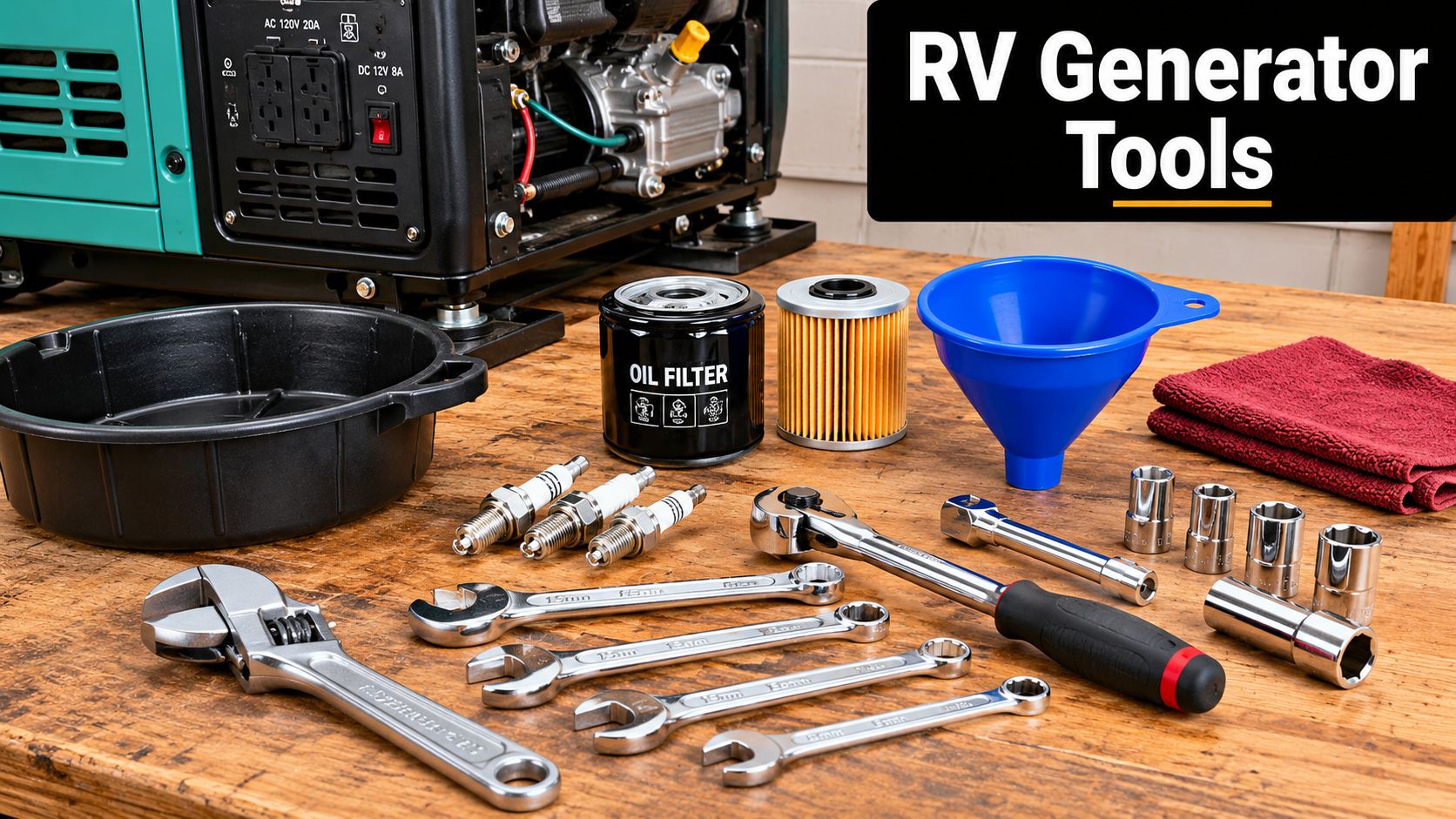
The go-kit we'd keep in the coach
Most owners do well with a simple pouch or small bin containing:
- Correct socket set and wrench sizes: Use what fits your drain plug, access panels, and battery terminals. Guessing with adjustable tools rounds fasteners.
- Oil drain pan and funnel: A clean funnel matters more than people think. Contaminated oil changes create avoidable mess and risk.
- Nitrile gloves and shop towels: These make roadside service much easier and keep dirty oil off compartment surfaces.
- Spare air filter: If you camp in dusty areas, having one on hand saves a trip.
- Correct replacement spark plug: Even if you don't swap it roadside, having the right part prevents delays.
- Fuel stabilizer: This should live with your storage routine, not as an afterthought.
- Flashlight or headlamp: Generator compartments are awkward even in daylight.
- Battery terminal brush: Corrosion and poor contact can create no-start complaints that feel bigger than they are.
One tool people forget is a notebook or phone note dedicated to maintenance logging. Write down the date, hours, and what you changed. That habit prevents duplicate work and missed intervals.
Parts matter more than people expect
A generator is picky about basics. The correct oil type, the correct filter, and the correct plug aren't details to wing. Before you buy parts, check the generator model and serial information directly from the unit. Owners often shop by RV brand when they should be shopping by generator model.
Battery support is part of the toolkit too. If your generator start battery or coach battery setup has been inconsistent, this guide on RV battery charger basics helps owners understand the charging side better.
For a quick visual walkthrough, this video is worth a watch before your next service day.
Keep the kit realistic
Don't overload your storage bay with specialty tools you won't use. Skip the fantasy mechanic setup. Focus on what supports these real-world tasks:
- Checking oil and topping off correctly.
- Replacing the air filter cleanly.
- Inspecting battery connections.
- Handling basic access-panel removal.
- Managing storage fuel treatment.
That's enough to solve a surprising number of generator headaches before they become service appointments.
Mastering Monthly and Seasonal Generator Care
The most misunderstood part of RV generator maintenance is “exercise.” A lot of owners think starting the generator for a few minutes in the driveway counts. It doesn't. Practical maintenance guidance says an RV generator should be run about once a month with a sizable load such as the A/C for about an hour, not merely started briefly, according to RV Life's generator maintenance guidance.
What proper exercise looks like
A proper monthly run does three things. It gets the generator up to operating temperature, puts a real electrical demand on it, and moves fuel through the system in a way that helps address moisture and buildup issues.
Here's the version we recommend owners follow:
- Start with a normal pre-check: Oil level, fuel status, and a quick visual look.
- Apply a meaningful load: Roof A/C is a common choice if conditions allow.
- Let it run long enough to get fully warm: A quick start and shutoff does very little.
- Listen while it works: Hunting, surging, rough running, and odd smells mean the exercise session is telling you something useful.
Brief idling is one of the least helpful habits in generator care. It sounds responsible, but it often leaves the real problems untouched.
Smart storage for Utah winters
Utah winter storage is rough on anything fuel-related. Long sits, temperature swings, and delayed spring startup are exactly where stale fuel and varnish become expensive. Good storage prep is simple, but it has to be deliberate.
One practical maintenance procedure recommends filling the fuel tank before long storage, adding stabilizer, then running the generator under load for at least 30 minutes so treated fuel reaches the carburetor, lines, and engine components, according to Coach-Net's generator care discussion.
That last step matters. Adding stabilizer and never running the generator afterward leaves untreated fuel sitting in the places that fail first.
Spring wake-up without drama
When you're getting ready for the first trip of the season, don't just hit the start switch and hope. Use a short recommissioning routine.
- Inspect the compartment: Look for nests, debris, chewed material, or corrosion.
- Check battery terminals: Clean, tight connections matter after storage.
- Verify fuel condition: If the coach sat a long time and the fuel is questionable, don't ignore that.
- Run under load before travel day: Don't make the campsite your test bench.
Battery maintenance plays into all of this. Even though it's a different vehicle category, the same storage discipline applies to lead-acid systems, and this piece on how to maximize golf cart battery lifespan is useful for understanding cleaning, charging, and storage habits that carry over well.
Troubleshooting Common Generator Problems on the Road
Even a well-maintained generator can act up on a trip. The trick is to troubleshoot in the right order. Start with the easy checks, not the scary conclusions. A lot of generator failures in camp turn out to be fuel, oil level, battery connection, airflow, or overload issues.
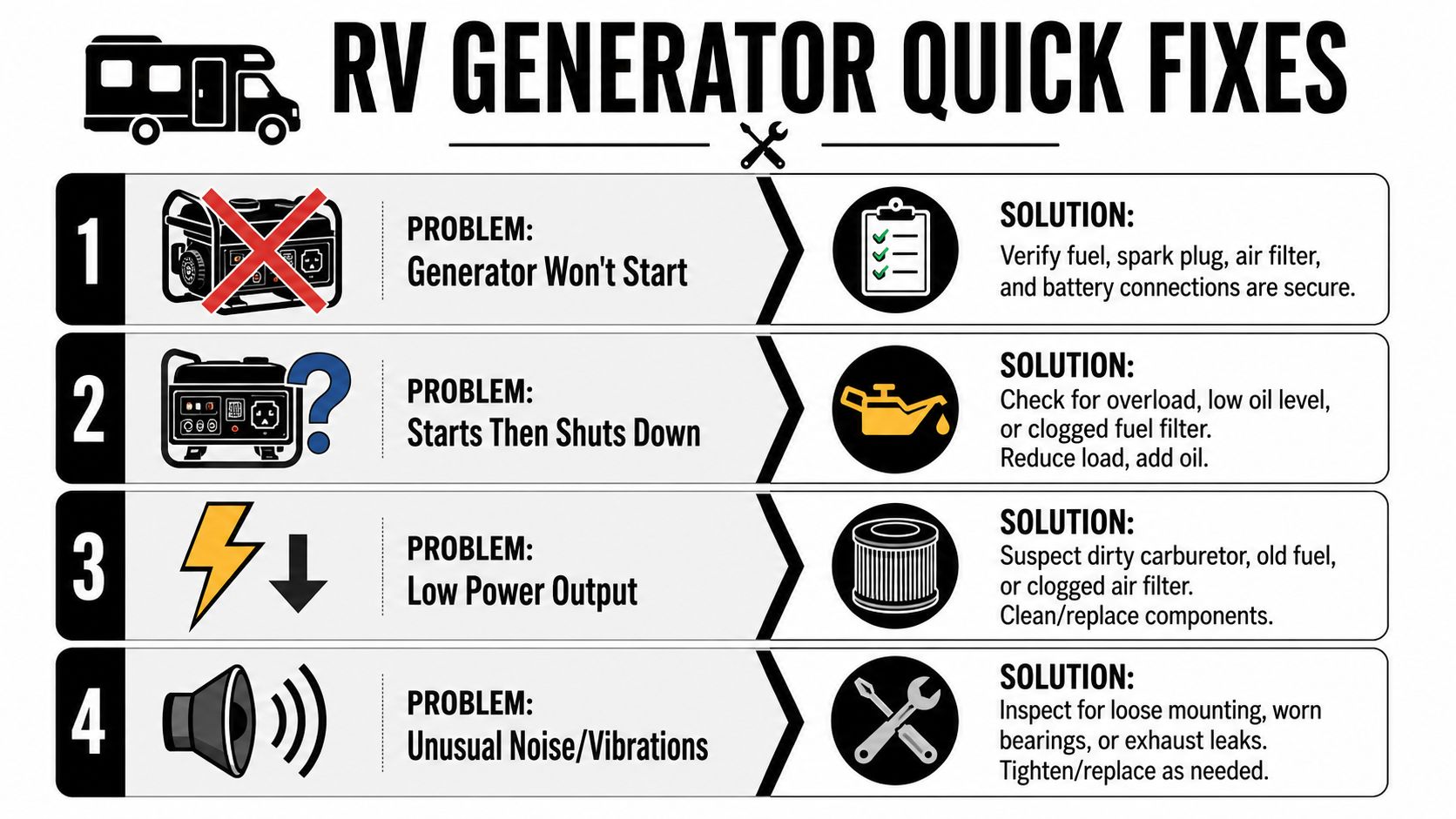
It won't start
If the generator cranks but won't fire, check the basics in this order:
- Fuel first: Make sure the coach has usable fuel available to the generator.
- Battery connections: Loose or corroded terminals cause weak cranking and inconsistent starts.
- Air filter condition: If it's dirty enough to restrict intake, starting gets harder.
- Spark plug and visible wiring: Look for obvious disconnections, not deep disassembly.
A lot of people jump straight to “bad generator” when the issue is poor battery voltage or stale fuel.
It starts, then shuts down
This symptom usually points to a protection shutdown or a running issue that appears once the unit is under stress.
Look at these possibilities:
- Low oil level
- Too much electrical load too soon
- Restricted fuel delivery
- Airflow problem or overheating condition
Try removing unnecessary loads, verifying oil level on level ground, and restarting after a short pause. If it repeats, don't keep cycling it endlessly. Repeated failed starts can muddy the diagnosis and make a small problem harder to sort out.
It runs rough or makes poor power
Rough running often feels like a fuel problem, but not always. Dirty intake, old fuel, or contamination in the fuel path are common culprits. If the generator runs but the coach still has electrical weirdness, inspect the breaker and the RV side of the electrical system before blaming the generator alone.
If you're chasing a broader power issue, this guide to RV electrical system repair can help you separate generator symptoms from coach wiring or transfer-related problems.
If the generator is making unusual mechanical noise, vibrating more than normal, or tripping protection repeatedly, that's usually the point to stop roadside guessing and get it inspected.
Utah-Specific Generator Care High Altitude and Cold Weather
Generic maintenance advice misses what Utah owners deal with every season. A generator that behaves fine in the valley can feel weak in the mountains. A unit that starts normally in July can turn stubborn on a cold shoulder-season morning. Add dust from desert roads, and the maintenance picture changes.
Higher elevation changes expectations
The first thing we tell Utah campers is simple. Don't judge generator performance in the Uintas the same way you judge it in Salt Lake City. At higher elevation, the engine has less air to work with, so power can feel softer and load handling gets touchier.
That means owners need to be more disciplined about what they ask the generator to do. If you're running multiple heavy loads at altitude, the margin shrinks. A filter that was “good enough” at lower elevation might become a noticeable problem when you climb. If you camp off-grid a lot, our article on camping off the grid pairs well with generator planning because load management matters as much as maintenance.
Cold starts and dusty roads need different habits
Cold weather exposes battery weakness, fuel quality issues, and marginal tune problems fast. If you're heading into the Wasatch in cooler months, test the generator before the trip, not at camp. Let it warm properly before putting a big load on it.
Dust is the other Utah reality. Owners coming back from southern Utah often focus on the exterior dirt they can see and miss the dust the generator inhaled. That's why we push regular air-filter inspection and a good visual cleaning of the compartment area. The generator doesn't care whether the dust came from a trailhead near Moab or a windy day by the Great Salt Lake. If airflow suffers, reliability follows.
A practical Utah mindset looks like this:
- Mountain camping: Be realistic about available power and heavy loads.
- Late fall trips: Confirm battery strength and startup behavior before departure.
- Desert travel: Inspect intake and cooling areas more often than you think you need to.
- Long storage between trips: Don't assume low use equals low maintenance.
When to Call the Pros at the Motor Sportsland Service Center
A lot of generator maintenance belongs in the driveway. Some repairs do not. Once you get into fuel delivery, output testing, control-board faults, or anything involving exhaust leaks, the job shifts from routine upkeep to diagnosis and safety work.
That matters even more in Utah, where altitude can make a weak-running generator feel like a major failure. I've seen owners replace parts that were not bad, just because the unit struggled in the mountains and the underlying issue was load, mixture, or a maintenance problem that needed proper testing. The same thing happens after winter storage, when stale fuel, low battery voltage, and varnish in the carburetor can stack up and muddy the symptoms.
Long-interval service is another point where many owners decide it is worth handing the job off. As noted in GenServe's maintenance milestone guidance, generators eventually need work beyond basic oil and filter service, including battery replacement, cooling-system service on applicable units, and valve adjustment. Those jobs are manageable with the right equipment and service information, but they are also easy to get wrong if you do not perform them often.
Here are the signs to stop troubleshooting in the campground or driveway and book service:
- It cranks but will not start after the basics check out: Fuel supply, oil level, and battery condition are confirmed, but the unit still will not light off.
- It starts, then shuts down under a normal load: That points to a fault that needs testing, not guesswork.
- You smell raw fuel or see any sign of a leak: Park it and get it inspected.
- It runs, but coach power is erratic: That can be a generator issue, a transfer issue, or another RV electrical problem.
- The sound or vibration changes suddenly: New mechanical noises usually mean wear, loosened mounts, or internal trouble.
Our Salt Lake City service team handles generator maintenance, repair, installation, and coach-side electrical diagnosis. That last part matters. Sometimes the generator is fine and the fault lives elsewhere in the RV. Sometimes it is the opposite. Good diagnosis saves time, parts, and a lot of frustration.
A good rule is simple. If the repair affects fuel, exhaust, internal engine settings, or electrical output, bring it in. Routine care keeps generators healthy. Skilled testing finds the problems routine care cannot.
Conclusion Keep Your Adventures Powered Up
A generator usually gets your attention at the worst time. You are setting up in the mountains, the temperature drops after sunset, and the power you counted on is not there. Good maintenance lowers the odds of that kind of trip-ending problem.
The pattern is pretty simple. Run the generator regularly under a real load, stay on top of service by hours and season, use clean fuel practices, and prep it correctly before a Utah winter layup. That routine prevents a lot of the no-starts, rough running, and weak performance owners deal with after long storage or trips into higher elevation.
You do not need to overcomplicate it. A written service log, a few basic tools, and the habit of paying attention to start-up behavior, sound, and load handling will catch a lot early. Then you can handle the routine jobs yourself and avoid guessing on the repairs that need testing.
That is the balance we recommend at Motor Sportsland. Do the maintenance that makes sense in your driveway. Bring in the problems that involve fuel, electrical output, internal adjustments, or hard-to-pin-down shutdowns. That approach keeps your RV ready for the next Utah weekend without turning generator care into a bigger project than it needs to be.
RV Generator Maintenance FAQ
How often should I exercise my RV generator?
Run it once a month with a meaningful load on it for a while, not just long enough to hear it start. In Utah, generators that sit through cold snaps and dry storage periods tend to show fuel and carburetor problems faster, so regular exercise matters.
Is time or runtime more important for service?
Runtime hours are the main guide for oil changes and other routine service. Calendar time still counts. A generator that barely runs all year can still develop stale fuel, dry seals, and corrosion during storage.
Why does my generator run fine at home but struggle in the mountains?
Altitude is usually the reason. As you climb, the engine gets less oxygen, so it makes less power and handles heavy loads worse. That catches a lot of RV owners on trips out of the Salt Lake Valley and into higher campgrounds. Sometimes the fix is as simple as managing what you run. Other times the unit needs altitude adjustment or a closer diagnosis.
Can I do my own oil and filter service?
Yes, if you can reach the service points safely, have the right parts, and follow the specs for your exact generator model. DIY service makes sense for straightforward maintenance. If the service history is unclear, the compartment is cramped, or you spot fuel leaks, loose wiring, or metal in the drained oil, it is time to hand it off.
What's the most common maintenance mistake?
Too many owners start the generator for a few minutes in the driveway and shut it back off. That does not heat it fully, does not put it under a real load, and does not tell you much about how it will perform on a trip.
When should I stop troubleshooting and get professional help?
Stop and get it checked if the generator keeps shutting down under load, surges, trips breakers repeatedly, smells strongly of fuel, or starts making sharp mechanical noise.
Those are the problems we want to inspect before they turn into a stranded weekend or a larger repair bill. If you are not sure whether your issue is routine maintenance or a real fault, the Motor Sportsland service team can help you sort that out quickly.
