
RV Refrigerator Maintenance a Utah Owner's Guide for 2026
You pull into camp, level the trailer, hook up power, and start settling in. A few hours later, someone opens the RV fridge for drinks and finds soft butter, sweating cheese, and a freezer that never really got ahead of the heat. That's the kind of problem that can derail an otherwise great Utah weekend fast.
We see versions of that story all the time in our Salt Lake City service work, especially during hot-weather trips around Bear Lake, Jordanelle, and Southern Utah. Most RV refrigerator problems don't start as dramatic failures. They start as small misses. Dirty vents. Weak airflow. Poor pre-cooling. A burner that's overdue for service. A fridge that's technically “on” but not performing well enough for real travel conditions.
Good rv refrigerator maintenance is less about heroics and more about routine. Owners who stay ahead of the basics usually get better cooling, fewer surprises, and a lot less stress when they're loading up for a trip. Utah adds its own wrinkles too. High altitude, wide temperature swings, and winter storage all put extra pressure on an RV fridge.
Your Guide to RV Refrigerator Care
A lot of refrigerator calls sound the same at first. “It works at home, but not at the campground.” That's common in Utah.
A fridge may seem fine in a driveway test in the Salt Lake Valley, then struggle during a hot weekend at Jordanelle or a mountain trip where altitude changes how an absorption unit behaves. That difference matters because RV refrigerators don't live in lab conditions. They live in sun, dust, uneven campsites, long drives, and frequent door openings from hungry kids.
That's why rv refrigerator maintenance needs to be treated like regular trip prep, not a one-time repair. Some owners only think about the fridge when it quits. In practice, the better approach is to check temperature, airflow, seals, and operating conditions before the first food goes in.
Practical rule: If your fridge is an afterthought until the night before departure, you're already behind.
The goal is simple. Keep the refrigerator reliable enough that it can handle real Utah camping conditions for years, not just pass a quick test in the driveway.
The Ultimate RV Fridge Maintenance Schedule
The easiest way to keep an RV refrigerator alive is to stop treating it like a household fridge. It isn't one. It depends on airflow, setup, and routine checks far more than typically expected.
For reliable performance, keep the refrigerator between 34°F and 40°F, run it for at least 12 hours before loading food, and make monthly checks of temperature settings while cleaning debris from access panels to preserve airflow, as noted in Heatso's RV refrigerator maintenance guidance.
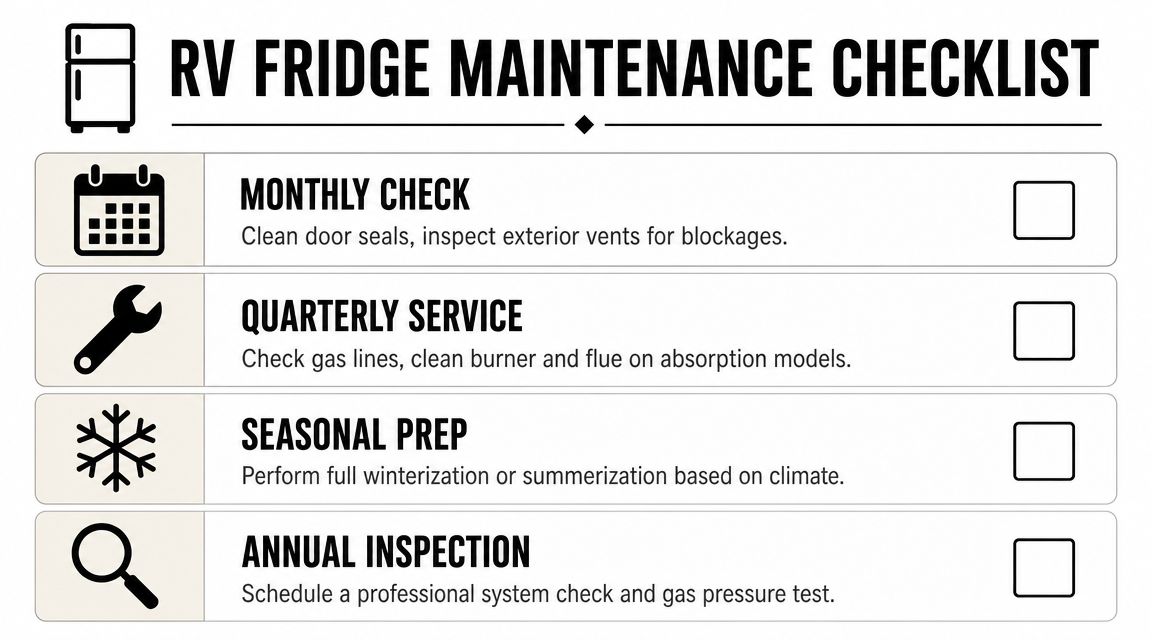
A schedule that's easy to keep
Most owners do better with a simple service rhythm tied to the camping season. If you already use a home checklist for spring and fall upkeep, the same habit works well for your trailer or motorhome. A good example is this roundup of Bulls Eye Repair home maintenance tips, which mirrors the same idea of breaking small jobs into repeatable intervals.
Here's a service schedule we'd hand to an owner.
| Frequency | Task | Applies To |
|---|---|---|
| Monthly | Check actual fridge temperature with a thermometer, not just the control setting | Absorption / Compressor |
| Monthly | Wipe door seals and inspect for gaps, cracking, or food debris | Absorption / Compressor |
| Monthly | Open rear access area and remove dust, bug nests, and debris that can block ventilation | Absorption / Compressor |
| Before each trip | Pre-cool the fridge before loading groceries | Absorption / Compressor |
| Seasonal | Clean vents and inspect the rear cooling area for restricted airflow | Absorption / Compressor |
| Seasonal | Clean burner area and flue components if you have an absorption model | Absorption |
| Seasonal | Inspect wiring connections and power delivery for stable operation | Absorption / Compressor |
| Annual | Have the refrigerator and related appliance system professionally inspected | Absorption / Compressor |
What matters most in real use
A long checklist can make owners tune out, so focus on the handful of jobs that prevent most headaches:
- Temperature verification: Put a thermometer toward the back of the fridge compartment so you know what the food experiences.
- Vent cleaning: Dust, road grime, spider webs, and nest material behind the fridge choke performance faster than people realize.
- Seal inspection: A slightly warped gasket can turn a decent fridge into a constant struggler in summer.
- Pre-cooling discipline: Loading warm drinks and groceries into a warm RV fridge is one of the fastest ways to lose cooling control for the first day of a trip.
- Seasonal service: If you run propane on an absorption unit, the burner side of the system can't be ignored.
The owners who have the fewest fridge complaints usually aren't doing complicated work. They're doing simple work on time.
Absorption vs Compressor Fridges Explained
The first step in smart maintenance is knowing which refrigerator you have. Owners often describe any RV fridge the same way, but the maintenance path changes a lot depending on whether it's an absorption model or a compressor model.
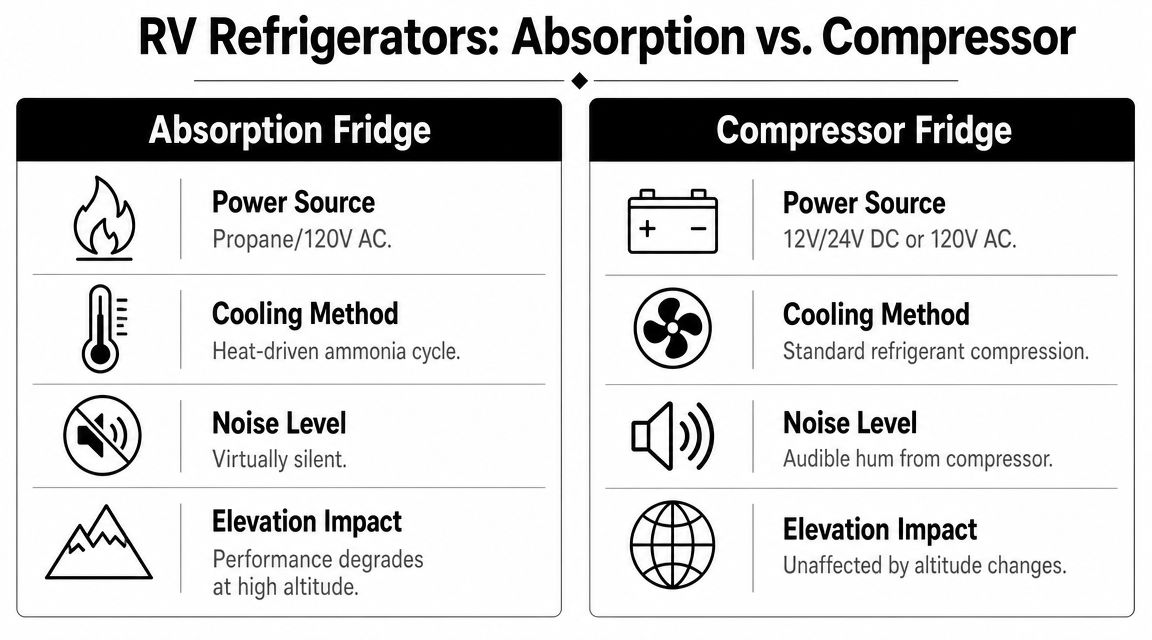
How absorption fridges work in the real world
Most traditional RV refrigerators are absorption units. They use heat to create cooling, usually from propane or electric operation. That design is why they're so sensitive to being level, keeping a clean burner area, and maintaining good airflow through the rear vent path.
A useful way to think about it is heat moving through a system that has to stay balanced and unobstructed. If you want a plain-English refresher on the basic concept of thermal transfer, this explanation of how heat exchangers work is a helpful background read.
For absorption refrigerators, seasonal service should include cleaning the burner assembly and setting LPG pressure to 11 inches water column for final burner testing, according to Good Sam's service guidance. That's one of those details that sounds small until you've seen what a weak flame or dirty burner does to cooling performance.
How compressor fridges change the maintenance picture
Compressor refrigerators act much more like a residential fridge. They don't use propane, and they aren't as bothered by operating angle or altitude in the same way absorption units are. Their weak point is usually the electrical side, not the burner side.
That means maintenance shifts toward:
- Battery health
- Reliable charging
- Clean condenser airflow
- Stable wiring and connections
- Realistic power planning for dry camping
If your all-electric fridge is acting up, the issue may not be in the fridge cabinet at all. It may be in the coach's power delivery. We see that often enough that owners should also understand the larger RV power system. This guide to RV electrical system repair helps connect those dots.
Which one needs more attention
Absorption fridges usually ask more of the owner. They reward careful setup and punish neglect. Compressor fridges are generally simpler to live with day to day, but they can expose weak batteries or poor charging habits fast.
Here's the trade-off in plain language:
| Fridge Type | Main Strength | Main Weakness | Maintenance Focus |
|---|---|---|---|
| Absorption | Can operate on propane | Sensitive to leveling, heat, airflow, and burner condition | Burner service, vents, seals, setup |
| Compressor | Stronger cooling consistency | Depends heavily on electrical system health | Power supply, airflow, wiring, battery support |
Neither is automatically better for every owner. What matters is knowing what your system needs, then maintaining that system instead of guessing.
Troubleshooting Common Fridge Failures
The hardest refrigerator problems are the ones where the unit is technically running but food still isn't staying cold. Those are common in Utah because environment plays a big role in RV fridge performance.
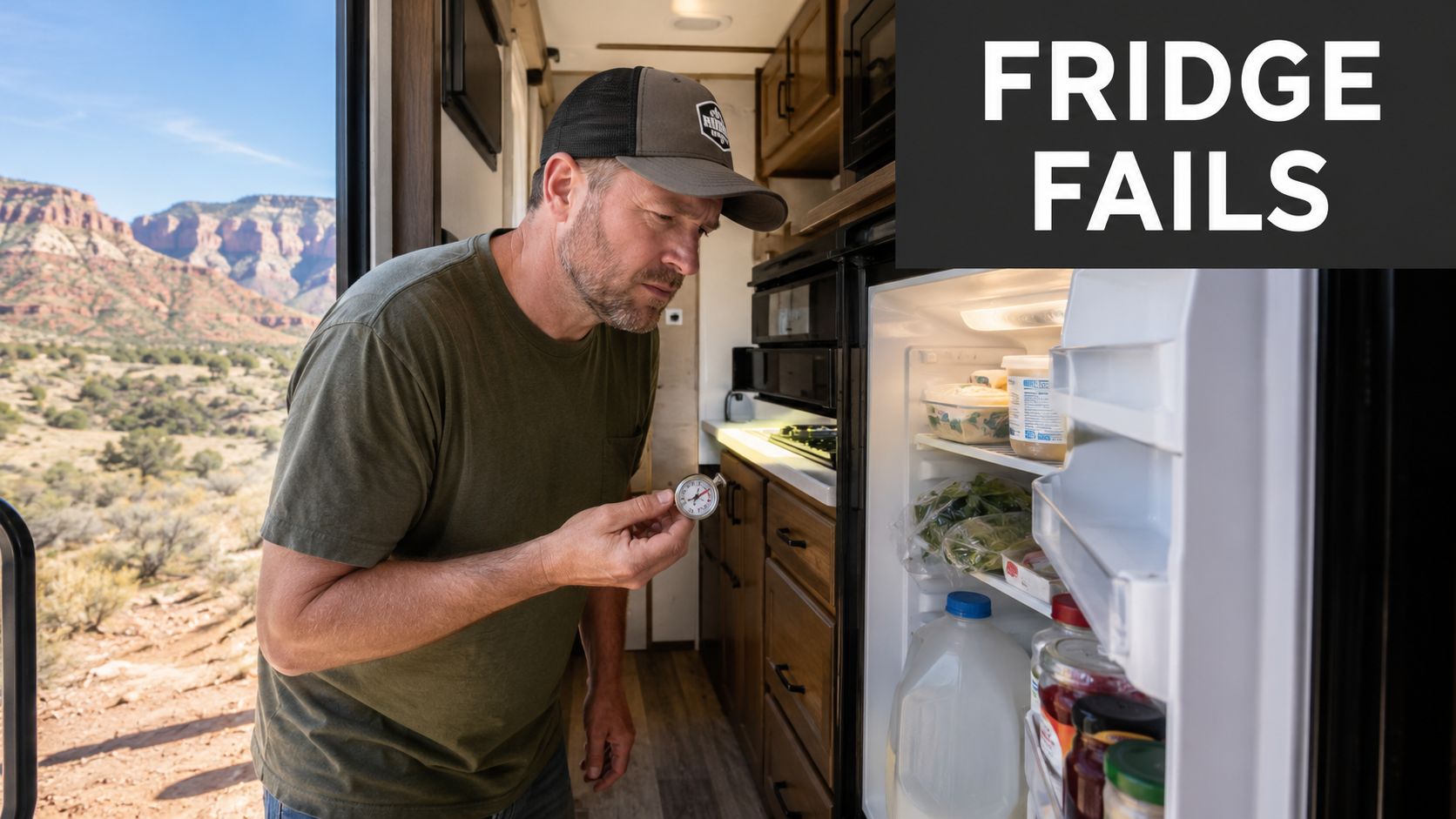
Many RVers run into a fridge that seems to work but falls short in real heat or at altitude, and one often-missed cause is low voltage, which can keep the AC heating element from getting hot enough on an absorption unit, as explained in this Roadtrippers look at RV refrigerator issues.
When it's not broken, but still not good enough
Owners often find this frustrating. They want a yes-or-no answer. Broken or not broken. RV refrigerators don't always cooperate with that.
A fridge can be:
- Operational but underperforming in heat
- Cold overnight but weak during the afternoon
- Fine on propane but poor on AC
- Acceptable when empty but unstable once loaded
- Marginal at home and worse at elevation
That doesn't mean every weak-cooling complaint needs a major part. It often means you need to work through conditions first.
Check the environment before condemning the appliance. Restricted airflow, poor leveling, warm food load, and repeated door openings can make a healthy fridge look bad.
A practical symptom checklist
If the refrigerator is running but not cooling well, start here:
- Verify temperature with a thermometer: Don't trust the dial or display alone.
- Look at the rear access area: Dust, nests, and blocked vents can starve cooling airflow.
- Think about your food load: Stuffing the cabinet with room-temperature groceries creates a huge recovery burden.
- Check frost pattern: Heavy frost buildup can interfere with normal operation.
- Compare power modes: If it cools differently on propane versus electric, that points you toward either flame-side or power-side diagnosis.
- Notice warning signs: Ammonia smell, oily residue, or yellow powder around the cooling unit area is a major red flag.
A quick visual walk-through helps most owners catch the easy stuff before they book service.
Problems that deserve faster action
Some symptoms are less forgiving than others.
If you see yellow residue, smell ammonia, or find the fridge cabinet warming steadily even after airflow and setup checks, stop trying to nurse it along for another weekend. At that point, you're no longer in “minor tuning” territory. You're into component failure or leak suspicion, and that needs proper diagnosis.
A “CHECK” light or repeated restart issue also deserves attention, especially when the problem shows up only on one power source. Those patterns usually mean there's a system issue behind the scenes, not just a dirty shelf or overpacked compartment.
Utah Seasonal Prep For Your RV Fridge
Utah is hard on stored RVs. Winter cold, spring startup, summer heat, and shoulder-season camping all stress the fridge in different ways. Owners who prep seasonally usually avoid the nastier surprises, especially vent blockages, mold, and first-trip cooling issues.
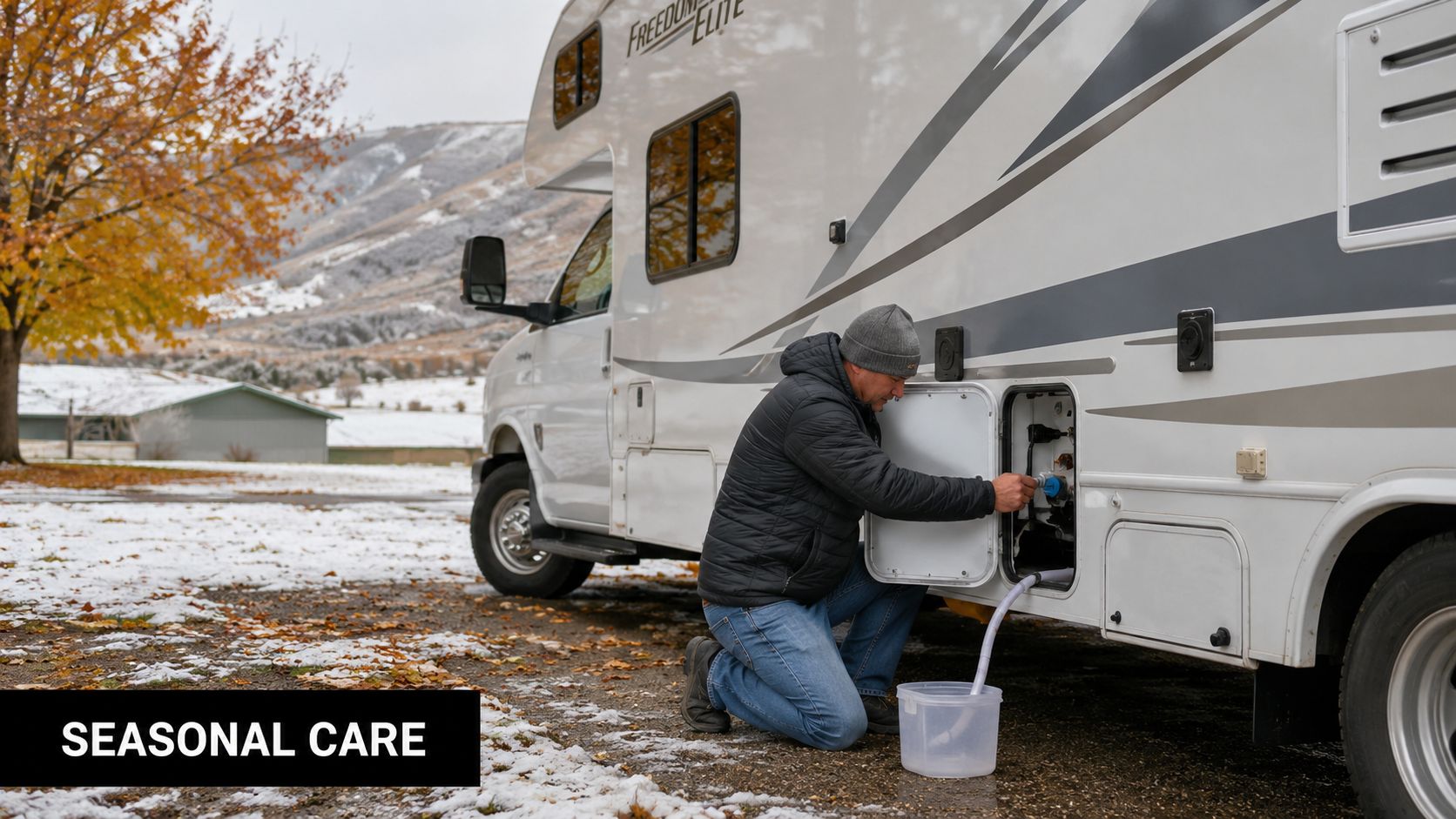
A solid target is 36–40°F in the refrigerator compartment, and service techs commonly recommend pre-cooling for 8–12 hours before loading food, according to Harvest Hosts' RV refrigerator maintenance article. That matters even more on the first trip after storage, when owners are tempted to plug in and immediately fill the fridge.
Winter shutdown done right
Before storage, focus on cleanliness and dryness.
- Empty everything: Forgotten condiments and freezer scraps create odor fast.
- Defrost fully: Any remaining ice turns into moisture and mildew problems later.
- Clean interior surfaces: Shelves, bins, and door gaskets need attention, not just the obvious spills.
- Leave doors propped open: Air movement prevents stale, moldy interiors during storage.
- Inspect icemaker or water-related fridge features: If your setup includes them, make sure they're handled as part of full winterization.
The refrigerator itself doesn't need a dramatic shutdown ritual. It needs to be dry, clean, and protected from sitting sealed up with trapped moisture.
Spring startup before the first trip
Spring is where a lot of owners cut corners. They plug the RV in, hear the fridge come on, and call it good. That's not enough after a Utah winter.
Use a short startup routine:
- Open the rear access area and look for bug nests, dust, and debris.
- Check for obvious wire damage or anything that looks chewed, loose, or corroded.
- Inspect door seals so you're not fighting warm-air intrusion on the first warm weekend.
- Run the fridge empty first and confirm it's reaching a safe temperature before adding food.
- Load cold food when possible instead of asking the fridge to cool everything from room temperature.
If you want a broader spring checklist beyond the refrigerator, our guide on how to dewinterize your RV for spring adventures lines up well with the same approach.
Summer and shoulder-season realities
Utah's summer heat can expose every weak spot in a refrigerator setup. Shoulder season brings the opposite issue. Cold mornings and warm afternoons can create weird owner expectations about how quickly the fridge should stabilize.
A fridge that starts clean, dry, pre-cooled, and unobstructed has a much better shot at surviving a hot travel day without drama.
The owners who struggle most are usually trying to do too much at once. They leave storage, stock the fridge immediately, park in direct sun, and expect household-fridge behavior. RV refrigerators can work well for years, but they do better when the owner respects their limits.
When to DIY and When to Call Our Service Center
A lot of RV refrigerator maintenance is owner-friendly. That's the good news. You don't need a shop visit for every issue.
Safe DIY work usually includes cleaning shelves, wiping door seals, defrosting, checking for blocked vents, removing debris from the access area, and confirming the fridge is hitting target temperature with a thermometer. Those are the jobs that catch everyday problems early.
DIY jobs that make sense
- Cleaning the interior: This prevents odor, mold, and sticky gasket problems.
- Basic airflow inspection: Dust, leaves, webs, and nest material are fair game for owner cleanup.
- Seal checks: If the gasket is dirty or obviously not seating, that's worth addressing right away.
- Loading habits and pre-cooling: Owners have more control over performance here than they think.
Jobs that should go to a technician
Propane work, cooling-unit diagnosis, board-level electrical faults, and leak concerns belong in trained hands. If you smell ammonia, stop there. Don't keep testing. Don't keep switching modes. Don't convince yourself it will make one more trip.
For owners trying to tell the difference between a manageable issue and a more urgent one, this urgent refrigerator repair guide is a useful outside reference. And if the problem points to the RV appliance itself rather than your loading or ventilation habits, our overview of RV appliance repair can help you decide what kind of service is needed.
There's no shame in drawing the line early. With refrigerators, a cautious service call is often cheaper than spoiled food, damaged components, or a ruined trip.
Keep Your Adventures Cool with Motor Sportsland
You're packed for a weekend in the Uintas, the sun is up, and the fridge has to do its job from the first stop to the last campsite. In Utah, that can mean a cool morning in Salt Lake City, a hot afternoon in the desert, and a campsite at elevation that pushes an absorption fridge harder than many owners expect.
Good refrigerator care gives you fewer surprises on the road. It helps food stay safe, cuts down on nuisance cooling problems, and gives your fridge a better shot at lasting through years of mountain trips, summer heat, and winter storage. We see that pattern every day in our Salt Lake City service center. Owners who stay consistent with basic care usually deal with fewer mid-season failures and less expensive repairs.
Motor Sportsland helps RV owners sort through those real-world fridge issues, whether the job is diagnosing a stubborn cooling complaint, scheduling appliance service, or comparing fridge setups before buying your next RV. If you want to look at layouts, power options, and refrigerator types in person, our Salt Lake City area team can walk you through the trade-offs and help you choose a setup that fits how you camp.
Frequently Asked Questions
How often should I service an RV refrigerator?
Plan on a full refrigerator service once a year. In our Salt Lake City shop, that schedule works well for owners who camp through Utah's heat, elevation, and long storage periods. Between annual visits, check cabinet temperature, door seals, and exterior airflow every month during travel season.
What temperature should my RV fridge run at?
Keep the fresh-food compartment in the upper 30s. Use a small fridge thermometer inside the box instead of relying only on the control panel, because the setting does not always match the actual food temperature, especially during hot afternoons or after repeated door openings.
Why does my RV fridge work better in the driveway than at camp?
Your driveway is usually a lighter test. Campsites add warm food, frequent door openings, uneven parking, direct sun, and, in Utah, altitude that can make an absorption fridge less efficient. A unit that seems fine at home can start struggling in the Uintas or southern Utah if airflow, leveling, or cooling performance is already marginal.
Do I really need to pre-cool before loading food?
Yes. Start the fridge the day before you leave, then load it with already cold food. That cuts recovery time and helps the refrigerator hold a safer temperature once you get on the road.
Can I clean the back of the fridge myself?
Basic cleaning is usually fine. Remove dust, leaves, and bug nests from the access area and vents, but stay cautious around burner parts, gas fittings, and wiring. If you see melted insulation, corrosion, soot, or damaged wires, stop there and schedule service.
What's the biggest red flag on an absorption fridge?
An ammonia smell, yellow residue, or signs of cooling-unit leakage. Shut the refrigerator off and have it inspected before using it again.
Need help before the next Utah trip? Motor Sportsland can inspect cooling performance, check for airflow or burner issues, and help you decide whether the problem is a simple maintenance item or a repair that should be handled in the shop.
