
Small Campers That Sleep 4: A Utah Family’s Guide

A lot of Utah families start in the same place. You want weekends at Bear Lake, a quick run to Jordanelle, maybe a longer swing down to Moab. You also want to keep your current SUV, avoid buying a full-size truck, and still have enough sleeping space that nobody dreads bedtime.
That's where the confusion starts. A brochure says a trailer “sleeps 4,” but that label can mean very different things in real life. Sometimes it means two adults and two kids fit comfortably. Sometimes it means four people can technically lie down, but nobody has elbow room, privacy, or a good night's sleep. For first-time buyers, that difference matters more than almost anything else.
Around Salt Lake City, we see families wrestle with the same three questions. Will it really fit us? Can our vehicle tow it safely in the mountains? And what will ownership cost once the excitement wears off and real trips begin?
Your Guide to Utah Family Adventures
A family in Millcreek might be staring at maps of southern Utah right now, planning spring weekends and trying to picture where everyone sleeps after a dusty day outside. Mom wants something simple. Dad wants something towable. The kids just want their own spot to crash. That's a normal starting point.
The hard part is finding a camper that's compact enough for everyday practicality but still comfortable once the sun goes down. Some of the best small campers that sleep 4 pull this off well. Others only work if your kids are little, your trips are short, and everyone's in a very forgiving mood.
Utah adds another layer. A trailer that feels easy on flat roads can feel very different heading up Parley's Canyon, maneuvering through mountain weather, or backing into a tighter campsite near the Wasatch. That's why families here need more than a basic shopping list. They need to know how floorplans live, how weights affect towing, and which features matter once you leave the driveway.
If you're shopping for small campers that sleep 4, keep one goal in mind. Don't buy for the sticker on the brochure. Buy for the way your family camps.
Decoding Floorplans That Sleep Four
The phrase sleeps 4 gets thrown around too loosely. It's useful, but it's incomplete. The right question is simpler and much more practical: who are the four people?
Most online advice skips that distinction. But that's where buyers get burned. As noted in a 2025 lightweight camper video review, many trailers under 3,500 lbs are fine for 2 adults + 2 children, while 4 adults would be a “tight squeeze.” That's the reality.
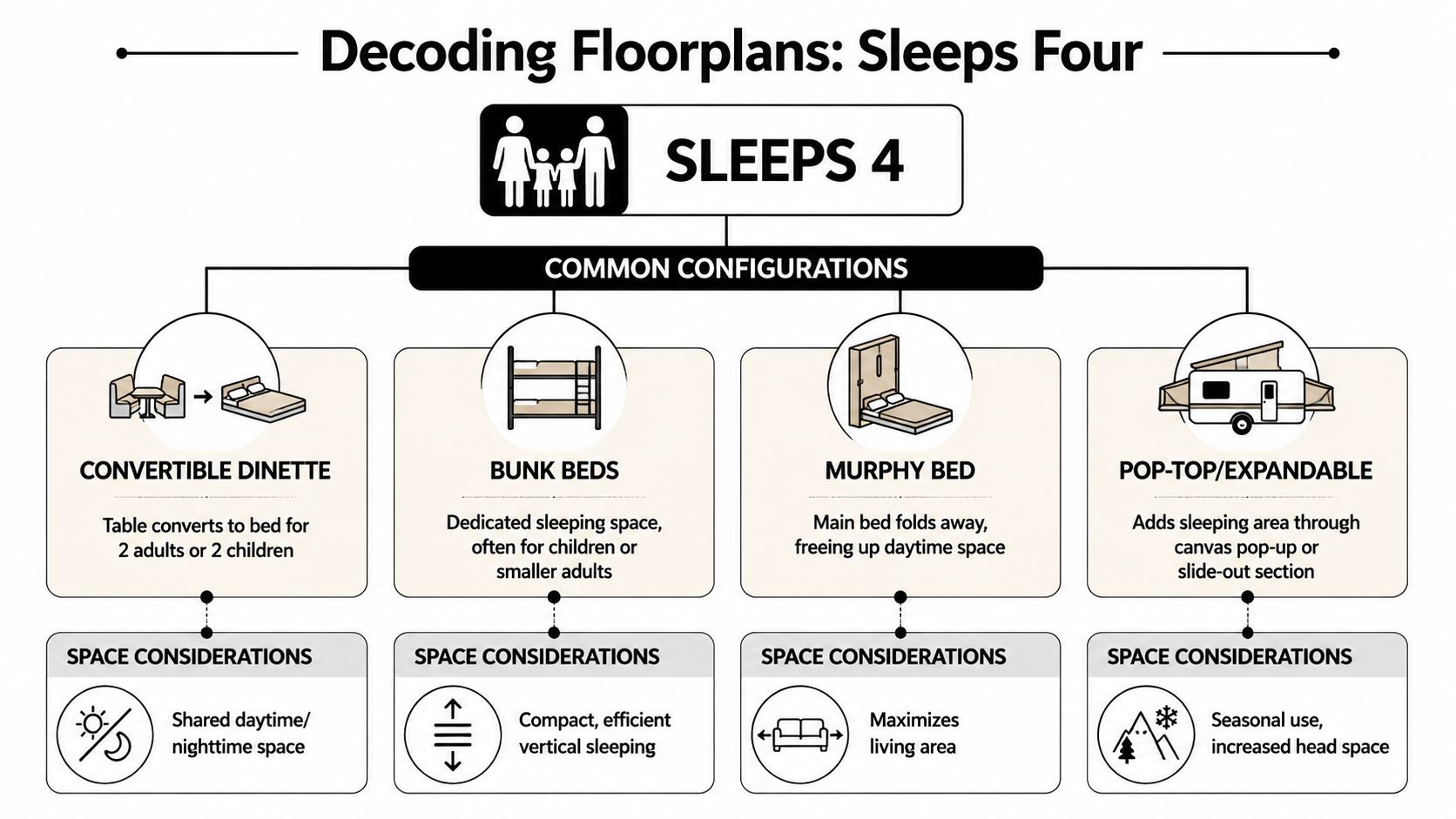
The four layouts you'll see most often
When families shop small campers that sleep 4, these are the floorplans they run into most:
- Convertible dinette. This is the classic small trailer move. You get a table by day and a bed by night. It saves space, but somebody has to rebuild it every evening and again every morning.
- Bunk beds. This is the easiest family layout if you have kids. Dedicated bunks mean no daily bed conversion, and bedtime goes a lot smoother.
- Murphy bed. This gives parents a better main bed without forcing a longer trailer. During the day the bed folds away, opening up lounge space.
- Pop-top or expandable sleeping sections. These can create impressive sleeping room in a compact footprint, though weather, insulation, and setup time matter more with this style.
If you want to compare layouts side by side, this guide to travel trailer floor plans is worth a look.
What works for kids versus adults
Here's my blunt advice. If your group is two adults and two younger kids, a dinette bed plus a main bed can work. If your kids are getting bigger, or if grandparents or friends may join you, that same setup gets old fast.
A bunk layout usually wins for family comfort because it separates sleeping zones. Parents get a dedicated bed. Kids get their own space. Nobody has to wait while the table gets turned into a mattress platform.
Practical rule: If you don't want to convert your dining area into a bed every single night, skip that floorplan.
Murphy beds are smart when the trailer is short and you still want daytime room. They're less appealing if you hate moving bedding around or want the bedroom available all day.
How to read a floorplan like a camper owner
Don't just count sleeping spots. Look for these pressure points:
| Floorplan element | Good sign | Warning sign |
|---|---|---|
| Main bed | Dedicated sleeping area for adults | Bed blocks movement or requires constant setup |
| Kids' sleep space | Real bunks or separate area | Dinette is the only second bed |
| Nighttime traffic | Easy bathroom access | One sleeper has to climb over another |
| Daytime use | Seating remains usable | Entire living area becomes a bed zone |
The best small campers that sleep 4 don't just fit bodies. They reduce friction. That's the standard you want.
Towing in Utah Weight and Size Matter
Weight is the first filter. Not color. Not upholstery. Not the outdoor kitchen. If you get weight wrong, everything else stops mattering the minute you point the trailer uphill.
Several compact campers designed to sleep four fall under 2,500 lbs, including models such as the Keystone Coleman 13B and R-Pod, which is a major reason buyers with mid-sized SUVs look at them first, according to this lightweight camper discussion. That light weight can open the door for families who don't own a heavy-duty truck.
Here's a visual refresher on the terms that matter.
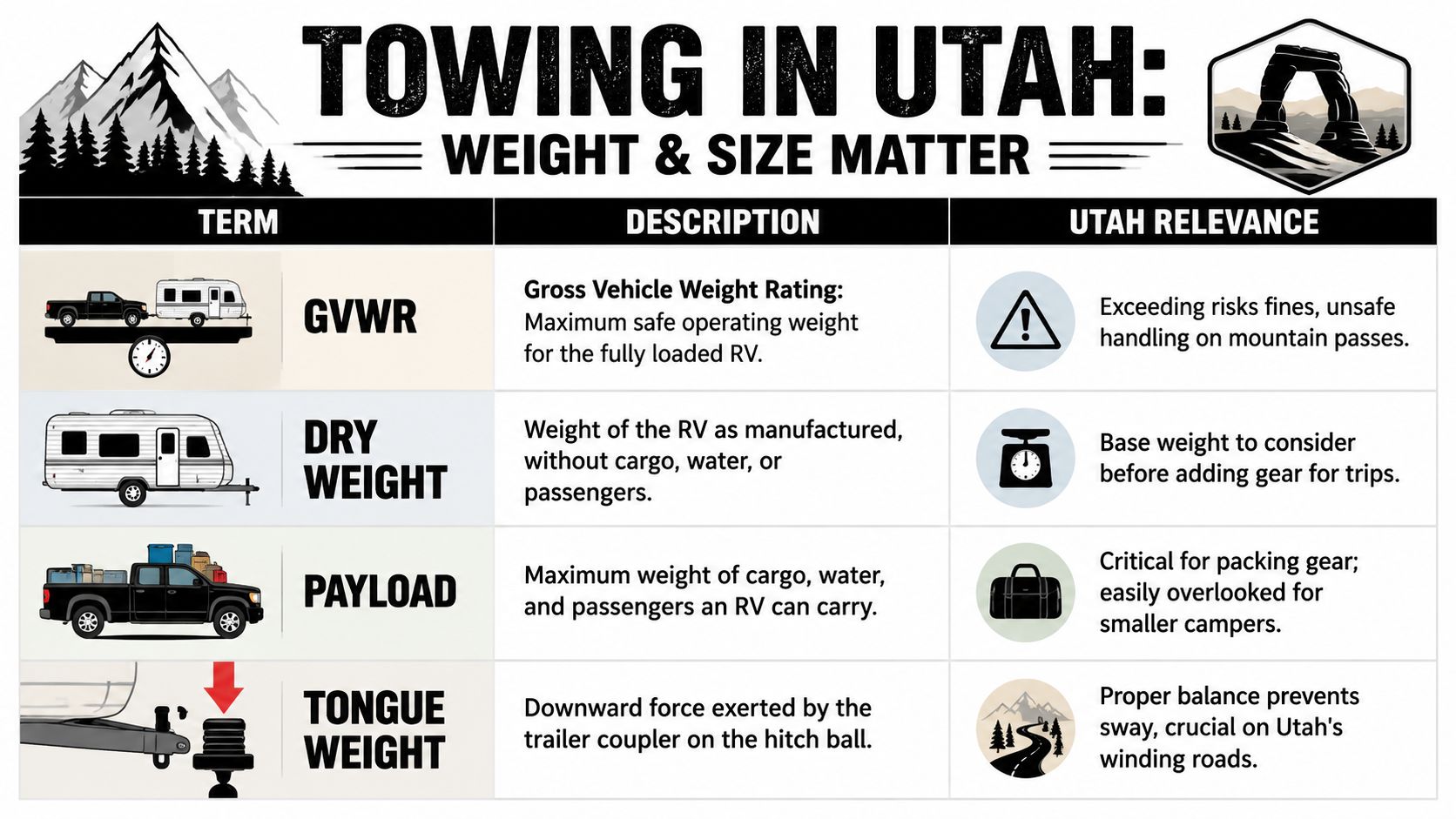
The weight terms buyers need to understand
Think of your tow setup like a backpacking pack. The empty pack has a weight. Then you add water, clothes, food, and gear. A trailer works the same way.
- Dry weight is the trailer as built, before your cargo, water, and camping gear.
- GVWR is the maximum safe operating weight once the trailer is loaded.
- Payload matters because your vehicle is carrying people, hitch weight, and gear too.
- Tongue weight affects balance and stability on the road.
If you want a cleaner breakdown, this article on RV dry weight does a good job of explaining where buyers get tripped up.
Why Utah towing feels different
Towing through Utah isn't the same as towing across a flat interstate. Climbing out of the Salt Lake Valley, dealing with wind, descending grades, and maneuvering canyon roads puts more stress on both trailer and tow vehicle.
That's why I tell first-time buyers to leave a healthy margin. A trailer might be towable on paper, but mountain towing punishes optimistic math. If your SUV is already loaded with kids, coolers, bikes, and camping gear, that “lightweight” trailer won't feel as light as the brochure made it sound.
Buy with the mountain pass in mind, not the flat parking lot test drive.
For a quick visual explanation, this towing video is useful before you narrow your list.
What vehicle types usually make sense
This isn't about brand loyalty. It's about matching trailer size to the job.
- Mid-size SUVs are the right starting point for the lightest small campers that sleep 4, especially compact bunk models and ultra-light trailers.
- Larger SUVs and half-ton trucks make more sense once you want more storage, bigger tanks, or more interior room.
- Families planning mountain-heavy travel should lean toward more tow vehicle, not less.
Short version: if your dream trailer and your current vehicle are barely compatible, keep shopping.
Must Have Features for Family Camping
A family camper can be light and still be miserable. That usually happens when buyers focus only on sleeping capacity and ignore daily use.
The smartest small trailers for families don't just sleep four. They solve little problems before they become trip-ruiners. Muddy shoes. Wet towels. No place to stash jackets. Kids needing a bathroom at the wrong time. Lunch getting cooked inside because the weather turned.
Features that earn their keep
Small travel trailers from Heartland start at about 22 feet, sleep between 4 and 8 people, and have dry tow weights starting under 4,000 lbs, which is exactly why they sit in the sweet spot for many growing families looking at manageable-size campers, according to Heartland's small travel trailer lineup.
That kind of compact, family-ready setup works even better when it includes the right equipment:
- A real bathroom. Even a compact wet bath beats midnight walks across a campground with sleepy kids.
- Dedicated storage. You need places for bedding, shoes, snacks, and the pile of random family gear that multiplies by trip two.
- An awning. Utah sun is no joke, and quick shade changes how much usable space you have.
- A practical galley. It doesn't need to be huge. It needs to be easy to use when the weather turns.
- Easy-clean surfaces. Sand from Moab and dirt from mountain campgrounds will end up everywhere.
What actually matters on a Utah trip
Families often think a bathroom or extra storage is optional until the first cold morning, rainy afternoon, or muddy return from the trail. Then it suddenly becomes the difference between a fun trip and a short one.
A camper that's easy to wipe down and organize feels bigger than it is. A camper with nowhere to put anything feels cramped no matter what the brochure says.
The floorplan that looks open on day one can feel cluttered by day two if there's no home for your gear.
Trip planning helps too. Even though it's written for another market, this checklist for planning your NZ camping trip is a helpful way to think through what your family packs and therefore what your camper needs to hold.
For a broader family-focused buying lens, this guide to buying an RV with kids in mind is useful.
Budgeting for Your Family Camper
A lot of first-time buyers focus on the monthly payment and forget the rest of the ownership picture. That's a mistake. The right budget includes the trailer, the camping style you want, and the recurring costs that show up after the excitement settles.
The good news is that campground costs for small campers are often manageable. According to TAXA Outdoors, basic campsites typically range from $10 to $50 per night, while full-hookup campsites typically range from $25 to $100 per night in common camping markets, which makes site fees one of the easiest budget lines to estimate early on when comparing trip styles.
New versus used
There isn't one correct answer here. There's only the right fit for your budget and tolerance for surprises.
| Buying path | Best for | Tradeoff |
|---|---|---|
| New camper | Buyers who want warranty coverage and current features | Higher purchase cost |
| Used camper | Buyers prioritizing lower upfront cost | More condition checking and possible catch-up maintenance |
A new trailer is easier for many first-time families because there's less uncertainty. A good used trailer can be a smart value, but only if you inspect it carefully and budget for repairs, upgrades, or deferred maintenance.
Costs people forget
Families usually remember campground fees. They often forget the rest:
- Insurance. Get quotes early so the full ownership number doesn't surprise you.
- Maintenance. Tires, roof sealing, appliance checks, and winter prep all matter.
- Storage. Utah winters force this conversation quickly if you don't have space at home.
- Gear. Hoses, leveling blocks, cookware, bedding, and electrical adapters add up.
If you're comparing ways to fund a purchase, it's smart to review how lenders structure recreational vehicle financing. Even a guide from another region, like this look at how to compare caravan loan deals, can help you think more clearly about term length, total cost, and monthly comfort level.
A budget rule that keeps buyers out of trouble
Don't spend your entire budget on the trailer itself. Leave room for setup costs, first-trip gear, and the maintenance you'll want to handle before peak season.
The best purchase is the one you can still enjoy after registration, supplies, and campsite bookings hit the credit card.
The Motor Sportsland Inspection Checklist
Even if a camper is new, inspect it. If it's used, inspect it twice. Water damage, appliance problems, old tires, and bad seals can turn an affordable trailer into a headache in a hurry.
A good example of how light and simple can still be appealing is Scamp. Scamp Trailers offer fiberglass travel trailers designed to sleep 1 to 4 people, with a starting weight as low as 1,250 lbs for the Lite model, according to Scamp Trailers. Lightweight doesn't remove the need for inspection. It makes inspection more important because small trailers hide problems well.
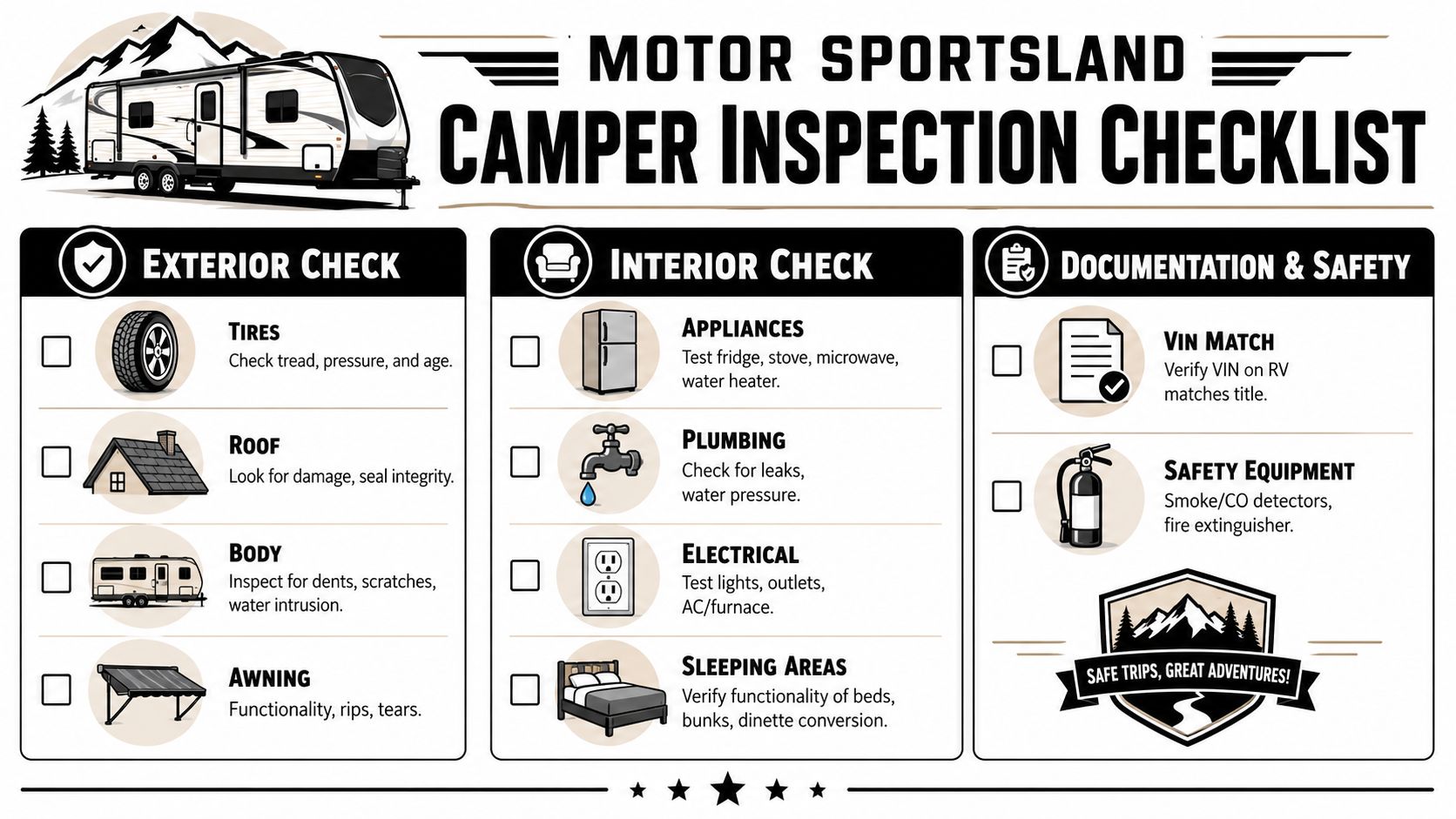
What to check outside
Start with the expensive stuff first.
- Roof seams and sealant. Soft spots, cracked sealant, or signs of patchwork deserve a closer look.
- Sidewalls and corners. Look for bubbling, staining, or waviness.
- Tires. Uneven wear, cracking, or obvious age issues are red flags.
- Awning. Open it fully and inspect fabric and arms.
What to check inside
Then move to the systems and signs of water intrusion.
- Turn on the refrigerator, stove, water heater, and air conditioner.
- Run the water system and look under sinks and around the toilet.
- Test lights, outlets, and battery function.
- Sit on the dinette, climb into bunks, and convert any beds yourself.
If a seller won't let you test the systems, walk away.
Documents and safety items
Finish with the basics buyers skip when they're excited:
- VIN matches title
- Smoke and CO detectors are present
- Fire extinguisher is there and accessible
- Manuals and service records are available
A clean trailer can still have hidden issues. A thorough inspection catches more than cosmetic problems.
Finding Your Camper in Utah
Once you know what floorplan, weight range, and feature set fit your family, shopping gets easier fast. You stop browsing everything and start eliminating the wrong trailers on sight.
Start with filters that matter most to a family shopping small campers that sleep 4:
- Weight range so your vehicle stays in the safe zone
- Length so campsites and storage are realistic
- Bunkhouse or family floorplans if you want dedicated kid sleeping space
- Used versus new depending on your budget and comfort level
Then narrow by the way you camp. Weekend state park trips call for one setup. Longer boondocking-style travel calls for another. A family with toddlers shops differently than a family with tall teenagers. That's exactly how it should be.
If you're shopping locally, it helps to compare units in person because compact trailers photograph well. They don't always live well. Stand at the galley. Try the dinette bed conversion. Pretend it's raining and everyone's inside. That little exercise tells you more than a polished listing ever will.
Salt Lake City buyers should also think about the first trip, not just the purchase day. A trailer that works for a loop through the Wasatch or a weekend near Bear Lake usually gets used more than the trailer that looked great online but feels cumbersome once you're packing it.
Start Your Family's Adventure Today
Saturday hits, the kids are packed, the cooler is full, and you are heading out of Salt Lake for a quick mountain weekend. That trip feels a lot better in a trailer that fits the way your family sleeps, loads, and travels.
Buy for real life. A camper that "sleeps 4" on a spec sheet may be a good fit for two adults and two kids, but a bad fit for four adults. That difference matters more than the sticker on the brochure. Families usually do best with a real main bed and dedicated bunks. Groups of adults need more body room, more privacy, and fewer bed conversions.
Keep your first camper simple.
The right choice is the one your vehicle can tow confidently through Utah grades, your family can set up without frustration, and your budget can support after the sale. If a trailer feels like a stretch on weight, space, or price, skip it. You will use a right-sized camper more often, and you will enjoy it more when weather rolls in and everyone ends up inside.
If you want a practical next step, come walk a few floorplans in person at 4001 South State Street, Salt Lake City, UT. Open the bunks. Sit at the dinette. Lie down on the main bed. Bring the family if you can. Ten minutes inside the right trailer will tell you more than another hour of online browsing.
Frequently Asked Questions
Can a small camper that sleeps 4 really fit four adults
Usually, no. In the small trailer class, “sleeps 4” often means two adults and two kids. Four adults can make it work for a night or two, but comfort drops fast if one of those beds is a converted dinette or short bunk.
What's the best floorplan for a family of four
Pick a trailer with a real queen bed and dedicated bunks. That layout works best for Utah families because bedtime is simpler, rainy-day hangouts are less chaotic, and nobody has to tear down the dinette every night.
Can an SUV tow a camper for four people
Some SUVs can. The right answer depends on loaded trailer weight, payload, hitch setup, and how often you plan to pull through Utah canyons and mountain grades. If your vehicle is close on paper, choose a lighter trailer.
Is a dinette bed a good idea for kids
Yes, for younger kids and occasional trips. For regular camping, bunks are the smarter buy. They keep the living space usable after bedtime and make mornings much easier.
Should I buy new or used for my first family camper
Buy the cleanest, best-kept camper you can afford. New gives you warranty coverage and fewer unknowns. Used can save money, but only if the roof, seals, appliances, and floor all check out.
What matters more, trailer length or trailer weight
Start with weight. A trailer that is easy to tow will get used more often, especially in Utah. Then look at length, because it affects campsite fit, driveway storage, and how relaxed you feel behind the wheel.
Ready to stop guessing and start comparing trailers that fit your family? Visit our Salt Lake City dealership, walk a few bunkhouse floorplans, and get straight advice from a team that helps Utah campers match the right trailer to the right tow vehicle every day.
