
Teardrop Campers for Sale in Utah (2026 Buyer's Guide)
In Utah, new teardrop campers shoppers may see at a dealership commonly fall around $14,000 to $32,000, while certified pre-owned options often run about $7,500 to $18,000 depending on condition and equipment. The smarter choice starts with loaded weight and your vehicle's tow rating, not the dry-weight number printed on a brochure.
A Salt Lake City buyer usually arrives with a simple plan: find something small enough for a mid-size SUV, tow it into the mountains, and avoid the setup work of a larger trailer. Then the questions start. Can the vehicle handle the trailer after water, propane, batteries, food, and camping gear are added? Is an outdoor galley enough for a week near Moab? Will the sleeping cabin work when the weather turns cold around the Wasatch Mountains?
Those questions matter more than a glossy floorplan. This guide looks at teardrop campers for sale through the lens we use with Utah buyers, including payload, mountain grades, galley design, winter storage, financing, and long-term service. Motor Sportsland serves Utah RV shoppers from Millcreek and Spanish Fork, and the right purchase should begin with a vehicle match and a realistic trip plan.
Why Utah Buyers Are Choosing Teardrop Campers in 2026
A Salt Lake City couple recently described the kind of decision we see often. They were tired of assembling a pop-up for short trips and wanted a compact trailer they could take toward the Uintas behind a mid-size SUV. Their target was a teardrop around 1,200 pounds, but the number on the sales sheet wasn't enough. We still had to discuss cargo, hitch limits, braking, sleeping space, and how the vehicle would behave on mountain grades.
That's the appeal of a teardrop. It gives two people a ready sleeping cabin and, on many models, a rear galley without the length and maneuvering demands of a full-size travel trailer. Parking at trailheads and compact campground sites around places such as Silver Lake and Mirror Lake is simpler, and the low frontal profile can make highway towing less intimidating.
Practical rule: Buy the trailer you can comfortably tow after loading it, not the trailer that looks easy to tow while empty.
The product also fits how many Utah residents camp. A couple may want a basecamp near Jordanelle, a solo traveler may prioritize a quick launch toward Capitol Reef, and a retired owner may want a trailer that stores more easily than a large towable. Fuel use, registration, and storage costs still depend on the specific vehicle, trailer, and Utah requirements, so don't treat a teardrop as automatically inexpensive.
The market remains a niche rather than a replacement for every RV. A market estimate places global teardrop trailer revenue at USD 2.54 billion in 2026, with North America holding 48.6% of the share, according to Coherent Market Insights' teardrop trailer market overview. That interest doesn't remove the basic limits of a small cabin. It makes careful matching more important, especially as owners use their RVs more often.
What a Teardrop Camper Actually Is and Who It Suits
A teardrop camper is a compact, aerodynamic trailer with an enclosed sleeping cabin and, in many classic layouts, an outdoor rear kitchen. Guides commonly describe classic versions as roughly 8 to 10 feet long and 4 to 6 feet wide, while modern models may add space without becoming a large towable. You'll also find modern examples with sleeping areas around 70 to 72 inches wide and 72 to 78 inches long, so mattress dimensions deserve a close inspection before you buy. Those figures come from RVShare's teardrop camper guide and nuCamp's TAB camper specifications.
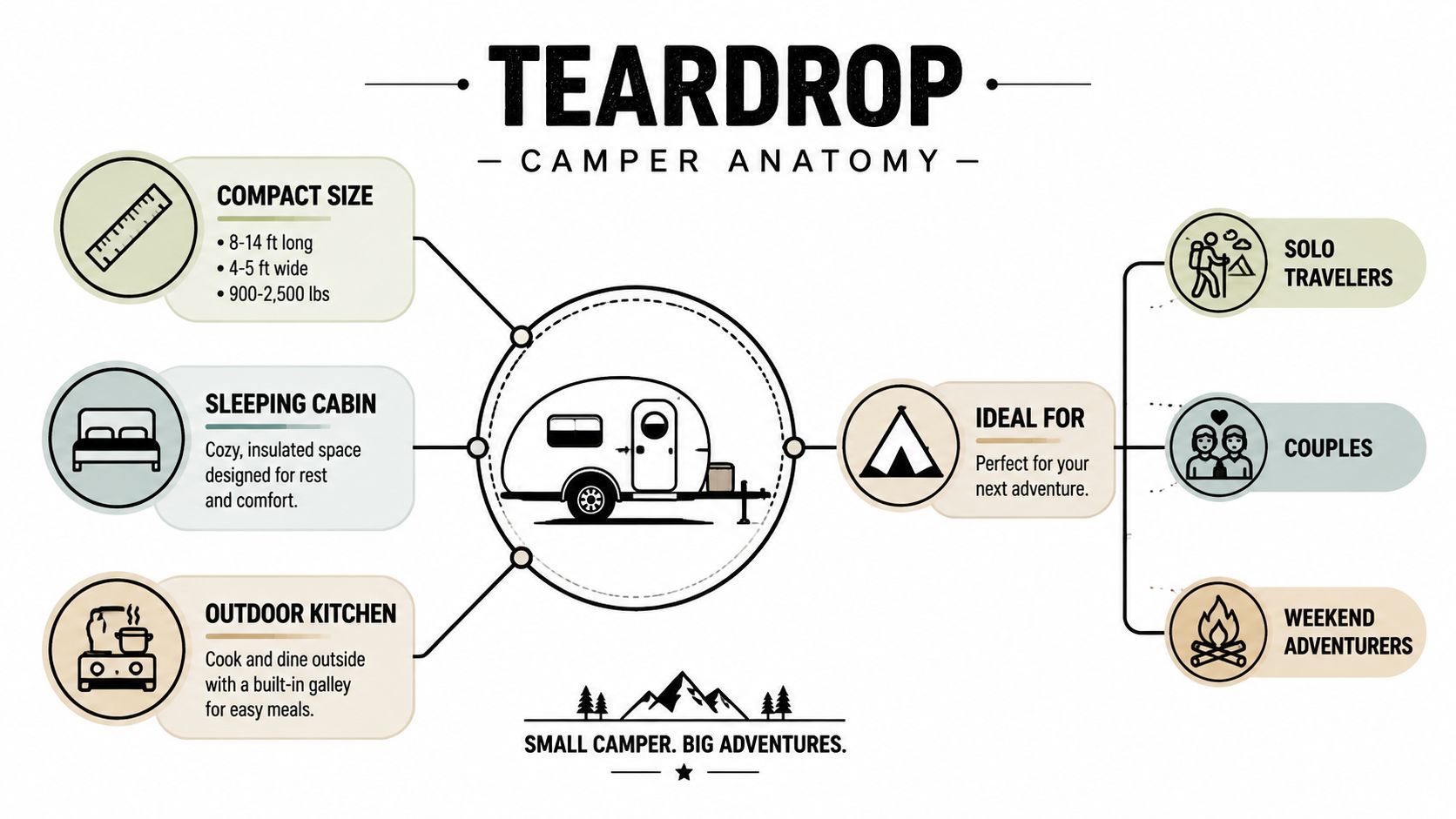
The design has deep roots. Teardrop campers first emerged in the United States during the 1930s, became especially popular in the 1940s after World War II, and were often built from 4 by 8-foot plywood sheets using magazine-published plans. Mainstream interest declined by the mid-1960s, then returned in the late 1990s as internet plans and interest in compact towing grew, as documented by The Teardrop Trailer's history of the design. Commercial production followed quickly after the war. Kit Manufacturing Co. formed in October 1945, and one historical account reports 4,500 Kit Kampers produced during 1946 and 1947, according to American Teardrop's historical overview.
Who should buy one
Teardrops suit:
- Solo travelers who want a secure sleeping space without towing a large trailer.
- Couples traveling to places such as Capitol Reef, Bear Lake, or southern Utah's desert country.
- First-time RV owners who don't want to back a 30-foot trailer into a state park site.
- Retirees and homeowners who prefer a smaller storage footprint.
- Weekend campers who spend most of the day outside.
Most teardrops are built for one or two sleepers, and two is the standard capacity, although some larger designs can accommodate three or four, according to Changing Gears' teardrop trailer introduction. Skip this category if you need permanent bunks, an indoor bathroom, generous indoor seating, or substantial indoor living space. If you plan to camp below freezing, look for an appropriate heater, insulation, and four-season equipment rather than assuming a small trailer is ready for winter.
For a broader look at the lifestyle trade-offs before committing to a compact RV, read this guide to RV life costs and freedom explained.
Matching Size, Weight, and Sleeping Capacity to Your Trips
The four numbers that determine whether a teardrop works are loaded weight, length, bed dimensions, and galley capacity. Dry weight is useful for comparing models, but it leaves out the equipment you'll carry. CURT's industry guide reports an average empty weight of about 1,700 pounds, a typical range from 500 to 3,200 pounds, GVWR up to 4,000 pounds, and average cargo capacity around 700 pounds, as summarized in this teardrop towing discussion and weight guide.
Water, propane, batteries, bedding, food, tools, and rooftop accessories can quickly consume that margin. Independent teardrop specifications also show tongue weights around 192 to 240 pounds and dry gross weights around 1,626 to 2,109 pounds, according to Vistabule's teardrop trailer weight guide. A trailer that looks comfortable behind a crossover when empty may require a different tow class once it's ready for a trip.
Four checks before you compare floorplans
- Loaded weight: Ask for the trailer's GVWR and calculate the expected ready-to-camp weight. A 1,800-pound loaded trailer behind a Toyota 4Runner might suit a short Jordanelle weekend, but only after verifying the exact vehicle rating and payload.
- Length and width: A compact body makes fuel stops, trailhead parking, and campsite placement easier. It also limits interior movement, so measure your storage location and driveway turns.
- Sleeping dimensions: Don't assume “queen” means the same thing across manufacturers. Check actual length, width, foam thickness, and whether your sleeping bags or bedding fit without blocking storage.
- Galley layout: A rear hatch, fridge, sink, and two-burner cooktop can make a big difference. A simpler single-burner setup saves space and weight, but it may frustrate owners who cook full meals.
| Loaded Weight | Sleeping | Galley | Best Tow Vehicle | Utah Trip Match |
|---|---|---|---|---|
| Light compact unit | 1–2 | Basic outdoor cooking | Properly rated crossover or SUV | Short weekend trips near developed campgrounds |
| Around 1,800 pounds | 1–2 | Fridge and compact cooktop | Properly rated mid-size SUV | Jordanelle, Bear Lake, and Wasatch Front escapes |
| Around 2,500 pounds | 1–2 | More storage and cooking equipment | Properly rated larger SUV or half-ton truck | Longer Uinta routes and gear-heavy camping |
| Higher-GVWR model | 2, 3, or more depending on floorplan | Expanded galley and options | Tow vehicle matched to the trailer's GVWR | Longer stays with more equipment |
The climb up Parley's Canyon is where optimistic estimates become uncomfortable. Use the exact VIN-sticker weights and vehicle manual, then keep a meaningful margin rather than treating the maximum rating as a target. For a deeper explanation of dry weight and why it can mislead buyers, review how RV dry weight works.
New vs Used Teardrops and How to Shop Utah Inventory
New and used teardrops serve different buyers. A new unit commonly falls between $14,000 and $32,000 at a Utah dealership in 2026, while certified pre-owned examples often run from $7,500 to $18,000, depending on year and options. Those ranges are useful for planning, but the exact out-the-door figure depends on the unit, taxes, fees, equipment, and financing.
| Factor | New Teardrop | Used Teardrop |
|---|---|---|
| Price position | Higher purchase price | Lower entry cost |
| Warranty | Manufacturer warranty may apply | Remaining or dealer coverage varies |
| Configuration | More choice of colors and packages | Buy the layout already available |
| Condition risk | Lower wear risk, still inspect carefully | Check leaks, axles, floors, seals, and wiring |
| Depreciation | Buyer absorbs early depreciation | Prior owner may have absorbed part of it |
| Best fit | Buyer prioritizing warranty and customization | Buyer prioritizing value and lower entry cost |
New buyers get current equipment, a manufacturer warranty, and the chance to select a galley or comfort package. They also accept the initial depreciation once the trailer leaves the lot. Used buyers can make a strong purchase when the previous owner maintained the trailer, but a low price doesn't excuse a detailed inspection.
Inspect a used trailer for Utah-specific wear
- Look for delamination: High-altitude sun can be hard on exterior surfaces. Check for bubbling, soft spots, and uneven panels.
- Test the floor: Walk every section, especially near the galley, door, and exterior storage.
- Inspect running gear: Ask about axle service, bearings, tires, brakes, and damage from rough forest roads.
- Open every cabinet: Rodent evidence, odor, chewed wiring, and moisture often show up in the galley first.
- Examine the roof: Use a flashlight to inspect sealant, vents, edges, and signs of previous leaks.
- Request records: A vehicle history report and service documentation can reveal problems that a quick walkaround misses.
The right purchase depends on your tolerance for inspection risk, not on finding the cheapest listing. Our guide to buying a used RV gives you a useful inspection mindset before you view inventory.
Towing, Payload, and Mountain Driving the Right Way
The biggest towing mistake is comparing a trailer's dry weight with a vehicle's maximum tow rating. A trailer listed at 1,800 pounds dry can reach 2,400 to 2,700 pounds loaded after batteries, propane, water, bedding, cookware, and gear are added. Those loaded figures are the ones that matter on the road and must be checked against the trailer GVWR, tow vehicle rating, receiver limit, payload, and brake requirements.
Our service team checks the complete connection before approving a setup:
- Confirm the vehicle rating: Use the owner's manual and door-jamb payload label, not a general internet estimate.
- Verify the hitch: Check the receiver class, ball size, rating, and tongue-weight limit.
- Inspect wiring: Confirm the correct four-pin or seven-pin connection, including trailer brakes and a charge line where equipped.
- Calculate payload: Include passengers, cargo in the vehicle, hitch weight, and trailer equipment.
- Discuss the route: Guardsman Pass, Highway 12, Parley's Canyon, and long descents all demand more from the tow vehicle than flat pavement.
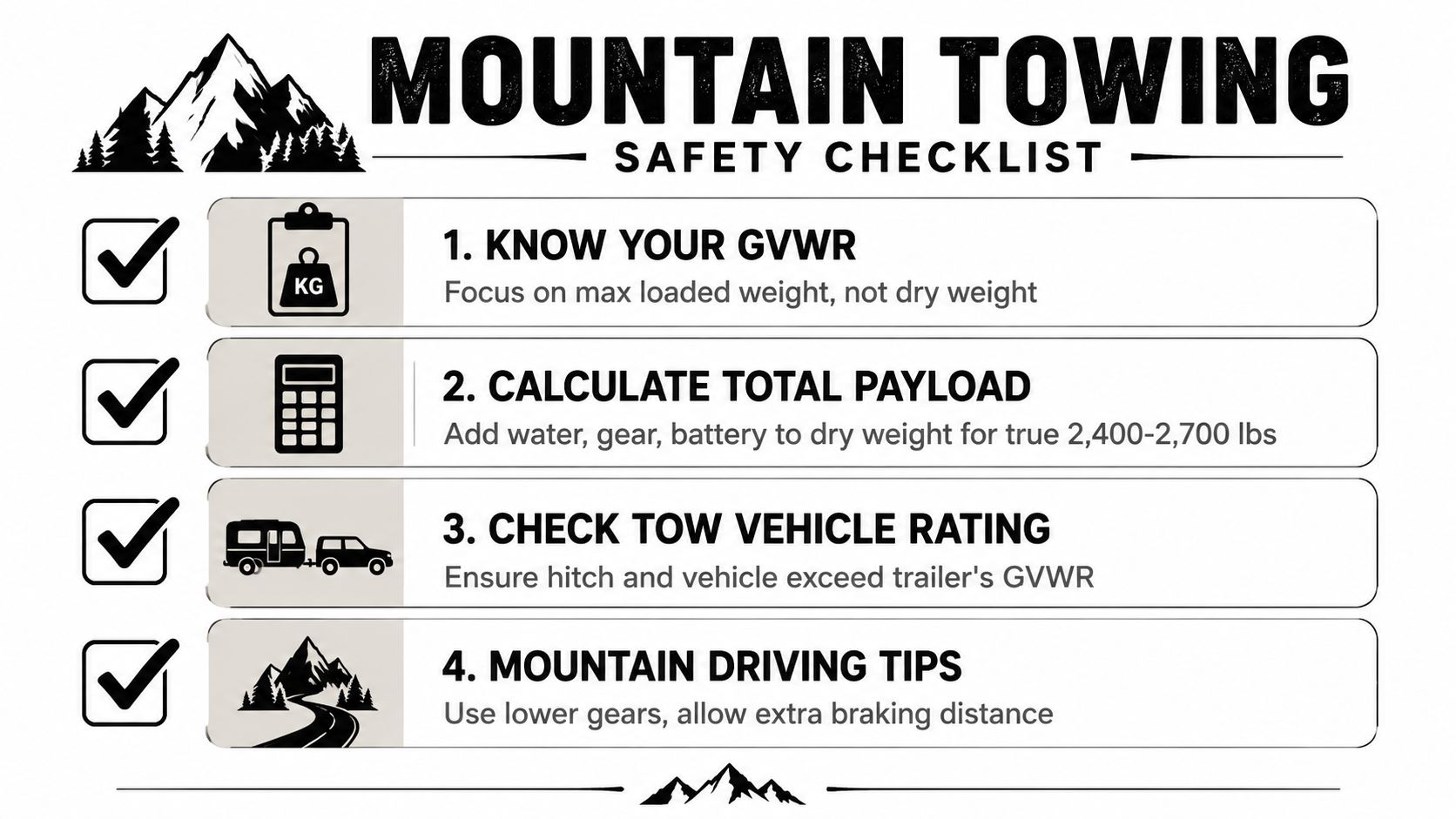
Use lower gears on descents and avoid riding the brakes. Leave more stopping distance than you would without a trailer, slow down before curves, and keep the propane valve closed when required during fuel stops. A properly set brake controller and correctly adjusted trailer brakes matter more than an aggressive suspension appearance.
For buyers fitting a truck, SUV, or garage around a trailer, this explanation of truck interior dimensions can help with general space planning, although your tow vehicle's manual remains the authority.
Don't choose a teardrop because the brochure says your SUV can pull it. Choose the model whose loaded operating weight, tongue weight, brakes, and route demands your vehicle can handle with room to spare.
Financing, Trade-Ins, and Deals of the Week Explained
The sticker price isn't the complete purchase decision. A hitch, brake controller, taxes, registration, accessories, insurance, and first service can change the amount you need to budget. Ask for an out-the-door worksheet before you compare one teardrop with another.
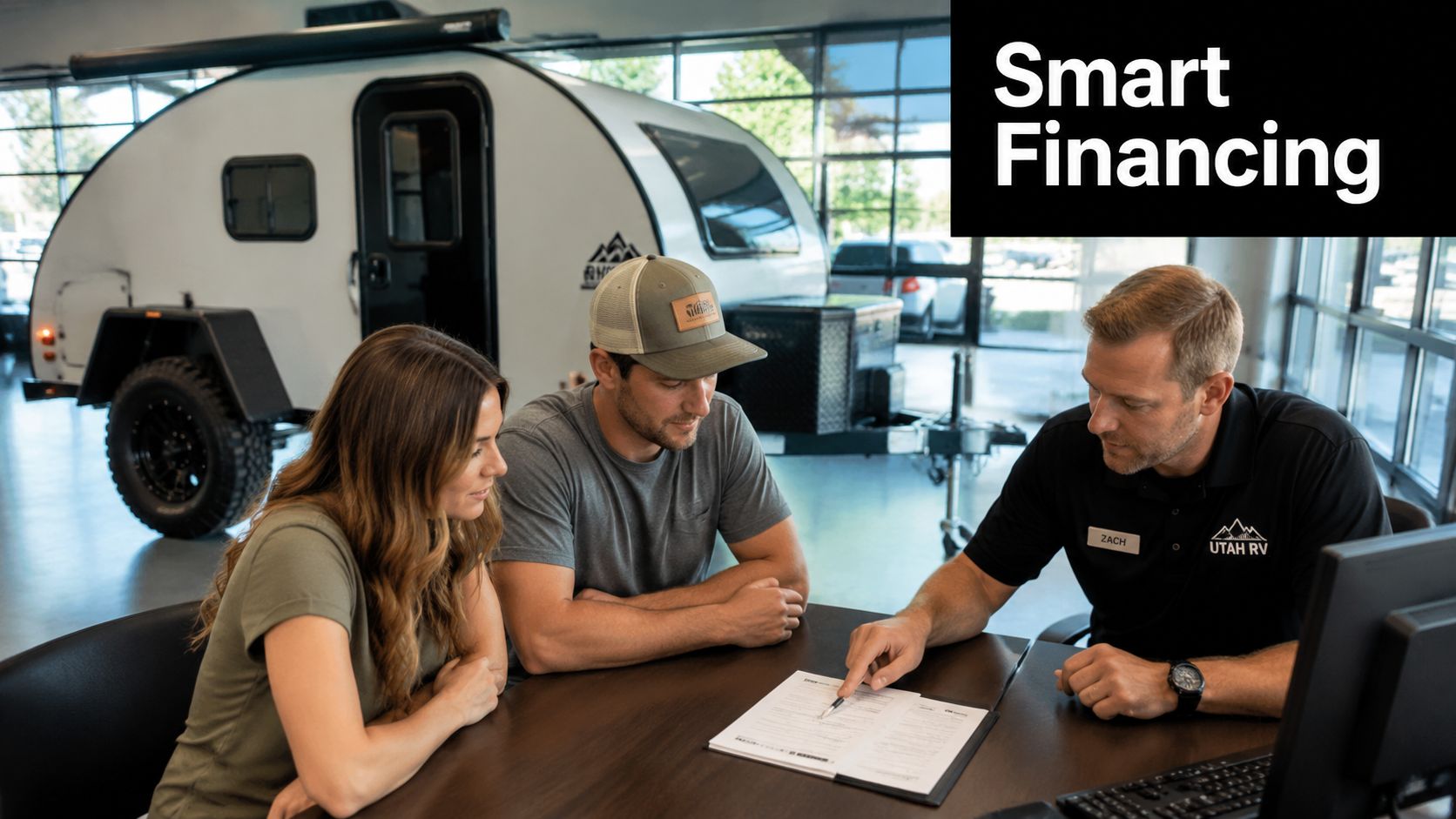
Dealership financing can also make the purchase easier to evaluate because the lender, trailer, trade, and installation needs appear in one conversation. Terms and rates depend on credit, lender approval, trailer age, and loan structure, so don't accept a payment quote without asking for the amount financed and total repayment.
Build a shortlist before you visit
Use inventory filters to eliminate mismatches early:
- Start with sleeping capacity: Most teardrops are designed for two sleepers, so decide whether you need a couple's cabin or a larger layout.
- Set a length limit: Keep the search aligned with your driveway, storage plan, and tow vehicle.
- Filter by GVWR: Compare the trailer's maximum loaded weight with your vehicle's actual rating.
- Compare the floorplan: Check mattress dimensions, galley reach-through versus hatch access, indoor versus outdoor cooking, solar preparation, and air-conditioning availability.
- Verify the VIN sticker: Filter results are only a starting point. Confirm the actual trailer weights on the unit before scheduling a walkaround.
- Save three finalists: A short list gives the sales and service teams enough information to compare trade-offs without starting from scratch.
Treat a trade-in as part of the purchase
An old pop-up, paid-off SUV, or another towable can reduce the amount you finance, but obtain a real appraisal rather than guessing from online listings. Bring the VIN, title information, payoff details if applicable, service records, and proof of insurance. Condition, demand, equipment, and the appraisal process determine the actual value.
Our team can review saved finalists, confirm whether a unit has arrived, identify dealer-installed equipment, and check whether a hitch or brake-controller installation needs to be scheduled. We also discuss three payment scenarios so the buyer sees how the monthly obligation changes with the down payment, trade value, and term.
Deals of the Week may include floor models, previous-year inventory, or inspected trade-ins. A discount is useful only if the trailer still fits your tow rating and trip style. A cheap teardrop that needs tires, axle work, electrical repairs, and a new galley appliance can cost more than a correctly equipped unit with a higher asking price.
Budget check: Set a maximum out-the-door amount before you fall in love with a mattress, screen, or upgraded galley.
Service, Winter Storage, and Long-Term Ownership in Utah
A teardrop has fewer systems than a large motorhome, but Utah's climate still demands maintenance. The Millcreek and Spanish Fork service lanes handle warranty concerns, axle and bearing repacks, brake adjustments, and roof-seal inspections. Schedule those checks before a long route rather than waiting for a bearing, tire, or seal problem to appear outside cell coverage.
Winterize before the first hard freeze
- Drain the fresh-water system: Empty the tank and open the lines according to the manufacturer's procedure.
- Protect the plumbing: Run the correct RV antifreeze through the galley pump and lines where required.
- Care for the battery: Remove it or place it on an appropriate maintenance charger.
- Prepare the tires: Store the trailer on a stable surface and inspect tire condition before spring travel.
- Cover carefully: Use a suitable cover and avoid trapping moisture against the exterior.
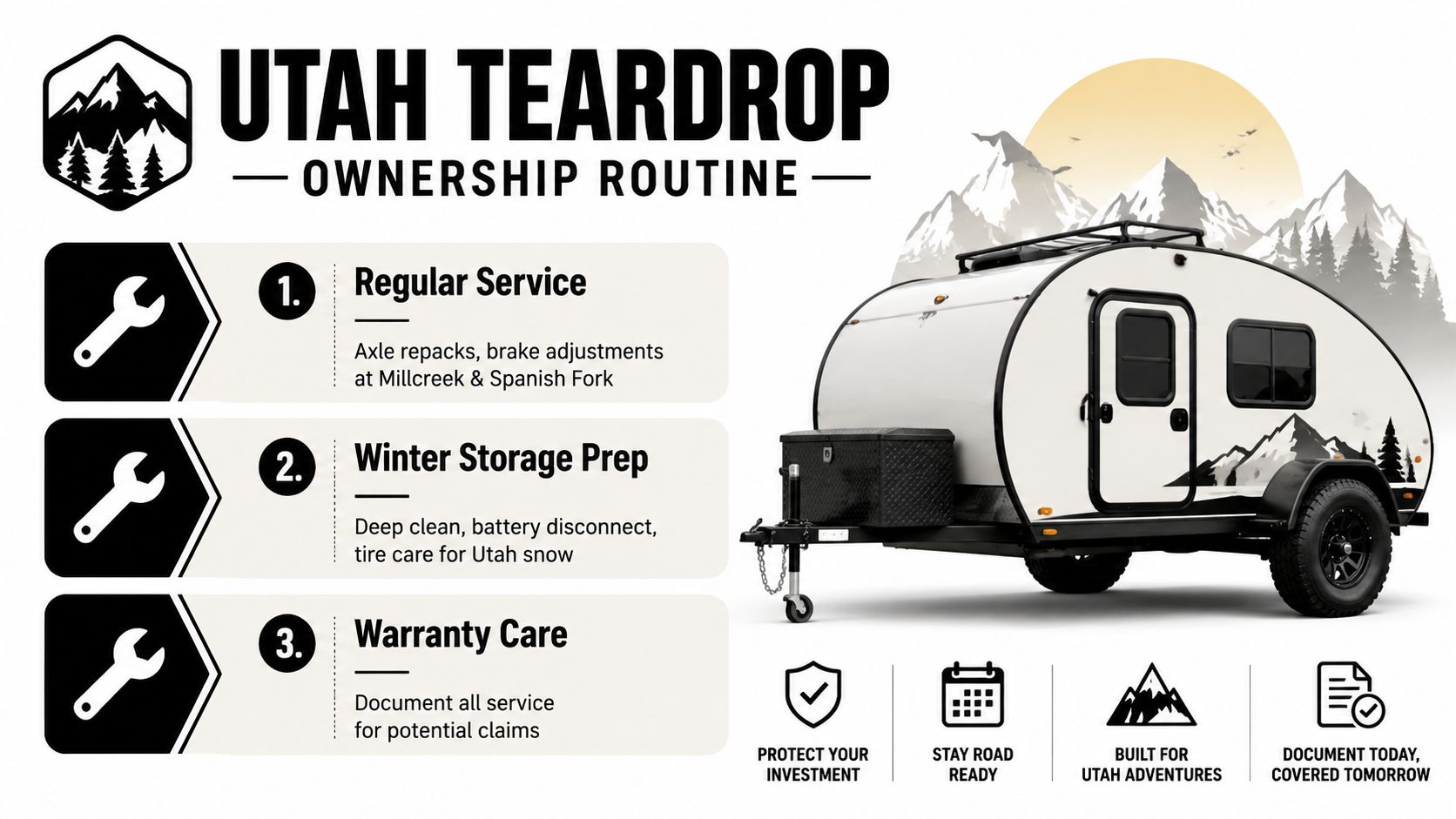
Summer preparation is just as important. Check tire pressure before canyon runs to Moab or trips toward the Uintas, verify lug torque after storage, sanitize the water system, and inspect roof sealant. A small trailer also benefits from a payload review before every major trip because batteries, racks, spare tires, and galley upgrades reduce the room left for water and camping gear.
For hail or collision damage, a shop should coordinate insurance documentation, exterior panel replacement, and interior trim repair. The goal isn't merely to make the trailer look presentable. It needs to return to the road with its seals, structure, lights, brakes, and appliances working properly.
Putting It All Together With Motor Sportsland
Before signing, reduce the decision to three checks:
- The tow match: The vehicle, receiver, payload, trailer GVWR, tongue weight, and brakes all need to agree.
- The trip match: A sleeping cabin and outdoor galley work beautifully for some couples and poorly for families needing indoor space.
- The ownership number: Include taxes, registration, hitch equipment, service, insurance, storage, and accessories in the budget.
For Utah shoppers, campers for sale in Utah can be a useful starting point for comparing available towables. Motor Sportsland's Millcreek and Spanish Fork teams can help buyers review inventory, financing, trade-ins, equipment, and post-sale service in one process. The Millcreek location serves the Salt Lake Valley, while Spanish Fork is convenient for Utah County and routes toward southern Utah.
Answers to common Utah buyer questions
Can a RAV4 or Subaru Outback tow a teardrop?
Sometimes, but never based on the trailer's dry weight alone. Confirm the exact vehicle's tow rating, payload, receiver limit, trailer GVWR, tongue weight, and brake requirements. A lightweight trailer may fit the rating, while a loaded model with water, batteries, and gear may not.
What's the practical difference between dry and loaded weight?
Dry weight describes the trailer before the equipment and supplies you carry are added. Loaded weight includes the items needed for camping, and that is the number to compare with the vehicle rating and trailer GVWR.
Do teardrops hold value better than larger travel trailers?
There isn't a verified resale percentage available here, so don't rely on a promised percentage range. Condition, brand, service records, layout, equipment, local demand, and remaining warranty will influence resale value. A clean, properly maintained trailer with documented service is easier to evaluate than one with unknown history.
What about Utah insurance and registration?
Confirm registration requirements and fees with the Utah DMV, and ask an insurer about specialty RV coverage. A teardrop may need protection for contents, appliances, weather damage, liability, and roadside assistance beyond what a basic vehicle policy provides.
Motor Sportsland can help you compare teardrop campers for sale by loaded weight, floorplan, tow-vehicle fit, financing, trade-in value, and service needs. Visit Motor Sportsland to browse current inventory, then contact the Millcreek or Spanish Fork team to arrange a walkaround and confirm the hitch and brake setup before your first Utah mountain trip.
Frequently Asked Questions
What are teardrop campers best for?
Teardrop campers are best for solo travelers and couples who want an enclosed sleeping cabin, compact towing, and an outdoor galley. They're a strong fit for weekend trips, desert basecamps, and developed campgrounds.
How many people sleep in a teardrop camper?
Most teardrop campers sleep one or two people, while some larger models can accommodate three or four. Always verify the manufacturer's stated capacity and actual mattress dimensions.
Should I compare dry weight or GVWR?
Compare the tow vehicle with the trailer's loaded weight and GVWR, not dry weight alone. Add water, propane, batteries, food, bedding, tools, and accessories before deciding whether the setup is suitable.
Are teardrop campers ready for Utah winters?
Some can be used in cold weather with the right heater, insulation, plumbing protection, and ventilation. Many owners choose to winterize instead, especially when the trailer lacks suitable four-season equipment.
Is a new or used teardrop better?
A new teardrop generally provides a current warranty and newer equipment. A used teardrop can offer better entry value, but inspect the roof, floor, seals, axle, brakes, tires, wiring, and galley carefully.
Where can Utah buyers compare teardrop inventory?
Start online, save several matching units, and then confirm actual VIN-sticker weights and arrival status with the Millcreek or Spanish Fork team before making a trip to the dealership.
