
Travel Trailers for Sale Utah: Your 2026 Buyer's Guide
A Utah family can fall in love with the idea of a Friday evening pullout to Bear Lake or a shoulder-season weekend near Jordanelle, then get stuck on the same three questions. Will the trailer tow safely over mountain grades, will the floorplan work with kids and gear, and is new really worth the extra cost?
That's the right way to shop, because travel trailers for sale Utah buyers aren't just comparing shiny interiors. They're buying into a tow setup, a storage plan, a camping season, and a long-term ownership cost that can either stay manageable or get messy fast. Utah's market is large enough to give shoppers real choice, with 1,957 new Trailer – Travel sales in Utah.gov's 2018 archive and 604 used travel trailer sales in the state's used-vehicle archive, so this isn't a niche corner of the RV world, it's a serious category with depth (2018 Utah new heavy vehicle archive, Utah used heavy vehicle archive).
Motor Sportsland has spent decades helping Utah buyers sort out those decisions in the world. That means matching trailers to tow vehicles, calling out the trade-offs that matter in the Wasatch, and steering families away from rigs that look good online but won't fit their life.
Why Utah Families Are Choosing Travel Trailers
A Utah family can get a trailer hooked up on Friday, head for the mountains after work, and still have a real sleeping space waiting at the campground. That flexibility is the main draw. Travel trailers keep the tow vehicle separate from the living area, so the family truck or SUV stays useful during the week and the RV can sit parked without turning daily errands into a compromise.
The bigger reason families choose them here is simple, they fit Utah life better than a lot of other RV types. A travel trailer can serve as a weekend basecamp, a summer road-trip rig, and a storage-friendly option when snow starts stacking up. For buyers comparing travel trailers for sale Utah, that matters more than flashy finishes. A rig that works in the driveway, on the highway, and at the campground earns its keep.
The part most buyers underestimate
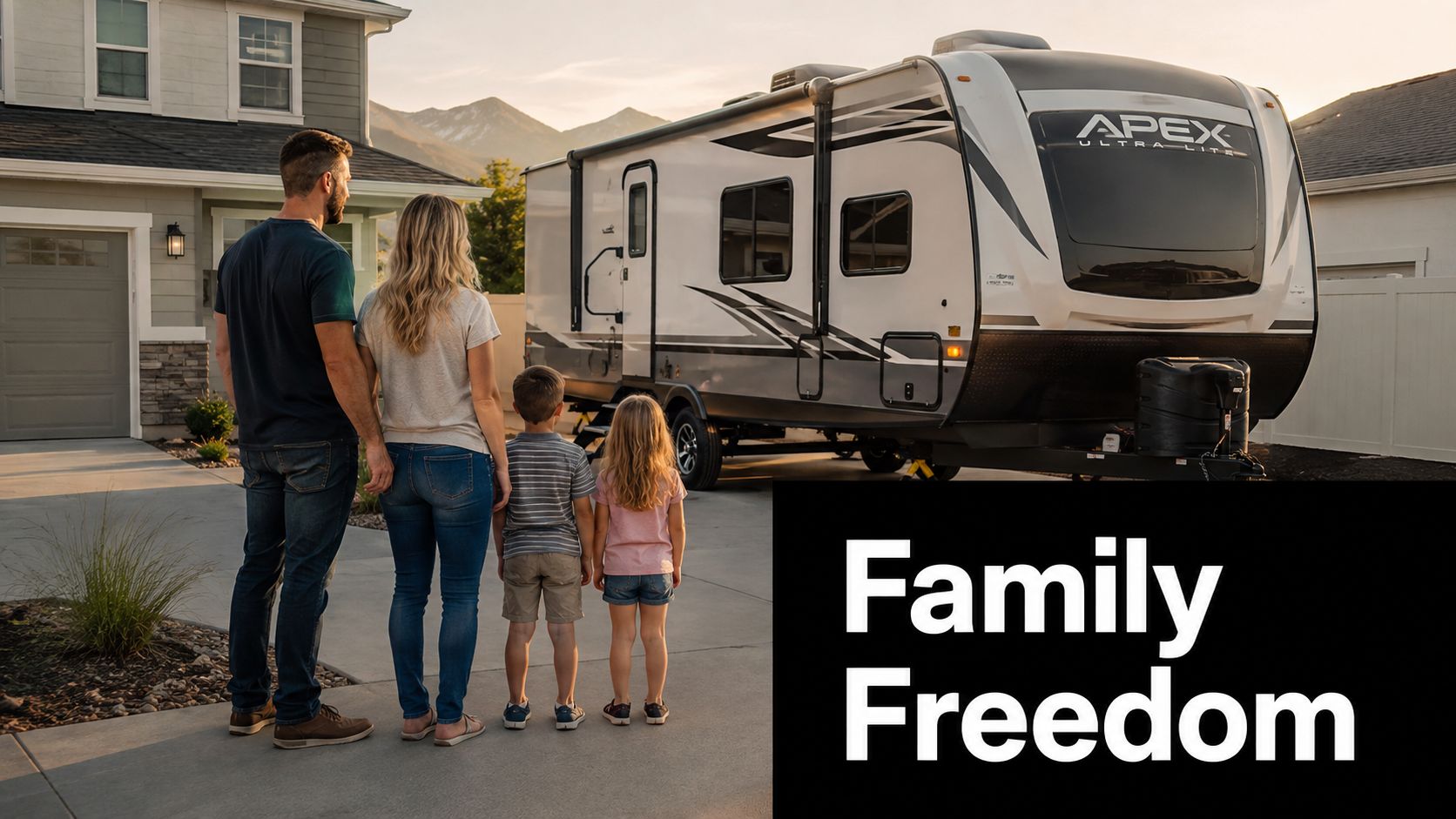
The hard part is not finding a trailer with a nice layout. The hard part is finding one that still makes sense after you add real family gear, full tanks, and Utah terrain.
Mountain towing changes the equation fast. A trailer that feels fine on flat streets can feel wrong on a hot climb out of the valley, especially once the load is packed the way families travel. Buyers who focus only on the dry brochure number usually end up shopping too close to the edge.
Floorplan choice needs the same honesty. A bunkhouse sounds perfect until the weight, length, and hitch setup start pushing the limits of your tow vehicle on grades and in crosswinds. A smaller model with a smarter sleeping setup often works better for Utah families than a bigger trailer that looks impressive in the lot.
Winter storage matters too. In Utah, a trailer needs a place to sit through cold spells, and that means thinking about cover, space, access, and whether you want to deal with winterizing every year. The best ownership experience comes from a rig that fits your driveway, your towing setup, and the way you camp, not just the way it looks on a sales sheet.
Practical rule: buy the trailer your tow vehicle can handle on a hot day, on an uphill grade, with the tanks and cabinets used the way your family actually camps.
How to Search Travel Trailer Inventory Like a Pro
Good inventory searches save time because they force the right conversation early. Start with tow capacity, not décor, then sort by the things that change the experience on Utah roads and at Utah campgrounds.
A smart search for travel trailers for sale Utah should begin with weight bands. If you're using a lighter tow vehicle, look for units under 3,500 lb. If you've got a mid-size SUV or a lighter truck, focus on the 3,500 to 5,000 lb range. Heavier setups belong with heavier tow vehicles, plain and simple. Utah inventory commonly clusters in the 3,000 to 6,500 lb dry-weight range, with many listings in the 21 to 32 ft length span and sleeping capacity from 4 to 10 (Mountainland RV inventory).
What the spec sheet really means
Dry weight is not what you'll tow. It's the trailer before the water, propane, batteries, and personal gear get added. GVWR is the ceiling, the maximum loaded weight the trailer is designed to carry. Cargo capacity is the gap between those two numbers.
That's why a lightweight-looking trailer can still get heavy fast. Published Utah inventory and RV specs show examples with 23-gallon fresh water, 30-gallon black and gray tanks, 13.5k BTU A/C, and GVWR ratings from 3,500 to 5,000 lb on lightweight models, while larger bunkhouse units in Utah inventory reach roughly 4,700 to 6,400 lb with 29 to 32 ft bodies (Airstream of Utah product pages).
If a seller can't explain how much payload is left after options and full tanks, keep looking.
How to filter without wasting a Saturday
Use inventory filters by:
- Weight band, to match the tow vehicle first.
- Length, so the trailer fits your driveway, storage plan, and campground comfort level.
- Sleeping capacity, because families outgrow “cozy” fast.
- Slide-outs, because a single slide can make a big difference in daily livability.
- Price range and floorplan, so you compare similar rigs instead of apples to oranges.
Motor Sportsland's inventory pages are built around those same filters, which is exactly how we'd shop if we were buying for our own families. Spend a few minutes narrowing the field online, then come in ready to compare the same weight class side by side instead of falling in love with a floorplan that doesn't fit your setup.
Questions to ask in the showroom
- What's the loaded weight with common options?
- How much cargo capacity is left after tanks and batteries?
- Would this trailer still tow comfortably on Wasatch grades?
- Does the bathroom layout work with kids or guests?
- What winterizing steps does this model need before storage?
Choosing the Right Floorplan for Your Utah Adventures
The right floorplan isn't the one with the most square footage. It's the one that matches how you camp. In Utah, that usually means choosing between a bunkhouse for families, a toy hauler for gear-heavy trips, or a lightweight model for easier towing and simpler storage.
Bunkhouse models for families
Bunkhouses make sense when kids, cousins, or friends are part of the plan. They usually give you more sleeping spots, better separation between adults and kids, and layouts that let one person prep breakfast while another is still asleep.
The trade-off is weight. More sleeping capacity usually means more trailer, and more trailer means you need to be honest about towing in the mountains. Bunkhouse units are a strong fit for families heading to Bear Lake, Jordanelle, or anywhere where the trailer becomes your base camp for several days.
Toy haulers for outdoor gear
Toy haulers are built for people who bring more than chairs and coolers. They work well for ATVs, dirt bikes, bikes, climbing gear, and all the muddy, wet, awkward equipment that doesn't belong in a normal closet.
The sacrifice is living space. A garage area eats into the main cabin, so you'll want to decide whether cargo flexibility matters more than a bigger kitchen, a larger lounge, or extra sleeping space. For Moab weekends, that trade is often worth it.
Lightweight models for smaller tow vehicles
Lightweight travel trailers are the cleanest answer for shoppers with mid-size SUVs or smaller trucks. They're easier to maneuver, easier to store, and easier to park in tight driveways or crowded trailhead campgrounds.
They can also be more limited. Tanks may be smaller, storage can be tighter, and you may give up a few conveniences that come with heavier units. But for couples or smaller families who camp on weekends, they're often the most practical choice.
| Travel Trailer Type | Weight Range | Ideal For | Utah Use Case | Key Trade-Off |
|---|---|---|---|---|
| Bunkhouse | Heavier on average | Families | Bear Lake or Jordanelle trips with kids | More sleeping space, more weight |
| Toy Hauler | Varies, often heavier | Outdoor enthusiasts | Moab and gear-heavy adventures | Cargo space cuts into living area |
| Lightweight | Lower to moderate | Smaller tow vehicles | Weekend trips from Salt Lake City | Fewer amenities and smaller tanks |
For a deeper look at layout choices, compare them with this travel trailer floor plan guide.
New vs Used Travel Trailers The Real Cost Breakdown
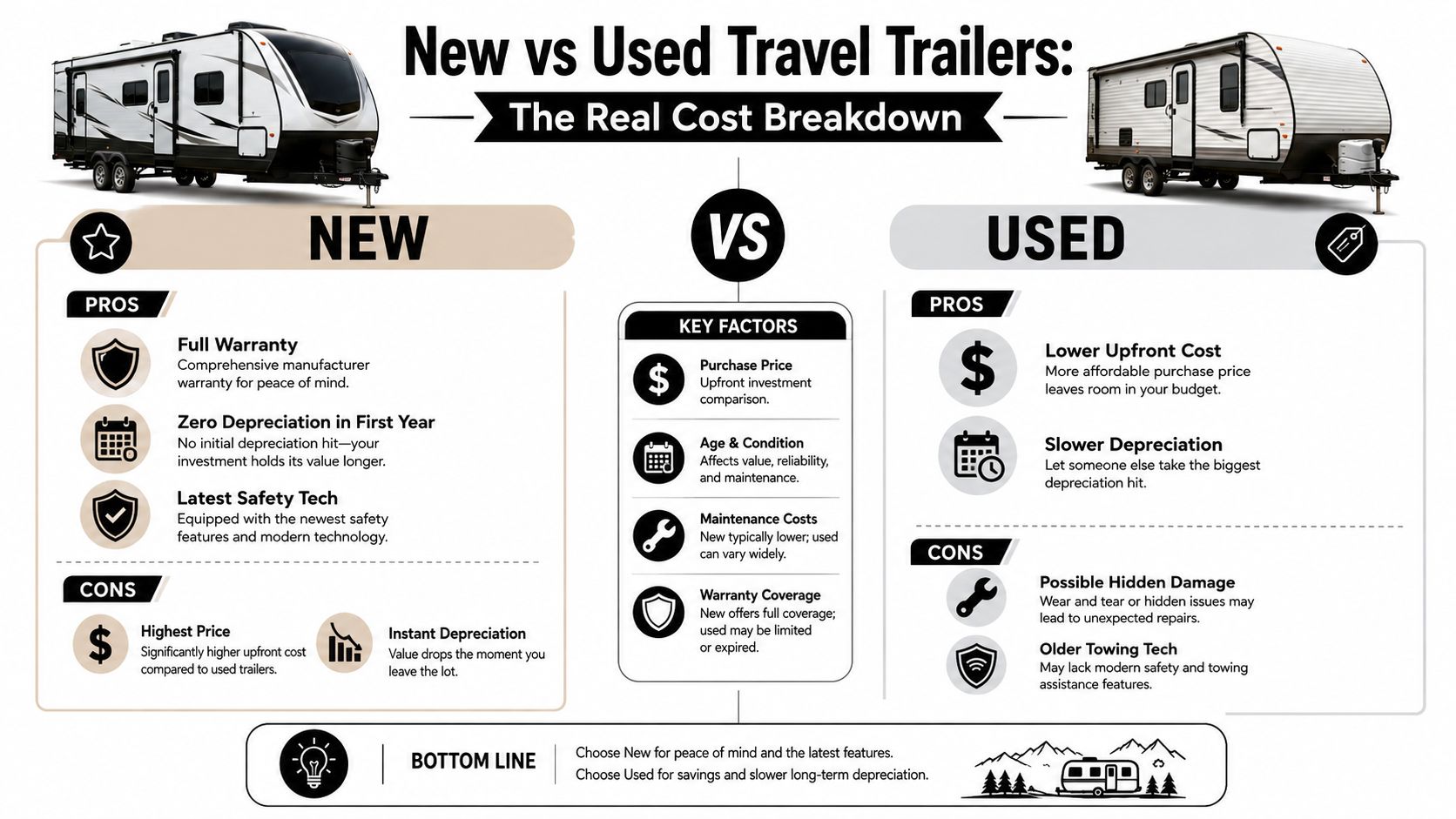
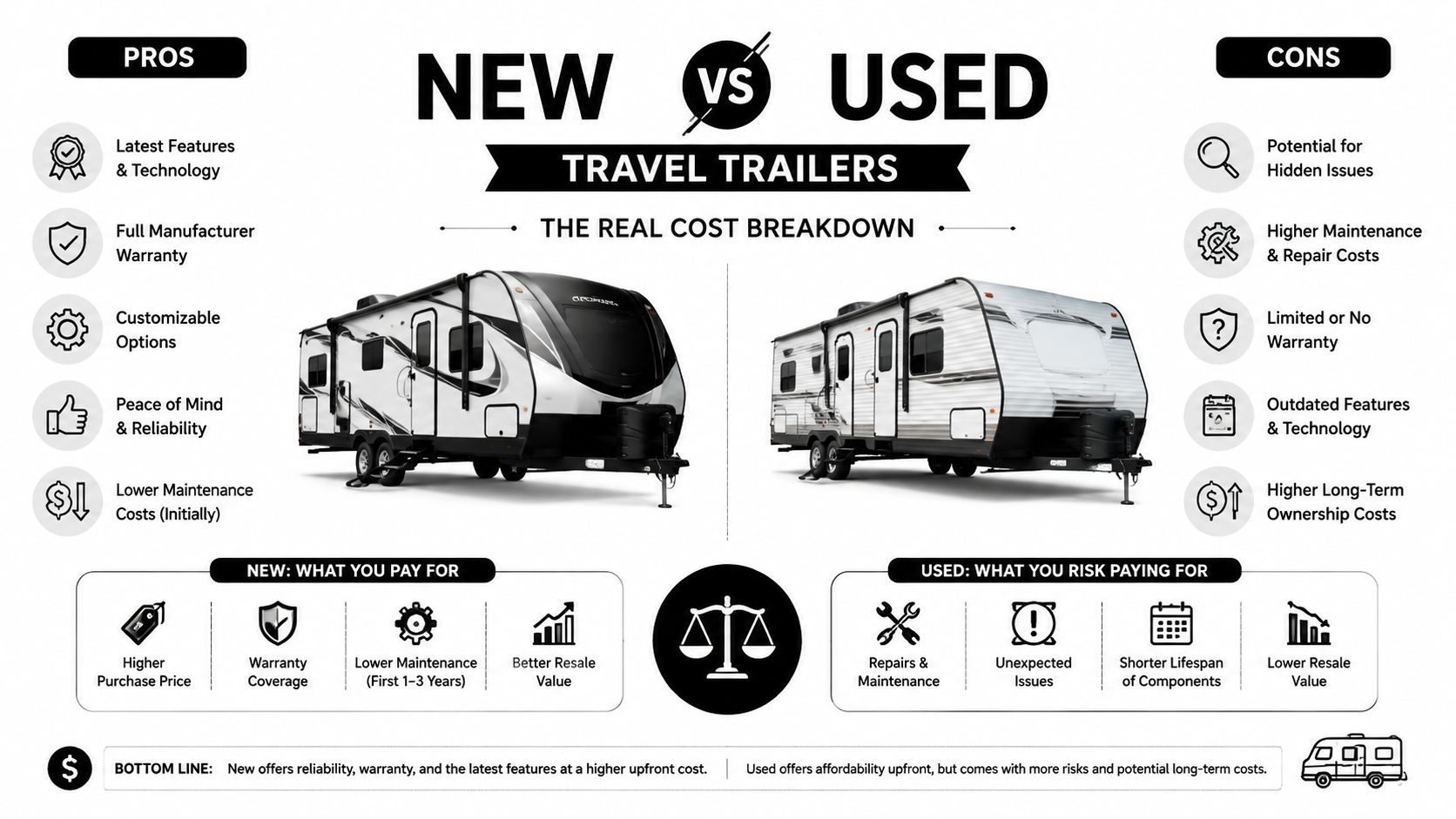
Sticker price gets shoppers in the door, but it doesn't tell the whole story. A new trailer gives you a clean start, warranty coverage, and the latest features. A used trailer usually lowers the entry cost, but it can bring immediate repairs, older components, and more uncertainty if the maintenance history is thin.
The Utah market shows there's real demand in both lanes. One reason is simple, buyers want options. Utah's RV dealer base is sizable, and IBISWorld estimates the state's Recreational Vehicle Dealers industry at $1.4 billion in 2026, with 215 businesses and 1,685 employees, plus average annual growth of 3.2% in market size and 9.8% in businesses from 2021 to 2026 (IBISWorld Utah recreational vehicle dealers). That kind of network supports both new and used shopping, but it doesn't erase ownership costs.
Where used trailers can surprise you
The cheap unit on the lot isn't always the good deal. Tires age out, brakes need attention, water systems need winterization, and collision repairs can be expensive if hidden damage shows up after the sale. A low price only works if the trailer doesn't immediately absorb that savings in service.
That's why used shopping should start with inspection, not payment terms. Check roof seals, wall corners, floor softness, appliance function, tank condition, frame condition, and signs of water intrusion. Ask for maintenance records whenever possible.
What new buys you
New trailers are simpler emotionally because you're the first owner. You know how they've been used, and you start with current features and full factory support.
That doesn't mean new is automatically cheaper over time. The benefit is clarity, not magic. If your budget can handle it and you plan to keep the trailer a while, new makes sense. If you're price-sensitive and patient enough to inspect carefully, used can be the smarter move.
How to think about financing and trade-ins
Financing can change the math fast, especially if a dealer can package the trailer, the trade-in, and the service work in one place. A fair trade-in also reduces the gap between what you want and what you can safely afford.
For a closer look at inspection points and used-shopping discipline, use this guide to buying a used RV.
Utah-Specific Tips for Towing, Storage, and Camping
Mountain towing in Utah is not the same as flatland towing. Grades, elevation, wind, and temperature swings all affect how a trailer feels on the road, which is why setup matters before you ever leave the driveway.
Towing through the Wasatch with less stress
Use lower gears on climbs instead of asking the transmission to do all the work. Keep speed conservative on steep sections of I-70 and I-15, and pay attention to sway before it becomes a problem.
A weight distribution hitch matters more than a lot of first-time buyers realize, especially when the trailer gets longer or the cargo load gets uneven. It helps the tow vehicle and trailer sit more level and can make the whole combination feel calmer on mountain passes.
Storage and winter care
Utah winters punish unprepared trailers. If you're storing outside, cover what needs covering, protect the roof and seals, and winterize the plumbing before the first hard freeze. If you're storing inside, you still need to prep the water system and battery setup, because storage alone doesn't freeze-proof a trailer.
For buyers comparing storage options, check local dimensions before you sign a lease. Van Dyke Outdoors carport sizes is a useful place to compare clearances when you're trying to decide whether a covered space will fit the rig you want.
A trailer that survives Utah's snow and road grime is usually the one that was winterized early, covered correctly, and checked again in spring.
Campgrounds and timing
Bunkhouses tend to fit family campouts at Jordanelle. Bear Lake works well for summer trips where the trailer is mostly a place to sleep, cook, and cool off. Higher-altitude camping rewards well-insulated trailers and disciplined loading, because nights get colder and mornings arrive fast.
Timing matters too. Fall is often the smartest season to buy if you want more breathing room, less rush, and time to prepare for spring camping. That also gives you time to sort out storage and service before the first warm weekend.
For a technical refresher on weight and setup, use this travel trailer weight guide.
Local habits that save headaches
- Check your breakaway system before longer trips.
- Load heavy items low and forward to keep handling steadier.
- Test your trailer lights every time, not just before long vacations.
- Keep a winterizing kit ready so the first cold snap doesn't catch you off guard.
Why Local Dealer Support Matters for Long-Term Ownership
A trailer sale is the beginning, not the finish. Once you own one, you need someone who can help with maintenance checks, repairs, parts, installations, upgrades, and collision work without making every issue a scavenger hunt.
That's where a local dealer relationship pays off. Motor Sportsland has served Utah for over 55 years from Millcreek and Spanish Fork, and that kind of continuity matters when you're trying to keep a trailer road-ready season after season. Our service center handles the work that keeps ownership sane, from plumbing and electrical issues to upgrades and repair needs.
One family we helped recently came in after buying a used trailer elsewhere. The floorplan fit their kids, but the trailer needed immediate service they hadn't budgeted for. We walked them through the repairs, helped them understand what was urgent, and got them back to camping without guessing at the problem.
Another shopper wanted a lighter rig for weekend trips but kept worrying about mountain driving. The right advice wasn't a bigger trailer, it was a better fit. That conversation saved them from buying a layout that would've felt tiring every time they headed into the hills.
Local support also helps on the front end. A dealer who sees Utah roads, Utah winters, and Utah campground habits every day can steer you toward a trailer that fits the way you travel. That's worth more than a glossy listing from a seller who's never seen how fast ownership questions stack up after the sale.
Your Next Steps to Finding the Perfect Travel Trailer
Start with the tow vehicle, then decide how you camp. If you're camping with kids, a bunkhouse probably belongs near the top of the list. If you bring bikes, dirt toys, or bulky gear, a toy hauler is worth a hard look. If your SUV is doing the towing, keep your search disciplined and stick to lighter units that won't punish you on steep grades.
Then compare new and used with open eyes. New gives you certainty and warranty support. Used can save money up front, but only if the inspection holds up and the ownership costs stay reasonable. Utah buyers do best when they shop with the full picture in mind, not just the payment.
Browse current inventory, compare floorplans by weight and length, and ask for a test tow if the numbers are close. If you want a direct conversation with a local RV team, stop by the Salt Lake City showroom, ask about current Deals of the Week, and make the search about fit instead of pressure. That's how you end up with a trailer you'll use.
Motor Sportsland helps Utah buyers compare travel trailers, line up financing, and keep rigs serviced long after the sale. If you're ready to narrow your choices and see what fits your tow vehicle and camping style, visit Motor Sportsland and start with inventory that matches real Utah use.
FAQ
What size travel trailer works best for Utah families?
It depends on your tow vehicle and how many people sleep in the trailer. Families usually focus on bunkhouses, but the right choice still has to fit your loaded weight and storage needs.
Are used travel trailers a good buy in Utah?
They can be, if the inspection is solid and the repair history is clear. Used trailers make the most sense when the upfront savings still leave room for service and maintenance.
Do I need a weight distribution hitch?
For many longer trailers, yes. It helps the towing setup feel more stable, especially on Utah mountain roads.
What should I check before winter storage?
Winterize the plumbing, inspect seals, protect the roof, and prepare the battery setup. Utah freezes are not forgiving.
Is it better to buy in spring or fall?
Fall usually gives buyers more breathing room. Spring is busier because everyone wants to camp right away.
