
Your Guide to RV Resale Value in Utah for 2026

Whether you're dreaming of your next big adventure up to Bear Lake or thinking about upgrading your current rig, one question always comes up: "What is my RV actually worth?" It’s a common puzzle for owners here in Utah, especially with the RV market's recent roller-coaster ride. For many of us, our RV is the second-most-valuable asset we own, right behind our house, so getting this right is important.
Figuring out that value can feel like a mystery. That's why our team at Motor Sportsland put this guide together—to pull back the curtain on how RV resale value is determined in 2026 and give you a clear, honest look at the process. Just like a home, an RV’s worth isn’t just about its age or mileage. It's a mix of its condition, the desirability of the floorplan, and even the time of year you sell. We see it every day at our dealership in Salt Lake City—a meticulously cared-for older travel trailer can easily bring in more money than a newer, neglected model.
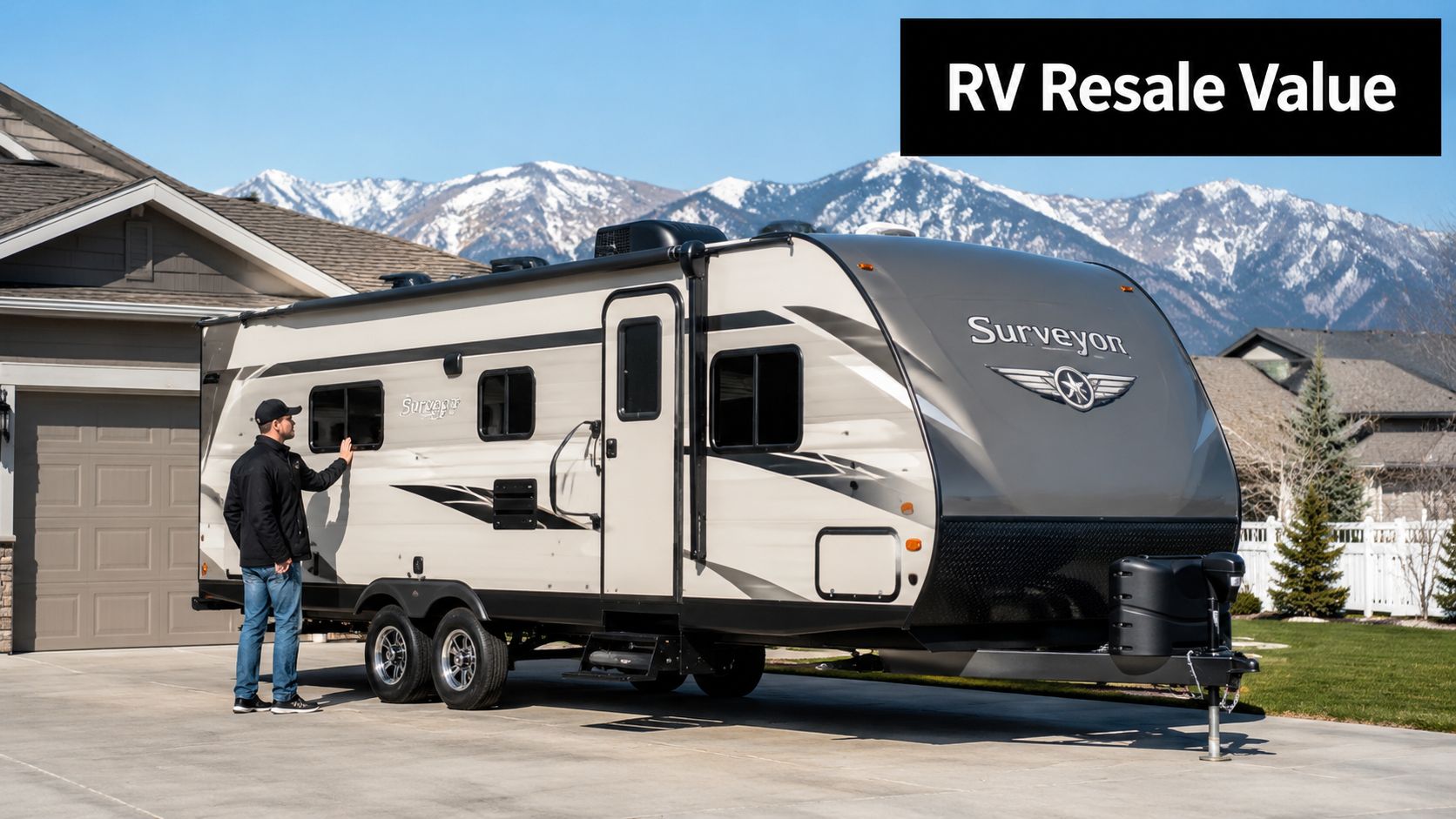
As your local experts, we're here to help you make sense of it all. We want you to feel confident and equipped with the right knowledge, whether you’re looking to trade up, sell, or just get a handle on your investment. In this guide, we'll cover the key factors appraisers look for, show you how to get a realistic value estimate, and help you decide the best way to sell your rig.
Understanding RV Depreciation and the 2026 Market Shift
When you own an RV, it's best to think of its value less like a used car and more like a second home. Its worth is tied directly to its condition, features, and the current market. The single biggest financial factor you’ll face as an owner is depreciation—the natural decline in value over time.
But RV depreciation isn't a simple, straight-line drop. The last few years have been a wild ride for RV values, and the market is shifting once again in 2026.
The Great Market Reset of 2026
The party's over. After an unprecedented period of high demand and inflated prices during the early 2020s, the RV market is finally coming back down to earth. In 2026, we’re seeing a major "reset" as values return to their pre-pandemic levels. If you're looking to buy or sell an RV in Utah, understanding this shift is crucial for setting realistic expectations.
Wholesale used RV values have now realigned with what we saw in early 2020. This includes an average drop of 16% in used RV values since the beginning of 2026, creating a much better market for buyers. For sellers, this means pricing your rig accurately has never been more important.
The key takeaway is this: the inflated values of the past few years are gone. Today, an accurate resale value is based on traditional depreciation curves, not the recent market highs.
If you want to dig deeper into the mechanics of how asset value declines over time, check out AutoProv's vehicle depreciation insights. While the article focuses on cars, the core principles apply directly to motorhomes and trailers, too.
How Different RVs Lose Value
Not all RVs depreciate at the same speed. Build quality, brand reputation, and the type of RV play a huge role. We see this firsthand on our lot in Salt Lake City every day—a well-maintained Class B camper van from a top brand will almost always hold its value better than an entry-level travel trailer. Some models are just built to last longer and stay in higher demand, which really slows down the depreciation clock.
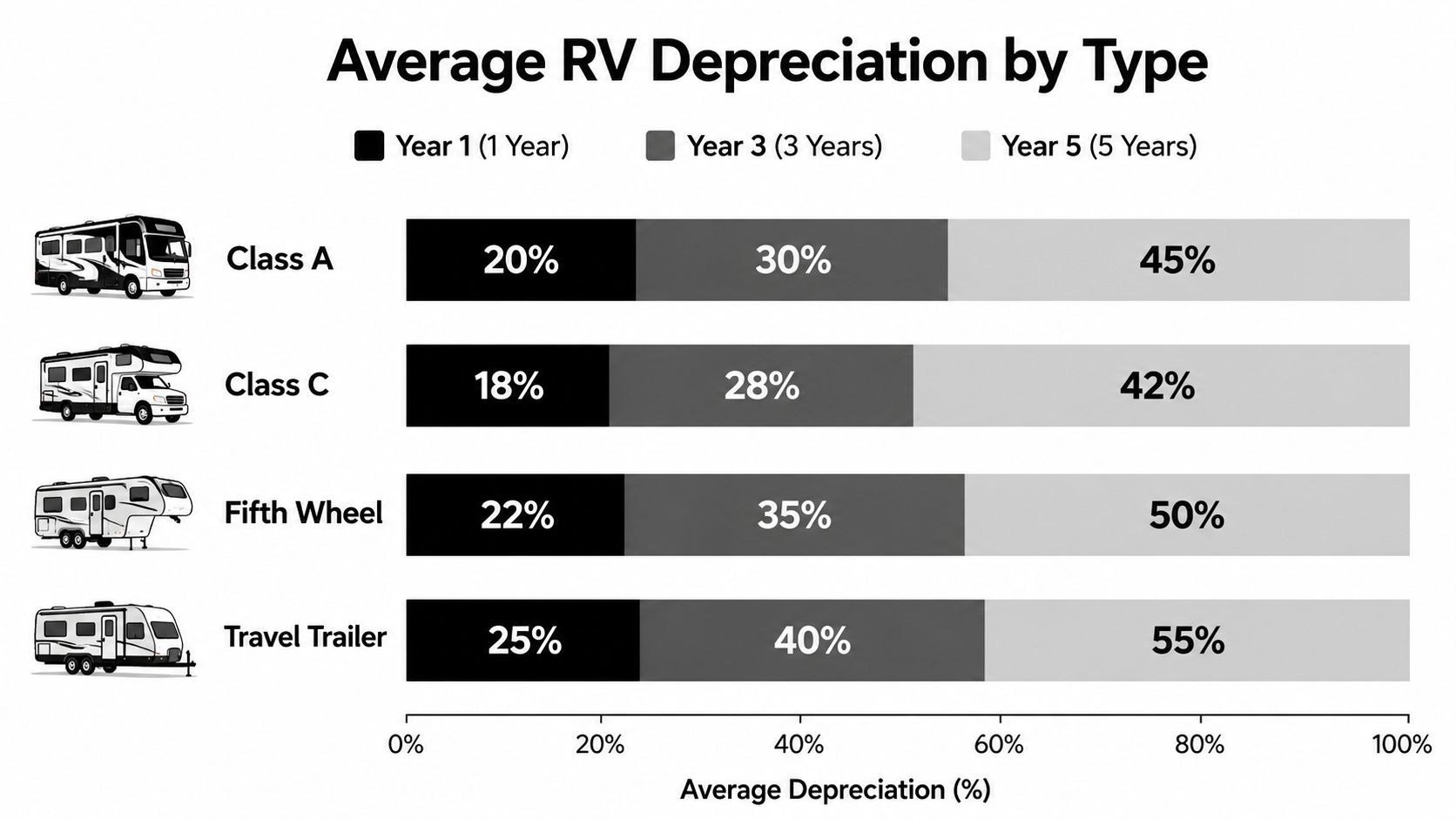
Average RV Depreciation by Type
To give you a clearer picture, it helps to see the numbers. The table below shows the typical depreciation our team sees for different classes of RVs over the first five years.
| RV Type | Year 1 Depreciation | Year 3 Depreciation | Year 5 Depreciation |
|---|---|---|---|
| Class A Motorhome | ~20% | ~30% | ~45% |
| Class C Motorhome | ~18% | ~28% | ~42% |
| Fifth Wheel | ~22% | ~35% | ~50% |
| Travel Trailer | ~25% | ~40% | ~55% |
As you can see, the initial hit in the first year is significant, but the rate of depreciation tends to slow down over time. Keep these figures in mind as a general guideline when you're estimating your own RV's value.
Ready to find your perfect RV? Browse our current inventory here or stop by our Salt Lake City showroom for a personalized consultation.
The 7 Key Factors That Drive Your RV's Value
Ever wonder why one used RV holds its value so well, while another seems to depreciate faster than a Utah snowbank in April? Here at our Salt Lake City dealership, our appraisers see it all. The difference almost always comes down to the same handful of critical factors.
Getting a handle on these will help you set a realistic price when it's time to sell. More importantly, it shows you where to focus your efforts right now to protect your RV resale value for the future. Let's break down the seven key drivers we look at every single day.
1. Brand Reputation and Build Quality
First things first: brand and build quality are king. It’s no secret that manufacturers like Airstream, Grand Design, and Tiffin consistently fetch higher resale prices. They’ve built their reputations on quality construction and happy owners, and buyers are willing to pay a premium for that peace of mind.
2. Overall Condition
Of course, even the best brand name can't save a rig that's been neglected. The overall physical condition is just as important. This goes way beyond a simple wash and wax. When our team appraises an RV, we're looking for the subtle clues that tell a story of meticulous care.
What Our Appraisers Look For:
- Zero signs of water damage: This is the #1 value-killer. We meticulously check ceilings, floors, corners, and inside cabinets for any hint of a leak, past or present.
- Smoothly operating slide-outs and awnings: These are complex, expensive systems. When they work flawlessly, it builds immediate buyer confidence.
- Tires with good tread and no dry rot: Worn-out tires are a big red flag and represent an immediate, hefty expense for the new owner.
- A clean, fresh-smelling interior: Lingering odors from pets, smoking, or mildew are incredibly tough to get rid of and will absolutely sink your offers.
3. Maintenance History
A shiny RV is one thing, but proven, documented care is what truly moves the needle. Having a complete binder stuffed with service records is one of the most powerful selling tools you can have.
Our Team's #1 Tip: Keep every single receipt. Oil changes, roof sealing, winterization, appliance repairs—a detailed service history proves you’ve been a responsible owner and can directly translate into a higher sale price.
4. Floorplan and Features
The layout also plays a huge part, especially for buyers here in Utah. Bunkhouse models are always hot commodities for families, and toy haulers are a must-have for anyone heading to the dunes near Little Sahara. The right floorplan makes your RV far more desirable.
5. Smart Upgrades
Smart additions can definitely add appeal, but don't expect to get your full investment back. Upgrades like solar panels, lithium batteries, or an improved suspension system are highly valued by experienced campers and can make your rig sell faster.
6. Mileage and Usage
For motorhomes, lower mileage is generally better, but a well-maintained, higher-mileage coach is often a safer bet than one that has sat unused for years. For towables, overall wear and tear is the more important metric.
7. Seasonality and Market Demand
Remember that seasonality matters a great deal—listing your RV in the spring as adventure season kicks off in the Wasatch Mountains will always bring more buyers than listing in the dead of winter.
How to Accurately Estimate Your RV’s Current Value
Alright, let's get down to brass tacks and figure out what your RV is really worth. Putting an accurate number on your rig isn't a guessing game; it's a process of starting with a national benchmark and then fine-tuning it for the realities of our local Utah market.
The first step for almost everyone in the industry, including our team here at Motor Sportsland, is to check the NADA Guides. Think of it as the Kelley Blue Book, but specifically for recreational vehicles. We plug in your RV's make, model, year, and all the factory-installed options, and it gives us a baseline wholesale and retail value. This provides a solid, unbiased starting point.
Adjusting for the Utah Market
But here’s the thing: a national average from NADA doesn't tell the whole story. The RV market can be surprisingly local. A bunkhouse model that's a hot seller here in Salt Lake City might not get a second look in Florida, and the same is true in reverse.
That’s why the next step is so important: finding local "comparables." This simply means hopping online and seeing what similar RVs are actually listed for right here in Utah. Check listings from dealers and private sellers from St. George up to Logan. This real-world evidence helps you adjust the NADA value to reflect what local buyers are willing to pay.
Remember, market conditions can change on a dime. A sudden market shift in late 2025, for example, saw used RV values drop by as much as 10% overnight when buyer demand suddenly cooled off. You can read a great breakdown of these market forces in this RV Miles market analysis.
For the most accurate, up-to-the-minute valuation, nothing beats a professional appraisal. Our team lives and breathes the Utah RV market every single day. You can get a quick estimate with the online trade-in tool on motorsportsland.com or bring your rig in for an expert evaluation based on our direct insights. For more context on our local market, check out our guide on how to buy a used RV near Salt Lake City.
Choosing Your Best Path: Trade-In, Private Sale, or Consignment
Once you have a realistic idea of what your RV is worth, you’ve reached the next big fork in the road: how are you actually going to sell it? There's no one-size-fits-all answer here. The right path really hinges on what you value most—is it maximum profit, or is it a fast, hassle-free experience?
Let's walk through the three main avenues for selling your RV: trading it in, selling it yourself, or putting it on consignment. Each has its own distinct advantages and trade-offs.
Comparing Your Sales Options
Trade-In: This is, without a doubt, the simplest and quickest way to go. You bring your current RV to a dealership like Motor Sportsland, we agree on a trade-in value, and that amount is immediately applied to the purchase of your next rig. The best part? It's all done in one clean transaction. For our fellow Utahns, there's a fantastic bonus: you only pay sales tax on the difference between your trade-in and the new RV's price, which can save you a substantial amount of money.
Private Sale: If getting the absolute top dollar is your primary goal, a private sale is almost always the way to do it. You're in complete control. You set the price, you manage the negotiations, and every penny of the final sale price goes straight into your pocket. The catch, of course, is that this path demands the most effort. You're the one handling all the marketing, answering every phone call, scheduling showings (often with strangers), and navigating the final mountain of paperwork.
Consignment Sale: Think of this as the happy medium. With consignment, you're essentially hiring an expert team—like us here at Motor Sportsland—to sell your RV on your behalf. We take care of everything: the professional marketing, the buyer inquiries, the showings, the negotiations, and all the final closing details. Your RV gets exposure to our dealership's steady stream of qualified buyers without you having to do any of the legwork. In exchange, the dealership receives a pre-determined commission from the sale.
This table breaks down the core differences to help you see which path aligns with your goals.
Choosing Your Sales Path: Trade-In vs. Private Sale vs. Consignment
| Factor | Trade-In at a Dealer | Private Sale | Consignment Sale |
|---|---|---|---|
| Sale Price | Lowest | Highest | High |
| Speed | Fastest (Instant) | Slowest (Weeks to Months) | Varies, but often faster than private |
| Convenience | Highest | Lowest | High |
| Effort Required | Minimal | Maximum | Low |
| Security | Very High (Done at dealership) | Low (Meeting strangers) | High (Dealer handles everything) |
| Best For | Owners prioritizing speed and a simple upgrade | Owners focused on maximizing profit with time to spare | Owners who want a good price without the hassle |
The big question to ask yourself is: What is my time worth? For many busy owners, the sheer convenience of a trade-in or the hands-off nature of consignment easily outweighs the extra cash they might have made from a time-consuming private sale.
If you're eager to get into a new rig tomorrow, the trade-in is a no-brainer. If you've got the patience and drive to squeeze every last dollar out of your RV, a private sale could be your ticket. And if you want a great return without the personal sacrifice, consignment offers a fantastic balance. For a more detailed look, be sure to read our guide on how to successfully sell your RV.
Actionable Steps to Maximize Your RV's Sale Price
Getting top dollar for your RV isn't about luck. It's about smart, strategic preparation. Think of it like staging a house before you put it on the market—you're highlighting its best features to make a fantastic first impression.
After years of helping owners sell their rigs, our sales and service teams have seen firsthand what works. We’ve pinpointed four essential areas that consistently boost RV resale value and get serious buyers to notice. These are the practical, must-do steps that show a buyer your RV has been well-loved and is ready for its next adventure.
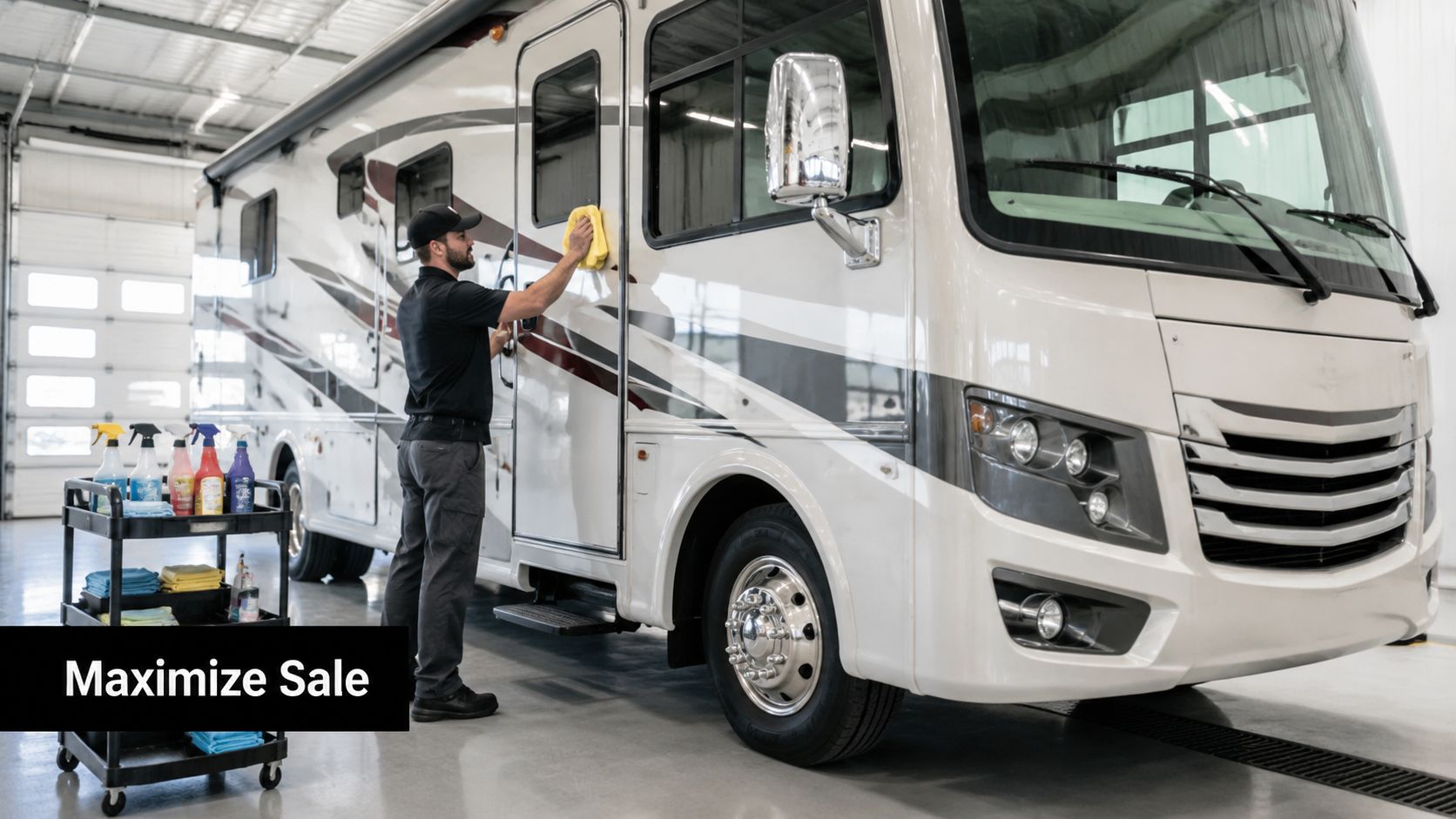
1. Deep Cleaning and Detailing
You only get one chance to make a first impression, and in the RV world, it’s everything. A sparkling clean rig immediately suggests meticulous care and sets your listing apart from the rest. This goes way beyond a quick wash.
- Exterior Shine: Power wash the exterior, roof, and undercarriage. A fresh coat of wax doesn't just make the fiberglass gleam; it protects it. Don't forget to clean the awnings and replace any yellowed or cracked plastic bits like vent covers—buyers notice these things.
- Interior Freshness: Shampoo the carpets, scrub the floors, and wipe down every single surface, especially inside cabinets and storage bays. It's also non-negotiable to eliminate any lingering odors from pets, cooking, or mildew.
2. Address Critical Repairs
Small, nagging problems can plant big seeds of doubt in a buyer's mind. Before you even think about listing your RV, walk through it with a critical eye and fix the little things that might suggest neglect.
More importantly, make sure all the major systems are working perfectly. Test the slide-outs, leveling jacks, and awnings to confirm they operate smoothly. Check every appliance, light fixture, and outlet. A non-working refrigerator or a sticky slide-out is a huge red flag that will either scare buyers away or give them ammunition for a lowball offer. If you run into any pre-sale repairs you aren't comfortable with, the experts at our Motor Sportsland Service Center are here to help.
3. Gather All Your Documentation
Few things build buyer confidence like a thick folder of paperwork. Having all your documents organized and ready to present is one of the most powerful selling tools you have. It’s proof that you’ve been a diligent and responsible owner.
Gather your vehicle title, the owner's manuals for the RV and all its appliances, and—most importantly—a complete history of service records. That paper trail of oil changes, roof inspections, and winterizations is concrete evidence of your commitment to maintenance.
4. Price It Right from the Start
Finally, you need to set a competitive and realistic price. Do your homework and see what similar RVs are actually selling for in the current Utah market.
If you price your RV too high, it can sit for months, becoming a stale listing that makes buyers wonder what’s wrong with it. A well-priced, clean, and fully functional RV will always sell faster and for a better final price. For a deeper dive into the selling process, we’ve put together a comprehensive resource you can check out in our guide on how to sell your travel trailer.
Conclusion: Maximizing Your RV Investment
Understanding your RV's resale value is the key to making smart decisions, whether you're buying, selling, or upgrading. While depreciation is a reality, you have significant control over your RV's long-term worth through diligent maintenance, smart upgrades, and proper care. By keeping detailed service records, addressing repairs promptly, and presenting a clean, well-cared-for rig, you put yourself in the best possible position.
Here at Motor Sportsland, our team is passionate about helping our fellow Utahns get the most out of their RV experience. We hope this guide has given you the confidence and knowledge to navigate the market. If you have more questions or want a professional, no-obligation appraisal, we’re here to help.
Ready to take the next step? Stop by our showroom at [your address in SLC], browse our inventory on motorsportsland.com, or call us today for expert advice on your RV's value.
Frequently Asked Questions About RV Resale Value
Here are some of the most common questions we get about RV resale value from folks right here in our Salt Lake City showroom.
How much value does an RV lose right away?
It’s the question on every new owner's mind. The biggest hit to your RV's value happens the second you drive it off the lot. On average, you can expect a new RV to lose between 15-20% of its value in the first year alone. Of course, this isn't a hard-and-fast rule; the specific brand, RV type, and what the market is doing at the time all play a big role.
Do some RV brands really hold their value better?
They absolutely do. Think about it from a buyer's perspective—a brand with a long-standing reputation for quality gives them peace of mind. That’s why names like Airstream, Grand Design, and Tiffin often command higher resale prices. Buyers know they’re investing in solid construction and are willing to pay more for that reliability compared to lesser-known or budget-focused brands.
Will my upgrades increase the resale value?
This is a tricky one. Smart, practical upgrades like solar systems, lithium battery banks, or an improved suspension can definitely make your RV stand out in a crowded market. They add real-world utility that experienced RVers appreciate. However, it's important to be realistic. While these features might help you sell faster or for a slightly higher price, you almost never get back the full cost of the parts and installation. Think of them as making your rig more desirable, not as a dollar-for-dollar investment.
What's the best time of year to sell an RV in Utah?
Timing your sale can make a surprising difference. Here in Utah, the market heats up just as the weather does. The prime selling season is late spring, from about April through June. That’s when everyone is getting excited and planning their summer adventures in the Wasatch Mountains or down in Moab. You can also catch a second wave in early fall, as hunters get ready for their season or snowbirds prepare to head south for the winter.
What is the single biggest factor that kills RV resale value?
Water damage. Hands down, nothing scares a buyer away faster or devalues an RV more than signs of a past or present leak. Stains on the ceiling, soft spots in the floor, or a musty smell are massive red flags. That's why our service team always says the most important piece of maintenance is regularly inspecting and sealing your roof and seams.
How much does RV mileage affect resale value?
For motorized RVs (Class A, B, and C), mileage is a factor, but it's not as simple as "lower is always better." An RV that sits unused for long periods can develop more problems than one that's driven regularly. Buyers are more interested in a balance of reasonable mileage and a stellar maintenance history. For towables like travel trailers and fifth wheels, mileage is irrelevant; condition is everything.
