
Your Guide to RV Sway Control for Safe Towing in Utah: 2026 Edition
Picture this: you're cruising down I-15 toward Bear Lake, your family excited for a weekend of fun, and a sudden gust of wind hits your trailer. You feel it start to dance behind you—that unnerving side-to-side movement known as trailer sway. For anyone RVing in Utah, where mountain passes and high winds are just part of the journey, getting a handle on sway is absolutely essential for safety and peace of mind.
Here at Motor Sportsland, our team has spent over 55 years helping families tow their RVs safely from our Salt Lake City home base, so we've seen it all. That fishtailing motion is the number one concern we hear about from trailer owners, and for good reason. It’s not just an uncomfortable feeling; it’s a serious safety risk that can quickly get out of hand. Think of this guide as a conversation with one of our experienced pros, where we'll walk you through everything you need to know about RV sway control.
We’ll cover:
- What’s really happening when your trailer starts to sway.
- A breakdown of the different types of sway control systems on the market.
- Practical, real-world tips straight from our Salt Lake City service center.
- How to choose the right system for your specific RV and tow vehicle.
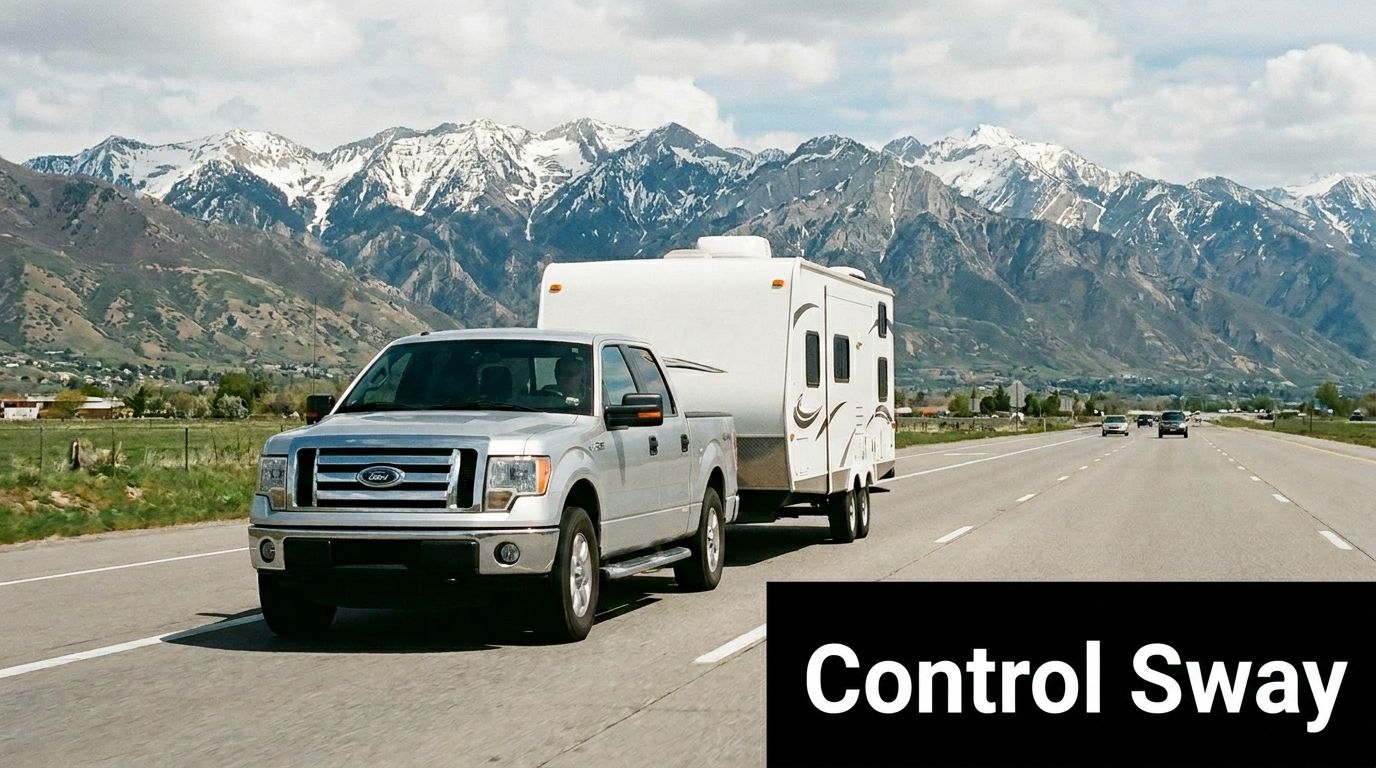
Our goal is simple: to make sure every trip you take, whether it's across the Wasatch Front or beyond, starts and ends with complete peace of mind.
Understanding What Causes Trailer Sway
Anyone who's towed a trailer has felt it: that unnerving wiggle from behind that can quickly escalate into a full-blown fishtail. That dangerous, side-to-side oscillation is what we call trailer sway, and it's one of the biggest safety risks on the road.
To get a handle on it, you have to understand what’s destabilizing your rig. The causes are often invisible forces you encounter every day, especially on Utah's highways.
Common Triggers for Trailer Sway
- Strong Crosswinds: A sudden gust hitting the huge, flat side of your RV is like a hand shoving it sideways. It’s a constant battle when you’re driving through places like Parley's Canyon or across the open plains of the West Desert.
- Passing Vehicles: You know that blast of air you feel when a semi-truck roars past? That "bow wave" first pushes your trailer away, then sucks it back in toward the truck. This push-pull is a classic recipe for starting a sway event.
- Improper Weight Distribution: This is, without a doubt, the most common and preventable cause our service team sees. Loading too much gear in the back of your trailer, behind the axles, turns it into a giant pendulum. Without enough weight on the hitch, there's nothing to keep the front of the trailer firmly planted.
- Driver Inputs: Even a small, sudden jerk on the steering wheel to dodge a pothole can send a shockwave down to the trailer. That whip-like reaction can easily get out of hand and initiate a dangerous sway.
Expert Insight: Many new RV owners mistakenly believe a powerful truck solves all towing problems. In reality, the balance and physics between the truck and trailer are what truly matter for stability. Our team at Motor Sportsland always emphasizes that a proper hitch setup is just as important as the tow vehicle itself.
On top of these main triggers, other things can pour fuel on the fire. Driving too fast, running on underinflated tires (on either your truck or trailer), or trying to tow an RV that’s just too big for your vehicle can turn a minor wiggle into a major crisis.
It really comes down to physics. As a rule of thumb, you need 10% to 15% of your trailer's total loaded weight pressing down on the hitch ball. For an 8,000-pound trailer, that’s 800 to 1,200 pounds of tongue weight keeping everything stable. You can learn more about proper trailer loading and sway prevention from official towing guides, but knowing these root causes is the first step to a safer trip.
Comparing Your RV Sway Control Hitch Options
Picking the right RV sway control system isn't a one-size-fits-all deal. Here at our Salt Lake City dealership, we walk customers through this exact decision every single day. The key is to match the technology to your specific trailer, your tow vehicle, and the kind of adventures you have in mind.
Think of it like choosing the right tool for a job. You wouldn’t use a sledgehammer on a finishing nail, right? The same logic applies here. A lightweight travel trailer has very different needs than a massive 35-foot bunkhouse.
Independent Friction vs. Integrated Systems
The most straightforward option is an independent friction sway control bar. It's a simple, effective add-on that's perfect for smaller, lighter trailers. Imagine a brake that constantly applies just enough pressure to dampen side-to-side motion before it can get out of hand. This is an affordable way to add a crucial layer of safety to a smaller setup, like a KZ Sportsmen Classic.
But for larger trailers, you're going to need a more muscular solution. That's where integrated weight distribution hitches with built-in sway control come into play. These are the heavy-hitters that combine the lifting power of weight distribution with powerful, always-on sway resistance.
The infographic below really helps visualize the difference between these two main approaches.
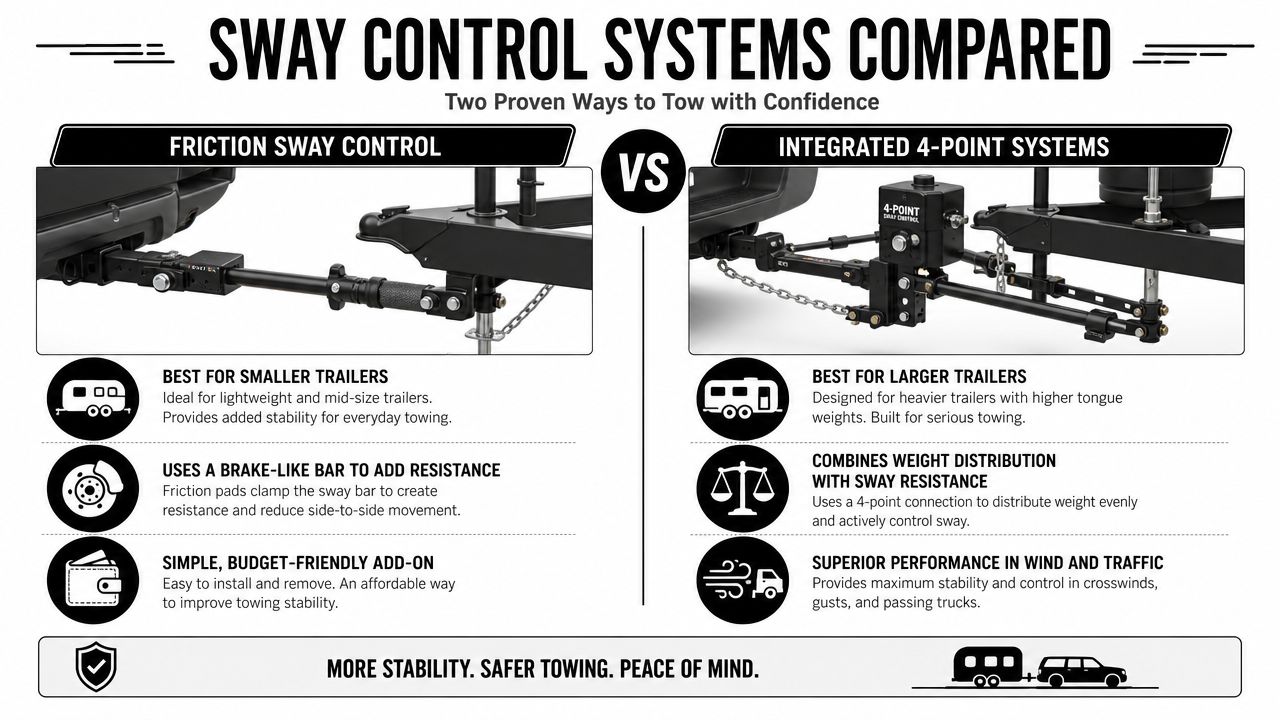
As you can see, while a simple friction bar is a great budget-friendly add-on for smaller trailers, integrated systems deliver the superior performance needed for bigger, heavier RVs that are more susceptible to crosswinds and passing semis.
Two-Point vs. Four-Point Sway Control
As you dive into the world of integrated hitches, you’ll hear talk about "two-point" and "four-point" systems. So, what’s the difference? A two-point system typically gets its sway resistance from friction created by the spring bars moving inside the hitch head. It's a solid, entry-level integrated design.
A four-point system, like the extremely popular Equal-i-zer hitch, takes it a step further. It adds two more points of friction where the spring bars rest on L-brackets attached to the trailer's A-frame. This creates a much more rigid and stable connection, actively fighting sway from multiple angles. It’s our team’s go-to recommendation for anyone towing a big fifth wheel or travel trailer through the windy canyons we have here in Utah.
For a closer look at a great two-point system, check out our guide on the Equal-i-zer E2 weight distribution hitch.
Choosing the Right System for You
To help you sort through the options, we've put together a table comparing the most common types of sway control. It breaks down what each system is best for, how it works, and the main pros and cons to consider.
RV Sway Control Systems Comparison
| Sway Control Type | Best For | How It Works | Pros | Cons |
|---|---|---|---|---|
| Independent Friction Bar | Small, lightweight trailers (under 6,000 lbs) | A separate bar applies friction to the hitch connection, acting like a brake to dampen sway. | – Very affordable – Easy to add to an existing setup |
– Must be disengaged when backing up or in slippery conditions – Not powerful enough for large trailers |
| 2-Point Integrated (Hitch Head Friction) | Small to medium trailers (up to 8,000 lbs) | Spring bars inside the hitch head create friction to resist side-to-side movement. | – Good performance for the price – Always active; no need to disengage |
– Can be noisy – Less effective than 4-point systems in heavy winds |
| 4-Point Integrated (Bar & Bracket Friction) | Medium to large trailers (over 6,000 lbs) | Uses friction at the hitch head and where spring bars slide on frame brackets for maximum resistance. | – Excellent sway prevention – Very stable and secure feeling |
– Higher initial cost – Requires precise setup and occasional adjustment |
| Electronic Sway Control | Any trailer, as a supplement to mechanical systems | Sensors detect sway and automatically apply the trailer's brakes on one side to correct it. | – Proactive and fast-acting – Works with any hitch system |
– Most expensive option – Requires professional installation – Doesn't prevent sway, only corrects it once it starts |
Ultimately, the best choice depends on your specific rig and where you plan to take it. A simple friction bar might be all you need for weekend trips with a pop-up, but a 4-point system provides invaluable peace of mind when you're crossing the plains with a 30-foot travel trailer in tow. While this article focuses on trailer sway, the broader concept of vehicle stability is important in other areas, too, as shown in this CA Tech USA sway bar guide for UTVs.
How to Choose the Right System for Your RV
With so many different types of sway control on the market, how do you actually pick the right one for your setup? It's not about grabbing the most expensive box off the shelf; it's about finding the perfect match for your trailer. Here at Motor Sportsland, we’ve helped thousands of Utah families get hitched up safely, and our team is ready to help you sort through the options.
Ultimately, your decision comes down to a few key things: your trailer's weight, its length, and of course, your budget.
Match the System to Your Trailer's Specs
First things first, you need to know your trailer’s Gross Vehicle Weight Rating (GVWR). You can find this number on a sticker right on your RV, and it represents the maximum safe weight when it's fully loaded with all your gear, water, and supplies. This is the only number that matters—it's your real-world weight.
Over the years, we've developed a pretty simple rule of thumb that our team uses daily:
- For smaller, lighter trailers (under 6,000 lbs GVWR): A simple, budget-friendly independent friction bar is often a fantastic choice. It gives you a solid safety boost for a teardrop or small camper without requiring a huge investment.
- For mid-size to large trailers (over 6,000 lbs GVWR): We almost always recommend an integrated four-point sway control and weight distribution system. For a 30-foot bunkhouse or a toy hauler, the stability and peace of mind you get on those windy Utah highways are priceless.
Expert Tip: Don't ever base your decision on the "dry weight." A trailer loaded up for a family trip to Bear Lake is a completely different beast than an empty one sitting on our lot. Always, always size your sway control for the fully loaded weight.
Ask Yourself These Key Questions
Before you head into our Salt Lake City showroom or start clicking through our online parts store, take a minute to get the answers to these questions. Having this info ready will help our team give you the most accurate and personalized recommendation right from the start.
Your Pre-Purchase Checklist:
- What is my trailer’s fully loaded weight (GVWR)? This is the most critical piece of the puzzle.
- How long is my trailer from hitch to bumper? Longer trailers catch more wind—like a giant sail—and demand more robust sway control.
- What kind of driving will I be doing? Frequent trips through mountain passes like Parley’s Canyon require a more powerful system than short, flat hauls across the valley.
- What is my tow vehicle? You have to make sure your truck can handle the load. If you're not sure, our guide on understanding your Dodge RAM tow capacity is a great resource.
- What is my budget? While you can't put a price on safety, there are fantastic options at every price point. We can help you find the absolute best value for your specific needs.
Ready to find your perfect fit? Our parts experts are just a phone call away, or you can stop by our Salt Lake City showroom for a personalized consultation.
Setting Up and Maintaining Your Hitch for Peak Performance
You can have the most advanced sway control hitch money can buy, but if it's not set up right, you're not getting the safety and performance you paid for. We see it all the time in our service bays—a brand new hitch that's actually making the tow experience worse simply because it hasn't been adjusted correctly.
Think of it like tuning an instrument. If the tension is off, you’ll never get the sound you want. The same principle applies here. Getting your hitch perfectly dialed in is what allows it to do its job, keeping you in control and your family safe on the road.
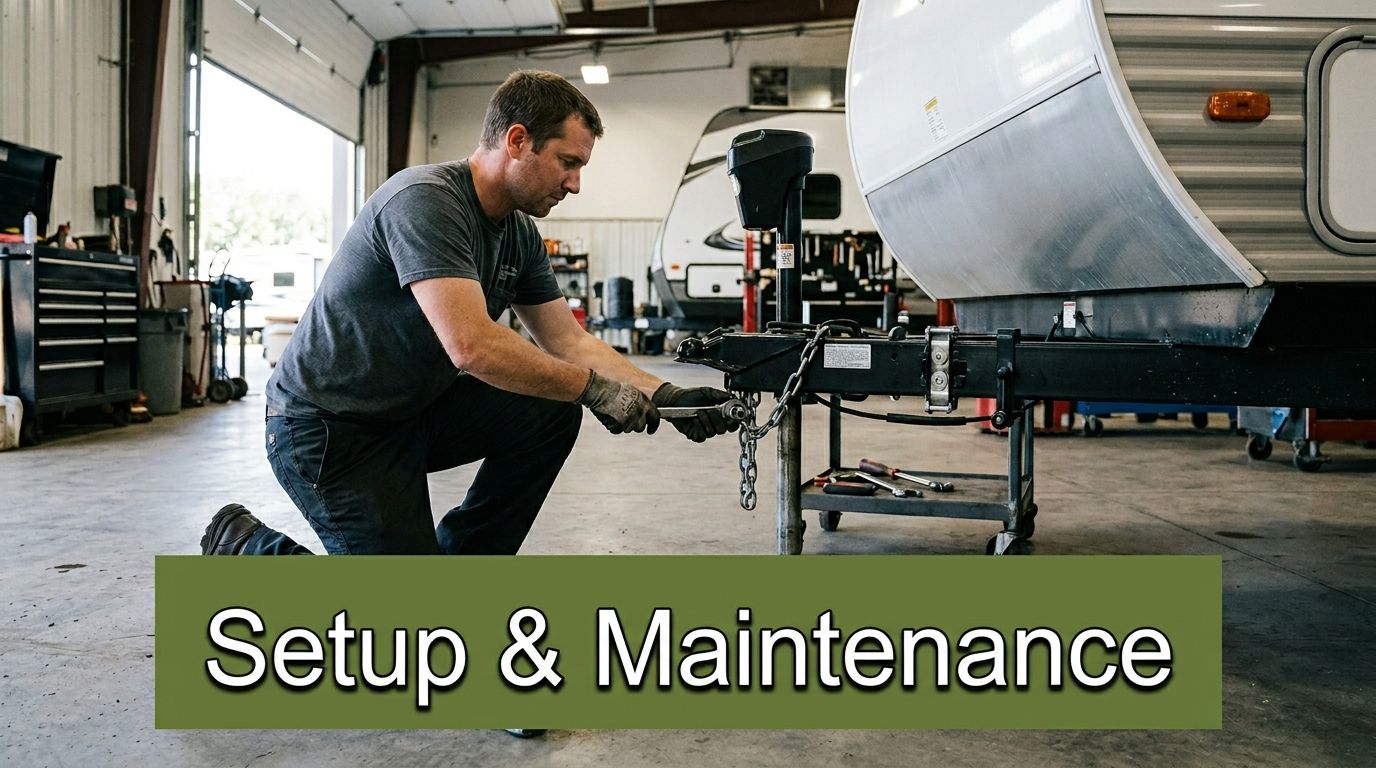
The main goal during setup is to get your entire rig sitting level. Once connected, both your tow vehicle and your trailer should be parallel to the pavement, with the proper tension applied to the spring bars of your weight distribution system.
Your Pre-Trip Hitch Inspection Checklist
Here at Motor Sportsland, our service technicians have a pre-tow routine that’s become second nature. It takes just a few minutes, but it's one of the most important habits you can develop for safe towing.
- Check Torque on All Bolts: Vibration is a constant on the road, and it can loosen critical bolts on your hitch head, ball mount, and sway control brackets. Grab a torque wrench and confirm everything is tightened to the manufacturer's specs.
- Lubricate Key Joints: For hitches that require it, a bit of grease on the hitch ball and the sockets for the spring bars keeps things moving smoothly and quietly. Your owner's manual will show you the exact points to hit.
- Inspect for Wear and Tear: Give the whole assembly a good look. You're searching for any signs of metal fatigue, cracks, or parts that look excessively worn. If you spot anything that doesn't look right, it's time for a professional to take a look.
When to Call the Pros: While these quick checks are perfect for any RV owner, the initial setup can be tricky. If you've just purchased a new trailer, swapped out your tow vehicle, or just feel like something is "off" when you're driving, your best bet is to schedule a professional setup with our Motor Sportsland service center. Our certified technicians have the specialized tools and experience to get it right the first time.
Don't forget that a proper setup does more than just prevent sway—it also has a huge impact on your braking. A level rig helps ensure your trailer's brakes are working in perfect harmony with your truck's. You can learn more about this crucial system in our guide on choosing and using a camper brake controller.
Your Partner for Safe and Smooth Towing Adventures
Getting a handle on trailer sway is one of the most critical things you can do for your family’s safety. After all, a confident towing experience is a fun towing experience. By understanding what causes sway and choosing the right RV sway control for your unique setup, you can travel through Utah’s beautiful landscapes without white knuckles on the steering wheel.
We’ve walked through the physics, the different types of hitches, and how to match a solution to your specific rig. Hopefully, you now feel equipped to make the right choice for your adventures.
At Motor Sportsland, our real passion is seeing you create wonderful memories on the road. We're not just a dealership; we're your local partner in adventure, and have been for over 55 years.
Whether you need a professional to upgrade the hitch on your current fifth wheel or you're just starting your search for the perfect travel trailer, our team in Salt Lake City is here to help. Stop by to talk with an expert, or better yet, schedule a professional hitch installation with our service center and drive away with total peace of mind.
Of course, a proper mechanical setup is only one part of the equation. Having the right insurance coverage is just as essential for a worry-free journey. If you're looking to review your policy, you can get competitive RV insurance quotes to make sure you're fully protected on all fronts.
FAQ: Your RV Sway Control Questions Answered
Even after you get the basics down, it’s completely normal to have more questions about RV sway control. Our team fields them every day in our Salt Lake City showroom and service bays. Here are the answers to some of the most common ones we hear from fellow RVers here in Utah.
Do I really need sway control for my small travel trailer?
Yes, absolutely. While it’s true that the danger of sway gets more intense with bigger rigs, any trailer can sway. All it takes is a strong crosswind whipping through Parley's Canyon or the powerful draft from a semi-truck blasting past you on I-15.
For smaller trailers, often those under 5,000 lbs, a simple friction sway bar is an easy and affordable way to add a serious layer of safety. Think of it as cheap insurance that pays off with a much more relaxing and stable tow.
Can I back up with my sway control system hooked up?
That’s a critical question, and the answer really depends on what kind of system you're running.
- Separate Friction Bars: If you have this style, you must disengage the bar before backing up, especially if you're making a tight turn. Forgetting to do this can bend the bar or damage its mounting points on your hitch or trailer frame—a common mistake we see.
- Integrated Systems: Thankfully, most modern weight distribution hitches that have sway control built-in (like popular models from Equal-i-zer or Blue Ox) are designed to let you back up without disconnecting anything. This is a major convenience feature.
When in doubt, and we can't stress this enough, always check your specific hitch manufacturer's instructions. It’s the final word on what your equipment can and can’t do.
What is the difference between weight distribution and sway control?
This is probably the most common point of confusion we clear up for people. They are often packaged together in a single hitch, but they solve two completely different towing problems.
- Weight distribution uses spring bars to transfer some of the trailer’s tongue weight from your truck's rear axle to its front axle and the trailer's axles. This corrects the vertical "seesaw" motion that lightens your front steering tires, restoring braking and steering control.
- RV sway control, on the other hand, uses friction to fight the horizontal "fishtailing" motion of the trailer. It actively dampens side-to-side movement caused by wind or passing trucks.
For a truly safe setup, you need both.
How do I know if my sway control hitch is set up correctly?
The eyeball test is a good start. A correctly installed hitch results in a level rig—your truck and trailer should both sit parallel to the ground. If you see the trailer's nose pointing noticeably up or down, that’s a red flag that something needs adjusting.
For a more precise check, grab a tape measure. Measure the height of your front fender from the ground before you hitch up. After you've hooked up and engaged your weight distribution system, that measurement should return to the original height, or very close to it. If your rig isn’t level or you’re still feeling uneasy on the road, it’s time for an adjustment. For brand-new setups, we always suggest a professional installation at our Motor Sportsland service center to get it dialed in perfectly for your safety and peace of mind.
What should I do if my trailer starts to sway?
If you find yourself in a sway situation, your instincts might tell you to slam on the brakes or jerk the wheel. Do not do this. The correct response is:
- Take your foot off the gas pedal to slow down gradually.
- Hold the steering wheel straight. Do not try to steer out of the sway.
- If you have a brake controller, manually apply the trailer brakes only by using the slider or button. This will help pull the trailer straight behind the truck.
- Once the sway stops, pull over safely and inspect your rig. Check your tire pressure, weight distribution, and hitch setup.
Ready to tow with confidence? The team at Motor Sportsland is here to help you find the perfect RV sway control system for your trailer. Browse our parts and accessories online or stop by our Salt Lake City location for an expert consultation.
