
Used Travel Trailers Under $7000: A Utah Buyer Guide

You're probably doing what a lot of Utah buyers do. It's late, the kids are finally asleep, and you're scrolling KSL, Facebook Marketplace, and dealer listings trying to find a trailer that won't wreck your budget. You see a handful of cheap units, a lot of vague descriptions, and plenty of sellers who say things like “everything works” without proving a thing.
That's exactly where used travel trailers under $7000 get interesting. This price range pulls in first-time buyers because it feels like a lower-risk way to start camping without jumping into a newer rig. Around Salt Lake City, that's a real draw. Families want weekends at Jordanelle, Bear Lake, or up in the Wasatch without taking on a big payment. The problem is that cheap and usable are not the same thing.
At Motor Sportsland, our team has seen this play out over and over. The buyers who do well in this bracket don't chase perfection. They move fast on structurally sound trailers, accept age and cosmetic wear, and save part of the budget for repairs right away. The buyers who struggle usually spend all their money on the purchase price and ignore towing fit, roof condition, and title issues. That's the difference between a fun summer and a driveway project.
Why Sub-$7000 Trailers Attract So Many Utah Buyers
A sub-$7000 trailer makes sense for a lot of Utah households because it offers a real entry point into camping. You don't need the latest floorplan to spend a weekend near Heber, head south toward Moab, or test whether your family likes RV travel. You need a trailer that's dry, towable, and safe.
Utah buyers want access, not luxury
Most first-time shoppers in this range aren't looking for a showroom unit. They want shelter, a bed off the ground, a basic galley, and a furnace that works when mountain nights turn cold. That's practical thinking.
Utah also creates a very specific kind of buyer. You've got a long camping season, lots of tow vehicles already in driveways, and plenty of families who'd rather spend money on trips than on a newer RV. A used trailer under this price cap feels like a way in.
Practical rule: If your goal is to start camping this season, a plain trailer with solid bones beats a prettier trailer with hidden water damage every time.
The low price is only the opening bid
People fool themselves. They see a trailer listed at a number they can manage and assume the hard part is over. It isn't.
At this end of the market, you're almost always dealing with older units, unknown maintenance history, deferred sealing, aging tires, and appliances that may or may not work correctly. The purchase price gets you ownership. It does not guarantee readiness.
A lot of buyers also like this segment because it feels reversible. If they decide RVing isn't for them, they haven't tied up the money that a much newer trailer demands. That part is fair. But the trade-off is simple. You're buying into a part of the market where condition matters far more than floorplan.
Who this price range actually suits
This budget tends to work best for:
- First-time RV families who want a basic camp setup and can live without modern features
- Weekend campers who'll use the trailer a few times each season
- DIY-capable buyers who can handle minor repairs and maintenance
- Value-focused shoppers willing to compromise on age, looks, and layout
If that sounds like you, this market can work. If you want spotless, modern, and zero hassle, it probably won't.
What $7000 Actually Buys in the Used Trailer Market
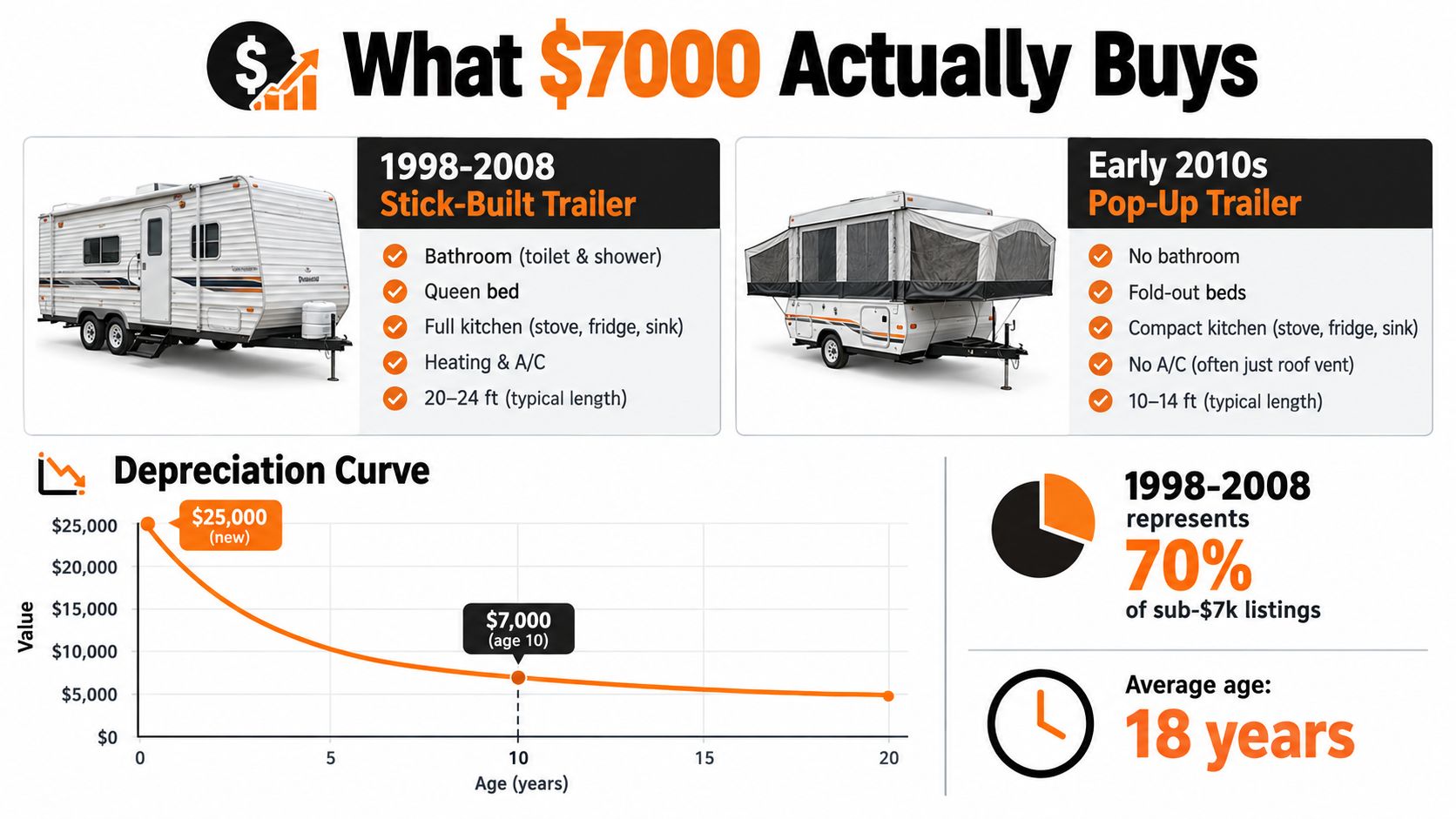
The biggest mistake buyers make is assuming $7000 buys “cheap version of a newer trailer.” It usually doesn't. It buys age.
One depreciation breakdown estimates travel trailers lose about 18% to 21% of their out-the-door price in the first year, then roughly 2 to 5 percentage points per year after that. That same breakdown puts a $35,000 trailer at about $21,700 by year 5 and about $7,700 by year 20, which explains why the under-$7000 market is mostly older inventory, worn inventory, or both, according to this RV depreciation method breakdown.
Expect old, basic, and a little tired
In plain English, used travel trailers under $7000 are usually not fresh trade-ins. They're often older stick-built trailers, compact bunk models, small single-axle units, or pop-ups and lightweights where age has already done most of the depreciation work.
Travel trailers also tend to hold value better than many motorized RVs because they don't have engines or drivetrains. Industry summaries commonly place travel trailer value retention at about 55% to 65% after five years, with some estimates around 58% to 65%, and the steepest depreciation usually happens in the first five years, based on this travel trailer depreciation summary. That's why a trailer under this budget is usually well past that early depreciation phase.
What the trailer usually includes
You can often expect some version of these basics:
- Sleeping space for a couple, and sometimes bunks or a convertible dinette
- A simple galley with sink, cooktop, and older fridge
- Heat from a propane furnace, if it still works properly
- A bathroom setup on some units, though not always a great one
- Manual systems instead of newer convenience features
What you usually should not expect is a flawless roof, modern solar prep, perfect upholstery, or a cold-blowing air conditioner without testing it yourself.
A cheap trailer should be judged by structure, leaks, and towing fit first. Everything else is secondary.
Where to Find Used Travel Trailers Under $7000
This market is smaller than most buyers think. On one major marketplace, there were only 16 travel trailers listed under $5,000 and 134 under $10,000 out of 4,878 used travel trailers total, based on current marketplace inventory data. That tells you something important. Good low-budget trailers are not sitting around waiting for you.
Start with the channels that move fastest
Private-party listings usually give you the best shot at finding a real bargain. That means KSL Classifieds and Facebook Marketplace first. In Utah, those are often where older family-owned trailers show up before they ever hit a lot.
Then check secondary marketplaces like OfferUp and Craigslist. They can produce a deal, but they also produce more nonsense. If a seller won't share clear photos, won't give you the VIN, or wants a deposit before you've seen the trailer, move on.
A few smaller dealers sometimes get low-priced trade-ins too. If you want one place to keep an eye on dealer inventory, browse used RVs for sale in Utah at Motor Sportsland. Just don't assume dealer inventory in this budget will be deep. It usually isn't.
For buyers comparing how different dealers handle older units, service disclosures, and inspection expectations, even outside Utah, this overview of RV dealer services in Texas gives useful context on what questions a dealership should answer before you commit.
Use a tighter search process
Your first message to a seller should be short and direct. Ask:
- Is the title in your name
- Any roof leaks or soft floor
- Do all appliances work on both shore power and propane if equipped
- Can you send the VIN and a photo of the weight sticker
- Are the tires roadworthy right now
That one message filters out a lot of bad listings fast.
Where used travel trailers under $7000 list in Utah
| Source | Typical Age | Negotiation Room | Avg. Days Listed |
|---|---|---|---|
| KSL Classifieds | Older, often private-owner units | Usually moderate | Often short in peak season |
| Facebook Marketplace | Mixed, heavily private-party | Usually moderate to high | Often short in peak season |
| OfferUp | Mixed, sometimes rougher condition | Varies | Unpredictable |
| Craigslist | Older inventory, more screening needed | Varies | Unpredictable |
| Small independent dealers | Trade-ins and as-is units | Usually limited | Varies |
| Auctions and estate sales | Older and unknown-condition units | Low once bidding starts | Event-based |
Rural Utah can also surprise you. We've seen cleaner older trailers come out of areas where retirees stored them carefully and used them lightly. It's worth widening your map.
Must-Check Inspection Points Before You Pay
At this budget, the inspection is not a formality. It's the whole deal.
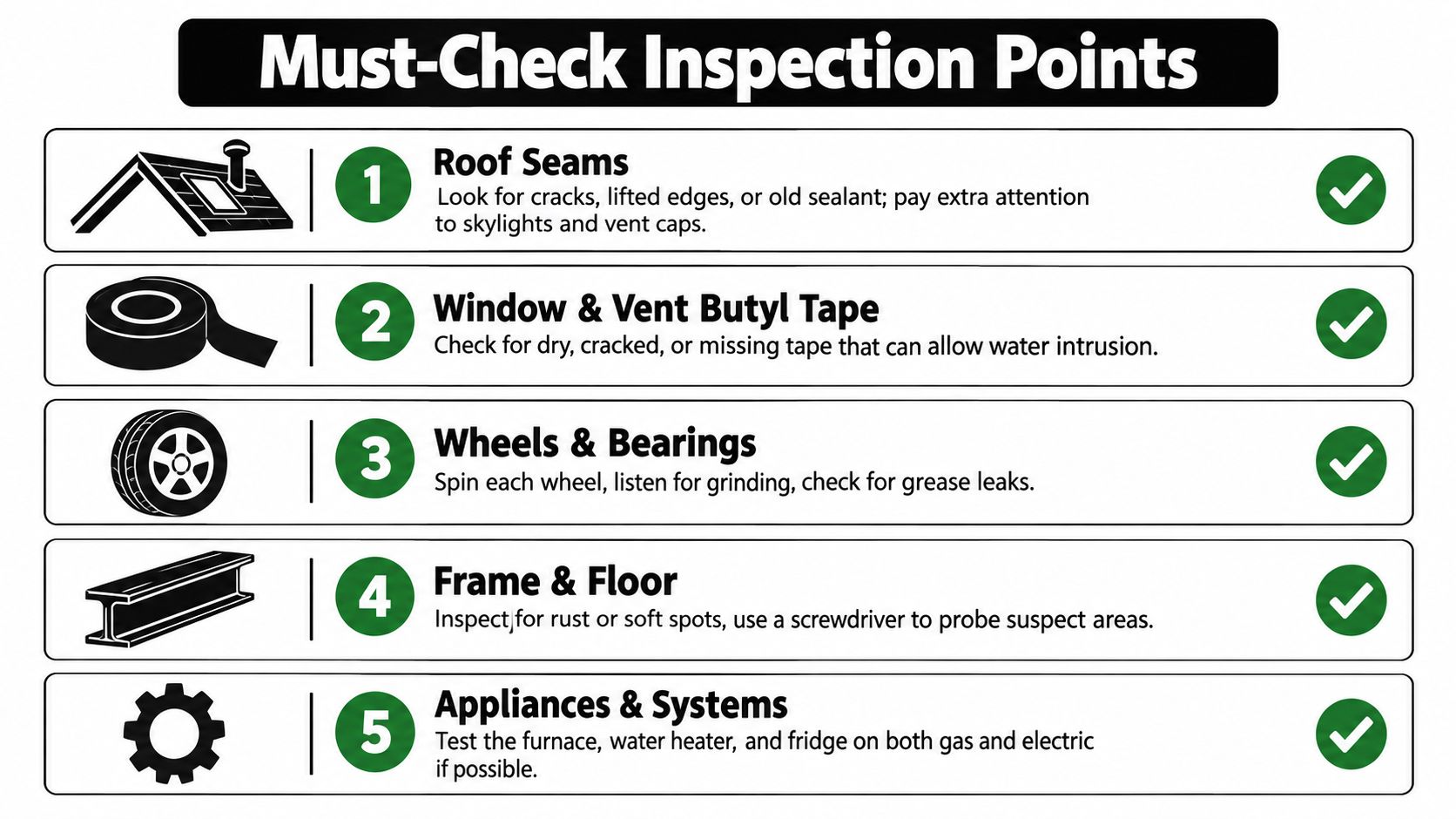
A thorough RV pre-purchase checklist should cover roof membranes, seams, skylights, slide tops, delamination, underbody condition, VIN and title match, recalls, service records, tires, brakes, electrical systems, and a road test, according to this field-tested RV inspection checklist. For a cheap trailer, that checklist matters even more because hidden damage is what turns “affordable” into regrettable.
Check the roof before anything else
In Utah, roof problems get worse fast. High UV exposure, dry summers, and winter freeze-thaw cycles punish old sealant.
Bring a ladder if the seller allows it. Look closely at:
- Roof seams where the membrane meets trim
- Skylights and vent covers for cracks and brittle sealant
- Front and rear wall transitions where leaks often start
- Any bubbling or staining inside that hints at long-term intrusion
Don't press soft flooring with your shoe and call it good. Use a screwdriver or similar tool to probe suspect spots gently around the bathroom, entry, and corners.
Then check everything that rolls, latches, and lights up
A lot of buyers get lazy. Don't.
- Tires: Look for sidewall cracking, uneven wear, and signs of age
- Bearings and hubs: Spin each wheel if possible and feel for roughness or play
- Coupler and jack: Make sure the latch closes cleanly and the tongue jack operates properly
- Brakes and lights: Confirm the trailer brake wiring and all lighting work
- Propane appliances: Test furnace, water heater, fridge, and stove when possible
- Electrical systems: Check both battery-powered and plug-in functions
For buyers who want a good framework for physical inspection habits in general, this step-by-step used car inspection is a solid reminder that the method matters as much as the item list.
This walkthrough is worth watching before you meet a seller:
If a seller refuses a real inspection, assume there's a reason.
Matching the Trailer to Your Tow Vehicle Safely
A cheap trailer that overloads your tow vehicle is not a cheap trailer. It's a mistake with brakes attached.
Use the working limit, not the bragging-number tow rating
Independent towing guidance notes that bumper-pull travel trailers usually put 10% to 15% tongue weight on the hitch, and that loaded trailers in the 3,000 to 5,000 lb range often fit mid-size SUVs or half-ton trucks, while 5,000 to 8,500 lb units generally need a half-ton to ¾-ton pickup with weight-distributing and sway control, according to this travel trailer towing guide.
The practical benchmark is simple. Compare the trailer's loaded weight against an 80% safety margin of your vehicle's tow rating. Then check that the tongue weight still fits inside your payload after passengers and cargo are added.
Tongue weight is not a detail
Several towing guides recommend tongue weight around 10% to 15% of loaded trailer weight, with 12% to 13% often treated as a practical target for travel trailers. Too little tongue weight can increase sway. Too much can overload the tow vehicle's payload, based on this tongue weight guide.
Tow vehicle vs. trailer weight match
| Tow Vehicle | Typical Max Tow | Safe Working (80%) | Trailer Class Match | Brake Requirement |
|---|---|---|---|---|
| Mid-size SUV | Varies by model and equipment | Use 80% of factory rating | Smaller, lighter trailers only | Verify trailer brake compatibility |
| Half-ton pickup | Varies widely by configuration | Use 80% of factory rating | Many older travel trailers fit well | Often needed as trailer size increases |
| Heavy SUV | Varies by model | Use 80% of factory rating | Some compact to mid-size trailers | Verify controller and wiring |
| ¾-ton pickup | Higher-capacity setups | Use 80% of factory rating | Larger or heavier used trailers | Commonly appropriate |
If you need a good primer on trailer sizing before you shop, read Motor Sportsland's guide on how to choose a travel trailer. Then bring the VIN sticker info from any trailer you're considering and compare real numbers, not guesses.
Realistic First-Year Ownership Costs in Utah
This is the part cheap-trailer articles usually skip. They focus on purchase price and act like the rest takes care of itself. It doesn't.
Independent RV ownership models estimate travel trailers can still cost about $8,000 to $15,000 annually once maintenance, insurance, storage, registration, and repairs are included, and routine upkeep alone is often budgeted at 3% to 5% of RV value per year, based on this RV ownership cost calculator discussion. On an older trailer, the first year is usually the most revealing because deferred maintenance shows up quickly.
The first-year expenses that usually hit first
Buyers in Utah often run into these categories right away:
- Maintenance catch-up such as roof sealing, battery replacement, bearing service, and appliance troubleshooting
- Insurance and registration which are manageable but still part of the budget
- Storage especially if HOA rules or winter weather keep the trailer out of your driveway
- Trip prep including hoses, leveling blocks, power adapters, and basic safety gear
First-year cost breakdown for a sub-$7000 trailer in Utah
| Cost Category | Low Estimate | High Estimate | Notes |
|---|---|---|---|
| Immediate repairs and maintenance | Varies | Varies | Often includes catch-up items after purchase |
| Insurance | Varies | Varies | Depends on coverage choice and unit details |
| Registration and title | Varies | Varies | Utah fees depend on trailer specifics |
| Storage | Varies | Varies | Covered storage generally costs more than uncovered |
| Camping gear and setup items | Varies | Varies | Hoses, cords, adapters, leveling items, and basics |
| Surprise repair reserve | Varies | Varies | Smart to hold back cash for the first season |
The number I'd focus on isn't the sale price. It's the amount of cash you still have after buying.
If you're comparing whether it makes sense to buy now or wait and increase budget, the Motor Sportsland RV loan calculator can help frame the difference between a cheap cash purchase and a slightly newer trailer financed responsibly. Sometimes waiting wins.
Negotiation, Financing, and When to Walk Away
The sub-$7000 trailer market is thin. That changes how you should negotiate.
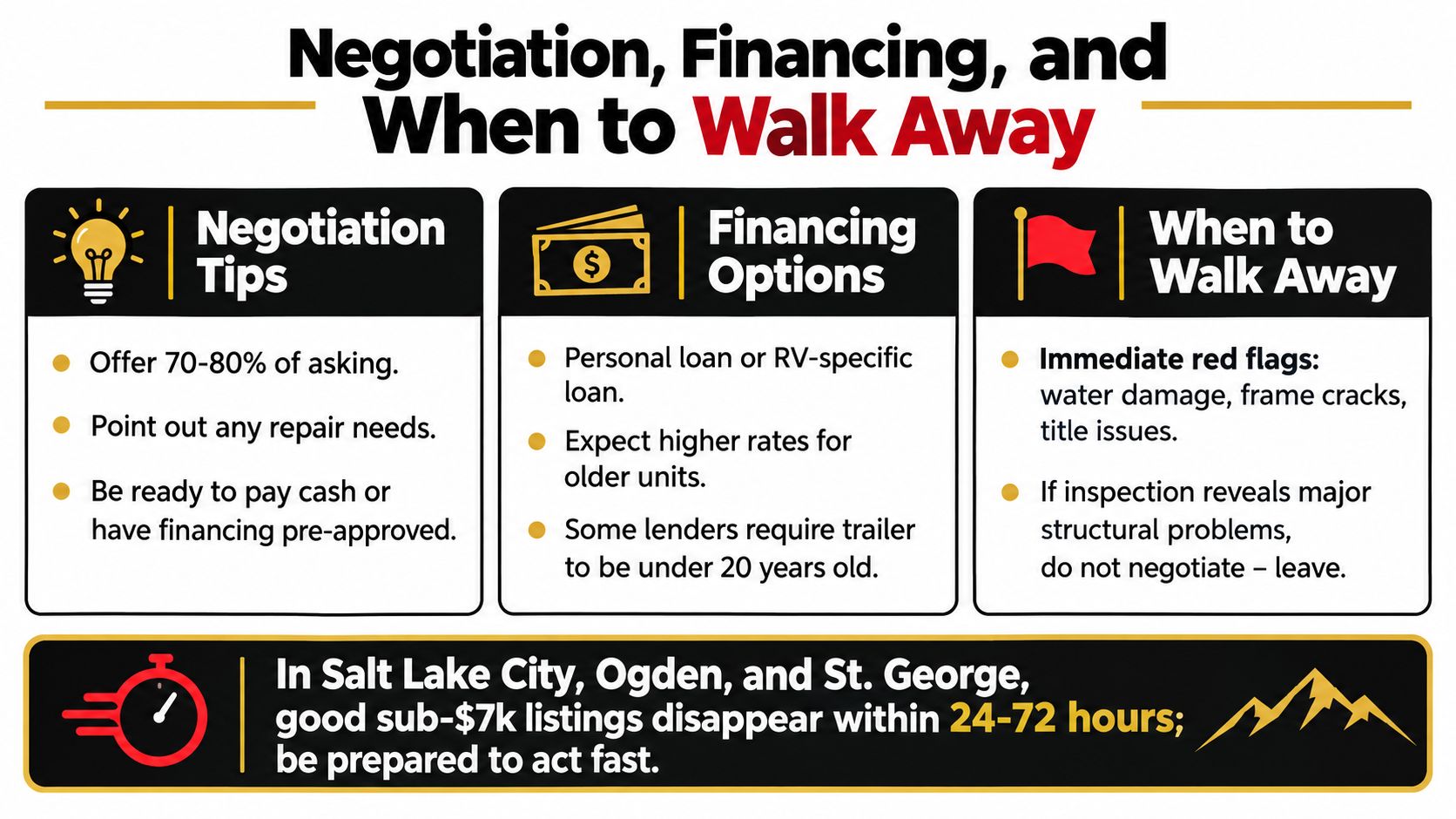
If the title is clean, the structure is dry, the floor is solid, and the trailer fits your tow vehicle, don't mess around for days trying to save a tiny amount. Cheap trailers with decent bones don't sit long because experienced buyers know what they're looking at.
Negotiate on flaws, not fantasy
The best negotiating points in this bracket are visible and verifiable:
- Aging tires
- Dead battery or weak battery
- Unsealed roof seams
- Appliances that don't fully test
- Missing service records
- Torn cushions, cracked vent covers, or broken latches
Ask for receipts. Ask if the propane tanks are current and filled. Ask whether bearings were serviced recently. Those questions do two things. They tell you about the trailer, and they tell you about the owner.
Buy from the seller who answers straight, not the seller who tells the prettiest story.
Financing needs to stay simple
At this price point, cash is usually easiest. Some buyers use a personal loan through a credit union. Some older trailers won't fit normal RV financing guidelines at all.
What I don't recommend is stretching to a high-interest loan on an aging trailer just because the monthly payment looks manageable. That's how a cheap RV turns into an expensive one.
Walk away fast when these show up
Do not negotiate around major structural or paperwork problems.
- Soft floors near the door or bath
- Active roof leaks
- Frame damage or obvious twist
- Missing title
- VIN issues or mismatched paperwork
- Seller refuses inspection
- Flood or major water intrusion signs
This market rewards decisiveness, but only after the trailer clears your must-have requirements.
Utah Title, Registration, and Towing Rules
Once you've found the right trailer, paperwork and legal towing details matter just as much as the deal itself. A surprising number of first-time buyers in Utah get careless here because they're focused on the purchase, not the transfer.
What to bring for title transfer
For a private-party purchase, bring the signed title, bill of sale if applicable, identification, and any supporting paperwork the DMV asks for. Make sure the VIN on the trailer matches the VIN on the title exactly. Don't gloss over one digit and assume it will sort itself out later.
If the trailer came from out of state, be ready for extra verification steps. Older trailers can have faded stickers, replacement tongues, or paperwork gaps. Fix that before money changes hands, not after.
Utah trailer compliance quick reference
| Rule | Requirement |
|---|---|
| Title transfer | Title and ownership paperwork must match the trailer VIN |
| Registration | Register through the Utah DMV with the required ownership documents |
| Trailer brakes | Trailers over the applicable weight threshold need brakes as required by Utah law |
| Safety chains | Required when towing |
| Lights | Running lights, brake lights, and turn signals must work |
| Tires | Roadworthy DOT-compliant tires are required |
| License | Standard Class C covers most typical non-commercial RV towing situations |
Towing compliance matters more in Utah than people think
Utah roads are not gentle on old trailers. Between canyon grades, crosswinds near the Great Salt Lake, summer heat, and long pulls south on I-15, little problems get exposed quickly.
That's why buyers should verify a few basics before the first trip:
- Brake function: If the trailer has electric brakes, test them with the controller
- Safety chains and breakaway setup: Don't assume they're usable because they're present
- Lighting harness: Old wiring often works intermittently
- Hitch ball size and coupler fit: Sloppy fit creates risk fast
- Tire condition: Old tires may hold air and still be unsafe
A Utah safety inspection typically isn't the gatekeeper for these trailers in the way some buyers expect, but a commercial inspection shop can still give you a useful roadworthiness check if you want another set of eyes.
The smart buying sequence
If you want the cleanest path, use this order:
- Set the total budget, not just the purchase number
- Confirm your tow vehicle limits before contacting sellers
- Choose your shopping channel between private-party, dealer, or auction
- Inspect without shortcuts
- Verify title and VIN
- Handle registration and towing setup before the first trip
That sequence saves people from a lot of avoidable headaches.
A good sub-$7000 trailer is rarely perfect. It's usually older, plain, and missing a few comforts. But if it's structurally sound, legally clean, and matched to your tow vehicle, it can still open the door to a lot of good Utah weekends.
If you want help sorting through older units without wasting weekends on obvious bad fits, our team can help you compare towability, condition, and realistic ownership costs before you buy. Browse current options or plan a visit through Motor Sportsland, and bring your tow vehicle details plus your inspection checklist so we can keep the conversation practical.
FAQ
What's the biggest mistake people make with used travel trailers under $7000?
They spend the full budget on the trailer and leave nothing for repairs, setup gear, registration, or storage.
Are used travel trailers under $7000 good for first-time buyers?
They can be, if you accept age, inspect carefully, and focus on structural condition over looks.
Should I buy from a private seller or a dealer?
Private sellers often have more negotiating room. Dealers may offer a more structured buying process. The better choice depends on the specific trailer, title status, and condition.
How do I know if my SUV or truck can tow the trailer safely?
Check the trailer's actual weight ratings, use an 80% working margin against your tow rating, and make sure tongue weight fits inside payload.
What should make me walk away immediately?
Soft floors, active leaks, frame problems, VIN or title mismatches, and any seller who refuses inspection.
Is a cheap trailer a good way to test RV life in Utah?
Yes, if you go in with realistic expectations. A modest, dry, safe trailer can be a smart trial run before spending more on a newer rig.
