
RV Air Conditioner Replacement Cost in 2026

A straightforward rooftop replacement commonly lands around $800 to $2,600 installed, with 13,500-BTU jobs often near the low end and 15,000-BTU, heat-pump, or basement jobs higher. You're probably pricing this because the air conditioner quit, started tripping the breaker, or can't keep up before a Utah summer trip you've already booked. The fastest way to overpay is to compare equipment prices alone and assume every shop is quoting the same roof work, wiring, and controls. A better approach is to split every estimate into what's unavoidable, what's optional, and whether your electrical system can run the unit you're buying. That's how our team at Motor Sportsland helps owners in Salt Lake City turn a vague RV air conditioner replacement cost into a number they can compare before the next Wasatch weekend.
Installed RV Air Conditioner Replacement Cost Breakdown
A rooftop air conditioner can run briefly, trip the breaker, then leave the trailer warming up at Jordanelle or Bear Lake. Before approving a replacement, separate the equipment and required installation work from upgrades that may not fit your travel needs.
A like-for-like rooftop swap commonly costs $800 to $2,600 installed, while changes to wiring, ducting, or the ceiling assembly can push the total higher.
2026 Installed Cost by RV Air Conditioner Setup
| Setup | Equipment | Installed total | Typical time |
|---|---|---|---|
| 13,500-BTU rooftop, cooling only | $600-$1,150 | $800-$2,600 | 2-4 hours |
| 15,000-BTU rooftop | $700-$1,100 | $1,600-$2,900 | 2-4 hours, longer if wiring changes |
| Heat-pump rooftop | $900-$2,200 | Often $2,500 or more (estimate) | Extra control and thermostat time |
| Basement air conditioner | $900-$2,200 | $2,200-$4,500 | Access, duct, and refrigerant-circuit work |
The price difference usually comes down to fit and access. Reusing a compatible roof opening and existing controls is simpler than changing wiring, ducting, or the ceiling assembly.
One Sample 13,500-BTU Quote Line by Line
The Micro-Air replacement cost guide estimates a 13,500-BTU unit at $600-$900 and a 15,000-BTU unit at approximately $700-$1,100. It lists installation labor at $140-$200 per hour for 2-4 hours, or $280-$720.
Then check the smaller lines. A replacement roof gasket or sealant may add $25-$100, disposal can cost up to $100, and electrical upgrades may run $100-$500 or more, according to the guide's component breakdown. Those items bring a typical installed total to about $800-$2,500 or higher.
Use this sample quote to distinguish required work from upgrades:
- Equipment: The replacement unit must match the roof opening and duct style.
- Labor: Removal, installation, wiring connections, and testing on shore power and generator power, if equipped.
- Roof seal: A new gasket and appropriate sealant help prevent leaks. Reusing a flattened gasket can put the roof at risk.
- Disposal: Confirm whether removing and disposing of the old unit is included.
- Optional soft start: This can help with a small generator, but it is not required for every RV.
- Optional heat strip or heat pump: Price these separately from basic cooling.
- Optional thermostat: Replace it only if the existing controls are incompatible with the new unit.
- Optional BTU upgrade: Approve a larger unit only after checking the RV's electrical capacity.
Practical rule: Ask each shop to list the unit, labor, gasket, disposal, and electrical work separately. Without those lines, it is hard to compare the actual installed cost.
Who Does the Work Changes the Total
The RV Repair Lab cost data puts a typical 13,500-BTU rooftop replacement at roughly $1,400-$2,600 and a 15,000-BTU replacement at about $1,600-$2,900. Basement systems can reach $2,200-$4,500. The same source lists mobile technicians at approximately $125-$200 per hour plus a $95-$250 service call, independent shops at $135-$185 per hour, and dealerships at $150-$225 per hour.
For comparable direct-replacement jobs, it gives installed ranges of $1,050-$1,900 for mobile service, $1,200-$2,100 for independent shops, and $1,450-$2,850 for franchised dealerships. Mobile service can suit an RV that cannot be moved. A shop may be better equipped to address roof or duct problems discovered during the work.
Check whether the written quote includes freight for a special-order unit, a second rooftop air conditioner, or a ceiling rebuild after water damage. Those items can change the total.
A Worksheet for Two Written Quotes
Copy these lines and fill in a column for each shop:
- Unit make, model, and BTU: Quote A ___ / Quote B ___
- Labor hours and hourly rate: Quote A ___ / Quote B ___
- Roof gasket and sealant: Quote A ___ / Quote B ___
- Disposal and service call: Quote A ___ / Quote B ___
- Electrical work, if any: Quote A ___ / Quote B ___
- Optional add-ons, priced separately: Quote A ___ / Quote B ___
Compare the same items in both quotes. The lowest equipment price may not be the lowest cost for a sealed, installed, tested replacement.
Repair the Old Unit or Replace It
A failed capacitor on a sound air conditioner usually calls for a repair, not a replacement. The decision changes when the compressor fails, refrigerant leaks keep returning, or another major repair is due on an aging unit.
The Mobile RV Service lifespan guide says properly maintained units commonly last approximately 8-15 years. Filter and coil cleaning, roof-gasket condition, vibration, weather exposure, electrical stability, and frequency of use all affect service life.
That guide estimates capacitor or contactor repairs at $50-$150 for parts and labor, and fan-motor replacement at $150-$300. Compare those repair figures with the equipment ranges in the replacement breakdown: $600-$1,150 for a 13,500-BTU unit and $700-$1,100 for a 15,000-BTU unit, before installation. The final bill can rise if the roof opening, wiring, or ducting needs changes.
Repair Cost Versus a New Rooftop Unit
| Job | Typical cost | When it makes sense |
|---|---|---|
| Capacitor or contactor | $50-$150 | One failed electrical part, compressor still good |
| Fan motor | $150-$300 | Airflow failure without refrigerant loss |
| New 13,500-BTU unit, before labor | $600-$1,150 | Compressor failure or repeated repairs |
| Straightforward install labor | $280-$720 | Existing opening, no new circuit |
| New 15,000-BTU unit, before labor | $700-$1,100 | Confirmed power and roof fit for the upgrade |
Repair a failed capacitor, fan motor, thermostat, or control board when the rest of the system is sound. If airflow is weak, check the filter and return before assuming the compressor has failed. These steps can help you find fixes for weak AC airflow.
Replacement makes more sense when the compressor fails, refrigerant leaks recur, water reaches the ceiling, controls are obsolete, or another repair is due on a unit with a history of costly problems. For help sorting appliance faults before authorizing major work, see our Utah owner's guide to RV appliance repair.
The Refrigerant Question in Plain Terms
Owners may wonder whether refrigerant rules prevent repairs to an existing unit. The EPA hydrofluorocarbon phasedown FAQ explains that the applicable transition rules prohibit installing certain new R-410A systems manufactured domestically or imported after January 1, 2025, while some previously manufactured or imported equipment may remain eligible during transition periods.
Those rules do not automatically prevent service on an installed RV air conditioner that needs a capacitor or fan motor. Before buying a replacement, ask the shop to document the model, refrigerant, manufacturing date, and installation eligibility.
Which Unit Fits the Roof and the Trips
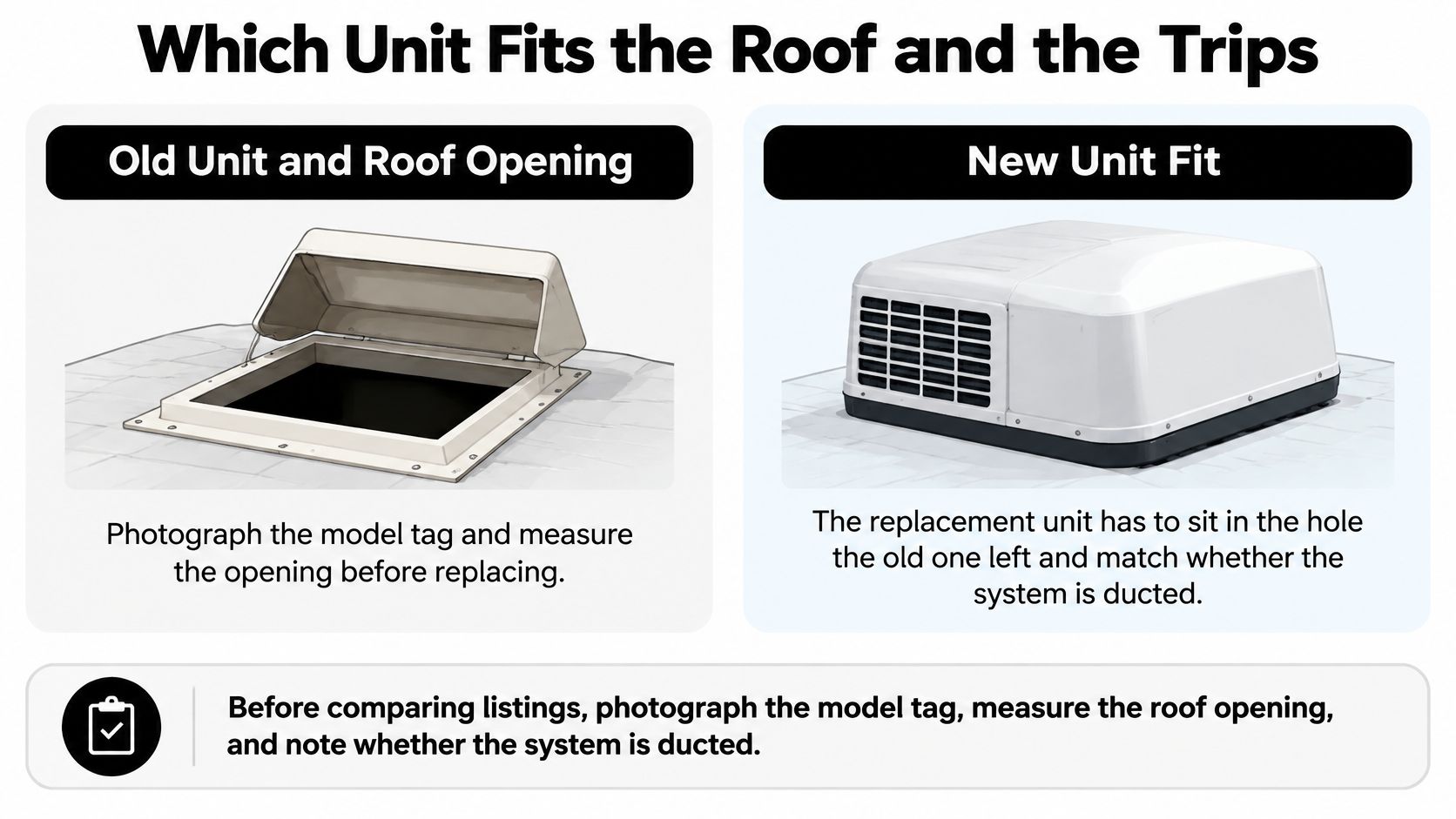
A discounted rooftop unit can become the expensive choice if its base, roof opening, or controls do not match. Start with the model tag, measure the opening, and check whether the RV has ducted air or a ceiling assembly that discharges air directly into the cabin. A mismatch can add roof work, duct changes, or wiring to the installation.
The illustration below shows how to measure the roof opening before ordering.
The Camping World guide to choosing an RV air conditioner puts a standard roof-mounted 13,500- or 15,000-BTU unit at roughly $900-$2,200 before professional labor. The installed price depends on roof configuration and whether the replacement matches the existing footprint. A different base, altered opening, changed ducting, heat pump, or soft-start device can add work beyond a straightforward swap.
Unit Type by Roof Fit and Trip Style
| Unit type | Best fit | Installed cost | Watch for |
|---|---|---|---|
| Cooling-only rooftop, 13,500 BTU | Older travel trailer on campground power | $800-$2,600 installed | Footprint and roof opening match |
| Rooftop, 15,000 BTU | Hot summers with confirmed power and roof fit | $1,600-$2,900 installed | Startup amps and breaker size |
| Heat-pump rooftop | Frequent shoulder-season travel on shore power | Often $2,500 or more | Thermostat and control compatibility |
| Low-profile rooftop | Mountain-road height clearance | $1,600-$2,900 installed | Must match the existing curb |
| Basement system | Rigs with ducted access below the floor | $2,200-$4,500 | Access, ducts, and refrigerant-circuit work |
For an older travel trailer used in hot Utah summers, cooling-only is the simpler option when the roof and power system suit it. A heat pump adds shoulder-season heat, but costs more and must work with the RV's thermostat and controls. A low-profile unit can help where height clearance matters, provided it fits the existing curb. A basement system requires different access and ductwork, so it is not a direct rooftop replacement.
Before approving a larger unit or heat pump, check the roof fit and electrical requirements against the RV's existing setup. The Utah guide to choosing an optimal RV AC unit can help frame that comparison. The electric RV water heater maintenance tips also discuss an appliance that may share the RV's electrical supply.
Measure twice, order once. A clear photo of the model tag helps prevent a wrong-unit purchase.
Power Limits That Change the Price
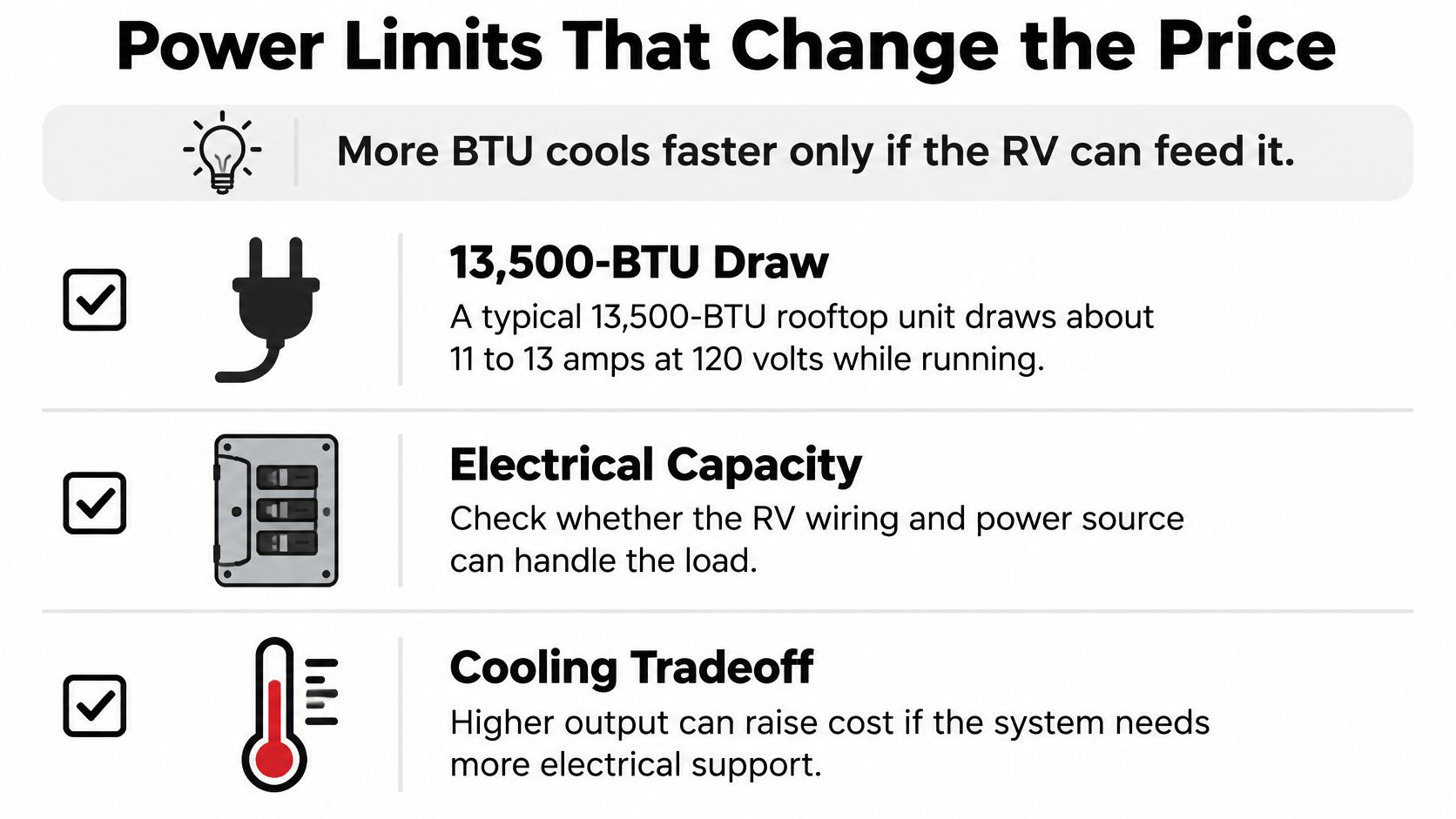
A replacement can fit the roof and still exceed the RV's available power. A typical 13,500-BTU rooftop air conditioner draws approximately 11–13 amperes at 120 volts while running, according to RV AC sizing calculator guidance. A 15,000-BTU upgrade may cool faster, but its startup and running demand can be a problem on a small generator or a heavily loaded 30-amp shore-power system.
Other appliances share that supply. Run a microwave, an electric water-heater element, or a hair dryer while the air conditioner is working hard, and a 30-amp connection can reach its limit.
Use this checklist before approving a higher-capacity or heat-pump unit:
What a Soft Start Does and Doesn't Do
A soft-start device commonly costs around $200–$300, according to the same sizing guidance. It reduces compressor-starting demand, which can help a generator start the air conditioner and limit nuisance breaker trips. It does not increase the power available from a pedestal or make undersized wiring safe.
If you are weighing an electrical service upgrade, review this guide to RV 50-amp service to understand the difference between the RV's power capacity and the supply available at the campsite.
The Go or No-Go Check
Before approving a 15,000-BTU, heat-pump, or premium low-profile replacement, ask the shop to check:
- Nameplate amps and startup specifications: Confirm the proposed unit's requirements.
- Breaker and wire size: Make sure they match those requirements.
- Generator output: Check whether it can support the air conditioner alongside other loads.
- Thermostat and control compatibility: Confirm the proposed unit works with the existing controls.
- Roof structure and curb footprint: Verify the unit fits and the roof can support it.
Ask any shop to complete these checks before finalizing the estimate, so wiring or compatibility work does not change the price after the old unit is removed. If the available power falls short, compare the cost of a correctly sized replacement with the cost of planned electrical work.
DIY Work Versus a Shop Install
A rooftop air-conditioner swap can look like a simple bolt-on job, until the old unit comes off and the roof opening, wiring, or duct connection doesn't match. Owner prep can speed up a quote; lifting and sealing the replacement is a different risk.
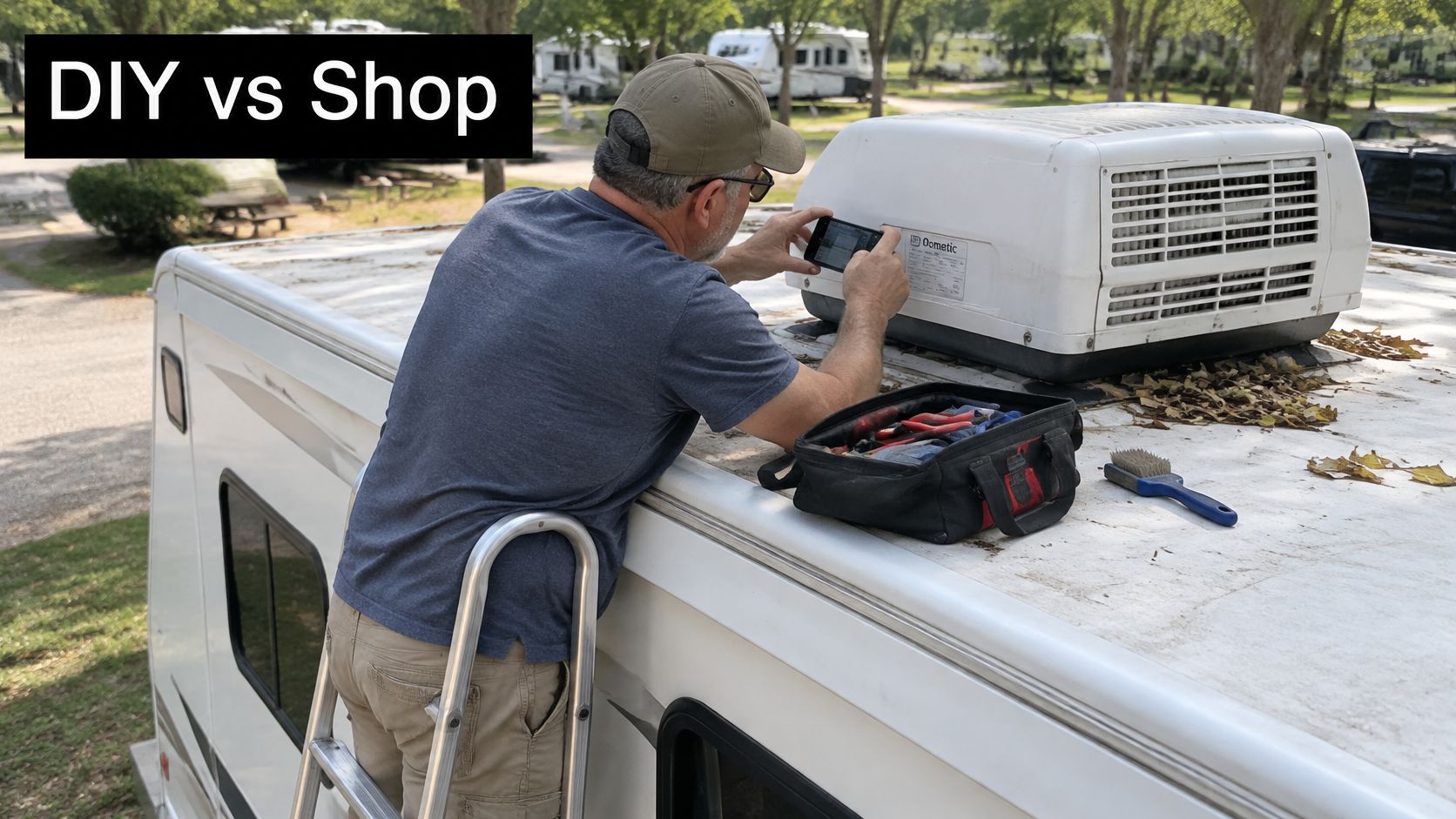
Photograph the model tag, clean or replace the filter, and clear leaves and debris around the unit. If you can inspect the rooftop gasket safely, note its condition. Those details help identify the equipment and distinguish a straightforward replacement from a job that may need additional parts or labor.
A new unit is heavy and must be sealed correctly. A poor seal can let water into the ceiling, while a wiring or roof-opening change can turn a low-priced unit into a costly installation. Leave lifting, circuit work, roof cutting, and refrigerant handling to qualified service personnel.
Refrigerant Rules
For refrigerant work, approved equipment must extract and recover refrigerant, and recycling equipment must be certified by the EPA administrator or an approved independent testing organization. Have a qualified technician handle that work and confirm the applicable requirements before service.
A rooftop-unit replacement and a dash air-conditioner repair are different jobs. Ask the shop to identify which system is being serviced and whether the quote includes refrigerant work.
The video below shows what a technician checks before recommending replacement.
Mobile service can suit an RV that cannot be towed safely. A shop may be the better choice when the job needs a lift, indoor work space, or parts on hand. Motor Sportsland's RV service department provides maintenance checks, repairs, installations, plumbing work, and electrical work. It serves RV owners across Salt Lake City, Millcreek, Spanish Fork, and throughout Utah, and Motor Sportsland sells RV parts.
"Colton listened to our RV issues and immediately fit us into the repair schedule, which was important as we were on a road trip.", Rick
For a replacement quote, clarify whether the work is a direct unit swap or includes wiring, roof, or duct changes. That distinction helps explain the difference between the unit price and the installed cost.
Book a Quote You Can Compare
Gather the details a shop needs to price the job before booking. Include the RV's year, brand, model, existing unit's BTU rating, and whether it is cooling-only or a heat pump. Note your shore-power rating and generator size, too.
Ask for a written estimate with separate prices for the unit, labor, roof gasket, disposal, and any electrical work or soft-start upgrade. Confirm the unit's manufacturing date and roof footprint before paying for equipment. These details help expose a low unit price that could turn into a costly installation if the wiring or ducting needs changes.
Book before peak weekends, when summer service schedules fill. Motor Sportsland's service team confirms appointments after you describe the RV, choose repair, installation, or maintenance, and select a time. Submit your request early rather than waiting for the rush; Mercateer for small HVAC teams is an unrelated tool for HVAC businesses, not a way to book RV service.
If the RV itself is due for replacement, compare the cost of a newer trailer with the cost of repairing your current one. Request a quote while there is still time to schedule the work before your trip.
Final Word on Replacement Cost
The equipment price is only part of an RV air conditioner replacement quote. Roof fit and electrical capacity can add work after the old unit comes off, so compare the full installed cost before choosing a replacement.
Motor Sportsland's service department serves RV owners across Salt Lake City, Millcreek, Spanish Fork, and throughout Utah. Bring a photo of the model tag, your roof-opening measurement, and your shore-power details to discuss whether repair or replacement makes sense. To book service, describe your RV, select repair, installation, or maintenance, choose a time, and the service team will confirm the appointment.
Frequently Asked Questions About RV Air Conditioner Replacement Cost
Can I Replace a Rooftop RV Air Conditioner Myself
Cleaning filters, photographing the model tag, and checking the gasket are safe prep you can do at home. Refrigerant handling, new circuits, and roof cutting belong with a certified technician, and a bad seal can cost more in water damage than the labor you saved.
How Much Does a 13,500-BTU Replacement Cost Installed
Plan on roughly $800 to $2,600 installed for a straightforward rooftop job. The final number depends on the roof opening, ducting, provider labor rate, and whether any electrical work is needed.
Will a 15,000-BTU Unit Trip My Breaker
It can, because a larger unit may raise startup and running demand on a loaded 30-amp system or small generator. Confirm nameplate amps, breaker and wire size, and generator output before you buy, and consider a soft start as a helper, not a cure.
Is a Heat Pump Worth the Extra Cost
It pays off for frequent shoulder-season travel on reliable campground power, where electric heat saves propane and furnace wear. It's harder to justify for a rig that mostly boondocks on a small generator.
How Long Does a Straight Swap Take
With an existing roof opening and matching parts, a straightforward replacement often takes about two to four hours. Duct changes, new controls, or circuit upgrades add time and should appear as separate lines on your quote.
If your air conditioner is tripping breakers or losing the fight against Utah heat, our service team can inspect the unit, confirm roof fit and power capacity, and give you a line-item quote for repair or replacement. Visit Motor Sportsland to schedule service or browse RVs with cooling systems ready for summer. Call or stop by before your next trip and we'll help you travel cool with confidence.
