
Travel Trailer Trade in Value: A Utah Owner’s Guide

Your travel trailer is sitting in the driveway, and you're ready for something different. Maybe the kids have outgrown the sleeping arrangement, you want a lighter trailer for trips into the Wasatch Mountains, or you're tired of squeezing riding gear around the dinette. You've checked online listings, found trailers that look like yours, and started wondering why a dealer's offer might be lower.
That's where owners can make an expensive mistake: treating travel trailer trade in value as a percentage of the original purchase price. Depreciation matters, but it doesn't settle the negotiation. The dealer also has to decide who'll buy your trailer next, what needs attention before that happens, and how long the trailer might sit.
Our advice is straightforward: arrive with evidence, not just an asking price. Know your exact floorplan, document its condition, and compare the whole replacement transaction rather than the trade allowance alone. You don't need to become an appraiser. You need enough preparation to recognize a defensible offer, challenge an unclear deduction, and decide whether trading or selling privately fits your situation.
The Question Behind Every Trade-In Quote
You're weighing a newer trailer against another season with the one you own. Selling privately looks attractive because the listings are higher. Trading looks easier because you don't want strangers inspecting your camper after work or a replacement purchase hanging on an uncertain sale.
Both reactions are reasonable. Neither tells you which route leaves you better off.
The useful question isn't, "What's my trailer worth?" It's "What can I realistically receive, through which selling method, with how much work and risk?" As Camping World's explanation of RV values makes clear, an online estimate is a starting range, while a dealer's offer also reflects condition, demand, and the work required before resale.
Start with the next owner
Think about the family who might buy your trailer. Can their tow vehicle handle it? Does the bunk arrangement work without rebuilding the living area every evening? Will they see a straightforward camping setup or a project?
We recommend organizing the discussion around these inputs:
- Market evidence: What comparable trailers support today, rather than what you paid.
- Condition: What an inspection can confirm, not just how clean the exterior looks.
- Buyer fit: Whether the layout and equipment match likely local buyers.
- Timing: Whether the dealer needs that type of trailer now.
There's also a practical question about your own travel plans. If you sell before choosing a replacement, decide how you'll handle trips already on the calendar. For a separate lodging search, the MyPerfectStay guide to Midway Rental is a resource to review, not an RV valuation reference.
Negotiating rule: Ask what supports the offer before arguing that the offer should be higher.
That question gets you closer to something useful: a condition finding, a comparable trailer, or an inventory concern you can discuss.
How Dealers Actually Calculate a Trade-In Number
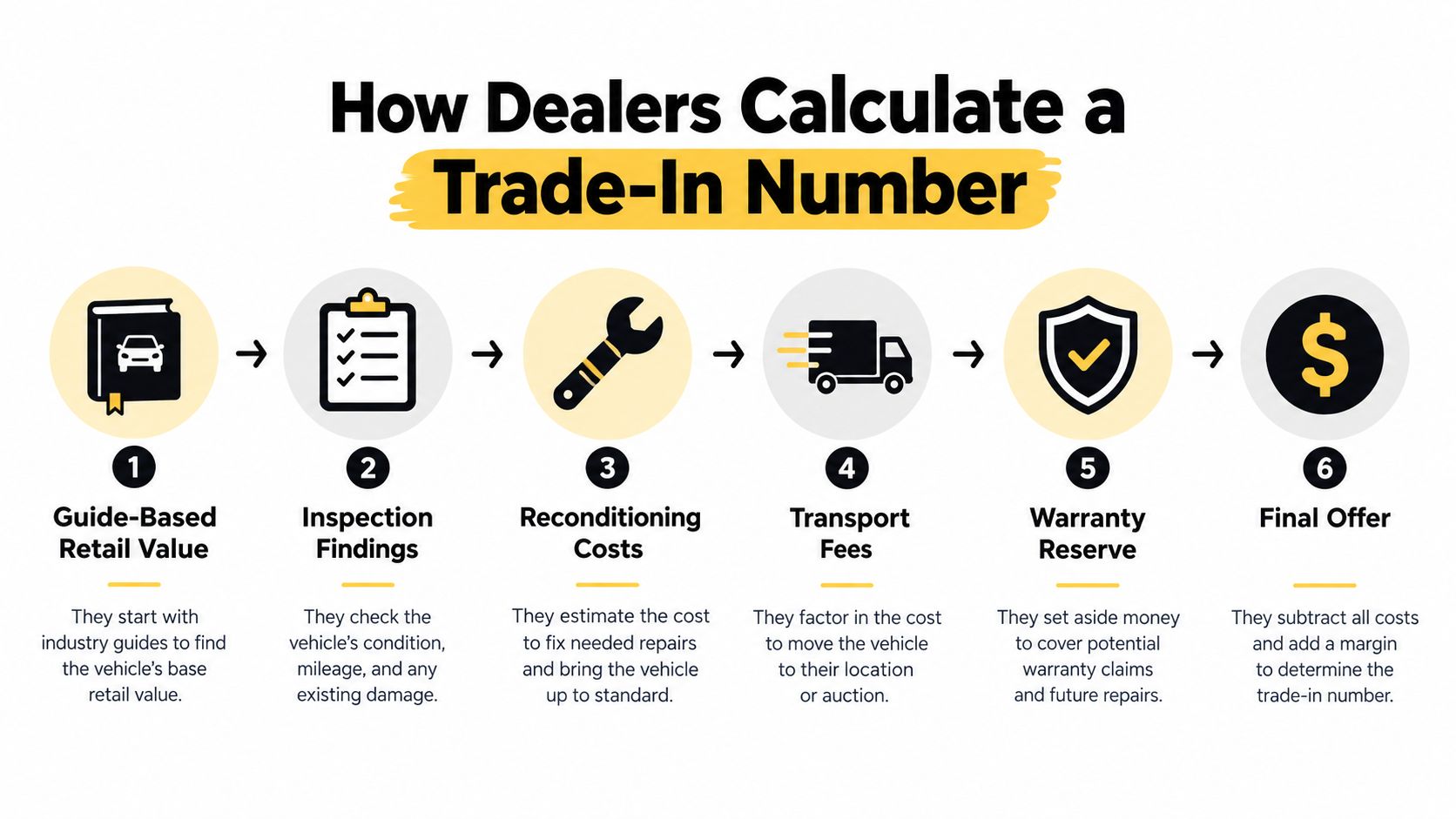
A guidebook doesn't write the check. A dealer uses a valuation baseline, considers likely resale proceeds, and works backward to an acquisition figure.
The practical calculation is:
Expected resale proceeds minus preparation, ownership, selling costs, and required margin equals a potential trade offer.
Published guidance commonly places dealer trade-in or wholesale value approximately 10–20% below low-retail value, but seasonal demand, difficult-to-sell floorplans, major reconditioning, and water damage can widen that adjustment substantially, according to Lake's explanation of RV guide values. Don't treat that range as an entitlement or subtract it mechanically from an optimistic listing.
Separate repairs from business costs
Some adjustments concern your trailer directly. Others concern what happens after the dealer owns it.
| Adjustment | What you should ask |
|---|---|
| Inspection and reconditioning | Which defects were found, and what work is anticipated? |
| Transportation | Does this trailer need to move before resale? |
| Warranty exposure | What potential post-sale responsibility is being allowed for? |
| Carrying and financing costs | How does expected resale time affect the offer? |
| Selling costs and margin | Is the acquisition figure consistent with the expected selling price? |
You can influence the condition evidence. You can't reasonably expect a dealer to operate without selling expenses or margin.
Use our used RV inspection checklist to prepare questions about the physical appraisal. If the offer includes an appliance deduction, ask whether the appliance failed testing or couldn't be tested. Those are different situations.
A lower offer isn't automatically unfair. An unexplained offer isn't automatically sound, either. Ask for a clear distinction between observed defects, uncertain condition, and commercial costs. Don't add every possible deduction yourself, because a dealer's acquisition estimate may already account for several of them.
Estimating Your Trailer's Value Before You Walk In
Build a valuation file you can hand across the desk. A defensible travel trailer trade in value starts with accurate identification and useful comparisons, not the highest price you can find.
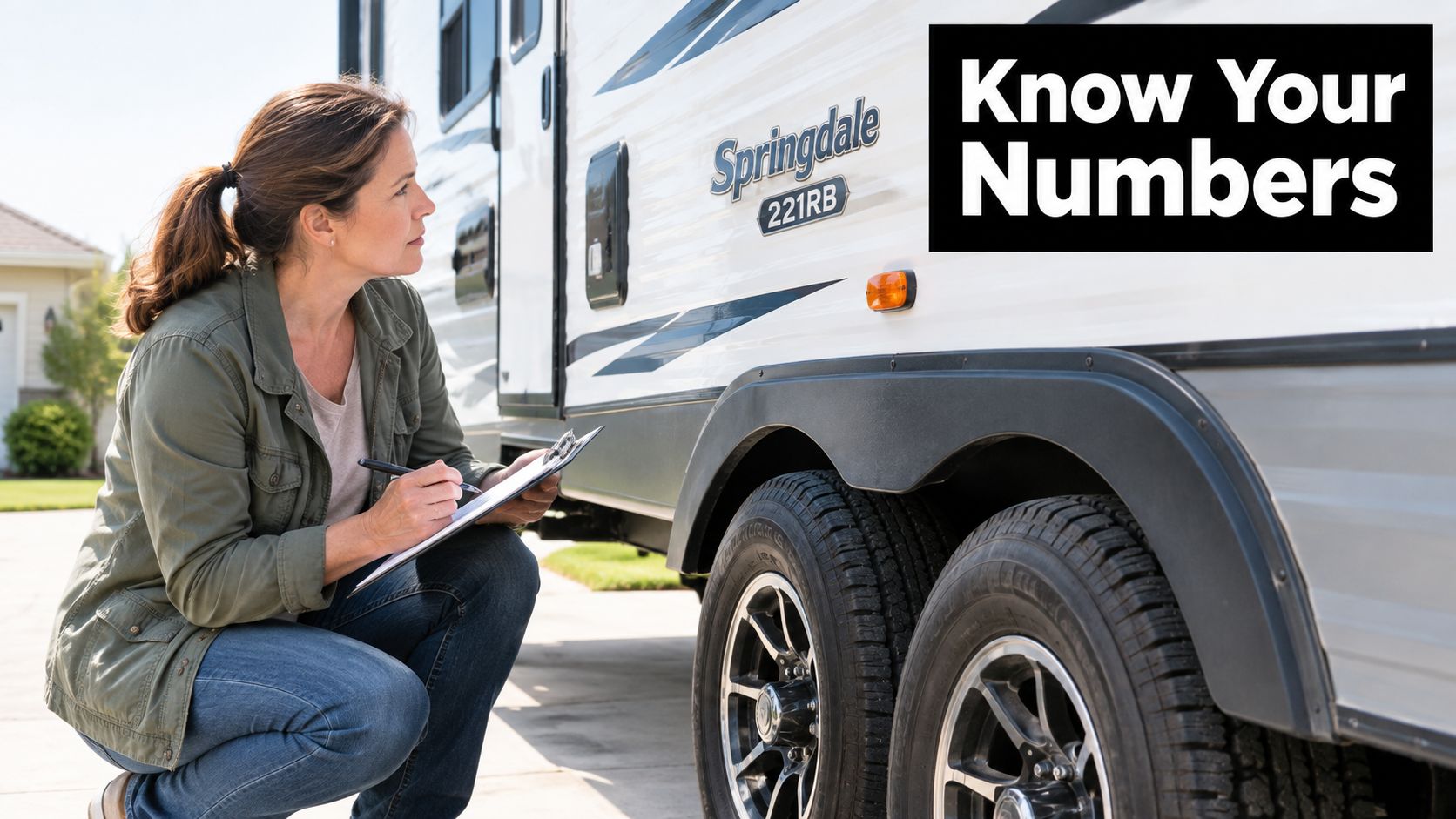
Build your estimate from the trailer outward
- Identify the exact unit. Record the year, manufacturer, model, floorplan, and factory equipment. Photograph the identification and weight labels rather than relying on your original advertisement.
- Save a guide baseline. Keep the condition category, selected options, and valuation date with the result. A number without its inputs is difficult to defend.
- Gather regional comparisons. Favor matching layouts, lengths, slide configurations, weights, and major equipment. Save the listings so you can explain why each belongs in your comparison.
- Grade condition conservatively. Check the roof, seals, floors, slides, tires, brakes, batteries, awning, and appliances. Write “not tested” when you haven't verified operation.
- Separate retail from acquisition value. Keep distinct estimates for a private sale and a dealer trade rather than labeling every figure “market value.”
True RVs' valuation guidance supports matching exact specifications, grading condition carefully, and keeping retail asking prices separate from dealer acquisition values.
Use a worksheet, not invented precision
Suppose you own a family bunkhouse near Salt Lake City. A similar-looking trailer with a different bunk arrangement, greater weight, or additional slide isn't automatically a useful comparable. Cross it off if those differences change who can tow it or how a family would use it.
Record your working calculation this way:
Supported retail estimate − documented preparation needs − dealer acquisition allowance = preliminary trade range.
Leave the commercial allowance open for discussion rather than inventing a dollar amount. For perspective from a different vehicle category, Sunmax Motors on used car pricing is a separate resource, not a substitute for trailer-specific comparisons.
Bring the worksheet even if your estimate and the appraisal disagree. It gives you something concrete to reconcile.
Trade-In Versus Selling Privately in Utah
Choose the selling method by net outcome, not the biggest advertised number. A private sale can make sense when you have time, secure storage, and the patience to manage inquiries. A trade can make more sense when coordinating the sale and replacement matters more than pursuing the highest possible gross proceeds.
Neither path deserves an automatic recommendation. Start by deciding which responsibilities you're willing to keep.
Trade-In vs Private Sale Trade-Offs
| Criterion | Dealer Trade-In | Private-Party Sale |
|---|---|---|
| Proceeds | Evaluate the offer within the complete purchase transaction | Evaluate the negotiated price after your selling expenses |
| Timing | Ask whether the offer and replacement delivery can be coordinated | Allow for inquiries, inspections, negotiation, and buyer readiness |
| Preparation | Discuss which work the dealer expects to handle | Decide what to repair, disclose, or leave for negotiation |
| Paperwork | Request an explanation of title and payoff handling | Arrange a secure payment and title-transfer process |
| Showings | Coordinate an appraisal visit | Manage appointments and access to the trailer |
| Existing loan | Confirm how the payoff appears in the transaction | Plan how the lien will be resolved before transfer |
| Tax treatment | Request the applicable Utah calculation in writing | Compare the replacement purchase using its actual tax calculation |
Compare complete transactions
Don't assume every dollar of trade allowance becomes a down payment. Ask to see the loan payoff separately so you can distinguish gross allowance from usable equity. If there's a shortfall, require a clear explanation of how it affects the replacement transaction before discussing monthly payments.
Utah tax treatment also belongs on the written comparison. Don't borrow an example from another state or confuse trade allowance with equity. Have the transaction's applicable trade-in treatment confirmed before counting tax savings as a benefit.
For a private sale, set boundaries around showings, payment verification, and possession. Don't release the trailer just because a buyer presents a convincing payment screenshot. If you consider consignment, request the commission, preparation obligations, insurance responsibilities, and cancellation terms before comparing it with an outright trade.
Our guide to selling a travel trailer in Utah can help you prepare that alternative.
My recommendation: pursue a private sale when you want to manage it. Don't choose it solely because an unsold listing makes the potential proceeds look effortless.
Upgrades and Maintenance That Move an Offer
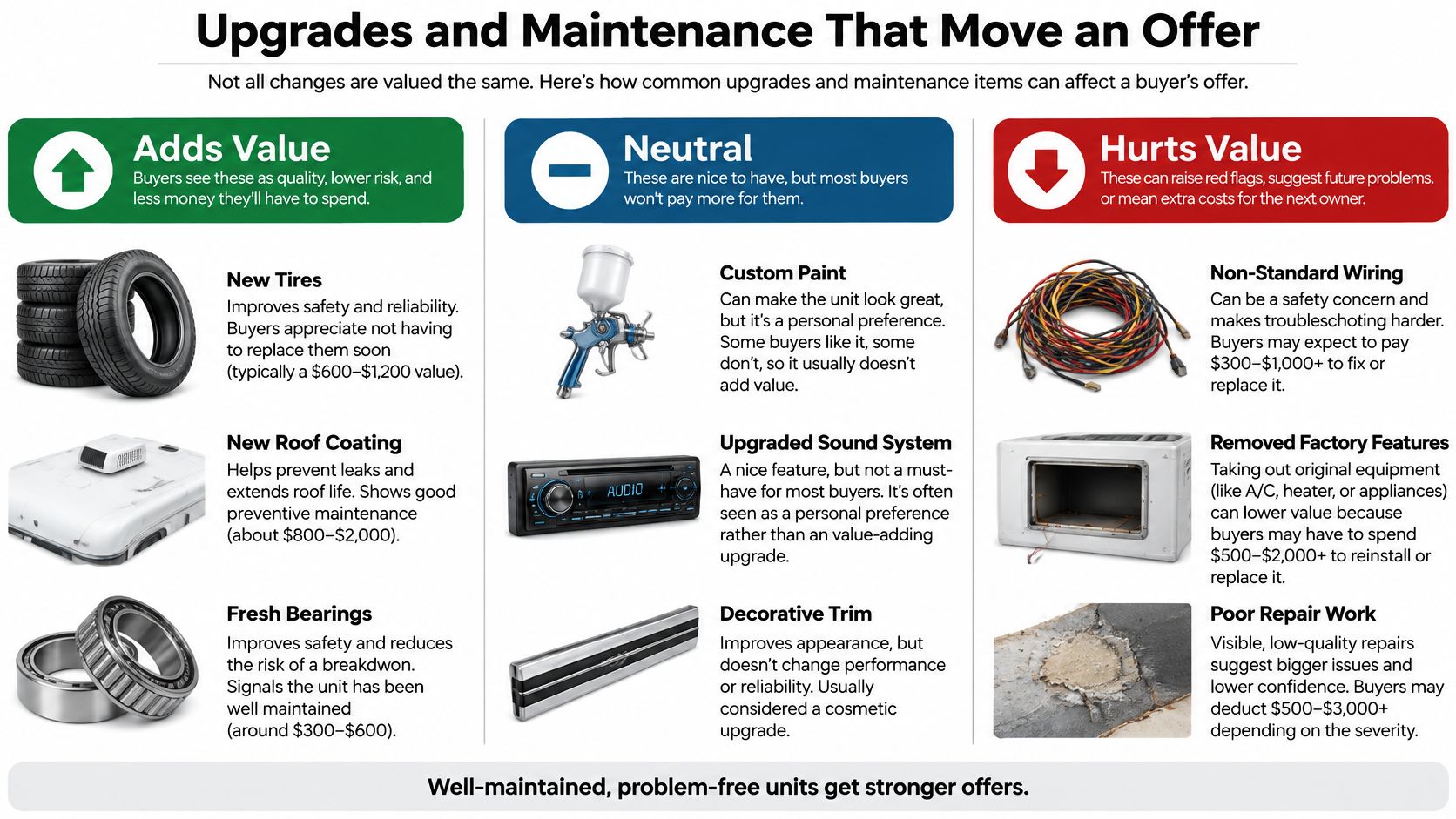
Don't buy accessories to impress an appraiser. Resolve uncertainty first. A documented, functional trailer gives the next owner a clearer proposition than an elaborate installation with missing instructions and questionable wiring.
Solar systems, lithium batteries, suspension upgrades, generators, ramps, and toy-hauler cargo features may appeal to particular buyers without recovering their installed cost. Maintenance records, leak prevention, working appliances, clean interiors, and correct title documentation can reduce dealer risk across segments, as described in Black Book's recreational vehicle market guidance.
Spend to preserve condition
Start with work that addresses a demonstrated need. Don't replace serviceable components merely to create a larger receipt folder.
- Water protection: Document inspection findings and any completed seal or roof repairs. Our travel trailer roof repair guide can help you understand the work before authorizing it.
- Functional systems: Have malfunctioning appliances, slides, plumbing, or electrical equipment evaluated. Ask for a diagnosis before committing to a repair intended only for resale.
- Road-ready components: Provide records for tire, brake, battery, and related service when available.
- Presentation: Empty storage compartments, remove personal belongings, and clean the interior so an appraiser can inspect it properly.
Treat personalization as personal spending
Our recommendation is to leave major decorative changes alone before trading. Fresh cabinet paint or custom furniture might suit you perfectly, but don't budget on the next buyer paying you back.
For installed equipment, organize the model information, installation invoice, operating instructions, and any relevant repair history. Let the appraiser evaluate the actual system rather than a vague description such as “upgraded power package.”
Spend because a repair is necessary or an upgrade improves your camping. Don't spend because you assume the receipt will be added to the offer.
Before authorizing substantial pre-trade work, ask for an as-is appraisal and discuss the likely effect of completing it. Maintenance preserves usability, but a repair bill isn't a guaranteed return on investment.
Utah Market Conditions That Change the Number
A trailer doesn't need to develop a defect for its offer to change. Dealers can change their bids because their inventory, buyer inquiries, and expected resale timing have changed.
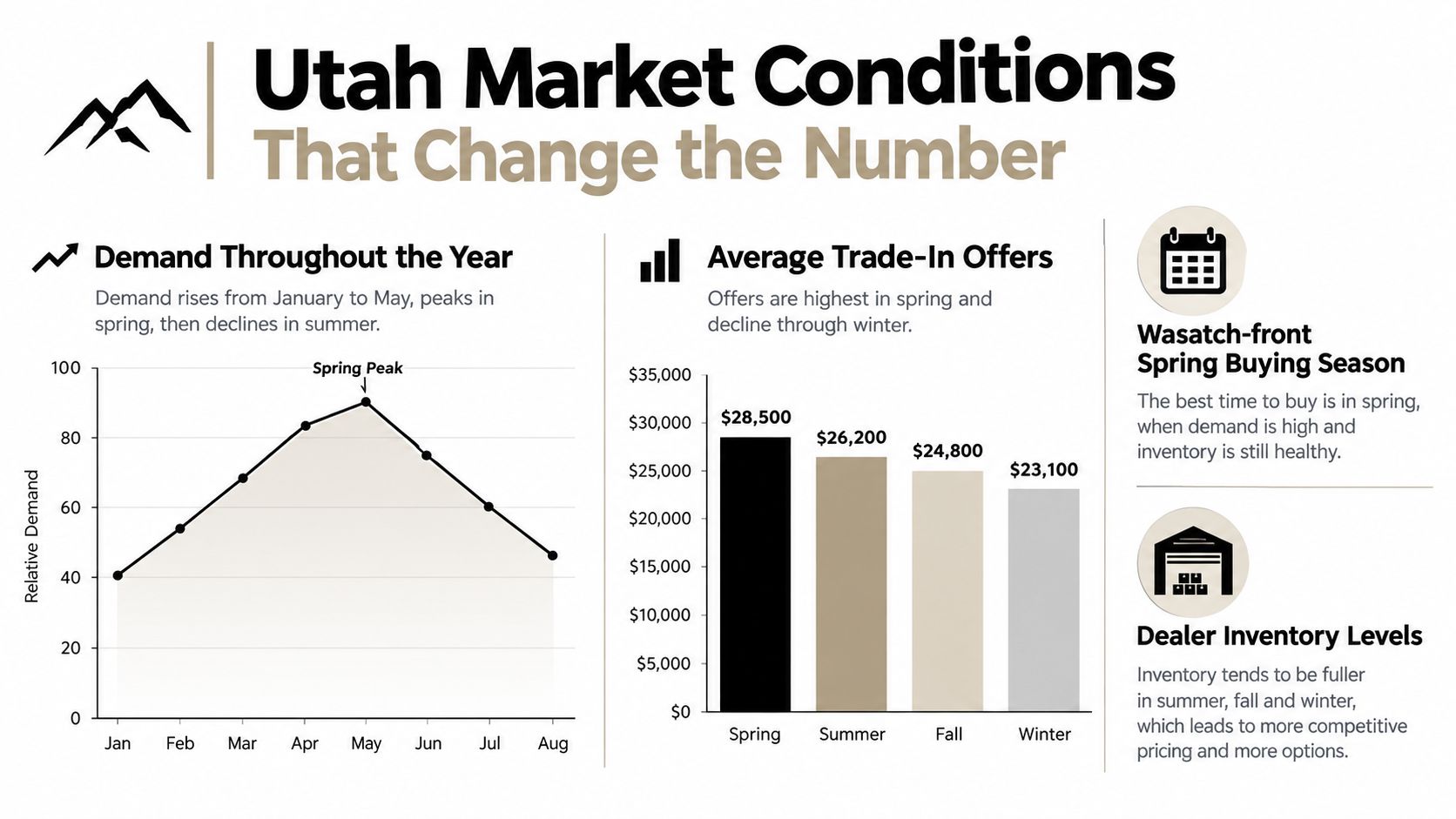
Black Book reported average towable wholesale prices of $18,426 in September 2025, down 3.3% year over year; the same update reported J.D. Power's finding that standard-hitch trailer values averaged 9.6% lower in November–December than September–October over the prior decade, compared with 10.3% lower for fifth wheels, in its recreational vehicle market update. Those are national category indicators, not a Utah appraisal for your individual trailer.
The visual below is conceptual. Any dollar amounts shown shouldn't be treated as verified Utah market averages or a forecast for your trailer.
Ask about timing without trying to predict the perfect week
For a Wasatch Front owner, the useful question is whether waiting improves the whole transaction. A potentially stronger spring appraisal isn't automatically better if you incur storage, maintenance, or other ownership expenses while waiting.
Ask the appraiser whether the current figure reflects seasonal resale expectations or a condition concern. If it's seasonal, ask what would need to change for a different assessment. Don't interpret that conversation as a promised future offer.
Floorplan matters, too. A practical lightweight family trailer, bunkhouse, or toy hauler may attract stronger Utah interest than an unusually large or specialized layout, but local demand and inventory still determine the opportunity, as discussed in RV Loan Wizard's depreciation guidance.
Think about actual use rather than a feature count. A family planning weekends at Jordanelle or Bear Lake may care about usable bunks and tow-vehicle compatibility. A powersports buyer may prioritize cargo arrangement. Neither necessarily wants the most expensive trailer.
Prepare for a Millcreek or Spanish Fork appraisal
When arranging a visit to our Millcreek or Spanish Fork location, tell our team whether you want a standalone trade discussion or intend to compare replacement RVs during the same visit. Ask what testing preparation is needed and how much appointment time to allow. Don't assume an online estimate replaces physical inspection.
Bring:
- Ownership information: Title details, registration, and identification requested for the transaction.
- Loan information: Lender details and a current payoff statement, if applicable.
- Service evidence: Maintenance invoices, repair documentation, and equipment information.
- Access items: Keys and access to compartments and systems.
- Known issues: A written disclosure of damage, intermittent faults, and equipment that hasn't been tested.
The important inspection areas include the roof and seals, evidence of moisture, floors, slides, appliances, awning, tires, brakes, and batteries. Ask which systems were tested and whether any part of the assessment remains conditional.
Read the offer as a transaction
For a standalone visit, request the appraisal assumptions, any remaining inspection conditions, and how long the offer applies. For an appraisal combined with a purchase, request separate lines for the replacement price, trade allowance, loan payoff, fees, taxes, and financing terms.
A larger trade allowance doesn't prove you negotiated a better deal if the replacement price changed with it.
Keep the proposed purchase separate long enough to understand it. Then evaluate whether the combined result fits your budget and camping plans, including trips close to the Great Salt Lake as well as longer Mountain West travel.
Mistakes That Quietly Cost Utah Owners Real Money
The biggest preventable mistake is arriving with confidence but no supporting information. Before your appraisal, use this checklist to catch weak assumptions.
- Treating an estimate as an offer: Save the tool's inputs and condition assumptions. Ask what still requires inspection.
- Ignoring moisture evidence: Don't cover stains or soft areas. One cited industry estimate places potential water-damage price reductions around 15–30%, depending on the damage and repair circumstances, according to this RV condition valuation guidance.
- Leaving records at home: Organize the paperwork before the visit so completed work can be distinguished from an owner's recollection.
- Using retail listings as guaranteed proceeds: Label each comparison correctly and remove mismatched floorplans.
- Overlooking presentation: Clear compartments and make awnings and interior areas accessible for inspection.
- Negotiating only the allowance: Review the complete written transaction before agreeing.
Frequently Asked Questions
Is an online travel trailer trade in value guaranteed?
No. Treat it as preliminary until the trailer's identity, condition, and market fit have been assessed.
Should I repair everything before trading?
No. Get a diagnosis and discuss an as-is appraisal before spending on substantial resale preparation.
Can I trade a trailer with an outstanding loan?
Discuss the lender payoff with the dealer. Ask for the allowance, payoff, and any resulting equity or shortfall to be shown separately.
Is spring always the right time to trade in Utah?
No. Compare the potential timing benefit with your ownership costs and replacement plans.
What should I do if I disagree with the appraisal?
Ask which finding or comparable explains the difference. Present your documentation and request clarification rather than negotiating from an unsupported target.
At Motor Sportsland, we offer trade-in evaluations, replacement RV options, and service support so you can compare trading with keeping or repairing your current trailer. Bring your valuation notes, maintenance records, and loan information to our Millcreek or Spanish Fork showroom, and ask our team to walk through the complete transaction before you decide.
