
7 Best Used Class a Motorhome Models for Utah in 2026

You're in the Salt Lake Valley, picturing weekend drives into the Wasatch, Jordanelle, or Bear Lake. A new coach doesn't fit the budget, but a used Class A brings a different question: what will this motorhome demand on mountain grades, at elevation, and during a Utah winter?
The best used Class A motorhome for Utah isn't just the one with the nicest floorplan. It's the coach whose chassis, service history, tires, generator, plumbing, and drivetrain match the way you'll travel. Motor Sportsland has served Utah from Millcreek and Spanish Fork for more than 55 years, so our local perspective starts with practical ownership, not showroom shine.
Below, we rank seven used Class A models by Utah suitability. You'll see where gas coaches make sense, when a diesel pusher earns its added complexity, and which inspection points can separate a well-kept bargain from a repair project. We'll also cover winter storage, high-altitude camping, recall checks, and the walk-through that should happen before you sign.
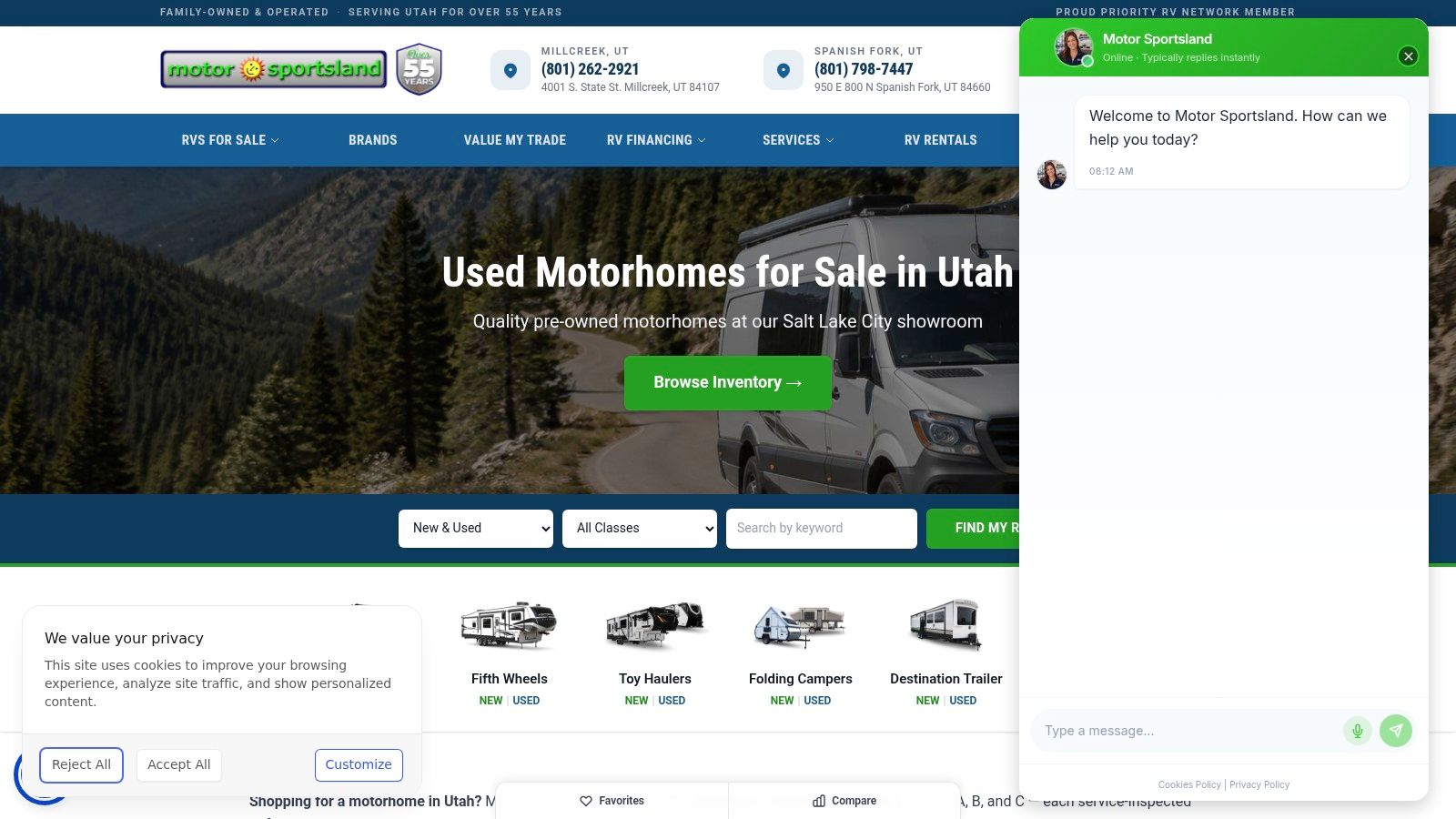
1. Used Motorhomes for Sale in Utah at Motor Sportsland
Start with the actual coaches available nearby. Motor Sportsland's used motorhomes for sale in Utah page lets shoppers compare Class A inventory from the Millcreek and Spanish Fork locations, with filters for class, price, length, floorplan, and features. Seeing the specific coach matters in Utah, where mountain grades, Great Salt Lake dust, high-altitude camping, and winter storage can expose weaknesses that photos miss.
Condition varies widely within one model line. A carefully maintained Fleetwood Bounder may suit a buyer better than a neglected luxury diesel. A coach with service records, newer tires, and a dry roof can justify more attention than a polished unit with gaps in its history. View the motorhome in person, start its systems, and ask how it was stored before making a decision.
Motor Sportsland's on-site Service Center gives buyers a place to discuss maintenance, repairs, parts, and road-readiness. That support can be useful when a pre-purchase inspection finds issues with the generator, plumbing, electrical system, appliances, or chassis.
Why the local buying process matters
The dealership also offers in-house financing and pre-qualification, accepts trade-ins, and has staff familiar with Mountain West travel. Its selection includes Forest River, Keystone, Jayco, KZ, EAST TO WEST, Redwood, Heartland, and other RV brands, allowing shoppers to compare a Class A with smaller motorhomes and towable alternatives.
Gas and diesel ownership deserve equal attention before a floorplan wins you over. This gas versus diesel Class A guide explains the trade-offs around mileage, towing, service access, and expected use. For Wasatch travel, also consider how the loaded coach feels on grades and how easily you can obtain service near home.
Strengths
- Live local inventory: Compare current units and inspect the exact coach.
- Dealer-backed support: Access the Service Center, parts department, maintenance, installations, electrical and plumbing work, and collision repair resources.
- Focused shopping: Filter by floorplan, length, features, and price before arranging a walk-through.
- Purchase assistance: Discuss financing, pre-qualification, and trade-in options with a local team.
Limitations
- Regional selection: Out-of-state buyers may face fewer nearby choices or transport costs.
- Unit-by-unit condition: Dealer support does not replace an inspection and test drive of the coach you plan to buy.
Practical rule: Treat the listing as an invitation to inspect the coach in person before you sign.
2. Newmar Dutch Star
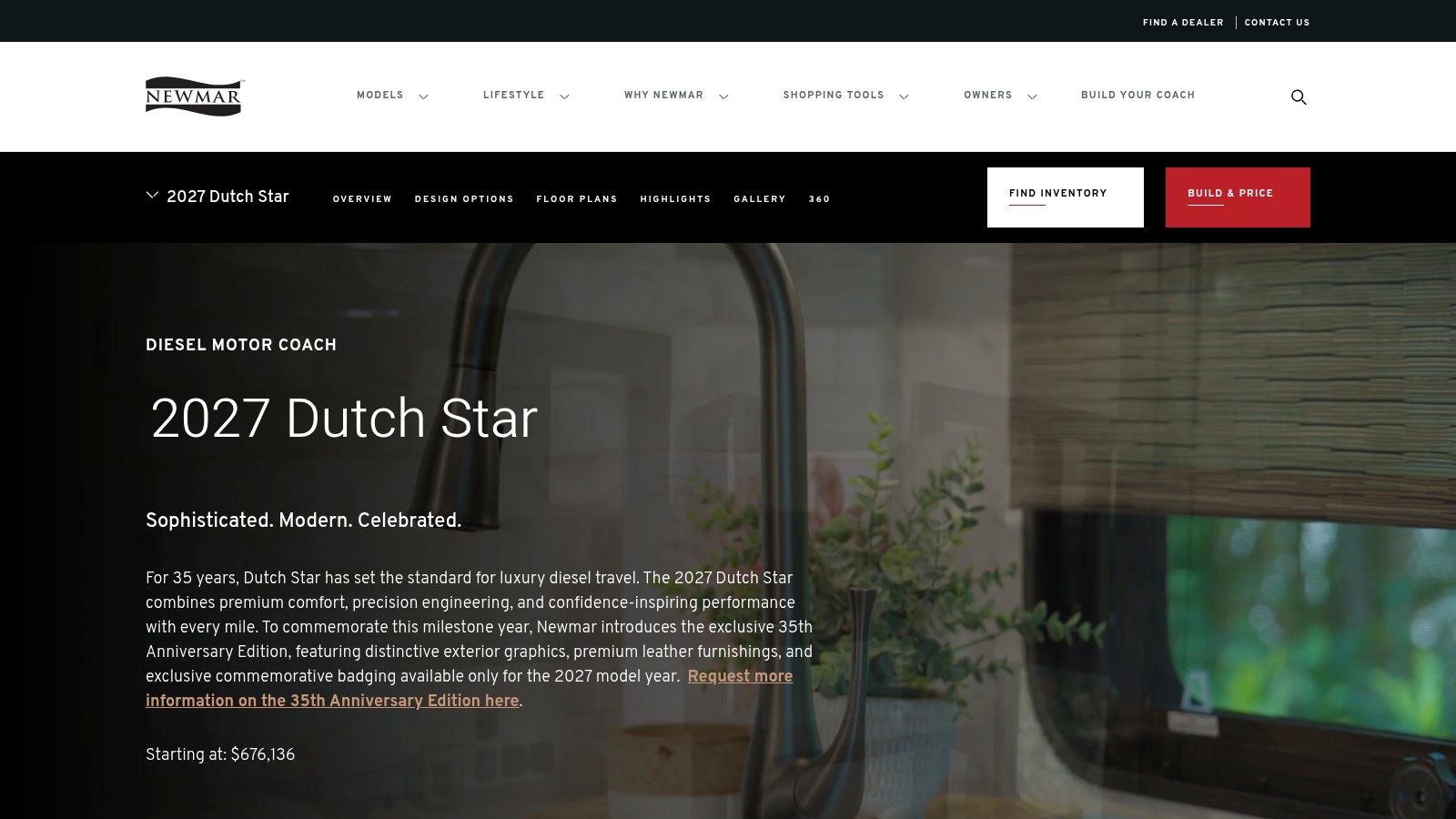
The Newmar Dutch Star is a strong match for buyers who expect long highway days, frequent mountain travel, and a quieter cabin. It's a diesel pusher with a reputation for residential fit and finish, solid cabinetry, strong insulation, and composed road manners. Newmar's Dutch Star model information details the platform and floorplan range, but used buyers should focus just as much on records and system condition as on trim level.
A major advantage is the STAR Foundation, a steel structure designed to add rigidity to the coach. That foundation, paired with a diesel chassis, can make a large motorhome feel more settled through wind and on uneven roads. On Wasatch grades, the diesel drivetrain and air-brake system are useful, especially when the coach is loaded for extended travel or towing.
What to inspect on a used Dutch Star
Luxury construction doesn't remove maintenance risk. It can increase the number of systems that need attention, including slides, leveling equipment, electronics, appliances, air systems, and generator components. Check for moisture around roof penetrations and slide rooms, then confirm that every major system works under load.
The Dutch Star's size and weight also affect campsite choices. It may be comfortable at a large campground near Bear Lake, but it can be inconvenient on tighter sites or older access roads. Diesel-system complexity, emissions hardware, air brakes, and specialized service should be part of the ownership budget.
Best fit: A long-haul traveler who values quiet travel, storage, premium construction, and a stable ride more than the lowest purchase or service cost.
3. Tiffin Allegro Bus
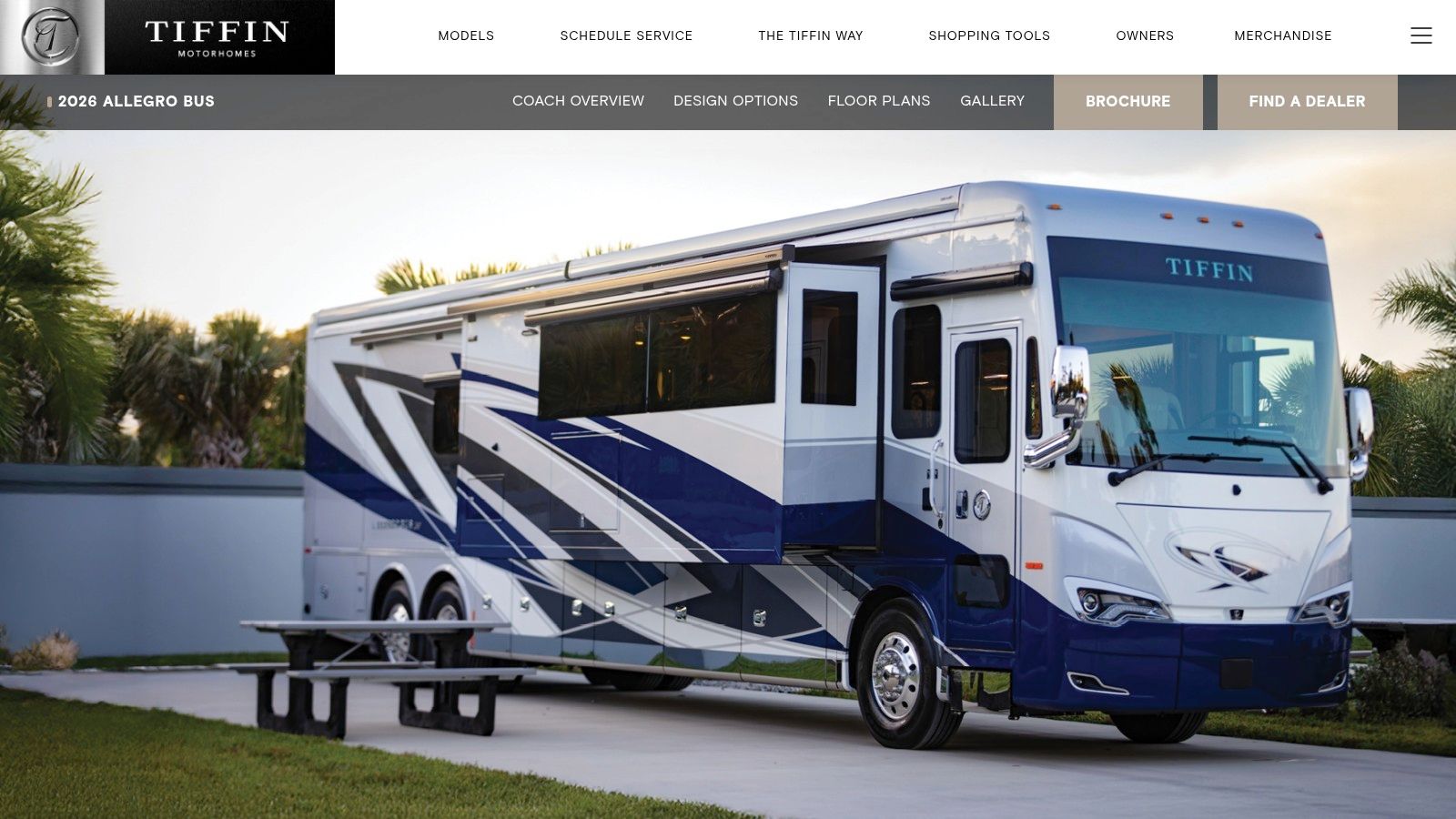
The Tiffin Allegro Bus appeals to buyers who want a used Class A that feels more like a full-time residence than a weekend vehicle. Its handcrafted cabinetry, residential finishes, basement pass-through storage, and substantial electrical and generator systems make it well suited to long stays and extended travel. Depending on the model year, you may find PowerGlide or Spartan chassis configurations, so verify the exact chassis before comparing two coaches.
Utah travel rewards a confident chassis. A well-maintained Allegro Bus can feel calm on the freeway and capable on long grades, but its size can limit access to older campgrounds and tighter mountain destinations. A 40- or 45-foot floorplan offers excellent living space, yet it demands more attention to turning radius, campsite length, fuel access, and towing setup.
The used-buyer advantage
Tiffin's owner community and factory service culture can help a second owner research repairs and understand model-specific quirks. Documentation still matters more than reputation. Look for generator service, transmission-fluid history, cooling-system work, chassis inspections, and evidence that the coach was stored properly.
The used motorhome value guide is useful when you're comparing a premium coach against a less expensive alternative. Don't price the Allegro Bus by cabinetry alone. Include tire age, batteries, slide operation, roof condition, suspension work, and any deferred electronics repairs.
Best fit: A retiree, full-time traveler, or couple planning long trips who wants upscale living space and accepts diesel ownership complexity.
4. Fleetwood Bounder
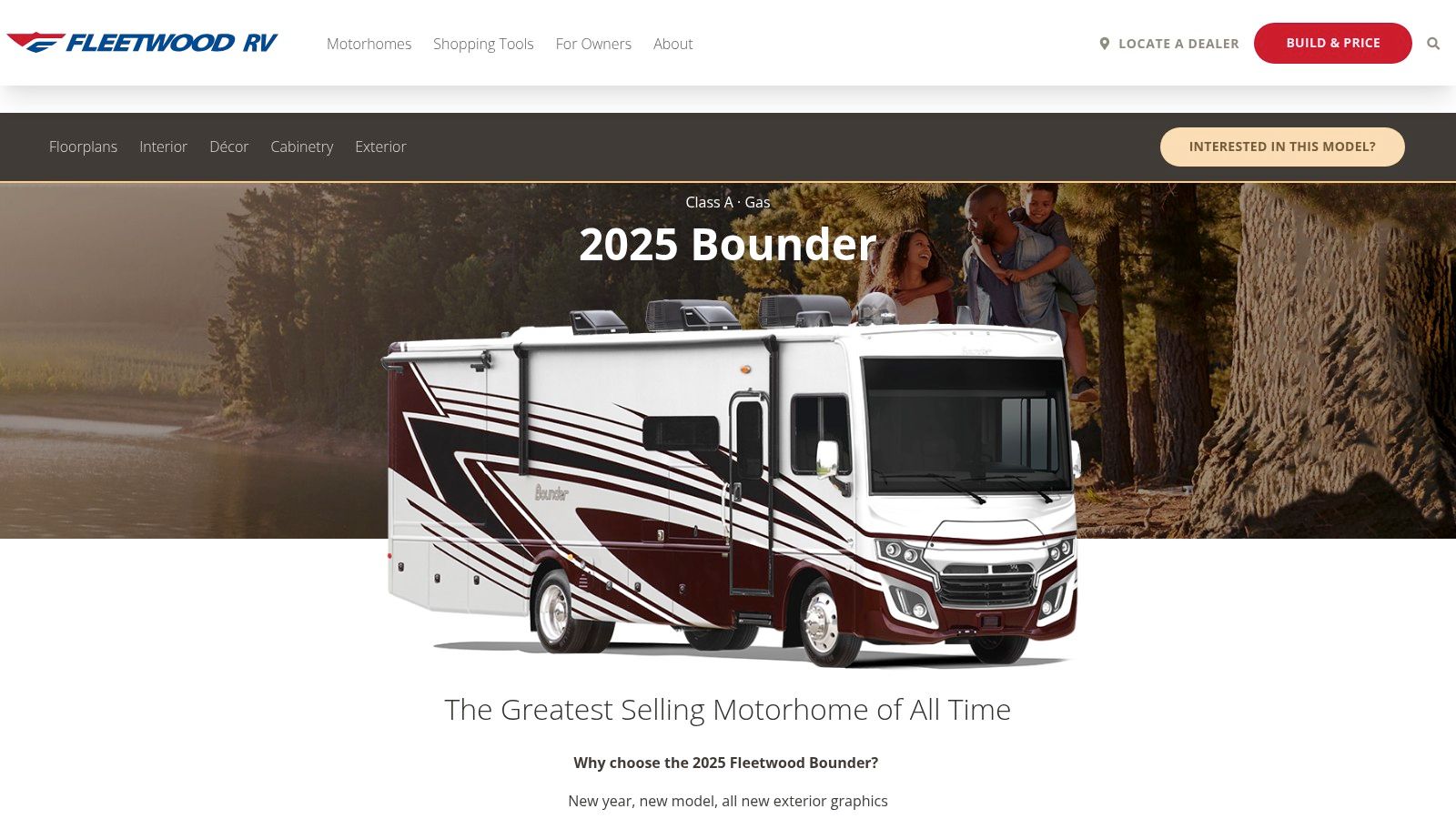
The Fleetwood Bounder remains one of the most practical ways into Class A ownership. Its Ford gas chassis is familiar to many service shops, and its family-friendly layouts often provide useful sleeping space, storage, and living-room functionality without the complexity of a diesel pusher. The Fleetwood Bounder model page provides current product context, but used shoppers should judge each year and unit independently.
Gas power works well for weekend trips from Salt Lake City, especially when your travel pattern involves seasonal outings rather than constant long-distance driving. You'll usually trade some quietness and ride refinement compared with a diesel, and mountain grades may require more planning with engine speed, cooling, and cargo weight. That trade-off can be worthwhile for a first-time owner who wants easier service access and a lower-complexity platform.
Where the Bounder needs scrutiny
Older Bounders can show wear around roofs, seals, slides, flooring, and interior fixtures. Inspect every roof penetration, use a moisture meter around slide rooms, and look beneath windows and cabinets for staining or soft material. Run the generator with a meaningful electrical load, not just for a few seconds.
Also confirm tire dates, chassis mileage, service records, and storage history. Low mileage alone doesn't prove careful ownership. A motorhome that sat outside with weak maintenance may need more attention than one used regularly and serviced on schedule.
Best fit: A first-time Class A buyer or family that wants practical space, broad used availability, and simpler gas-chassis service.
5. Winnebago Adventurer
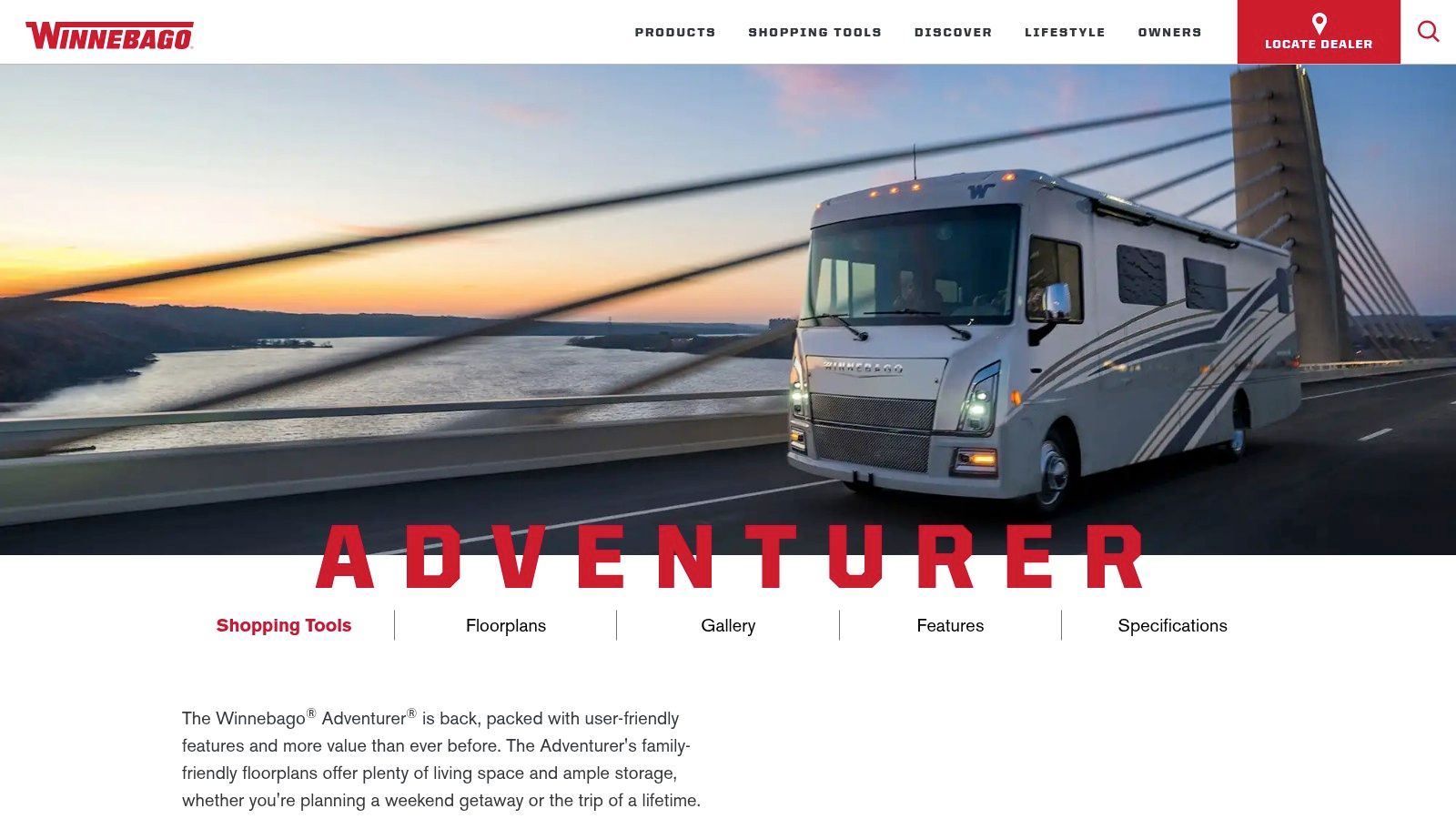
The Winnebago Adventurer earns its place through flexibility. It has practical floorplans, broad documentation, and a national service network that can make used ownership less intimidating. Shorter Class A options are available within the line, which helps buyers who want more living space than a Class C without committing to the largest diesel coach. Winnebago's Adventurer model page is a useful reference for comparing layouts and features across years.
That range matters in Utah. A shorter coach is easier to maneuver into campgrounds near Jordanelle and can be less stressful on narrow approaches, while a larger floorplan brings more storage and residential comfort. Gas power keeps the mechanical package more approachable, though the ride can be louder and less polished than a diesel pusher on long highway days.
Inspect the roof before admiring the interior
Some vintages deserve careful roof and seal inspection. Water intrusion can hide behind ceiling material, wall coverings, cabinets, and flooring, so look for odors, discoloration, soft spots, bubbling, and evidence of repeated resealing. Operate the slides fully and inspect the slide floors, seals, motors, and interior trim.
Use this used RV inspection checklist during the walk-through, then ask for a written report and estimates for safety-critical defects. Test the generator, every 120-volt and 12-volt circuit, propane appliances, water pump, water heater, and refrigerator.
Best fit: A buyer who wants a documented, serviceable gas coach with multiple length and floorplan choices.
6. Entegra Coach Aspire
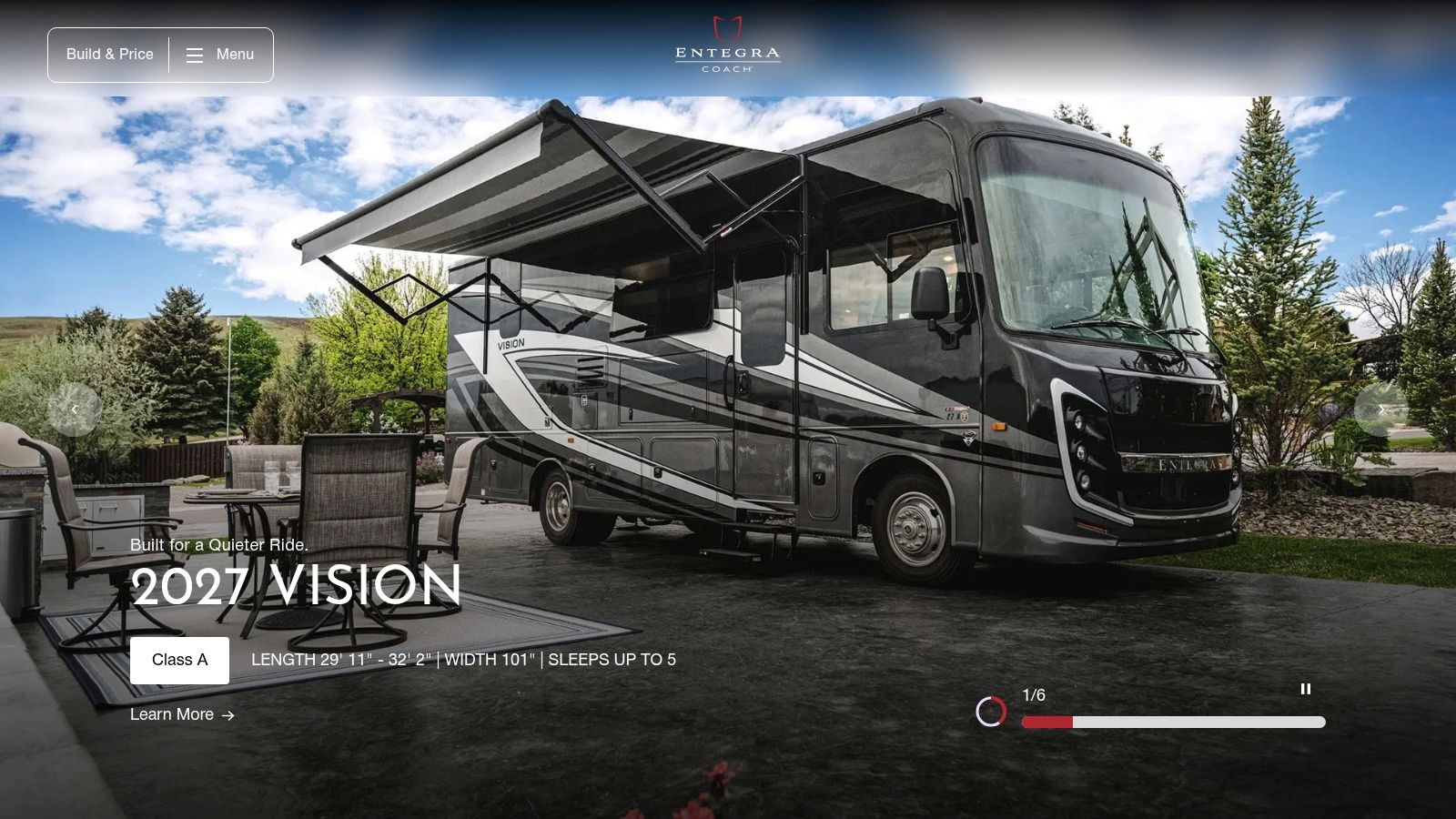
The Entegra Coach Aspire offers a compelling used-luxury equation. It brings a quiet cabin, high-gloss cabinetry, substantial insulation, and residential systems to buyers who want diesel-pusher comfort without necessarily moving into the brand's largest models. Many model years use a Spartan-based chassis, which can deliver strong ride and handling when the coach has been maintained properly. Review the current Entegra Coach lineup for brand context, then verify the equipment on the specific used unit.
For Utah, the Aspire makes sense for long-haul travelers who want to cross mountain passes with a composed ride and carry substantial gear. It also works well for extended stays where insulation, storage, and interior comfort matter more than compact campground access. A 360-degree camera or digital dash on later models can be helpful around tight campsites, but technology adds another layer to inspect.
Budget for luxury systems
The Aspire's purchase price may look attractive beside a new luxury coach, but the maintenance profile remains premium. Diesel emissions equipment, air systems, leveling components, electronics, generator service, and specialty labor can all affect ownership cost. Check whether the coach has been stored indoors or outdoors, and look for records rather than relying on a clean interior.
Dealer access can vary by region, so Utah buyers should identify where specialized service will happen before buying. Confirm parts availability, ask about prior repairs, and make sure every camera, monitor, appliance, slide, and electrical feature operates correctly.
Best fit: A traveler who wants quiet diesel comfort and upscale finishes, and who has planned for specialized service.
7. Fleetwood Discovery and Discovery LXE
The Fleetwood Discovery gives families and long-distance travelers a diesel platform with useful storage and a broad selection of layouts. Many models use a Freightliner XCM Freedom Bridge foundation, and the line includes floorplans with bunk options and bath-and-a-half arrangements depending on the year. The Fleetwood Discovery model information helps identify the range, but the used market includes meaningful differences between older base models and better-equipped LXE trims.
The Discovery works well when you need basement storage, towing capacity, and a coach that can handle extended travel. Diesel power is helpful on Wasatch grades, while the large cargo areas make it easier to carry outdoor equipment for trips around the Great Salt Lake or higher-elevation campgrounds. The trade-off is size. Measure your intended storage site, confirm campground access, and practice backing before your first busy-season trip.
Inspect the slide floors and service history
Fit and finish vary by vintage, so look closely at slide floors, roof seams, seals, cabinetry, and flooring. Operate every slide while listening for hesitation or uneven movement. Review generator service, chassis work, air-brake maintenance, cooling-system records, tire dates, and transmission-fluid history.
A Discovery can be a strong used value when the records are complete and the coach has been stored correctly. It can also become expensive when cosmetic upgrades distract from neglected systems. Treat LXE trim as a comfort feature, not a substitute for mechanical documentation.
Best fit: A family or long-haul traveler who needs diesel capability, large storage, and flexible sleeping layouts.
Top 7 Used Class A Motorhomes, Side-by-Side Comparison
| Item | 🔄 Implementation Complexity | ⚡ Resource Requirements / Efficiency | ⭐ Expected Outcomes (Quality) | 💡 Ideal Use Cases | 📊 Key Advantages |
|---|---|---|---|---|---|
| Used Motorhomes for Sale in Utah (Motor Sportsland) | Low, dealer-managed listings and processes | Efficient locally; travel/transport cost for out‑of‑state buyers | Good, inspected inventory + dealer backing | Local buyers wanting inspected, dealer‑backed used RVs | Curated inspected stock; in‑house financing, parts & service |
| Newmar Dutch Star | High, diesel pusher systems and heavier chassis | High fuel & maintenance needs; strong dealer/service network required | Very high, luxury build quality and resale appeal | Full‑timers or luxury buyers prioritizing fit/finish | STAR Foundation rigidity; premium finishes; strong support |
| Tiffin Allegro Bus | High, premium systems; late‑model electronics can be complex | High, robust electrical/gen systems and diesel service needs | Very high, full‑time capable, upscale interiors | Full‑time owners seeking handcrafted interiors and factory support | Handcrafted cabinetry; strong chassis/suspension options; owner community |
| Fleetwood Bounder | Low–Medium, simpler gas chassis and serviceable systems | Lower fuel/maintenance; easy local serviceability | Good, practical layouts and value leader in gas segment | Families and first‑time Class A buyers seeking affordability | Widespread availability; lower entry price; Ford chassis serviceability |
| Winnebago Adventurer | Low–Medium, gas coach with straightforward systems | Moderate, good parts availability and national service network | Good, practical ownership ease and multiple length options | Buyers needing shorter Class A options and easy service | In‑house components; national service network; varied floorplans |
| Entegra Coach Aspire | High, luxury diesel complexity and advanced tech | High, diesel fuel, premium maintenance; regionally limited dealers | Very high, upscale cabin and strong ride for the segment | Buyers seeking lightly used luxury diesel value | High‑gloss cabinetry; Spartan chassis handling; premium tech options |
| Fleetwood Discovery / Discovery LXE | Medium–High, diesel coach with variable trims and systems | Moderate–High, diesel servicing; parts via Fleetwood/REV network | Good, family‑oriented diesel performance and storage | Families needing bunk/bath‑and‑a‑half and large cargo capacity | Large basement storage; family‑friendly layouts; good used availability |
How to Compare Gas and Diesel for Utah Travel
Gas Class A coaches usually make the most sense for occasional trips, first-time ownership, and buyers who want broader local service access. Diesel pushers generally offer a quieter ride, greater long-haul comfort, stronger towing potential, and better composure under heavy use. They also bring diesel-system complexity, emissions hardware, air brakes, and specialized maintenance.
Your travel pattern should decide the powertrain. A buyer planning a few weekend trips from Salt Lake City may be better served by a Bounder or Adventurer with a clean inspection and newer tires. A couple crossing multiple mountain ranges, towing regularly, or living aboard for extended periods may find the ride and capacity of a Dutch Star, Allegro Bus, Aspire, or Discovery worth the added ownership burden.
Fuel is only one part of the calculation. One recent ownership analysis estimates Class A fuel economy at roughly 6 to 12 mpg and gives an example of about $4,375 in annual fuel cost for 10,000 miles at 8 mpg and $3.50 per gallon. Review the full RV ownership cost analysis before treating a low purchase price as a low-cost travel plan.
Build three ownership scenarios
Use your own travel plans rather than a generic annual budget:
- Occasional Utah trips: Include fuel, campground access, insurance, storage, winterization, and routine service for a coach that may sit between outings.
- Seasonal travel: Add tire aging, battery care, generator use, fluid service, and storage preparation.
- Long-haul travel: Price diesel or gas service, towing equipment, tires, brakes, generator maintenance, and the cost of a larger storage site.
A smaller Class B or C may win if you'll travel infrequently or prefer easier access to compact campgrounds. The best used Class A motorhome is the one you'll use confidently and maintain consistently, not the largest coach your purchase budget can reach.
The Used Class A Inspection That Protects Your Budget
A walk-through should function as technical screening, not casual sightseeing. Independent inspection guidance reports that professional RV inspectors identify significant problems in 78% of examined units. Common findings involve roofs and seals, water systems, electrical systems, and tires or suspension, according to used RV inspection guidance.
Ask for a written report and make purchase approval conditional on correcting leaks, unsafe tires, brake defects, or electrical faults. A professional estimate helps you negotiate from documented repairs rather than vague anxiety.
Check the systems that fail expensively
Inspect these areas before comparing upholstery or entertainment features:
- Roof and seals: Take moisture-meter readings around roof penetrations, vents, windows, and slide rooms.
- Water system: Pressure-test potable water, operate the pump, inspect tanks and lines, and run every faucet.
- Electrical system: Test every 120-volt and 12-volt circuit under load, including the generator output.
- Propane and appliances: Perform propane-leak testing and operate the refrigerator, furnace, water heater, cooktop, and air conditioners.
- Slides and leveling: Run every slide through its full travel and inspect floors, seals, motors, and alignment.
- Chassis and drivetrain: Verify mileage, generator hours, cooling-system service, transmission-fluid history, brake work, and service intervals.
- Storage evidence: Look for sun damage, rodents, freeze damage, battery neglect, and long-term moisture exposure.
Maintenance deserves its own attention. A service-industry estimate attributes about 70% of RV repair failures to inadequate maintenance, so records can be more valuable than a low odometer reading. Read the maintenance and inspection reference alongside the actual service documents for the coach.
Tires, Recalls, and Utah Winter Storage
Tires are a purchase gate, not a cosmetic detail. NHTSA explains that aging raises failure risk, and some manufacturers recommend replacement at six to 10 years regardless of tread depth. The final four digits of the DOT Tire Identification Number identify the manufacturing week and year. Check the sidewalls for cuts, cracks, bulges, irregular wear, and damage linked to underinflation or overloading. Use NHTSA tire safety guidance during your inspection.
Goodyear's RV technical bulletin hosted by NHTSA recommends replacing RV tires that have been in service for six years or more, even if tread remains. If the in-service date isn't known, use the DOT manufacturing code. The bulletin also warns against used RV tires because their service, storage, and maintenance history is usually unknown. Read the RV tire replacement bulletin before accepting a coach with apparently good tread.
Verify recalls by VIN
Recall status should be a purchase gate, including on newer-looking motorhomes. NHTSA recall reporting identifies 2009 to 2017 Georgetown Class A motorhomes with noncompliant turn-signal reflectors. A 2025 recall involving 2022 to 2025 Fleetwood gasoline motorhomes cited a possible Ford-chassis exhaust-tip weld failure that could allow exhaust fumes into the cabin and create a road hazard. Certain Holiday Rambler models were also reported with the issue. Review the RV recall reporting, then check the specific VIN in the NHTSA database.
Confirm whether the remedy was completed and request documentation. Distinguish a safety recall from a service campaign or ordinary repair, and test the carbon-monoxide alarms before purchase.
Utah winter adds another layer. Sustained sub-freezing conditions occur during December through February, and a Utah storage guide recommends winterization for vehicles stored longer than 30 days. Ask for winterization records, inspect water lines and tanks for freeze damage, and verify faucet, pump, and water-heater operation. The Utah RV storage guidance also covers fuel stabilizer, battery maintenance, tire pressure, and covering.
Before a mountain trip: Confirm tires, brakes, cooling system, generator output, fluids, and carbon-monoxide alarms. A clean interior doesn't tell you whether the coach is ready for elevation or a long descent.
Your Next Used Class A Starts with a Walk-Through
The right choice depends on how you'll use the coach. Gas models such as the Fleetwood Bounder and Winnebago Adventurer usually offer lower mechanical complexity, easier service access, and a practical entry into Class A ownership. Diesel pushers such as the Newmar Dutch Star, Tiffin Allegro Bus, Entegra Aspire, and Fleetwood Discovery generally deliver a quieter ride, more storage, and stronger long-distance capability, but they require a larger maintenance plan and more specialized service.
For Utah, inspect beyond the floorplan. Check roof and seal condition, slide floors, moisture readings, tire dates, generator hours, service records, cooling-system work, transmission-fluid history, and evidence of winterization. Confirm recall status by VIN, test safety equipment, and make the purchase conditional on correcting safety-critical defects.
The best used Class A motorhome is not automatically the newest, longest, or most luxurious coach. It's the one with documented care, a sound chassis, safe tires, working systems, and a layout that fits your actual trips to the Wasatch Mountains, Jordanelle, Bear Lake, and beyond.
Browse current used Class A motorhome inventory, compare financing and trade-in options, and schedule a walk-through at Motor Sportsland's Millcreek or Spanish Fork location. Our Service Center can also help with maintenance, plumbing, electrical work, installations, parts, upgrades, and collision repair after you bring your coach home. If you're outfitting the kitchen for travel, these collapsible kitchen storage ideas can help you use limited cabinet space more effectively.
Frequently asked questions
What's better for Utah trips, a gas or diesel Class A?
Gas is often the practical choice for occasional trips and simpler service. Diesel can be worthwhile for long-haul travel, heavier towing, a quieter ride, and frequent mountain driving, provided you budget for specialized maintenance.
How should I prepare a used Class A for Utah winter storage?
Ask for winterization records, drain and protect the plumbing, maintain the batteries, stabilize fuel when appropriate, verify tire pressure, and protect the coach from moisture and weather. Inspect the water system for freeze damage before your first spring trip.
Can a used Class A handle high-altitude camping?
It can, but inspect and test the cooling system, generator, appliances, batteries, and brakes before traveling. Load the coach carefully, monitor engine temperatures, and plan mountain descents rather than relying only on uphill power.
Can I get financing pre-qualification before choosing a coach?
Yes. Motor Sportsland offers financing support and quick pre-qualification tools, which can help you understand your purchase range before comparing specific used motorhomes.
Can out-of-state buyers purchase from Motor Sportsland?
Yes, but inventory is concentrated in Utah, so discuss inspection, transportation, registration, and service arrangements before committing. An in-person walk-through is still the best way to verify the exact coach.
Motor Sportsland offers curated used motorhomes, financing and trade-in support, and a Service Center equipped for maintenance, repairs, parts, and upgrades. Visit Motor Sportsland to browse current inventory, then schedule a personal walk-through in Millcreek or Spanish Fork before your next Utah adventure.
