
Class C Motorhomes Towing Capacity: The Complete Guide

A standard gas Class C typically tows 3,000 to 8,000 lbs, but the true safe limit is whatever remains after you subtract the coach's loaded weight from its GCWR, then verify that number against the GVWR and hitch rating. If the rig's numbers don't line up, the brochure claim doesn't matter, because the mountain will remind you fast.
A family rolling out of the Wasatch foothills with bikes, a trailer, and a full tank of water can get into trouble before they ever see the first long grade. That's the problem with class c motorhomes towing capacity. It looks simple on paper, then passengers, fuel, cargo, and tongue weight all start eating into the margin. At Motor Sportsland, we see this mistake a lot, especially from buyers who assume every Class C can easily pull a car behind it.
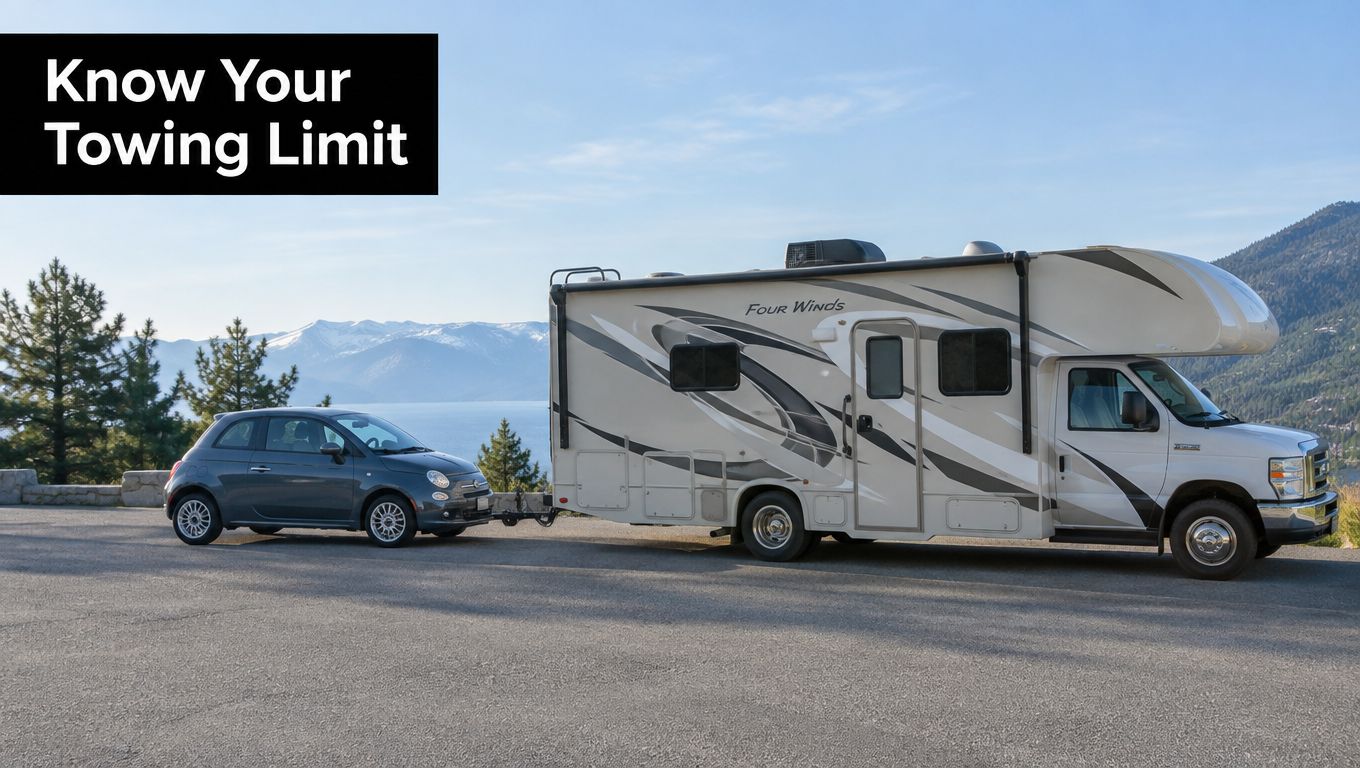
For Utah driving, that difference isn't academic. It's the gap between a calm climb toward Bear Lake and a white-knuckle descent when the brakes and transmission are already working too hard. The smartest buyers treat towing like a measurement problem, not a guessing game, and that's exactly how to stay safe.
Introduction - Why Class C Motorhomes Towing Capacity Matters
A Class C can feel like the perfect middle ground, comfortable, familiar, and easier to drive than a bigger coach. The catch is that towing behind it only works when the numbers line up, and they often don't line up the way shoppers expect. A rig that looks ready for a small car might only have enough real-world margin for bikes, light cargo, or a tiny trailer once people and gear are onboard.
On Utah roads, that margin matters even more. The steep pull through the Wasatch, long downhill stretches, and cold-weather trips to higher elevations all punish an underbuilt setup. We've had plenty of shoppers come in convinced they could tow a family car, only to find the loaded coach leaves them with far less capacity than the floorplan suggests.
The safe answer always starts with the specific coach, not the badge on the side. That means checking GCWR, GVWR, and the receiver hitch rating before you hitch anything up. When those three numbers work together, towing feels stable and predictable. When they don't, the stress shows up fast, especially with a full family onboard and a mountain pass ahead.
Compare Class C motorhomes with travel trailers if you're still deciding which platform fits your camping style and towing needs.
The Essential Math - GVWR, GCWR, and Payload Defined
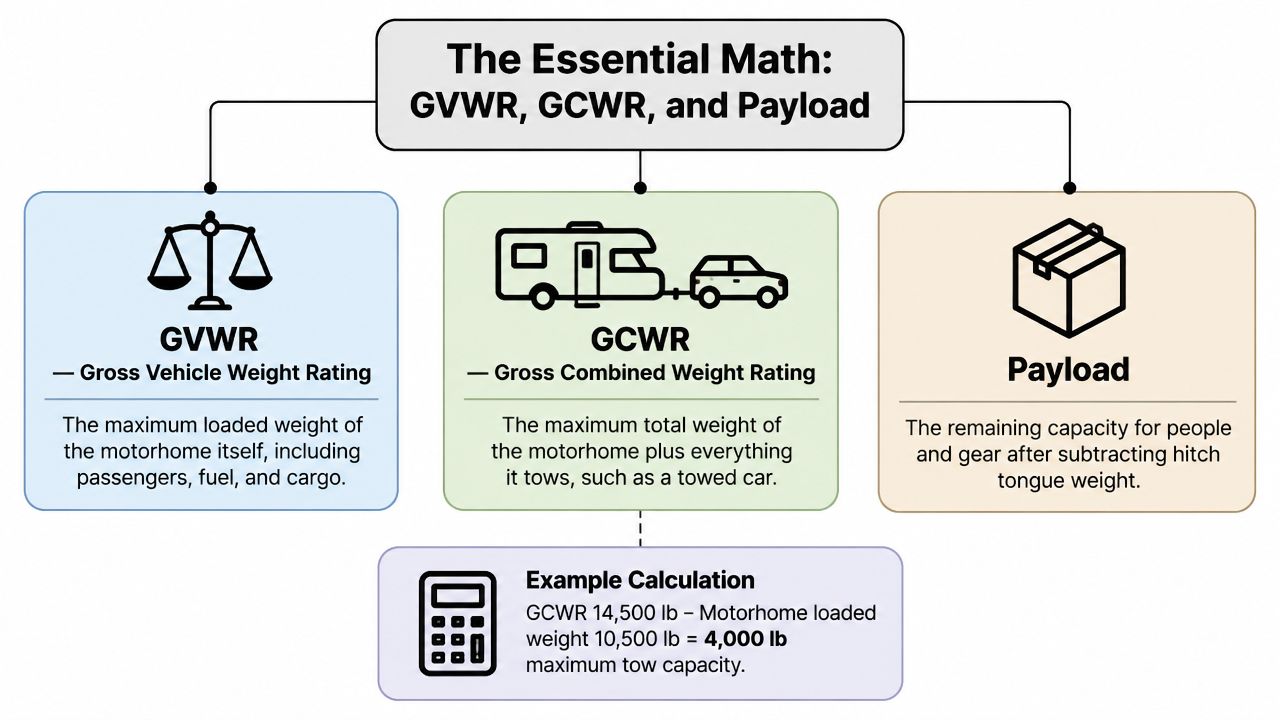
Start with the three ratings that actually control the outcome
GVWR is the maximum loaded weight of the motorhome itself. That includes passengers, fuel, water, cargo, and anything else riding inside the coach. GCWR is the maximum combined weight of the motorhome plus whatever it's towing, and that combined ceiling is the number that really decides how much margin you have left.
Payload is the room left for people and gear after the coach's own weight is accounted for. On a Class C, payload gets used up quickly. A full tank, a family, food, tools, chairs, and a few “just in case” items can erase a lot of headroom before the hitch ever sees a trailer.
The practical formula is simple. Tow capacity equals GCWR minus the actual loaded weight of the motorhome. That loaded weight must reflect the way you really travel, not a stripped-down showroom walk-through. If you're traveling with a full freshwater tank, extra gear, or a bike rack, those items belong in the calculation.
Practical rule: if you haven't weighed the coach in travel-ready condition, you don't know what it can tow safely.
A useful extra check is the trailer's tongue weight. On travel trailers, tongue weight usually consumes a noticeable chunk of available rear capacity, and that's where the hitch rating becomes a hard stop. If you want a separate example of how payload limits work in the trailer world, ANTS Trailers has a clear overview of side dump payload limits that shows why the load itself matters just as much as the brochure.
Why the formula beats guesswork
Brochures often highlight the best-case number, but real travel doesn't happen in best-case conditions. People bring more than they think, water weighs more than they expect, and mountain driving exposes every ounce of overconfidence. That's why the subtraction method matters so much, it keeps the conversation grounded in actual loaded weight.
For a simple planning habit, use this checklist before towing:
- Weigh the coach loaded for travel, not empty.
- Confirm the GCWR from the coach spec sheet.
- Compare the remaining margin to the trailer or car you want to tow.
- Check the hitch tag so the receiver isn't the hidden limit.
Use this towing capacity calculator guide when you want a deeper walkthrough of the math.
Calculating Your Safe Towing Limit
The loaded coach is the number that matters
The formula manufacturers keep coming back to is GCWR minus the motorhome's loaded weight. That loaded weight has to include everything that is in the coach on travel day. If you calculate from an empty rig, you're not calculating towing capacity, you're guessing.
That guess gets dangerous fast in a Class C because the coach itself can be carrying a lot before you even hook up. Passengers, fuel, fresh water, propane, food, tools, and camping gear all chip away at the remaining margin. By the time the family is seated and the storage bays are full, the tow number can look very different from the sales brochure.
A coach at its full GVWR can have very little left to tow, even if the hitch itself looks stout.
What usually limits Class C towing first
The lower of the ratings wins. In practice, that usually means one of three things happens first, the GCWR runs out, the hitch receiver maxes out, or the loaded coach itself gets too heavy. That's why a buyer should never focus on just one badge on the back of the motorhome.
A helpful way to think about it is this:
- GCWR sets the combined ceiling.
- GVWR caps the motorhome itself.
- Hitch rating caps the mechanical receiver.
If any one of those numbers is lower than the others, that's your limit. That's also why two Class Cs with similar layouts can tow very differently. The chassis underneath, the installed hitch, and the way the coach is loaded all matter.
Why loaded weight changes the answer
Fresh water is a big one. So are extra chairs, heavy kitchen items, tools, and accessories mounted on the coach. Families often add gear over time and never recheck the math, which is how a rig that started out within limits slowly drifts out of compliance.
The right habit is simple. Weigh the RV in the condition you travel in, then compare that number to the GCWR. That's the only way to know what's left for a car, cargo trailer, or toy hauler setup.
Typical Towing Ranges by Chassis and Size
Class C towing capacity varies more than many buyers expect. Some smaller rigs are only good for about 2,000 lbs, standard gas Class C models often fall around 3,000 to 8,000 lbs, and heavier setups can reach 10,000 lbs or more Renegade RV's Class C and Super C overview.
Gas Class C versus heavier-duty builds
The floorplan does not tell the full story. Two coaches can sit side by side on the lot and still have very different tow ratings because the chassis, drivetrain, and hitch hardware are not the same. One may handle a small car without trouble. The other may be limited to a light trailer once the coach is loaded for a real trip.
Standard gas Class C units usually work well for families who want manageable road manners and lighter towing. That makes sense for short Utah runs, but it also means some coaches are not built to pull a vehicle behind them once tanks, passengers, and gear are on board. Smaller or lightly equipped models often sit closer to the low end of the range than buyers expect.
Where Super C and diesel platforms separate themselves
Heavier-duty diesel and Super C platforms usually sit at the higher end of the scale. Guidance from Camping World's Class C towing guide and Thor Motor Coach's Class C overview places many of those rigs around 10,000 to 15,000 lbs, with some Super C comparisons going higher. That is the difference between towing a compact car and setting up for a heavier trailer or toy hauler.
A quick comparison makes the gap clear:
| Coach type | Typical towing range | Best fit |
|---|---|---|
| Smaller gas Class C | Around 2,000 lbs | Light cargo, very small trailers |
| Standard gas Class C | Roughly 3,000 to 8,000 lbs | Compact cars, small trailers |
| Heavier-duty diesel or Super C | Roughly 10,000 to 15,000 lbs | Larger trailers, heavier tow setups |
The useful part is not the brochure number alone. It is the loaded coach number. A rig that looks capable on paper can lose a lot of towing headroom once it is stocked for family travel, especially on Utah routes with long climbs and steep grades. If you need to tow a specific vehicle, start with chassis specs and the weight you will carry, not the showroom impression.
Understanding Hitch Types and Tongue Weight
A trailer can look manageable on paper and still push a Class C past its safe limit once the hitch and rear axle are fully loaded.
The receiver can be the hidden ceiling
Even if the chassis still has combined weight margin, the receiver hitch may be the part that sets the limit. Common Class III receivers are typically rated around 5,000 to 8,000 lb GTW with about 500 to 800 lb tongue weight, while Class IV hitches are commonly rated up to about 10,000 lb GTW and 1,000 lb tongue weight Auburn University trailer guide. That hardware rating matters as much as the coach spec.
Buyers get caught here all the time. They focus on what the motorhome can pull in theory, but the label on the receiver is the ceiling for the hitch itself. If the tongue weight runs high, the rear of the coach can be overloaded even when the trailer weight seems fine.
Tongue weight changes stability
Tongue weight is the downward force at the hitch. On many travel trailers, it is often around 10% to 15% of gross trailer weight RV Critic's hitch capacity comparison. That can put more load on the back of the motorhome than a buyer expects, especially on Utah grades where the coach is already working hard.
Learn how tongue weight affects stability in our guide to what hitch weight means for Utah RVers.
A few quick checks help:
- Read the hitch label for GTW and tongue-weight ratings.
- Match trailer setup to the receiver rating, not just the coach spec.
- Watch rear axle loading, especially with bikes, cargo carriers, or a heavy tongue.
The hitch rating wins if it is lower than the coach's tow math. That is the part many first-time owners miss. The motorhome may look capable, but the receiver can still say no, and that is a safety limit, not a paperwork issue.
Real-World Example - The Jayco Redhawk Calculation
The 2026 Jayco Redhawk gives a clean example of how all the numbers interact. Jayco lists a 14,500 lb GVWR, a 22,000 lb GCWR, and a 7,500 lb hitch with 750 lb tongue capacity Jayco Redhawk spec page. That's a great illustration of why towing capacity is never just one number.
How the math changes with real loading
Let's say the coach is loaded for travel with passengers, food, fuel, and camping gear, and the actual weight comes in close to the GVWR. In that situation, the available tow margin is whatever remains between that loaded weight and the GCWR. If the coach is lighter, the tow margin grows, but the hitch still caps the answer at 7,500 lbs and tongue weight at 750 lbs.
That means the true towing limit is the lowest applicable rating after the coach is loaded. Not the brochure dream number, not the max someone saw in an ad, the actual combined limit.
Here's the lesson buyers should keep in mind:
- A high GCWR doesn't guarantee a high tow number.
- A strong hitch doesn't override loaded coach weight.
- A good floorplan still needs to fit the way your family packs.
Why this example matters on Utah roads
A coach like this can be a solid fit for many families, but only if they stay honest about what they carry. Add a full crew, bikes, extra water, and a trailer, and the margin can disappear quickly. On a long climb, that's the difference between comfortable power and a coach that feels strained before the summit.
The cleanest takeaway from the Redhawk example is simple. The number printed on the hitch is a hard ceiling, but the actual tow number starts getting smaller the moment the coach is loaded for a real trip.
When to Upgrade or Seek Professional Help
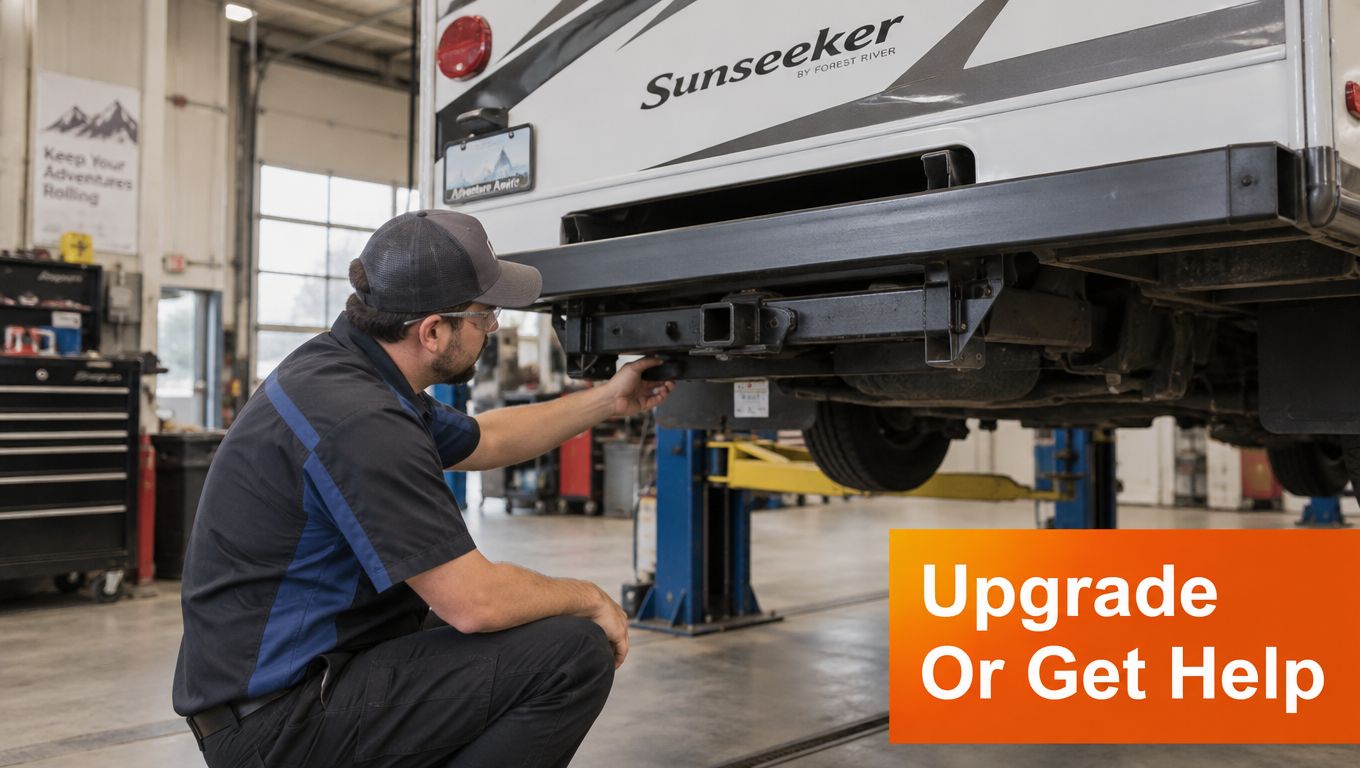
Don't force the setup to fit the wish list
A buyer can love a trailer or dinghy car and still be out of margin. I see that mistake a lot. The brochure number looks comfortable until the coach is loaded with people, water, gear, and food, then the tow limit shrinks fast.
Class C towing capacity is often in the 3,500 to 8,000 lb range, while heavier-duty diesel or Super C rigs can reach 10,000 to 15,000 lb when the chassis, hitch, and braking system are built for that job. If your current coach falls short, a lighter tow vehicle or a different trailer is the honest fix. The number on paper only helps if the whole rig can carry it.
A service visit is the right next step when the math is close. An inspection can confirm whether the hitch, brakes, tires, and suspension are ready for the load you plan to pull. For Utah owners, that matters before summer mountain trips and before winter storage, because wear does not improve with time.
A few things worth checking before you tow
- Brake controller function: Make sure the controller talks to the trailer cleanly.
- Tire ratings: Confirm the tires match the actual load, not just the brochure.
- Receiver condition: Look for wear, rust, or signs the hitch has been stressed.
- Load balance: Keep rear-heavy setups from overworking the back of the coach.
If you are comparing coach options or need setup help, our team at Motor Sportsland can review the numbers with you and point you toward a safer match. A dinghy car is not always the right answer, and a lighter trailer or a different coach can be the better long-term move.
Towing Safety Tips for Utah Roads
Utah exposes weak towing setups fast. The grades, altitude, and long downhill stretches around the Wasatch don't give you much margin for error, so the prep needs to be practical, not theoretical.
Drive for the conditions, not the brochure
At higher elevations, engines work differently and braking strategy matters more. Keep your speed conservative, shift early on climbs, and don't wait until the descent starts to decide how you're going to manage it. On a long grade, a loaded Class C with a trailer behind it can heat up quickly if the driver stays in the wrong gear too long.
A large, empty parking lot is still the best training ground. Practice turns, backing, and stop-and-go control before you point the coach toward the mountain highways. That's especially useful if you're heading toward Jordanelle, Bear Lake, or any campground with tight entries and uneven surfaces.
Check the basics before every long pull
- Tire pressure: Verify it cold before travel.
- Lug torque: Recheck it regularly, especially after service or tire work.
- Braking feel: Make sure the coach stops straight and predictably.
- Load placement: Keep heavy items low and centered.
Altitude and heat can both expose flaws that local around-town driving won't show. If the rig already feels sluggish on flat ground, it won't magically improve on a mountain pass. The safest approach is to give yourself more margin than you think you need.
Final Thoughts and Next Steps
The big lesson is simple. Class C motorhomes towing capacity is not a guess, and it's not defined by the floorplan name alone. It's a specific calculation based on GCWR, GVWR, hitch rating, and the coach's actual loaded weight. Once you start treating it that way, towing gets a lot safer and a lot less stressful.
That's especially true in Utah, where grades, altitude, and long descents punish sloppy planning. If your numbers are close, don't hope for the best. Recheck the load, confirm the hitch, and make sure your trailer or towed car fits the limits of the coach you own.
A clean coach also helps. If you want to protect your investment while you're sorting out your setup, RV detailing protects your investment and keeps the rig easier to inspect for wear, leaks, and hitch-area issues. A well-kept motorhome is easier to evaluate, service, and trust on the road.
If you're near Salt Lake City or Spanish Fork, bring your specs, your tow vehicle details, and your questions to Motor Sportsland. We'll help you check the numbers, talk through safer options, and get your rig ready for the next Utah trip with less guesswork and more confidence.
Motor Sportsland helps buyers and owners sort out the true towing numbers, compare Class C options, and keep their rigs road-ready with service and inspection support. Visit Motor Sportsland to browse inventory, plan your next upgrade, or get help matching your coach to the right tow setup.
FAQ
How much can a Class C motorhome tow?
Many standard gas Class C rigs tow roughly 3,000 to 8,000 lbs, but the actual limit depends on the coach's loaded weight, GCWR, GVWR, and hitch rating.
Why doesn't the brochure number match my actual towing limit?
Because the actual limit is based on the coach as you travel, not as it sits empty on the lot. Passengers, fuel, water, cargo, and tongue weight all reduce available margin.
What rating matters most for Class C towing?
All three matter, but GCWR usually sets the combined ceiling, while the hitch rating and GVWR can lower the practical limit.
Can a Class C tow a car?
Sometimes, yes. It depends on the specific coach and the car's weight, plus the loaded condition of the motorhome.
What's the best way to know my safe towing limit?
Weigh the coach loaded for travel, then subtract that number from the GCWR and compare the result to the hitch rating.
