
Loft Travel Trailers: Layouts, Towing and Utah Buying Tips

You're standing in a travel trailer that sleeps your whole crew on paper, and you're staring up at the loft wondering if anyone will want to sleep there. That's the right question to ask before you fall for the floorplan photo. Loft travel trailers can give a Utah family real sleeping space without forcing you into a longer trailer, but only when the ladder, the escape exit, the loaded weight, and the storage height all work for your household. At Motor Sportsland, we walk shoppers through those checks on the lot, because a loft that looks clever in Salt Lake City can feel very different at 2 a.m. near Jordanelle.
What Loft Travel Trailers Are and How They Add Space
Think of a loft as a second floor built over part of a single-level footprint, like a mezzanine above a shop counter. The lower level keeps doing the daily work, handling the kitchen, lounge, bath, and storage. The raised area above handles sleeping, privacy, or overflow bunks.
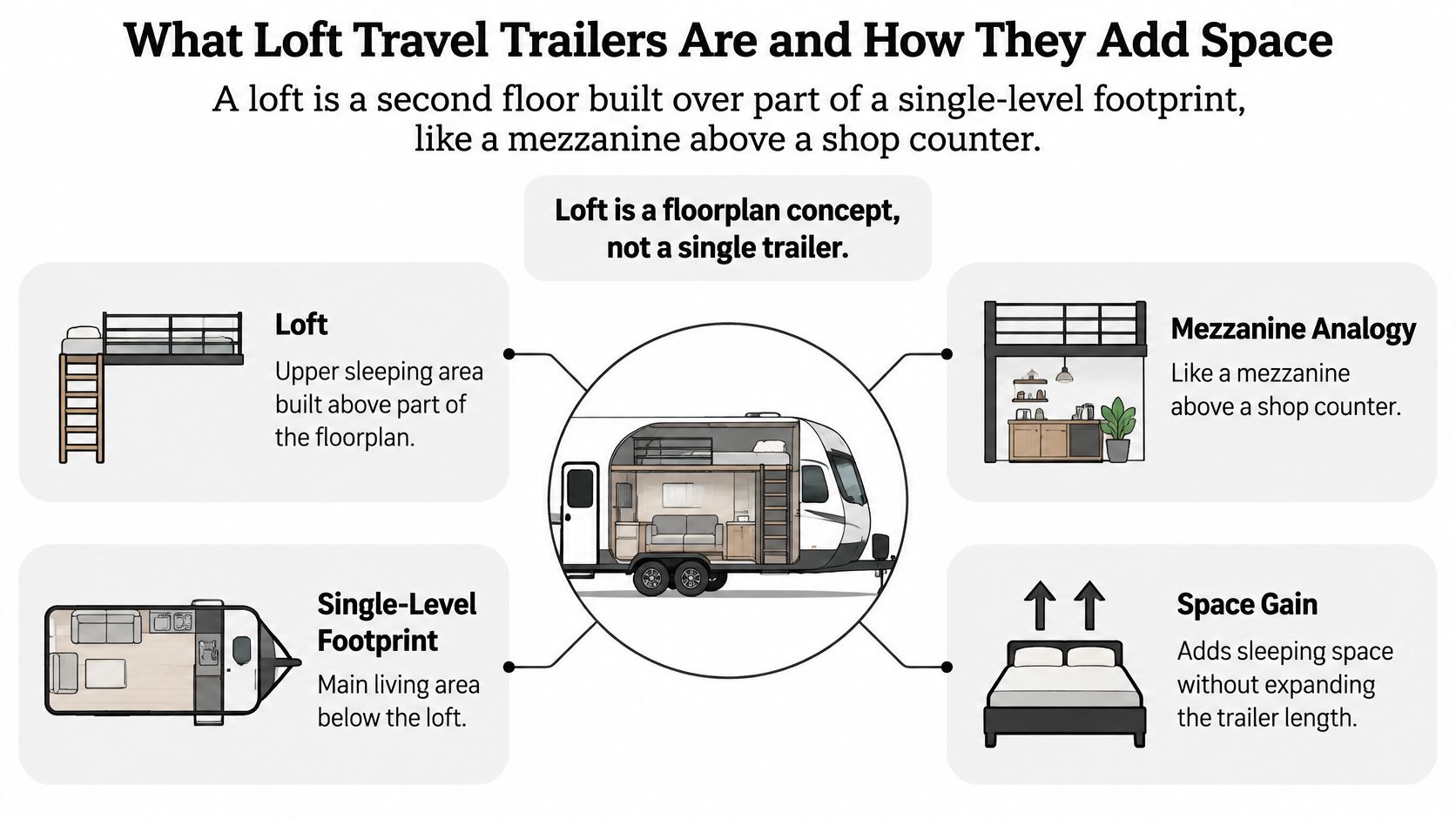
Loft is a floorplan concept, not one standardized trailer class, so two listings can differ sharply. Current loft-oriented travel trailer listings from Campers Inn span approximately 37 to 42 feet in length, weigh about 6,978 to 12,015 pounds, and sleep as many as 9 people. Those same listings mix in bunkhouses, slide-outs, outdoor kitchens, kitchen islands, and double-over-double bunks.
Say you're parked near Bear Lake for a long weekend. Your kids claim the loft as their own nook at night, and the dinette below stays free for breakfast instead of converting back and forth. That's the main gain, more sleeping capacity without adding floor length.
More beds on the brochure don't help if the people assigned to them can't climb up comfortably and get down safely at night.
Before you go further with any model, get three answers. How is the loft reached, who can sleep there in real use, and what will the trailer weigh loaded for your trip? A roughly 7,000 pound trailer and a 12,000 pound trailer can both promise loft sleeping, but they don't ask the same thing from your tow vehicle, your payload margin, or your confidence backing into a tight site.
Common Loft Layouts and What Each One Trades Away
Start with the comparison, then read the trade-offs underneath it. Sleeping counts here are typical ranges, so confirm the exact bed count and mattress size on the manufacturer floor plan for the model year you're shopping.
| Layout | Typical sleepers | Floor space trade-off | Best fit | Watch for |
|---|---|---|---|---|
| Front overhead loft above dinette or kitchen | 2 to 4 | Keeps rear bath and bedroom, loft sits over the front zone | Couples wanting one extra sleeping spot | Heat collects in the loft and ladder placement near the entry |
| Rear loft over bunkhouse | 4 to 6 | Rear bunks and loft share the back, main living area stays intact | Families with young children | Lower bunk access can be tight at night |
| Double-over-double bunks | 4 to 6 | Two stacked beds per side, usable floor width shrinks | Kids and teens sharing a room | Upper bunk headroom and fall exposure |
| Loft with slide-out | 4 to 6 | Slide adds floor width under the loft | Longer stays with daily living needs | Extended slide can block the ladder landing |
| Loft with kitchen island | 4 to 6 | Island adds galley prep space, walkway narrows | Families who cook daily on the road | Island can block the path to the loft ladder |
| Loft used mainly for gear | 0 as a dedicated bed | Loft holds bedding, bikes or seasonal supplies, freeing floor space | Owners hauling recreational gear | Loft load rating and tie-down points |
Where the Table Does Not Tell the Whole Story
Double-over-double bunks pack sleepers in efficiently, but the upper bunk usually suits children or teens, and the lower bunk may need its own clear route in and out. If one child has to climb past another to reach the bathroom, you'll hear about it every night.
A slide-out under the loft makes the lower zone feel roomier for cooking and lounging. Run that slide out and check the ladder landing, because the extra width doesn't help if the bottom rung now sits in a cramped corner. The same applies to a kitchen island. It gives you prep space families love on longer Utah trips, but it narrows the walkway everyone uses to reach the ladder.
Count the people who need a bed every night, not the guests you might host twice a year. Then pick the layout that gives each of them a bed they can reach without climbing past another sleeper.
Loft Access, Ladders and Sleeping Comfort
Ladder dimensions decide whether a loft gets used or avoided. The sleeping loft access and egress code requirements on UpCodes call for rungs at least 12 inches wide, rung spacing between 10 and 14 inches, and a ladder capable of supporting a 300-pound load on any rung. The access route also needs at least 3 feet of ceiling height along its full width.
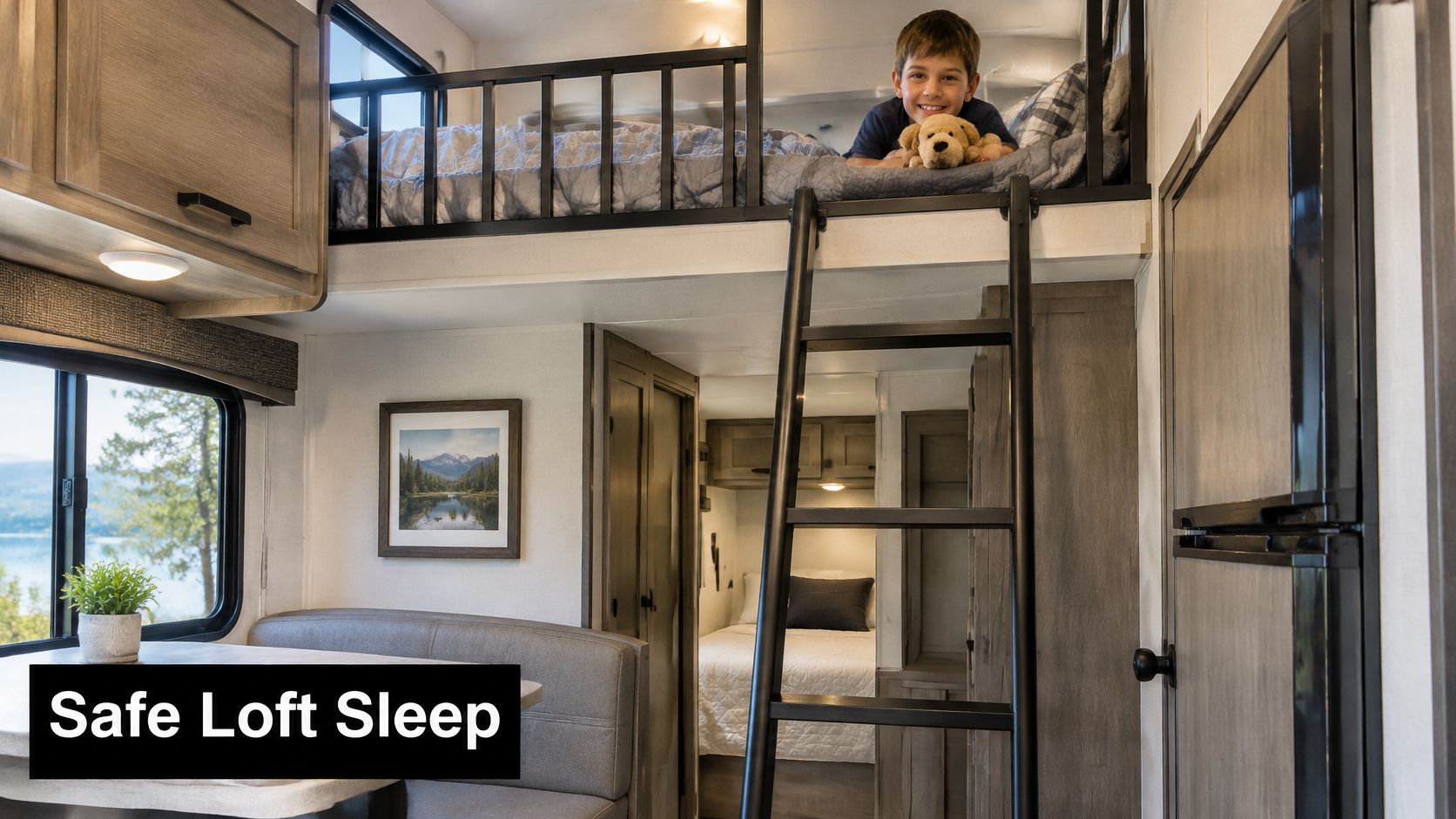
Those numbers matter when someone climbs down half asleep for a bathroom trip while carrying a blanket. A narrow ladder with wide spacing can look fine under showroom lights and feel awkward in the dark. It also matters in an emergency, when a child or older adult needs to get down quickly without hunting for footing.
A Six Step Ladder Test You Can Run Anywhere
- Measure rung width: Put a tape across two or three rungs.
- Measure spacing: Check the gap between the first four rungs.
- Check headroom: Hold a hand above the top rung and follow the full access route.
- Climb with a pillow: Wear normal footwear, not just socks.
- Find the handholds: Look for a secure grip at the top and bottom.
- Repeat with gear in place: Extend the slide-out and put mattresses and stored items where they'll live.
Watch how a loft bed works in daily use before you test one in person.
Utah mornings add one more wrinkle. Cold weather layers, stiff boots, and gloves make a tight ladder harder to use, so test it in the clothing you'd wear on a Wasatch trip.
Who a Loft Trailer Suits and How to Decide
A loft isn't automatically a family-friendly sleeping solution, and that's where honest shopping starts. Families with teens who want separate space often do well, as do couples who want a guest or gear zone and long-stay campers who need the lower living area clear during the day.
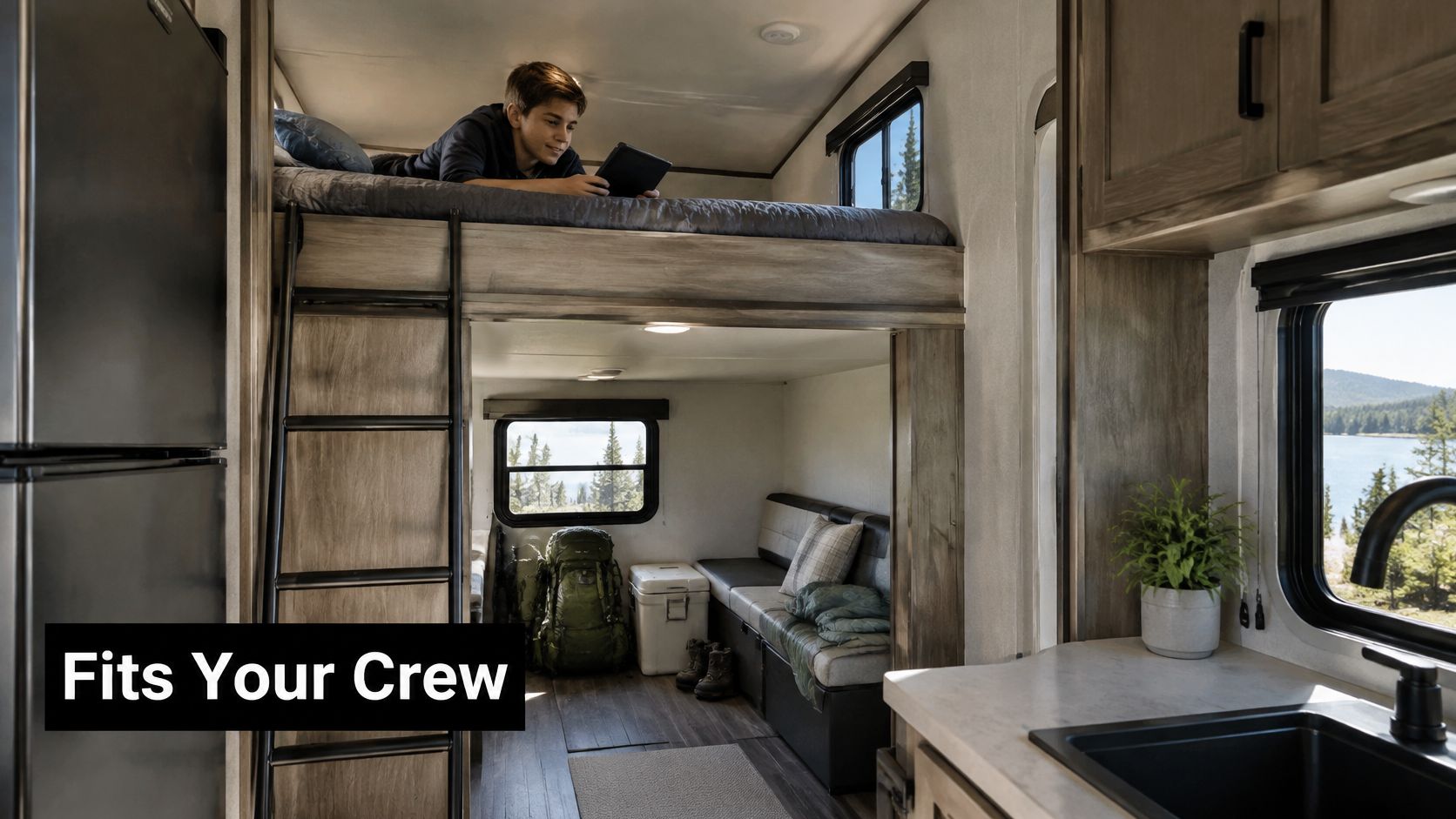
Adults with limited mobility, older guests who avoid ladders at night, and anyone who'd climb up and down several times a day should look harder. Accessibility is shaping more buying decisions, and reporting on the 2025 KOA report from RV News notes Boomers are increasingly prioritizing accessibility, while Gen Z is increasing demand for comfort and convenience.
Run a Fit Test for Each Sleeper
- Young children: Can an adult help them up and down, and will the loft stay a sleeping place rather than a play zone?
- Teens: Do they get real privacy, operable ventilation, and enough head clearance to sit up?
- Adults: Can they handle a full night up there plus a dark bathroom trip?
- Long stays: Does the lower zone stay usable for cooking and work while the loft is occupied?
We sell travel trailers, fifth wheels, fifth wheel toy haulers, travel trailer toy haulers, popup trailers, and destination trailers, so a loft is only one option on our lot. If a floor-level layout fits better, our guide to choosing a bunkhouse travel trailer for families walks through that alternative.
Decision rule: Choose a loft when every regular sleeper can climb safely, your tow vehicle keeps payload after tongue load, and the height clears at home. Choose a bunkhouse when small children need easy supervision or the loft would sit mostly empty.
Write down each sleeper and their night needs, note your tow vehicle payload figure, browse current inventory, and schedule a walk-through before you sign.
Towing a Loft Trailer Without Overloading the Tow Vehicle
Tow the loaded trailer, not the brochure dry weight. Guidance in the Virginia Department of Wildlife Resources towing capacity guide places conventional-trailer tongue load near 10% of loaded trailer weight, with a broader range of 10 to 15%. That tongue load counts against your tow vehicle's payload along with passengers and cargo.
| Weight item | Example value | Effect on tow setup |
|---|---|---|
| Loaded trailer weight | 7,000 lb (example) | Sets the trailer side of the tow rating |
| Tongue load at 10% | 700 lb | Counts against tow vehicle payload |
| Tongue load at 15% | 1,050 lb | Counts against payload and reduces braking margin |
| Passengers and gear in tow vehicle | Your actual passenger plus cargo total | Subtracts from the same payload |
| Cargo split guidance | 60% front half, 40% rear | Helps keep tongue load in range |
For that 7,000 lb loaded loft trailer, you're looking at roughly 700 to 1,050 lb on the hitch before anyone climbs into the truck. Add your family, a cooler, tools, and firewood, and a payload sticker that looked generous can shrink fast.
Two Ways Loading Goes Wrong
Too little tongue weight can promote sway, especially with crosswinds across open Utah highway. Too much can degrade braking and handling, which you'll feel descending I-80 through Parleys Canyon with a loaded trailer pushing behind you. Keep about 60% of allowable trailer cargo in the front half and 40% in the rear, always within axle and tongue limits.
Loft layouts hide weight in ordinary places. Extra bedding for upper bunks, bikes, a generator, motorcycles, full water tanks, and bunkhouse supplies all consume cargo capacity. Our deeper walkthrough on towing a camping trailer covers hitch setup in more detail.
- Compare the right numbers: Loaded gross weight, GVWR, axle ratings, hitch rating, and the payload sticker on your door jamb.
- Ignore the headline alone: Maximum tow rating doesn't tell you how much payload remains.
- Weigh the combination: A certified scale visit after loading is the most reliable check you can make.
Storage, Height Limits and Utah Seasons
Measure the trailer's highest point with the roof air conditioner, roof rack, and antenna included. The RV LIFE towing guide warns owners to account for additions such as a roof-mounted air conditioner, roof rack, or antenna when determining total trailer height. Advertised body height understates the actual figure, and taller loft roof profiles make the gap easier to miss.
Check that delivered height against your garage door, carport, covered storage bay, and low tree branches at home. Then think about the route, including low bridges, fuel station canopies, and older campground overhangs on the way into the mountains. Keep the number written in your tow vehicle so you don't guess at a canopy.
What Utah Weather Does to a Loft
Snow load sits on flat roofs through Wasatch winters, and freezing overnight temperatures call for proper winterization of plumbing before storage. Wind and dust near the Great Salt Lake work into seals and vents over a season. After dusty desert or lakeside trips, the RV bug-removal guide by GP Mobile Car is a useful reference for clearing the front cap without damaging the finish.
Warm air rises, so a loft collects heat and humidity from sleepers below. That moisture can condense on the upper ceiling on cold nights at altitude. Keep loft vents and windows operable, run the roof fan on humid nights, and use a dehumidifier in closed storage. Inspect roof seals each spring, and store covered or indoors through winter when you can.
Checking Loft Features During a Dealer Visit
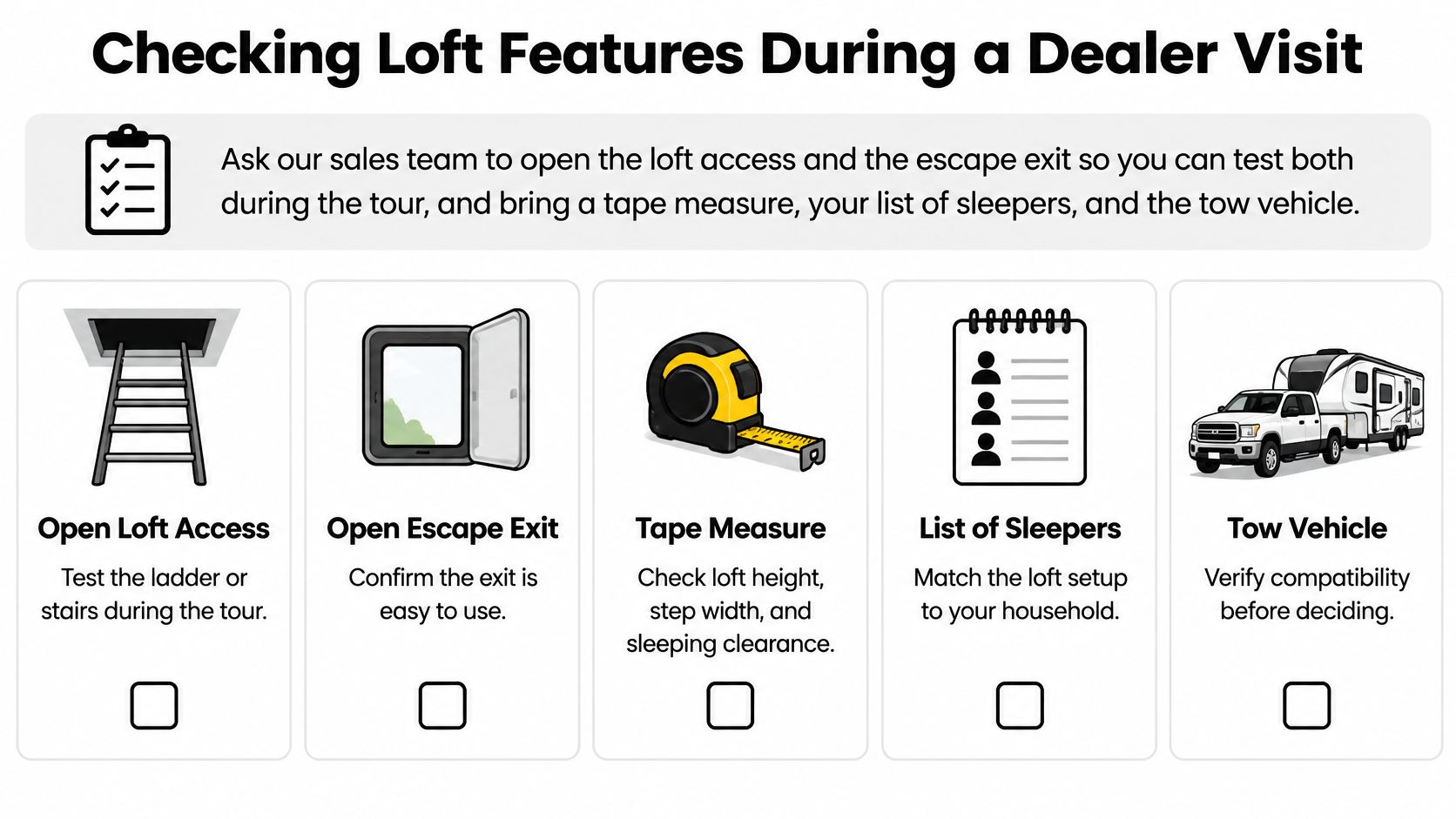
Ask our sales team to open the loft access and the escape exit so you can test both during the tour. Bring a tape measure, your list of sleepers, and your tow vehicle payload figure. Our sales team can be contacted to schedule a tour of an RV, and customers who come in can be shown around any trailer they want to see.
| Feature | What to verify | Why it matters |
|---|---|---|
| Secondary loft exit | Exit other than the ladder that opens directly outside | Gives a real escape route |
| Guardrail height | At least 36 inches, or half the ceiling height if lower | Reduces fall risk from the loft |
| Guardrail openings | No gap that passes a 4-inch object | Keeps small children from slipping through |
| Loft smoke detector | A dedicated detector in the loft | Early warning for sleepers above the main floor |
| Loft ventilation | Operable vent or window | Limits heat build-up and condensation |
| Weight label | GVWR and dry weight on the sticker | Basis for the tow setup |
The NFPA 1192 standard documentation requires each loft to have at least one exit in addition to its access staircase or ladder, with direct access to the exterior. It also sets guardrails at at least 36 inches high, or one-half of the maximum clear ceiling height when that's lower, and bars openings that pass an object 4 inches or larger.
Climb up and work the escape latch with your own hands, then check the height with roof gear included. Ask for the manufacturer floor plan and RV construction documentation for that exact model year, since loft layouts change between years. If you're comparing a pre-owned unit, our used RV inspection checklist pairs well with the loft-specific checks above.
What a Loft Trailer Really Costs to Own
A loft's first-year cost depends on more than its price. Compare new and used options by including the tow vehicle changes, running costs, and likely resale value, not just the monthly payment.
| Cost line | New loft trailer | Used loft trailer |
|---|---|---|
| Tow vehicle changes driven by payload | Confirm available payload before buying; budget for any changes needed to stay within vehicle limits. | Check payload against the trailer's loaded weight, then price any required vehicle changes. |
| Insurance | Get a quote for the specific trailer and coverage you want. | Request a separate quote; age and condition can affect the coverage options. |
| Registration | Check the applicable registration costs before setting your budget. | Confirm registration costs for the specific trailer and your situation. |
| Campsite fees | Estimate fees based on where and how often you plan to camp. | Use the same trip plan so the comparison reflects your actual use. |
| Winterization and tires | Budget for seasonal winterization and tire upkeep. | Allow for winterization and assess tire condition before purchase. |
| Expected resale at end of year one | Estimate resale conservatively rather than treating it as guaranteed savings. | Compare likely resale with the purchase price and any immediate maintenance needs. |
Market reporting summarized in RVBusiness's SSI takeaways says travel-trailer registrations in the $0 to $25,000 band rose 2% in 2025, while used travel-trailer sales increased 1.80% in August 2025. Those figures describe the broader market, not the value or resale speed of a particular loft trailer.
For Utah trips, account for added fuel and brake wear on I-80 grades through Parleys Canyon. Covered winter storage can cost more than an open lot, and freeze-season winterization belongs in the annual budget. Ask Motor Sportsland's sales team about a trailer quote and schedule a tour to review a specific unit.
Frequently Asked Questions About Loft Travel Trailers
A loft adds real sleeping space only when its ladder, escape exit, and tow weight all pass your checks. Our team can walk each of those checks with you on the lot before you commit.
What is a loft travel trailer? It's a towable with a raised sleeping or living area over part of the floor plan, often 37 to 42 feet long, so the main floor stays open for kitchen, lounge, and bath space.
Are lofts safe for young children? They can work when an adult can help the child up and down, guardrails are secure with no gap that passes a 4-inch object, and the ladder meets the rung width and spacing limits covered above.
Does a loft need a second exit? Yes. Under NFPA 1192 it needs at least one exit besides the ladder that opens directly outside, and you should test that latch yourself.
How much weight should my tow vehicle carry? Plan on tongue load of about 10 to 15 percent of loaded trailer weight, and remember it counts against payload along with passengers and gear.
How do I stop condensation in the loft? Keep vents and windows operable, run the roof fan on humid nights, and use a dehumidifier in closed storage.
Browse current inventory at motorsportsland.com or stop by our Salt Lake City area showroom for a personal consultation.
If you're weighing loft travel trailers against a bunkhouse or a larger fifth wheel, bring your sleeper list and your tow vehicle payload figure and we'll climb the ladder, test the escape exit, and run the loaded numbers with you. Visit Motor Sportsland to browse current inventory and schedule a tour, and we'll help you pick the layout your family will still enjoy after the third night out.
